10 Funny Spanish Riddles – Adivinanzas en Español

- Grades
- Pre-K, Adult Education, Elementary, Homeschool Resources, High School, Middle School, Not Grade Specific
- Pages
- 5
- File type
- Preparation
- Print ready
- Subject
- Foreign Languages, Spanish, Reading, ELA, Language Development, Pre-Reading, Vocabulary
- Topic
- FREE, FREE RESOURCES
- Resource types
- Activities, Teacher Tools, Classroom Decor
- Preparation
- Print ready
About this resource
What's inside this resource
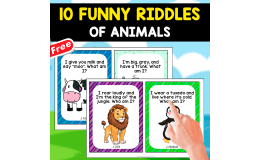
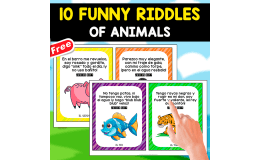
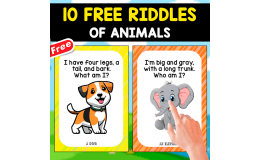
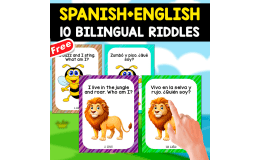
10 FUNNY RIDDLES IN SPANISH | ADIVINANZAS EN ESPANOL
WITH THIS FUNNY RESOURCE, YOUR STUDENTS CAN PRACTICE THE SPANISH LANGUAGE, BECAUSE THIS 10 RIDDLES OF ANIMALS HAVE BEEN DESIGNED IN SPANISH.
PLEASE VISIT MY STORE, BECAUSE I HAVE A LOT OF FREE RESOURCES FOR YOU:
FOOD FLASHCARDS:https://teachsimple.com/product/6-free-flashcards-of-food-vegetables-and-fruits
NUMBERS PUZZLES:https://teachsimple.com/product/numbers-puzzles-1-to-10-cut-and-paste-activity
DESCRIPTION OF THIS PRODUCT:
1) What specific skills are developed using this resource?
Students will be able to develop their attention, concentration, creativity, and imagination skills. It will also allow students to develop their cognitive skills such as comprehension, analysis, and others.
2) Who is the ideal audience for this document?
This document and/or teaching resource is primarily intended for young students, meaning those between the ages of 5 and 12, in other words, students in early childhood and/or primary education. However, it can also be used by the general public if required.
3) What recommendations are there for making the most of this resource?
To make the most of this resource, I recommend first analyzing it, then looking at the specific topic your student needs to learn and assess whether my resource addresses it. I also ask you to consider how you will print it.
4) Is this material up to date with the latest educational changes?
Yes, this material primarily addresses all learning theories about children, which tell us that children should learn in an educational and fun way.
5) What printing format guarantees the best results?
I recommend printing this document in PDF format. I would also ask you to carefully check whether you have a color or black and white printer.
SECONDARY AND COMPLEMENTARY INFORMARION OF THIS PRODUCT:
1) How many pages does the file contain in total?
This educational document contains enough pages to make this resource ideal for promoting fun and successful learning.
2) Does this material allow for custom editing?
This educational document is available in PDF format, so you cannot edit it. You simply need to download and then print it.
3) What main topic does the resource cover?
This document has been developed to address a basic topic that children in kindergarten through elementary school should master. This document will also be helpful to the general public who want to learn.
4) What version does this document correspond to?
This educational resource is designed in PDF format, which will make your download experience much simpler and easier to use.
THANK YOU SO MUCH! PLEASE GIVE ME A POSITIVE REVIEW OF MY PRODUCTS!
In the classroom
Teaching tips & learning objectives
Learning objectives
Read a short rhymed Spanish text and infer the animal it describes
Recognise ten animal nouns in Spanish with their definite articles: el perro, el gato, la vaca, el mono, el elefante, la gallina, el sapo, la cebra, la abeja, la tortuga
Follow first-person present-tense verb forms — tengo, soy, camino, me cuelgo, salto, digo — as the clue-giving voice
Use sound, appearance and behaviour clues together to reach an answer rather than relying on a single word
Teaching tips
Each solution is printed directly under its riddle, so folding or covering the lower half of the page keeps the guess live; the same layout makes the pages usable straight away as a display or a read-aloud set
Every riddle ends with the same question, ¿Quién soy?, which gives a beginner class one sentence to learn and then hear ten times
The clues split into three kinds — sound (ladro, maullar, muu, croo, zumbando), appearance (orejas grandes y una trompa, rayas blancas y negras) and habit (llevo mi casa encima, me cuelgo en los árboles) — which is a useful way to group them when teaching the strategy rather than the answers
Two riddles to a page means a page can be cut in half to make ten separate cards for a guessing round or a warm-up jar
Vocabulary stays inside one field, animals, so the set works as a single lesson's worth of listening practice without a second topic to preload
Skills covered
Spanish reading comprehension — students read ten short rhymed passages and work out which animal is speaking in each one.
Animal vocabulary in Spanish — ten nouns arrive with their articles, from el perro and el gato through la cebra and la abeja to la tortuga.
First-person present-tense verbs — every riddle is the animal describing itself, so tengo, soy, camino, salto, digo and me gusta recur throughout in natural context.
Inference from mixed clues — each riddle combines a sound, a physical feature and a habit, so the answer comes from assembling several details rather than spotting one keyword.
Listening comprehension — rhymed lines and the repeated closing question make the riddles work read aloud as a spoken guessing round.
Good to know
Questions teachers ask about this resource
Where are the solutions printed?
Directly beneath each riddle, in capitals — EL PERRO under the dog riddle, LA VACA under the cow. The pages are therefore ready to read aloud or display as they are, and covering the bottom of each riddle is the quickest way to keep the guessing live.
Which animals do the ten riddles describe?
Dog, cat, cow, monkey, elephant, hen, toad, zebra, bee and tortoise. The clues lean on sounds and habits — ladro, maullar, digo "muu", digo "croo", zumbando voy por el aire, me cuelgo en los árboles — so the vocabulary load is animal nouns plus everyday verbs.
What level of Spanish do the riddles use?
Simple present tense in the first person throughout, with each animal speaking about itself: "Tengo cuatro patas", "Soy suave y peludo", "Me cuelgo en los árboles", "Camino muy lento". Every riddle closes with ¿Quién soy?, so one question form recurs ten times and the grammar stays in a single tense.
No reviews yet
Downloaded this resource? Tell other teachers how it went.
Resource details
Concepts & topics
Core concepts
Spanish vocabulary
Riddles
Animals
Reading comprehension
Explore more
Categories this resource belongs to
Explore related searches
More to explore