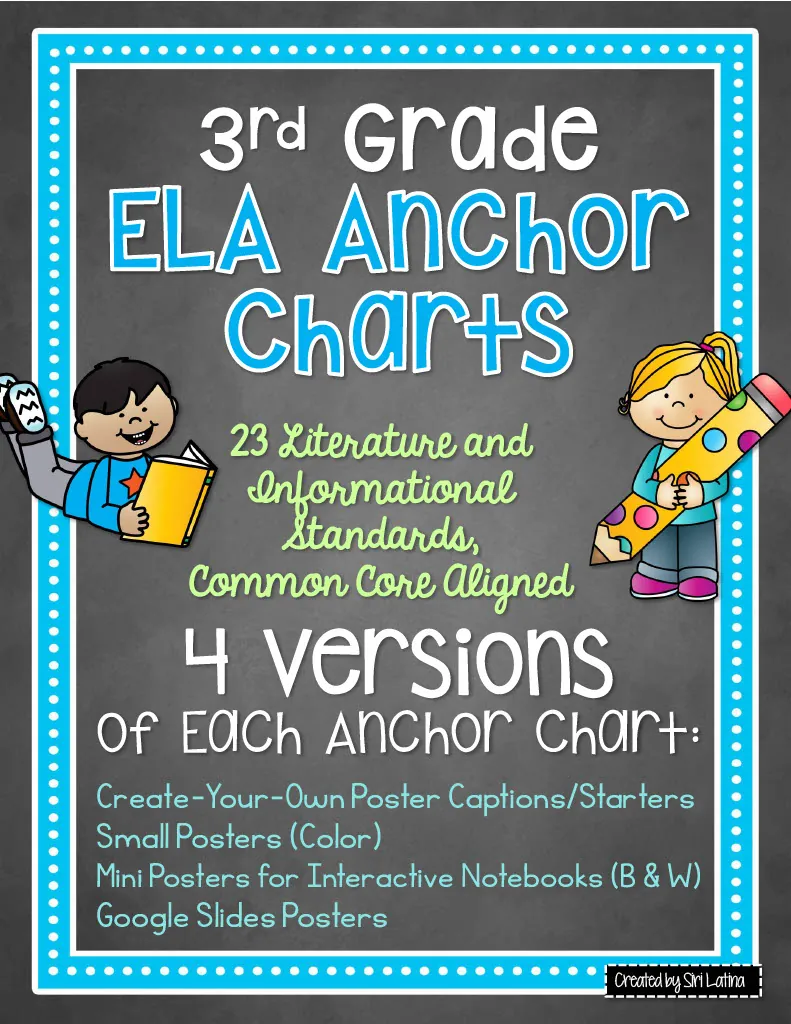
3rd Grade ELA Anchor Charts – 23 Standards Set
- Grades
- Grade 3
- Pages
- 116
- File type
- Multiple File Types


- Subject
- ELA
- Topic
- Graphics, Anchor charts
- Resource types
- Anchor Charts, Teacher Tools
- Standards
- CCSS.RL.3.1
Product description
From the author
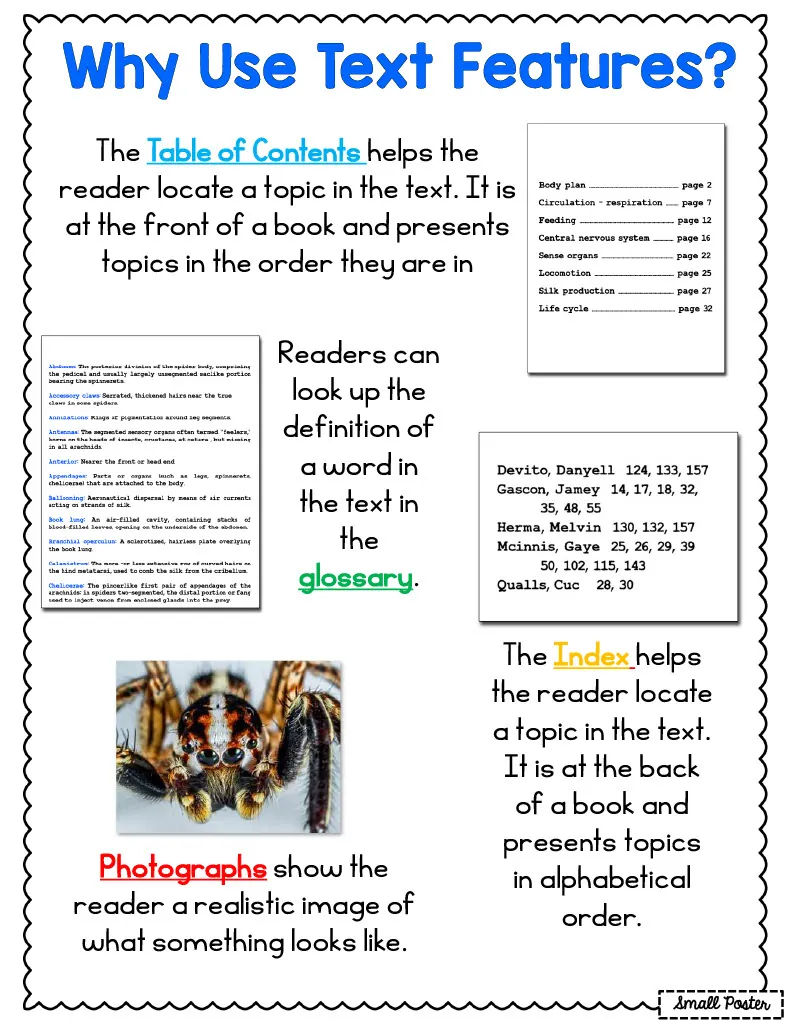
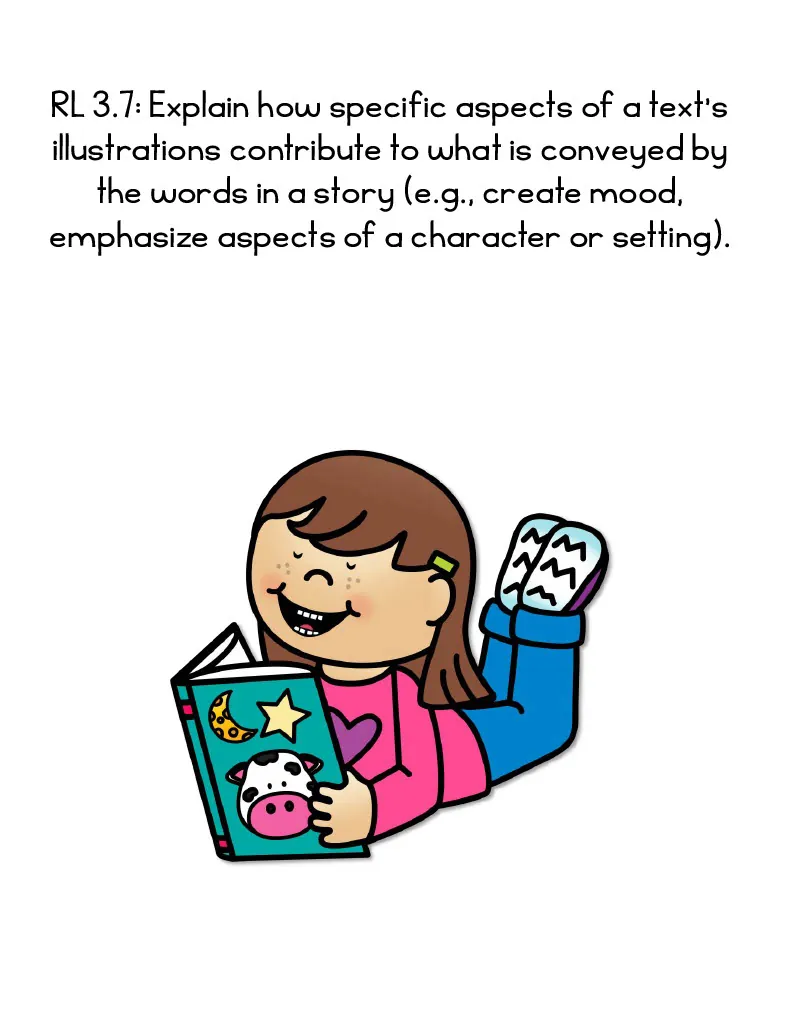
This is a set of 3rd Grade ELA Anchor Charts.
There are 4 versions of each anchor chart:
1) Create-Your-Own Poster Captions/Starters
2) Small Posters (Color)
3) Mini Posters for Interactive Notebooks (B & W)
4) Google Slides Posters
The contents reference 17 distinct Grade 3 literature and informational-reading standards, with supporting charts. The PDF has 116 pages; the linked Google Slides deck has 24 slides.
Related resources
More resources teachers may find useful
24 related resources were found using this product's title, contributor, categories and tags.
In the classroom
Teaching tips & learning objectives

Learning objectives
Cite text evidence to answer literature and informational-text questions using the RACE rubric structure.
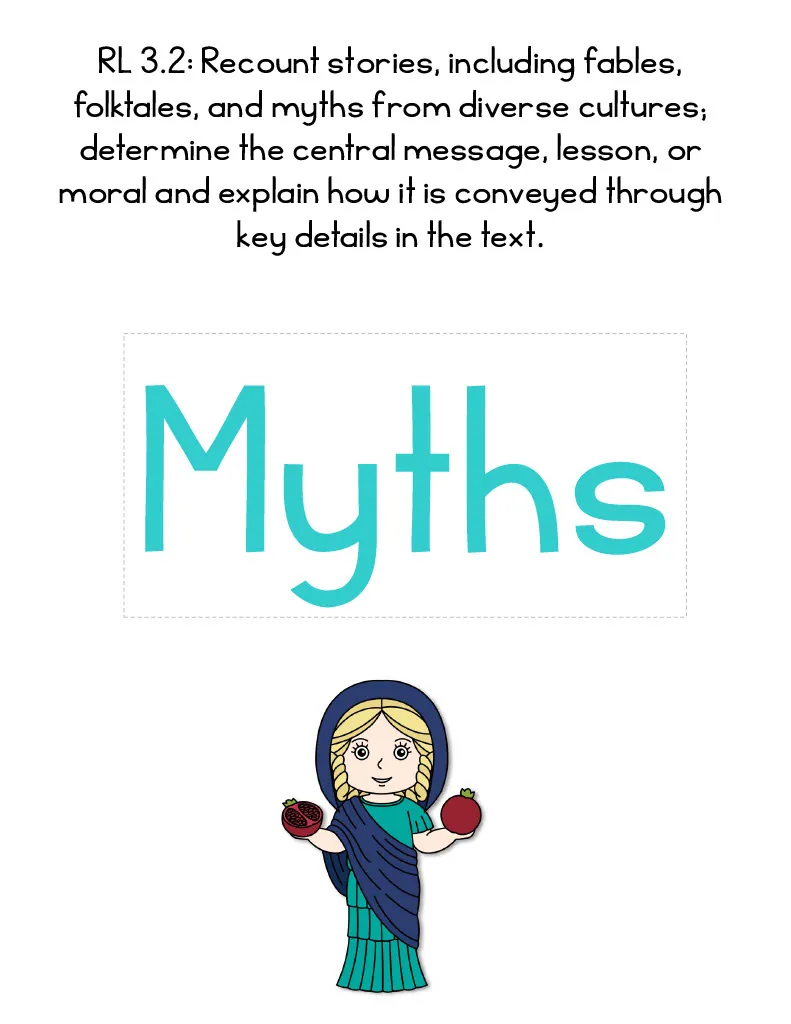
Distinguish fables, folktales, and myths by their defining features and examples.
Identify common text structures (sequence, compare/contrast, cause/effect, problem/solution) and their signal words.

Teaching tips
Print and laminate the small posters if you want to reuse the charts across school years.
Have students glue the black-and-white mini posters into interactive notebooks as a personal reference copy of each classroom chart.
Introduce the RACE rubric chart early in the year, since several of the other charts assume students already cite text evidence in their answers.

Skills covered
Citing text evidence — the RACE rubric chart walks students through restating, answering, citing, and ending an answer with textual support.
Genre comparison — the fables/folktales/myths chart has students compare and contrast the three genres' features and examples.
Text-structure recognition — the text-structures glossary pairs five structures with their signal words and a matching graphic organizer.
Good to know
Questions teachers ask about this resource
Do I have to build a large chart?
Use the caption pieces for a class-built chart, or choose a small poster, notebook format or slide reference for your setting.

No reviews yet
Downloaded this resource? Tell other teachers how it went.
Curriculum
Standards, concepts & topics
Standards
 Standards
- CCSS.RL.3.1 — Ask and answer questions to demonstrate understanding of a text, referring explicitly to the text as the basis for the answers.
Core concepts
 Core concepts
Common Core Grade 3 ELA
Citing text evidence (RACE)
Text structures
Text features
Literary genres
 Topics
Explore more
Categories this resource belongs to
Explore related searches
More to explore
You may also like