bags adjectives french exercises worksheet with answers
- Grades
- Grades 4–6
- Pages
- 7
- File type
- Answer key
- Included


- Subject
- French, Foreign Languages, Grammar
- Topic
- French adjectives, Bags vocabulary
- Resource types
- Worksheets
- Answer key
- Included
Product description
From the author
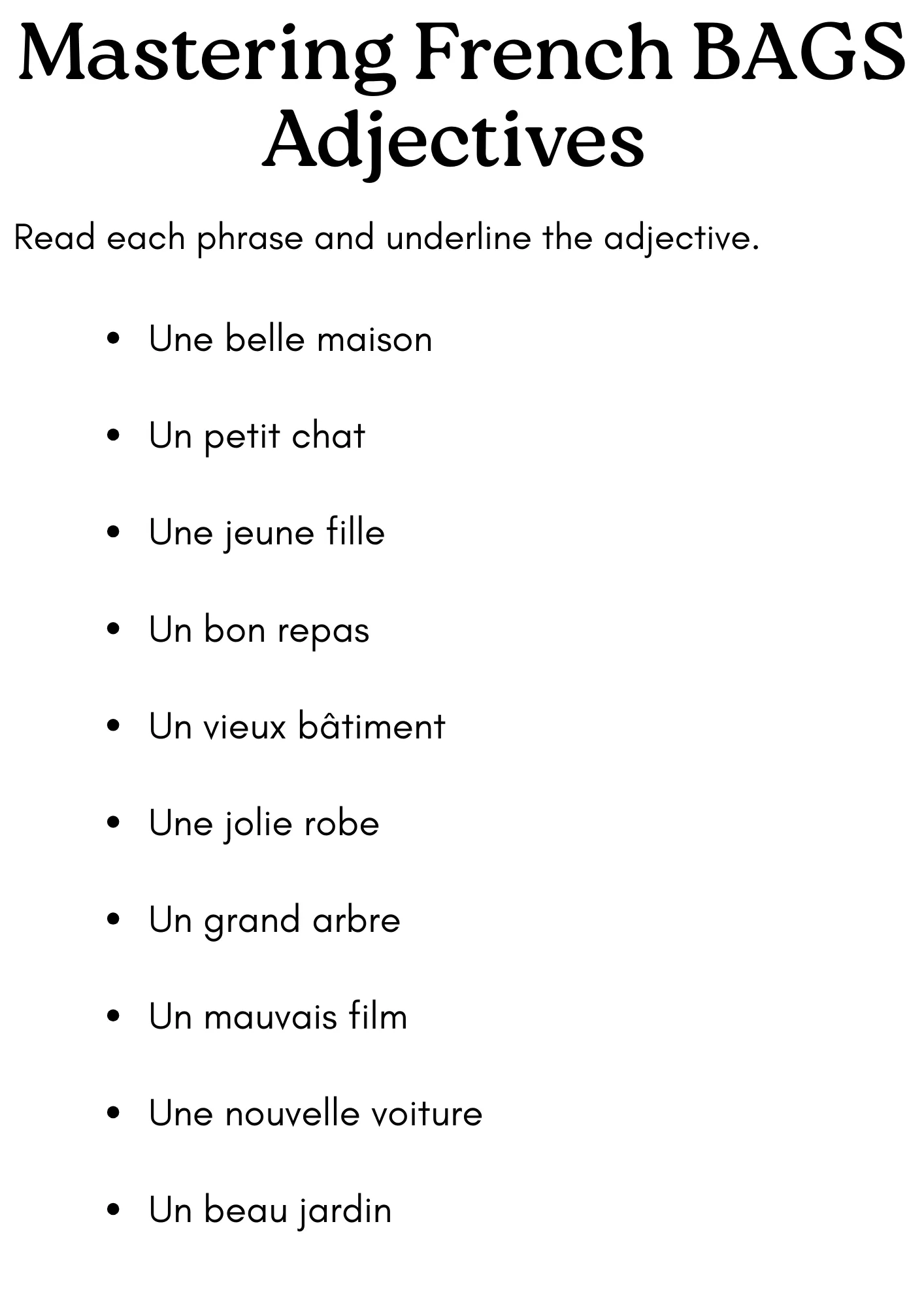
This worksheet is something I made to help my students with a common problem in French—adjective placement. Many of them kept putting every adjective after the noun, so I decided to focus only on BAGS adjectives to make things easier.
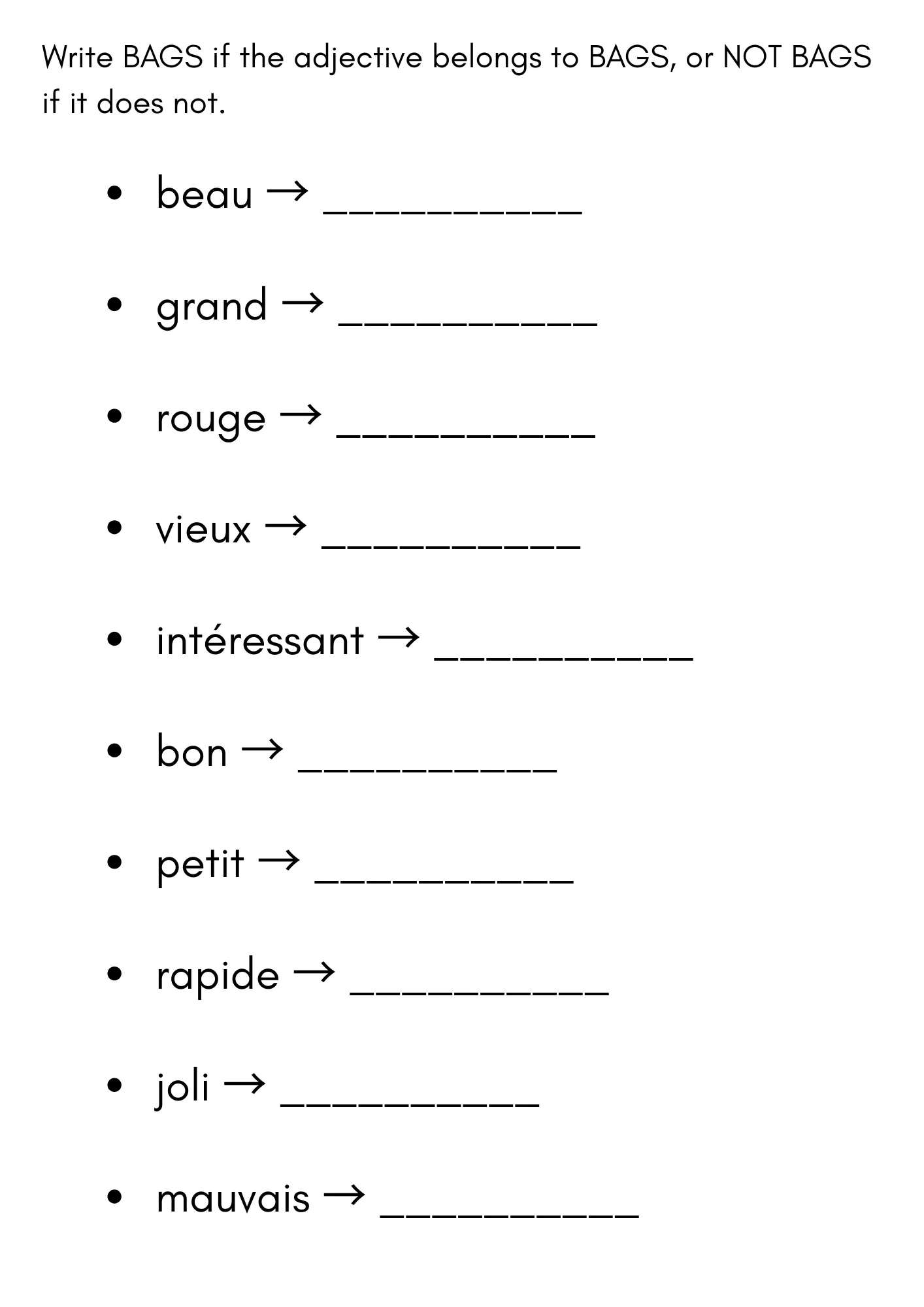
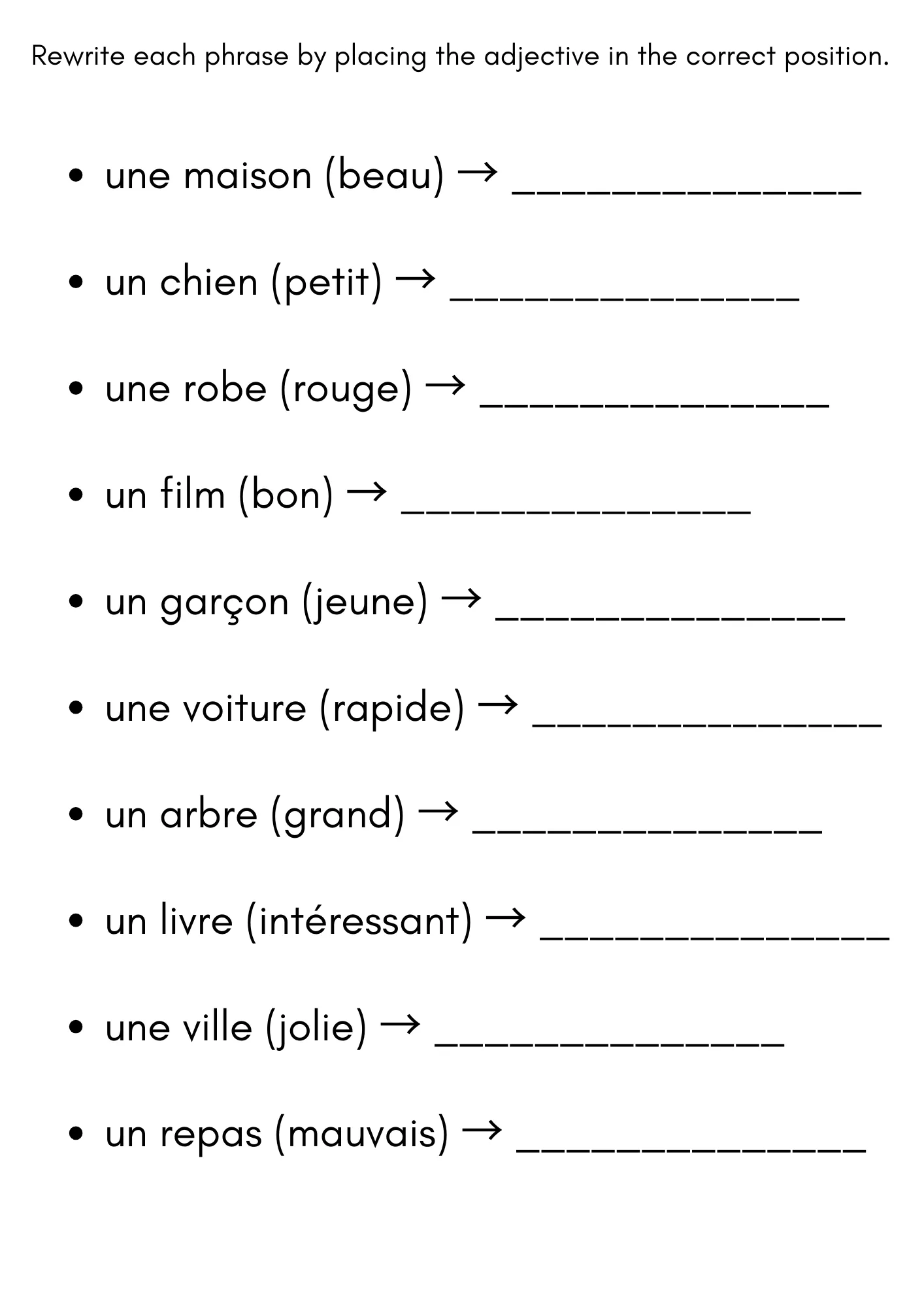
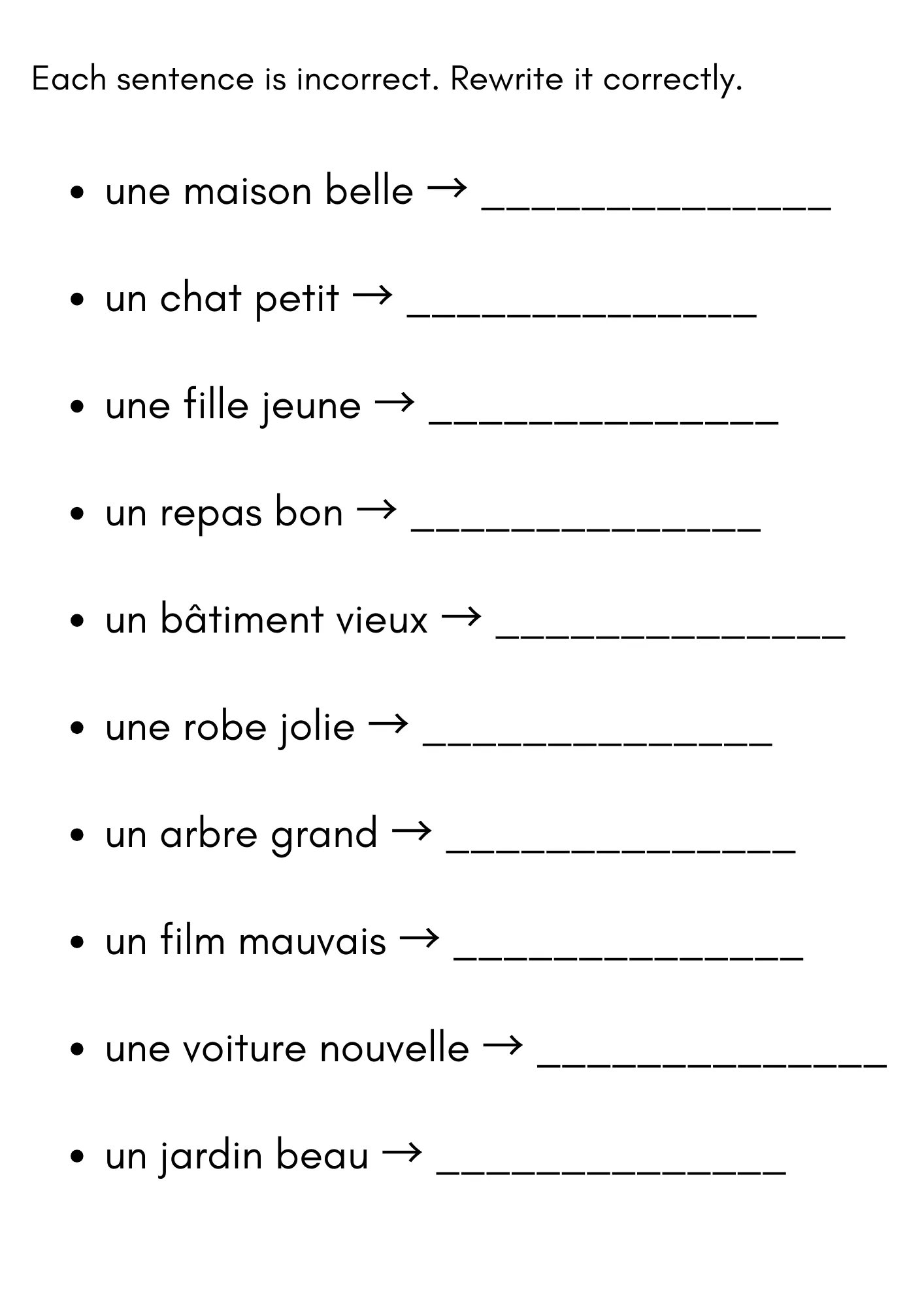
Instead of giving a long explanation, I preferred to give them practice. The exercises are simple and repetitive on purpose. Students first recognize the adjectives, then fix mistakes, and later try to write their own answers. After doing a few of these, they usually start noticing the pattern on their own.
I didn’t use difficult vocabulary here because that’s not the goal. The idea is just to get comfortable with where the adjective goes. You can use this as classwork, homework, or even a quick revision before a test.
It’s not a complicated resource, but it does the job, especially for beginners who are still getting used to basic sentence structure in French.
Related resources
More resources teachers may find useful
24 related resources were found using this product's title, contributor, categories and tags.


In the classroom
Teaching tips & learning objectives

Learning objectives
Identify and correctly position BAGS-category adjectives (Beauty, Age, Goodness, Size) before the noun in French.
Distinguish BAGS adjectives from adjectives that follow French's default after-the-noun placement.
Apply the special pre-vowel/silent-h masculine adjective forms (bel, vieil, nouvel) in place of beau, vieux, and nouveau.

Teaching tips
Introduce bel, vieil and nouvel as masculine singular forms used before a vowel or silent h before assigning the correct-form choices.
Use the true/false section as a quick formative check before or after the hands-on exercises, since it tests the underlying rule rather than a specific phrase.
Have students self-correct using the answer key's fully worked sentence-correction section as a model for their own error patterns.

Skills covered
BAGS adjective identification — students underline and classify adjectives like beau, petit, and bon as BAGS or not.
Adjective placement — students reposition or correct French phrases so BAGS adjectives precede the noun.
Rule-based reasoning — students judge true/false statements about how and why BAGS adjectives differ from the French default.
Good to know
Questions teachers ask about this resource
What should students know before starting?
Students should recognize basic French nouns and be familiar with masculine and feminine forms. Model a phrase from the first page before assigning the placement and agreement tasks.

No reviews yet
Downloaded this resource? Tell other teachers how it went.
Resource details
Concepts & topics
Core concepts
 Core concepts
French adjective placement
BAGS adjectives
Adjective agreement
Masculine liaison forms
 Topics
More to explore
You may also like