Grade 2 Language Arts Skills Practice Test

- Grades
- Grade 2, Elementary
- File type
- Preparation
- Print ready
- Subject
- ELA, Reading
- Topic
- writing, blends
- Resource types
- Tests, Quizzes and Tests, Teacher Tools
- Preparation
- Print ready
- Standards
- CCSS.L.2.2 CCSS.L.2.1 +1
About this resource
What's inside this resource
Product description
From the author
Practice worksheets provide excellent preparation for standardized testing!
—Long and Short Vowels, Digraphs, and Diphthongs
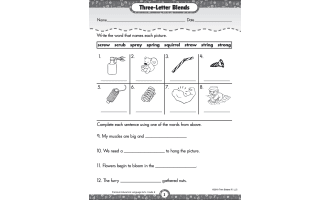
—Blends and Silent Letters
—Capitalization
—Statements, Questions, and Exclamations
—Nouns and Pronouns
—Adjectives and Verbs
—Word Order, Subjects, and Predicates
—Compound Words and Contractions
—Synonyms, Antonyms, and Homonyms
—Prefixes and Suffixes
—Sequencing and Prediction
—Comparison, Inference, Conclusions
—Fact and Opinion
—Letter Writing
In the classroom
Teaching tips & learning objectives
Learning objectives
Identify words that share the same vowel sound, beginning sound, or ending sound as a given word.
Choose the correctly capitalized or punctuated part of a sentence.
Form correct plural nouns and select fitting pronouns, adjectives, and verb forms to complete sentences.
Identify the subject or predicate of a sentence and answer literal comprehension questions about a short story.
Recognize synonyms, antonyms, and homonyms, and build words using common prefixes and suffixes.
Teaching tips
Use each single-page test independently as a quick skill check, or assign the full set together as a comprehensive Grade 2 language arts review.
The Reading page's short original story about a lonely snake looking for a friend can double as a quick read-aloud before students answer its five questions.
Group the ten units by skill area — phonics (Vowels, Blends and Digraphs), grammar (Nouns, Pronouns and Adjectives, Verbs, Subjects and Predicates), vocabulary (Vocabulary, Prefixes and Suffixes), Writing Mechanics, and Reading — to target instruction to a specific weak spot.
Confirm the underlined subject/predicate text is visible when printing the Subjects and Predicates page, since all three answer choices repeat the same sentence.
Skills covered
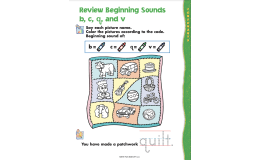
Vowel and consonant sound discrimination — students match words sharing a target vowel sound (e.g., pump) or a beginning/ending blend or digraph sound (e.g., blue, bench).
Sentence mechanics — students identify the incorrectly capitalized or punctuated part of a sentence, such as spotting the missing capital in "tim is my best friend."
Grammar and sentence structure — students form correct plural nouns (witch → witches), choose matching pronouns and adjectives, select the correct verb form ("we ___ a funny video" → watched), and identify subjects and predicates.
Vocabulary relationships and word building — students identify synonyms (kind/nice), antonyms (deep/shallow), and homonyms (road/rode), then build words using prefixes and suffixes ("to heat again" → reheat, "without hair" → hairless).
Reading comprehension — students answer main-idea and detail questions about an original short story.
Good to know
Questions teachers ask about this resource
Are the ten practice tests meant to be used together or separately?
Either — each of the ten pages is a standalone, single-skill test with its own directions, so they can be assigned individually for a quick check or together as a full comprehensive review.
What is the reading passage about?
A short original story about a lonely green snake in the forest who is turned down by a beetle and an owl before finally making friends with another snake.
No reviews yet
Downloaded this resource? Tell other teachers how it went.
Curriculum
Standards, concepts & topics
Standards
- CCSS.L.2.2 — Demonstrate command of the conventions of standard English capitalization, punctuation, and spelling when writing. a. Capitalize holidays, product names, and geographic names. b. Use commas in greetings and closings of letters. c. Use an apostrophe to form contractions and frequently occurring possessives. d. Generalize learned spelling patterns when writing words (e.g., cage → badge; boy → boil). e. Consult reference materials, including beginning dictionaries, as needed to check and correct spellings.
- CCSS.L.2.1 — Demonstrate command of the conventions of standard English grammar and usage when writing or speaking. a. Use collective nouns (e.g., group). b. Form and use frequently occurring irregular plural nouns (e.g., feet, children, teeth, mice, fish). c. Use reflexive pronouns (e.g., myself, ourselves). d. Form and use the past tense of frequently occurring irregular verbs (e.g., sat, hid, told). e. Use adjectives and adverbs, and choose between them depending on what is to be modified. f. Produce, expand, and rearrange complete simple and compound sentences (e.g., The boy watched the movie; The little boy watched the movie; The action movie was watched by the little boy).
- CCSS.RL.2.1 — Ask and answer such questions as who, what, where, when, why, and how to demonstrate understanding of key details in a text.
Core concepts
phonics (vowels, blends, digraphs)
grammar and parts of speech
vocabulary relationships
prefixes and suffixes
reading comprehension
Explore more
Categories this resource belongs to
Explore related searches
More to explore