Country Study Presentation - Senegal - Geography - West Africa


- Grades
- Grades 7–12
- Pages
- 15
- File type
- Preparation
- Print ready


- Subject
- Social Studies, Geography, History: African
- Topic
- Senegal, West Africa
- Resource types
- Presentations
- Preparation
- Print ready
Product description
From the author
Country Study Presentation - Senegal - Geography + Social Studies - West Africa
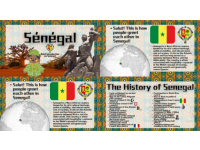
Try this Teaching Resource on Senegal (Introductory Presentation Lesson - PDF Printable), designed for Geography + African History (West Africa) + Social Studies lessons. Suitable for Grades 7–12 (Middle school and High School students), this Introductory PDF Presentation offers a ready to use lesson that requires little to no preparation.
Geography and Social Studies students will learn about Senegal’s geography, history, culture, language and economy — making it perfect for classroom instruction, homeschooling, or online learning.
📘 Teachers can find the following topics in this Social Studies and Geograhy Teaching resource
✅ Greetings in French + Wolof
✅ Geography of Senegal (West Africa) – Key facts, borders, and an interactive Google Maps link to its location.
✅ Quick Facts – Population, capital city, currency and other essential details.
✅ Languages of Senegal: French + Wolof - introduction in the languages spoken + basic vocabuary
✅ History Overview – A concise summary of the most important events in the history of Senegal (West Africa)
✅ Geography & Environment – Details about the country’s land area, regions, and climate zones.
✅ Senegal's Economy – paragraph on Senegal’s industries, exports, currency and economic strengths (West Africa)
✅ Dakar – Explore the capital city of Senegal, its famous landmarks, and cultural highlights.
✅ Other Major Cities – A map showcasing additional important cities in Senegal (West Africa)
✅ Senegal's Culture & Traditions – A look at the customs and values that define Senegal (West Africa)
✅ Farewell in French + Wolof
🎯 This Geography and Social Studies Teaching Resource can be perfect for:
Geography classes
Social Studies lessons
World cultures units
Country study projects
Substitute teacher toolbox
Digital learning
In-class or online teaching
📂 Resource Details
Format: PDF Digital Presentation
Grade Levels: 7th–12th Grade (Middle School and High School students)
Learning with Alan is an educational resource store created to help teachers, educators, and tutors reach their teaching goals while building a fun, engaging, and stimulating learning environment. Because learning should always be meaningful—and fun! 🎓✨
If you want to browse more of my Teaching Resources, click here Learning with Alan!!
Related resources
More resources teachers may find useful
24 related resources were found using this product's title, contributor, categories and tags.


In the classroom
Teaching tips & learning objectives

Learning objectives
Locate Senegal and its bordering countries on a map of West Africa.
Describe key facts about Senegal's government, economy, and population.
Summarize major events in Senegal's history from early kingdoms to independence.

Teaching tips
- Pause at the map and language sections to connect location with the country’s cultural background

Skills covered
Country profile analysis — students examine Senegal's geography, government, economy, and culture through a structured slide sequence.
Basic French and Wolof vocabulary — students learn greeting and everyday phrases (Salut, Asalaamaalekum, Jerejef) on separate French and Wolof vocabulary slides.
Historical timeline reading — students trace events from early African kingdoms through 21st-century Senegalese politics.
Good to know
Questions teachers ask about this resource
What does the Senegal presentation cover?
It introduces geography, history, government, economy, major cities, languages, and culture.
Is this an editable slideshow?
The downloaded presentation is a PDF. It can be displayed to a class or printed for reading.

No reviews yet
Downloaded this resource? Tell other teachers how it went.
Resource details
Concepts & topics
Core concepts
 Core concepts
West African geography
Senegal
Country study
Francophone Africa
 Topics
More to explore
You may also like