


Digraph Vowel List Worksheet – 2nd Grade Digraphs & Vowels Practice



About This Product
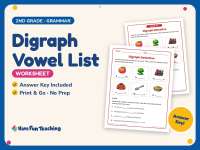
The Digraph Vowel List Worksheet gives second grade students focused, no-prep practice with digraphs. It is a print-and-go grammar page that fits easily into a mini-lesson, a center rotation, or a quick review day.
Learning objective: By the end of this activity, students will be able to use their digraphs skills accurately and explain their thinking.
Why it works: Practice like this gives students a chance to try digraphs on their own after you teach it. Because the page is quick to complete and easy to review, it fits into almost any part of the school day.
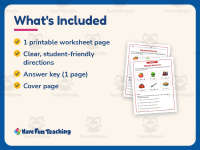
What's included:
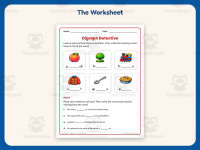
1 printable worksheet page
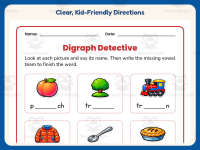
Clear, student-friendly directions
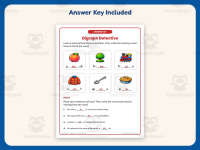
Answer key (1 page)
Cover page
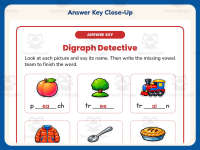
How it's organized: The page opens with these directions: "Look at each picture and say its name. Then write the missing vowel team to finish the word." Students then complete the practice items in order and check their work before turning it in.
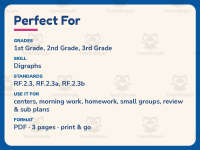
Grade level: Designed for second grade students. It also works well for first grade and third grade students who need extra practice or a fresh review.
How to use it: It works well for whole-class lessons, small groups, early finishers, homework, review days, intervention time, and sub tubs.
Answer key: An answer key is included, so you can check work quickly or let students self-correct.
Teaching tips and variations:
Send it home as homework so families can see what their child is learning in grammar.
Keep a few copies in your early finisher bin for independent review.
Use it as an exit ticket the day after a digraphs lesson to see who needs more support.
Skills covered: Digraphs, Vowels, English, Phonics
Standards: Supports Common Core RF.2.3, RF.2.3a, RF.2.3b.
File type: PDF, ready to print.
Number of pages: 3 (1 worksheet page, 1 answer key page, 1 cover page).
Looking for more digraphs practice? Visit the Have Fun Teaching shop for related worksheets, reading passages, and activities for second grade. Have Fun Teaching on Teach Simple
Resource Tags
0 Reviews
Check out these other great products


