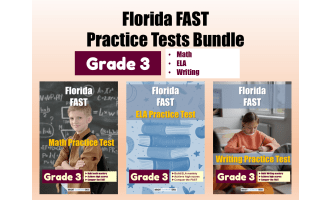
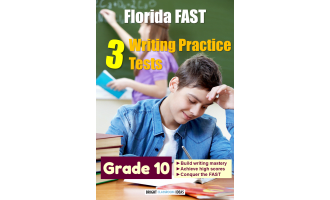
Florida (FAST) Practice Tests Bundle for Grade 10


- Grades
- Grade 10
- Pages
- 42
- File type
- Answer key
- Included


- Subject
- ELA
- Topic
- Florida FAST ELA, Grade 10 ELA
- Resource types
- Tests, Assessments
- Answer key
- Included
- Standards
- RI.10.1
Product description
From the author
This Grade 10 ELA practice resource includes a 35-item reading and editing test, answer explanations and a teacher guide. The three PDFs total 42 pages. Activities cover literary and argumentative reading, comparison of paired essays, vocabulary and sentence editing. Separate Geometry and Writing tests were not found in the supplied ZIP.
Related resources
More resources teachers may find useful
24 related resources were found using this product's title, contributor, categories and tags.
In the classroom
Teaching tips & learning objectives

Learning objectives
Determine theme and analyze episodic story structure, simile, and irony in a first-person narrative
Trace a multi-part rhetorical argument, including anaphora, concession, and extended metaphor, in a persuasive essay
Apply conventions of standard English: sentence concision, modifier placement, semicolon punctuation, and subjunctive mood

Teaching tips
Use the 'annotate every rhetorical move' anchor discussion for the disagreement essay to teach argument-structure mapping as a transferable skill.
Pair the two nostalgia essays for a cross-text agreement/disagreement chart before assigning the compare-and-contrast questions.
Use raw scores for classroom follow-up, not as official FAST proficiency predictions. Check the guide’s benchmark labels against the current Florida standards before using its alignment table for reporting.

Skills covered
Episodic structure and irony analysis — students explain how a series of late-night hotel encounters builds theme and reveals a gap between what the narrator says and what she has actually learned.
Rhetorical move mapping — students identify anaphora, concession, and extended metaphor in a structured argumentative essay about disagreement.
Grammar and mechanics — students revise for concision, fix misplaced modifiers, punctuate conjunctive adverbs, and apply the subjunctive mood.
Good to know
Questions teachers ask about this resource
How can I use this set to plan follow-up reading lessons?
Review students’ responses alongside the answer explanations, then choose a passage or skill to revisit. The teacher guide offers discussion ideas, writing extensions, and targeted review suggestions.

No reviews yet
Downloaded this resource? Tell other teachers how it went.
Curriculum
Standards, concepts & topics
Standards
 Standards
- RI.10.1
Core concepts
 Core concepts
Theme
Rhetorical structure
Cross-text synthesis
Figurative language
Grammar mechanics
 Topics
More to explore
You may also like