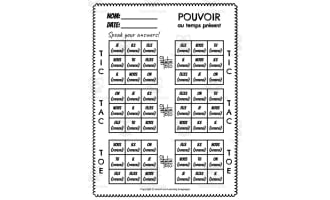
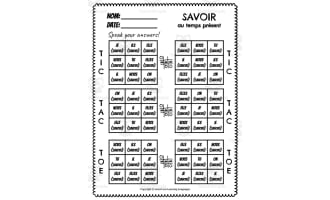
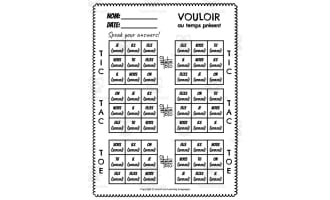
French: Faire Present Tense Tic Tac Toe Game
- Grades
- Not Grade Specific
- Pages
- 3
- File type
- Answer key
- Included


- Subject
- Foreign Languages, French
- Topic
- French conjugation, Faire present tense
- Resource types
- Games, Activities
- Answer key
- Included
Product description
From the author
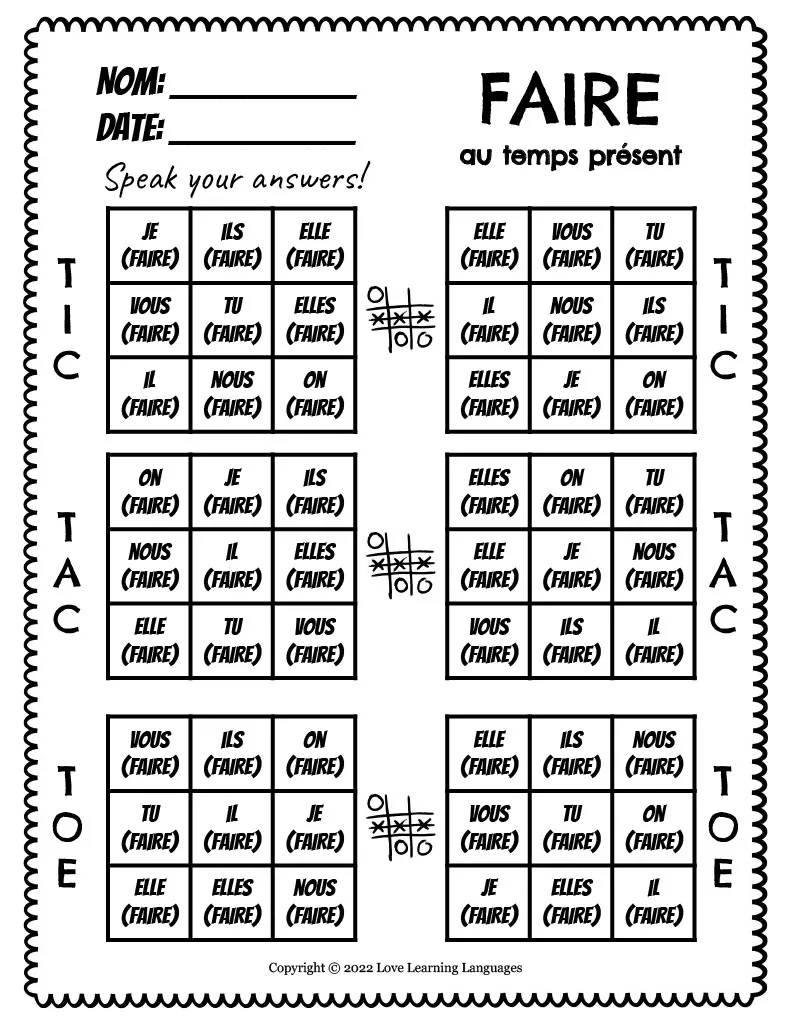
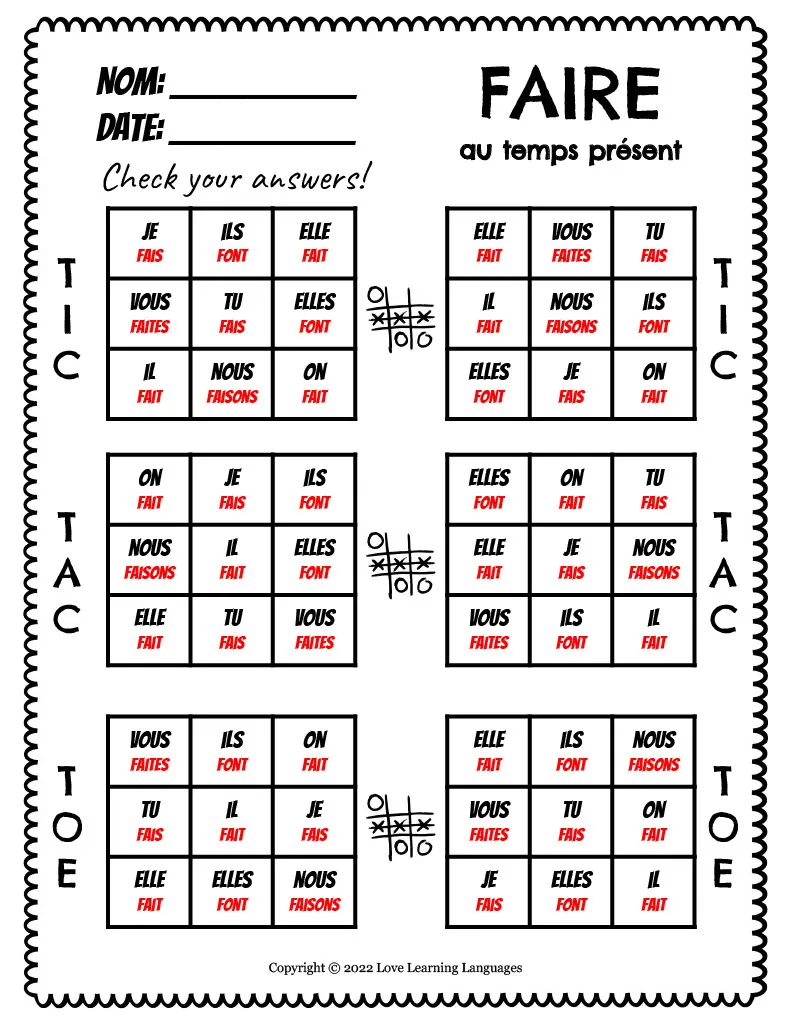
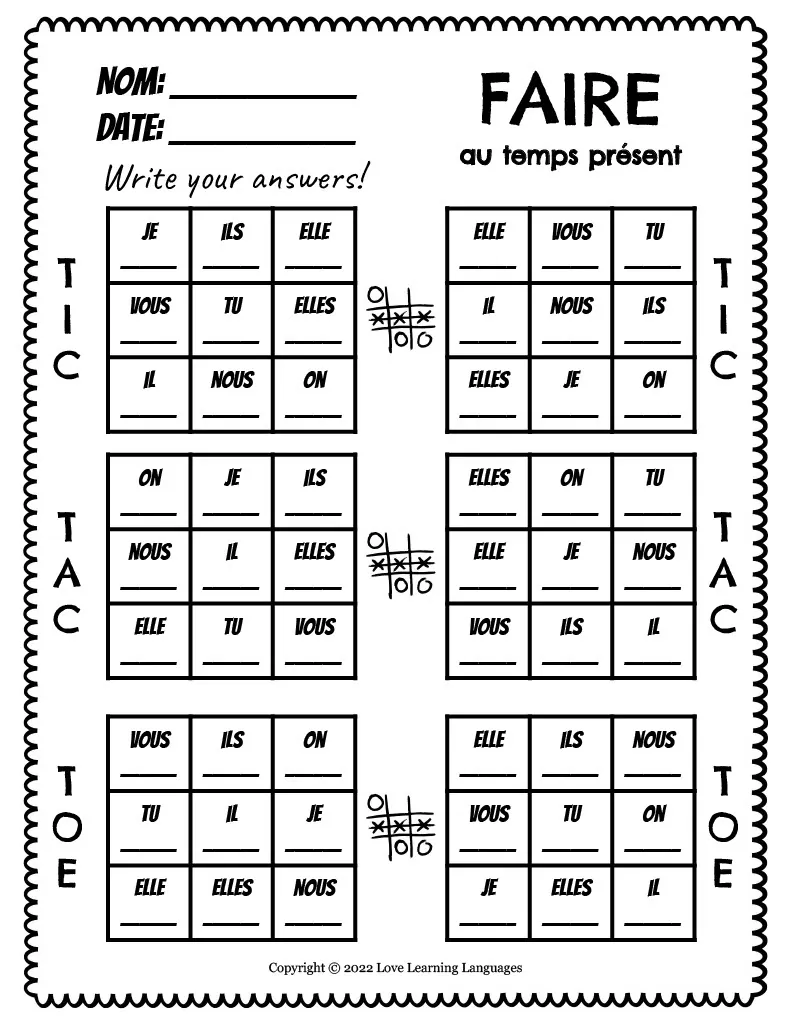
Faire Present Tense Tic Tac Toe in French provides educators with six printable Tic Tac Toe games focused on the present tense conjugation of the essential French verb faire, meaning "to do" or "to make". Students reinforce grammar skills and vocabulary by competing to get three in a row, either against one another in pairs or in small groups. Students supply the conjugated form themselves, using either the spoken or written version. Answer keys are included within the PDF file. This versatile resource can be used for independent practice, homework, center work, early finishers, or test prep on the present tense in 7th grade and up. Implement in whole or small group French foreign language classes or in individual learning.
Related resources
More resources teachers may find useful
24 related resources were found using this product's title, contributor, categories and tags.


In the classroom
Teaching tips & learning objectives

Learning objectives
- Choose the present-tense form of faire for a given subject pronoun.
- Distinguish fais and fait in writing.
- Recall nous faisons, vous faites, and ils/elles font.

Teaching tips
Run the spoken version first as a warm-up and keep the written version for the follow-up round; the grids are identical, so a pair who played the spoken game already knows the board and can concentrate on spelling
Hand the completed version to one student as referee rather than giving it to both players, which keeps the game self-checking without exposing the answers mid-round
Squares carrying nous and vous are the ones worth watching: faisons and faites break the pattern learners will have generalised from regular -er verbs

Skills covered
- Present-tense conjugation of faire
- Subject-pronoun recognition
- Accurate spelling of conjugated forms
Good to know
Questions teachers ask about this resource
How do the speak, write and check versions relate to one another?
They are three passes over the same six boards. The first prints the cue (FAIRE) under each pronoun for a spoken answer, the second replaces that cue with a ruled blank for a written one, and the third fills every square with the correct form.
Do the six grids use the same arrangement of pronouns?
Each is shuffled differently. The first opens je / ils / elle across the top row, the second opens elle / vous / tu, and the third opens on / je / ils, so consecutive rounds land on different squares.

No reviews yet
Downloaded this resource? Tell other teachers how it went.
Resource details
Concepts & topics
Core concepts
 Core concepts
Present tense
Verb conjugation
Irregular verbs
Subject pronouns
 Topics
Explore more
Categories this resource belongs to
Explore related searches
More to explore
You may also like