French - Family members


- Grades
- Not Grade Specific
- File type
- Preparation
- Print ready


- Subject
- Foreign Languages, French
- Topic
- family, family members
- Resource types
- Worksheets & Printables, Worksheets
- Preparation
- Print ready
About this resource
What's inside this resource
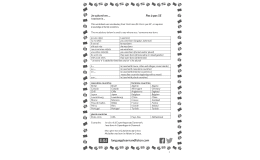
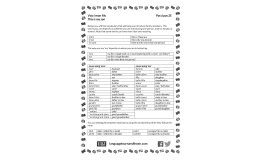
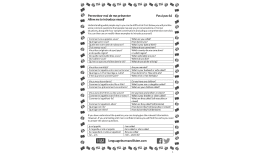
In this worksheet you will learn the vocabulary to describe the extended family. You will also learn how to describe relationships and avoid using 'apostrophe s' (for example, le père de ma mère = my mum's dad). There is 1 exercise of phrases to translate from French into English and all necessary vocabulary is provided. Suitable for all levels of ability. Answers provided.
Related resources
More resources teachers may find useful
24 related resources were found using this product's title, contributor, categories and tags.

In the classroom
Teaching tips & learning objectives

Learning objectives
Name family relationships in French in both masculine and feminine forms, including step, half and in-law relations
Choose the correct article - le, la or l' - for a family noun according to its gender and first letter
Use mon and ma correctly, including mon before a feminine noun that starts with a vowel

Teaching tips
The twenty-four sentences all use the same frame - one relative, de, another relative, est, the answer - so students can be pushed for speed once the vocabulary is secure
The pattern reverses neatly for oral practice: read the English translation from the answers page and ask for the French sentence back
The compound terms repay a minute of explicit teaching - beau- and belle- cover both step and in-law relations, demi- marks half and step siblings, and arrière- marks a great-grandparent

Skills covered
French family vocabulary - students meet paired masculine and feminine terms across seventeen relationships, from husband and wife out to great-grandparents.
Noun gender - every term is printed with its article, so le, la and l' are learned alongside the word rather than as a separate rule.
Possessive adjectives - mon and ma replace the article in all twenty-four exercise sentences, with mon also required before a vowel.
Good to know
Questions teachers ask about this resource
Why are the sentences built as "the father of my mother" rather than with an apostrophe?
Because French has no possessive apostrophe. The sheet states it directly and then drills the alternative: relationships are expressed with de, so "my sister's husband" becomes "le mari de ma soeur", and all twenty-four exercise sentences follow that frame.
Which direction do the translations run?
French into English. Every one of the twenty-four sentences is printed in French with a ruled line underneath for the English, and the answers page gives the English versions. Reading the answers aloud and asking for the French back turns the same page into a reverse exercise.
How does the vocabulary table handle gender?
In two columns - masculine terms on the left behind le, feminine on the right behind la, and l' wherever the noun opens with a vowel, as in l'oncle and l'arrière grand-père. One entry appears in both columns: l'enfant is glossed as child (boy) and child (girl), because the noun does not change form.

No reviews yet
Downloaded this resource? Tell other teachers how it went.
Resource details
Concepts & topics
Core concepts
 Core concepts
French vocabulary
Family members
Noun gender
Possessive adjectives
 Topics
Explore more
Categories this resource belongs to
Explore related searches
More to explore
You may also like