Hair and Fiber Evidence Analysis

Science, Life Sciences, Physics, Biology, Human Body, Chemistry, Resources for Teachers, Research, Classroom Management, Community Building
Worksheets & Printables, Workbooks, Worksheets, Word Searches, Teacher Tools, Lesson Plans, Quizzes and Tests, Quizzes, Tests, Assessments


About This Product
Unlock the Secrets of Forensic Science with this All-Inclusive Hair and Fiber Evidence Unit!
Are you looking to captivate your students with a real-world scientific investigation? Transform your classroom into a crime lab with this comprehensive, no-prep Hair and Fiber Evidence Unit! This resource is expertly designed to engage middle and high school students, making complex forensic concepts accessible, interactive, and exciting.
From the foundational Locard's Exchange Principle to the intricate details of microscopic analysis, this unit guides students on a journey to become trace evidence analysts. They will learn to differentiate human from animal hair, identify natural and synthetic fibers, and use their knowledge to solve compelling, scenario-based crimes.
What’s Inside This Complete 40-Page Unit?
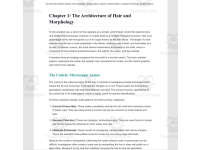
Part 1: In-Depth Informational Text (11 pages): A professionally written, student-friendly "textbook" covering:
Introduction to Trace Evidence & Locard's Exchange Principle
Chapter 1: Hair Morphology (Cuticle, Cortex, Medulla)
Chapter 2: Natural vs. Synthetic Fibers (Cotton, Wool, Nylon, Polyester)
Chapter 3: The Comparison Microscope
Chapter 4: Transfer Evidence & Case Study Analysis
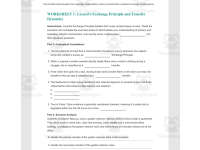
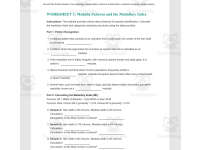
Part 2: Student Workbook (15 pages): Ten engaging worksheets that build skills progressively. Activities include fill-in-the-blanks, calculations (Medullary Index), critical thinking questions, and a culminating case study that requires students to synthesize all their knowledge.
Part 3: Teacher Resources & Visuals (14 pages): Everything you need to teach with confidence!
Teacher Implementation Guide: Suggested pacing, learning objectives, and differentiation strategies for both support and enrichment.
NGSS Alignment: Clearly outlined alignment with Next Generation Science Standards (HS-LS1-2, SEP, CCC).
3 High-Clarity Visual Aids: SVG diagrams illustrating Hair Morphology, Fiber Classification, and Locard's Principle—perfect for printing or projecting.
Comprehensive Answer Key: A complete, detailed answer key for all ten student worksheets.
Key Concepts Covered:
Forensic Science, Trace Evidence, Locard's Exchange Principle, Hair Morphology, Cuticle, Cortex, Medulla, Medullary Index, Natural Fibers, Synthetic Fibers, Comparison Microscopy, Primary & Secondary Transfer, Crime Scene Investigation (CSI).
This print-and-go resource is perfect for forensic science electives, biology, or integrated science classes. Watch your students' engagement and critical thinking skills soar as they learn to give a voice to the "silent witnesses" of crime.
Keywords: Forensic Science, Trace Evidence, Locard's Exchange Principle, Hair Morphology, Cuticle, Cortex, Medulla, Medullary Index, Natural Fibers, Synthetic Fibers, Comparison Microscopy, Primary & Secondary Transfer, Crime Scene Investigation (CSI), DNA Phenotyping, Genetics, AP Biology, Forensics, Criminal Justice, Biotechnology, STEM, High School Science, NGSS, Case Study, Worksheets, Answer Key, Genetic Ethics, SNP, Ancestry, Genetic Genealogy, IGG, Cold Case, DNA, High School, College, Biology, Criminology, Law, Student Workbook, Teacher Resources, Golden State Killer, GEDmatch, DNA Analysis, Forensics Activity, Critical Thinking, DNA Fingerprinting, DNA Profiling, PCR, Gel Electrophoresis, STR Analysis, Honors Biology, Molecular Biology, Crime Scene Investigation, CSI, Lab Procedures, Activities, No Prep, CODIS, Paternity Test, Electropherogram, Hardy-Weinberg, Random Match Probability, Bloodstain Pattern Analysis, BPA, Angle of Impact, Area of Convergence, Area of Origin, Forensics Worksheets, Forensics Lab, CTE, Trigonometry Application, Physics in Forensics, Deductive Reasoning, BPA workbook, forensic science high school, blood spatter analysis, trigonometry forensics, crime scene reconstruction, velocity spatter, forensic worksheets, Serology, Blood Evidence, Blood Typing, Kastle-Meyer Test, Luminol, Chemistry, Lab, Lesson Plan, Unit Plan, Case Scenarios, Digital Resource, Printable, 3D Reconstruction, Virtual Forensics, Law Enforcement, LiDAR, Photogrammetry, Digital Forensics, VR, Teacher Guide, No-Prep, Sub-Ready, Homeschool, Handwriting Analysis, Questioned Documents, Forgery Detection, Forensics Lesson Plan, Digital, Ink Chromatography, Document Alteration, Tool Mark Analysis, Physical Matching, Evidence, Grades 9-12, Visual Aids, Striation, Casting, Impression Evidence, Shoe and Tire Tracks, Gait Analysis, Class vs Individual Characteristics, Career and Technical Education, Sub Plan, Workbook, Activity, Print and Go, forensic science curriculum, Evidence Collection, Locard's Principle, first day of school activities, back to school, first day jitters, all about me, all about me worksheets, our class is a family, our class is a family activity, first day jitters activities, first day of school crown, find someone who, a letter from your teacher on the first day of school, math about me, back to school word search, find someone who back to school activity, all about me craft, color by number back to school, meet the teacher template editable, would you rather back to school, morning meeting slides, classroom jobs, Middle School Science, Forensic Photography, Oblique Lighting, UV/IR Photography, Exposure Triangle, Scale Placement, Photo Log, Hands-on, Project-Based Learning, Capstone .
Why Parents/Schools Love It:
Comprehensive & All-in-One: This is a "no-prep" resource, saving teachers valuable time on lesson planning, resource creation, and assessment design. Everything from the text to the answer key is included.
Promotes Critical Thinking: It moves beyond memorization. Students must analyze data, make calculations, draw logical conclusions, and synthesize information in the case studies.
Real-World Science Application: It connects abstract scientific concepts (like microscopy and cell structure) to a high-interest, practical field. This answers the student question, "When will I ever use this?"
Standards-Aligned: Explicit alignment with the Next Generation Science Standards (NGSS) makes it easy for teachers in public schools to justify its use and integrate it into their curriculum maps.
Engaging and Motivating: The "CSI" theme is a powerful hook for students, increasing participation and making learning fun and memorable.
Target Audience (Classes) :
Based on the content's depth, the inclusion of calculations, and the explicit alignment with High School NGSS standards, target:
High School Forensic Science Electives (Grades 9-12): This is the perfect primary audience. The unit is a turnkey lesson for this exact topic.
High School Biology or Integrated Science (Grades 9-10): Excellent as an application-based unit on structure and function, microscopy, and scientific methodology.
Advanced/Gifted Middle School Science (Grades 7-8): The material is highly engaging and can be used for an advanced or honors class looking for a challenging and exciting topic.
Copyright/Terms of Use:
This Book was copyrighted by Syed Hammad Rizvi. This resource is for personal and single classroom use only. You may not alter, redistribute, or sell any part of this resource. In other words, you may not put it on the Internet where it could be publicly found and downloaded.
If you want to share this resource with colleagues, please purchase additional licenses from Teachsimple. Thank you for respecting these terms of use.
This product is happily brought to you by Syed Hammad Rizvi
Resource Tags
0 Reviews
Check out these other great products