Health Bell Ringers FULL YEAR - 180 Daily Warm-Ups (Grades 6-12)



About This Product
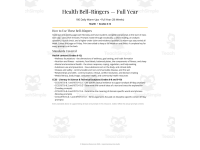
This is a full year of health bell-ringers - 180 short daily prompts that give students a steady, five-minute way to begin class. The set spans an entire course. It opens with the dimensions of wellness, SMART goal setting and how habits form, then moves through the macronutrients, reading a Nutrition Facts label, building a balanced plate, the five components of health-related fitness, exercise and recovery, sleep and the adolescent body clock, and daily hygiene and hydration habits.
The second unit covers mental and emotional health: mental health as a range rather than a diagnosis, naming emotions precisely, the stress response and the difference between eustress and distress, problem-focused and emotion-focused coping, self-esteem and realistic self-talk, emotional regulation and impulse control, empathy and perspective-taking, recognizing when a friend needs help, and building a support system. The third unit covers substance use, disease and safety: the brain's reward pathway and how tolerance and dependence develop, tobacco and nicotine, vaping aerosol and nicotine salts, alcohol and why judgment is affected before coordination, prescription and over-the-counter medicine safety, communicable and non-communicable disease, and first aid using check, call, care. The final unit covers relationships and skills: boundaries and respect, active listening and I statements, refusal skills, conflict resolution, bullying and bystander action, media literacy, body image, the decision-making process, and consumer and community health resources.
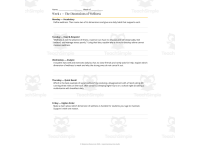
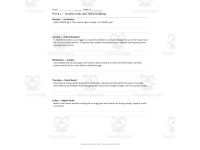
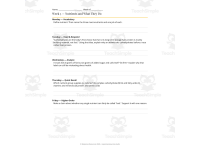
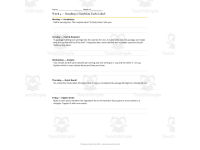
Prompts are arranged into 36 weekly pages, each holding five days of work a teacher can hand out on Monday and collect on Friday. Every week rotates through the same five kinds of thinking: a term used rather than recited, a short reading with a question that requires reading it, an analysis problem, a quick multiple-choice check, and a question that asks students to state a claim and back it with evidence. That last one appears every Friday for 36 weeks because health is a course built on making decisions and defending them, not on recall alone. Correct answers on the multiple-choice day are distributed evenly across all four positions, so there is no pattern for students to guess.
The scope is deliberately classroom-safe, and that is stated up front rather than left for a buyer to discover. There is no sexual-health content anywhere in the set - no contraception, no sexually transmitted infections, no dating scenarios. Substance-use prompts cover effects on the body, statistics and refusal skills, with no doses, no methods of use, and nothing that presents use as appealing. Mental-health prompts stay in the third person, so no student is asked to disclose personal history or to diagnose themselves or a friend, no prompt covers self-harm methods, and help-seeking points to a trusted adult, a school counselor, or a crisis line. Body-image prompts address how media images are constructed rather than weight, calories or dieting. First aid teaches recognizing an emergency and getting help rather than performing procedures.
Every reading passage is original writing, so there is no third-party text to clear and no textbook is required. Everything is print-first: one clean PDF that copies well, uses little ink, prints two-sided so a full week fits on a single sheet, and needs no student accounts, devices or logins. A complete answer key covers all 180 prompts, and a standards page lists the CCSS literacy in science and technical subjects codes the set actually addresses - each one earned by a recurring prompt slot rather than claimed in general. Built for grades 6 through 12, it works as a daily opener while attendance is taken, as an exit slip at the end of the period, as spiral review before an exam, or as ready-made work to leave for a substitute teacher on short notice.
Resource Tags
0 Reviews
Check out these other great products