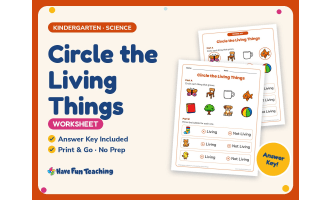
Is it a Living Thing Worksheet – 1st Grade Practice + Answer Key







About This Product
Build strong living and non-living things skills with the Is it a Living Thing Worksheet. This first grade science printable keeps the focus on one skill so students can practice it with confidence.
Learning objective: Students will build accuracy and confidence with living and non-living things through short, focused practice that reinforces what was taught in class.
Why it works: Each page targets one skill, so students get meaningful repetition without feeling overwhelmed. The layout is clean and uncluttered, which helps young learners focus on the task instead of the decorations.
What's included:
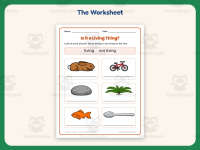
1 printable worksheet page
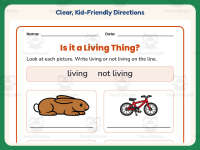
Clear, student-friendly directions
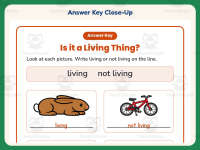
Answer key (1 page)
Cover page
How it's organized: The page opens with these directions: "Look at each picture. Write living or not living on the line." Students then complete the practice items in order and check their work before turning it in.
Grade level: Designed for first grade students. It also works well for kindergarten and second grade students who need extra practice or a fresh review.
How to use it: It works well for whole-class lessons, small groups, early finishers, homework, review days, intervention time, and sub tubs.
Answer key: An answer key is included, so you can check work quickly or let students self-correct.
Teaching tips and variations:
Use it as an exit ticket the day after a living and non-living things lesson to see who needs more support.
Send it home as homework so families can see what their child is learning in science.
Slip the page into a sheet protector so students can practice again with dry-erase markers.
Skills covered: Living and Non-Living Things, Science
File type: PDF, ready to print.
Number of pages: 3 (1 worksheet page, 1 answer key page, 1 cover page).
Looking for more living and non-living things practice? Visit the Have Fun Teaching shop for related worksheets, reading passages, and activities for first grade. Have Fun Teaching on Teach Simple
Resource Tags
0 Reviews
Check out these other great products