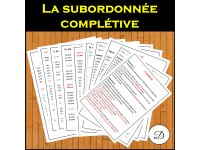
La subordonnée complétive: Explications et exercices corrigés

- Grades
- Grades 8–12
- Pages
- 10
- File type
- Answer key
- Included


- Subject
- Foreign Languages, French
- Topic
- French grammar, Subordinate clauses
- Resource types
- Worksheets
- Answer key
- Included
Product description
From the author
Ce document est une ressource claire et complète pour comprendre et maîtriser la subordonnée complétive conjonctive. Il combine explications détaillées, exemples pratiques et exercices variés avec corrigés pour progresser efficacement.
Ce que vous trouverez dans ce guide :
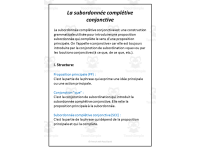
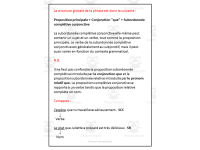
Structure : Comprendre comment les complétives s’intègrent dans une phrase.
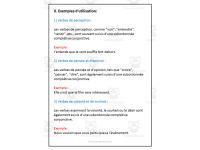
Exemples d’utilisation : Illustrations simples et concrètes.
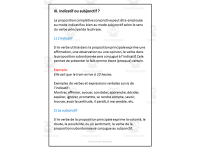
Indicatif ou subjonctif ? : Savoir quand choisir l’un ou l’autre.
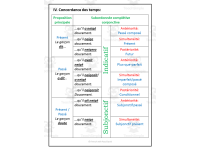
Concordance des temps : Appliquer les règles temporelles de manière fluide.
Exercices corrigés :
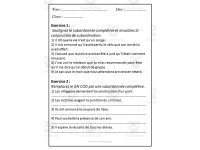
Soulignez la subordonnée complétive et identifiez la conjonction.
Transformez un groupe nominal (GN) COD en subordonnée complétive.
Complétez des phrases avec le bon mode : indicatif ou subjonctif.
Reliez deux phrases en une seule avec une complétive au temps adapté.
Pour qui ?
Élèves du secondaire ou apprenants en français langue étrangère souhaitant approfondir leur grammaire.
Enseignants cherchant un support pédagogique structuré.
Pourquoi choisir ce document ?
Explications claires et accessibles.
Exercices variés pour s’exercer et vérifier ses connaissances.
Parfait pour un apprentissage autonome ou guidé en classe.
Related resources
More resources teachers may find useful
24 related resources were found using this product's title, contributor, categories and tags.


In the classroom
Teaching tips & learning objectives

Learning objectives
Students identify the subordonnée complétive conjonctive within a sentence and distinguish it from a relative clause introduced by the same word "que".
Students select correctly between the indicative and subjunctive mood in a completive clause based on the meaning of the main-clause verb.
Students transform a noun-phrase direct object into a full subordinate clause.

Teaching tips
Present the structure diagram and the perception/opinion/volition verb groupings before assigning Exercise 1, since the file gives no additional explanation beyond these notes.
Review the tense-concordance chart with students before the mood-selection exercises, which require switching between indicative and subjunctive conjugations.
Have students self-check with the included Corrigé after each student exercise page rather than waiting until the end.

Skills covered
Clause identification — students underline the subordonnée complétive and box its introducing conjunction "que" across five sentences.
Mood selection (indicatif vs. subjonctif) — students conjugate verbs correctly within a completive clause based on whether the main verb expresses perception, opinion, or volition.
Sentence transformation — students convert a noun-phrase direct object into a full subordinate clause.
Good to know
Questions teachers ask about this resource
How does the file distinguish the conjunction "que" that introduces a subordonnée complétive from the relative pronoun "que"?
It notes that the completive clause relates to a verb in the main clause, while a relative clause introduced by "que" completes a noun.

No reviews yet
Downloaded this resource? Tell other teachers how it went.
Resource details
Concepts & topics
Core concepts
 Core concepts
Subordonnée complétive conjonctive
Mode indicatif
Mode subjonctif
Concordance des temps
 Topics
More to explore
You may also like