Locard’s Exchange Principle & Transfer Evidence

STEM, Science, Life Sciences, Human Body, Biology, Physics, Psychology, Social Studies, Research, Resources for Teachers
Worksheets & Printables, Workbooks, Worksheets, Word Searches, Teacher Tools, Assessments, Lesson Plans, Quizzes and Tests, Quizzes, Tests


About This Product
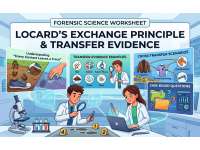
Transform your classroom into a crime lab with this comprehensive, no-prep forensic science unit on Locard's Exchange Principle and the science of trace evidence! This engaging resource is designed to captivate your middle or high school students, turning them into sharp-eyed investigators who understand that "every contact leaves a trace."
Perfect for any Forensic Science, Criminal Justice, Biology, or general Science class, this unit breaks down complex theories into understandable, hands-on activities. Students will move from passive reading to active investigation, analyzing realistic case studies and applying critical thinking skills to solve crimes.
WHAT'S INCLUDED IN THIS 51-PAGE UNIT:
Part 1: In-Depth Reading & Case Studies (13 pages): A detailed guide covering the foundational theory of trace evidence.
Chapter 1: The Theory of "Every Contact Leaves a Trace"
Chapter 2: The Typology of Transfer Evidence (Hair, Fibers, Soil, etc.)
Chapter 3: The Mechanics of Cross-Transfer
Chapter 4: Three engaging, age-appropriate Case Studies with application questions that challenge students to apply what they've learned.
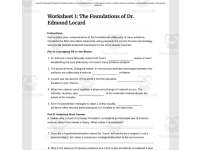
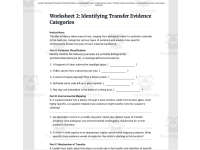
Part 2: Student Workbook (21 pages): Ten progressive worksheets that build skills from basic vocabulary to complex scenario analysis.
10 Unique Worksheets: Activities include fill-in-the-blanks, evidence classification, scenario dissection, critical thinking questions, and a final "Master Investigator" project where students design their own crime scene!
Topics Covered: Primary vs. Secondary Transfer, Cross-Transfer, Microscopic vs. Macroscopic Traces, Environmental Factors, Crime Scene Deconstruction, and more.
Part 3: Complete Teacher Resources (17 pages): Everything you need to teach this unit with confidence!
Comprehensive Answer Key: Detailed answers for all 10 worksheets, saving you valuable prep time.
Instructional Visuals: Three high-contrast, print-friendly diagrams (The Evidence Triangle, Typology of Evidence, and Cross-Transfer Flowchart) perfect for classroom display or student handouts.
Teacher Implementation Guide: A goldmine of instructional support, including:
Clear Learning Objectives.
Suggested 5-Day and condensed 3-Day Pacing Guides.
Differentiation Strategies for both struggling and advanced learners.
Tips for addressing common student misconceptions.
► Key Concepts Covered:
Locard's Exchange Principle
Trace Evidence (Biological, Manufactured, Environmental)
Primary Transfer (Direct Transfer)
Secondary Transfer (Indirect Transfer)
Cross-Transfer
Evidence Persistence and Degradation
Microscopic vs. Macroscopic Evidence
Bring the thrill of a CSI lab to your classroom and watch your students' critical thinking skills come alive. Download now to get started!
This print-and-go PDF resource is your complete solution for teaching one of the most fundamental principles in forensic science. Watch your students' engagement and critical thinking skills soar as they learn to see the invisible world of evidence all around them.
Keywords: Forensic Science, Forensics, Locard's Exchange Principle, Trace Evidence, Crime Scene Investigation, CSI Activity, High School Science, Middle School Science, STEM, Criminal Justice, Worksheets, Handouts, Printables, No Prep, Sub Plans, Case Studies, Critical Thinking, Differentiated Instruction.
Why Parents/Schools Love It:
Promotes Real-World Critical Thinking: Instead of just memorizing facts, students apply scientific principles to solve complex, story-driven puzzles, developing crucial analytical and problem-solving skills.
Comprehensive & Time-Saving: This is a complete, "print-and-go" unit. The included pacing guides, differentiation strategies, and full answer key save teachers hours of planning and preparation time.
Engages All Learners: With exciting case studies and hands-on analysis, it captures the interest of students who might be disengaged by traditional science lessons. The built-in differentiation guide ensures both struggling and advanced learners are challenged appropriately.
Cross-Curricular Connections: This resource seamlessly blends science (biology, physics, geology) with reading comprehension, logical reasoning, and writing, making it a valuable tool across multiple subject areas.
Builds Foundational STEM Skills: Students learn the core of the scientific method—observation, hypothesis, and analysis—in the thrilling context of crime scene investigation, sparking interest in future STEM careers.
Target Audience :
Based on the content's complexity, vocabulary, and the explicit mention in the teacher's guide, target the following:
Primary Target: High School Forensic Science classes (Grades 9-12). This material is perfectly aligned with the standard curriculum for an introductory forensics course.
Secondary Target:
Advanced Middle School Science / STEM Electives (Grades 7-8). The concepts are accessible, and the case studies are engaging for this age group, especially with the teacher guidance provided.
High School Biology or Integrated Science Classes (Grades 9-10) as a special, high-interest unit.
Criminal Justice or Law Enforcement Classes (Grades 10-12) to provide foundational scientific context.
Copyright/Terms of Use:
This Book was copyrighted by Syed Hammad Rizvi. This resource is for personal and single classroom use only. You may not alter, redistribute, or sell any part of this resource. In other words, you may not put it on the Internet where it could be publicly found and downloaded.
If you want to share this resource with colleagues, please purchase additional licenses from Teachsimple. Thank you for respecting these terms of use.
This product is happily brought to you by Syed Hammad Rizvi
Resource Tags
0 Reviews
Check out these other great products