No Dogs Allowed, by Sonia Manzano Interactive Read-Aloud Activities


- Grades
- Grades 2–4, Elementary
- Pages
- 41
- File type
- Answer key
- Included


- Subject
- ELA, Reading, Reading Comprehension
- Topic
- reading comprehension, reading
- Resource types
- Read Alouds, Activities
- Answer key
- Included
About this resource
What's inside this resource
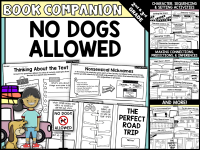
This picture book companion is a comprehensive supplemental resource for No Dogs Allowed, by Sonia Manzano. It includes 35 ready-to-use, print-and-go activities designed to meet the needs of all learning levels. Created with teachers in mind, this resource saves you time while providing students with engaging opportunities to demonstrate their understanding and newly acquired knowledge through interactive read-alouds. The activities cover a range of skills, from basic comprehension to critical thinking.
Included in this resource:
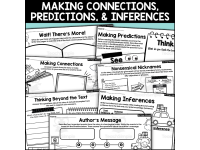
Making Predictions
Judging by the Cover
Story Elements
Sequencing
Recalling Events in Chronological Order
Trip to the Enchanted Park
Summary
Story Event Sort
Making Connections
Making Inferences
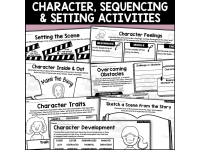
Character Feelings (Iris)
Character Inside & Out (Iris)
Character Inside & Out (Shorty the Fortune-teller)
Character Inside & Out (Mami the Busy)
Character Inside & Out (Papi the Clever)
Character Development (Iris)
Character Change (Iris)
Character Traits (Shorty the Fortune-teller)
Character Traits (Iris, Shorty the Fortune-teller, Mami the Busy, & Papi the Clever)
Overcoming Obstacles
Sketch a Scene From the Story
Setting the Scene
Thinking About the Text
Thinking Beyond the Text
Theme
The Why Behind the Sign
Author's Message
Dear Diary
Packing for a Trip
Nonsensical Names
Crossword Puzzle
Word Search Puzzle
Wait... There's More!
Book Review
The Perfect Road Trip Brochure
This resource is for extension read-aloud activities only. The book is not included.
Related resources
More resources teachers may find useful
24 related resources were found using this product's title, contributor, categories and tags.

In the classroom
Teaching tips & learning objectives

Learning objectives
Students describe how the main character's feelings and traits change over the course of the story, citing specific events.
Students identify the story's theme and central message and support their choice with text evidence.
Students sequence major events in the story in chronological order.

Teaching tips
Spread the activities across a week or more rather than assigning them all at once, as the file's own teacher notes recommend.
Project the book under a document camera so students can see the illustrations clearly, since the teacher notes state the illustrations are necessary to tell the story.
Choose activities that fit your teaching style and students' needs rather than assigning the full set, since the file's teacher tips explicitly frame the collection as a menu rather than a fixed sequence.

Skills covered
Character analysis — students describe what four different characters say, think, do and feel, then track how Iris's traits and feelings change across the story.
Theme and central message identification — students determine the story's theme and author's message, citing text evidence to support their choice.
Story structure and sequencing — students recount major events in chronological order and complete a Somebody-Wanted-Because-But-So summary.
Good to know
Questions teachers ask about this resource
How are the four character-study pages different from each other?
Each of the four pages (Iris, Shorty the Fortune-teller, Mami the Busy, and Papi the Clever) uses the same 'Character Inside & Out' structure, asking students to describe what that specific character says, thinks, does and feels, so the set builds a comparative profile across the whole cast.
What does the road-trip brochure activity ask students to do?
Students fill out a brochure sharing their own opinions on what would make the perfect road trip, extending the story's family-outing theme into a personal, opinion-based writing task.

No reviews yet
Downloaded this resource? Tell other teachers how it went.
Resource details
Concepts & topics
Core concepts
 Core concepts
Character analysis
Theme and central message
Story sequencing
Inference-making
 Topics
Explore more
Categories this resource belongs to
Explore related searches
More to explore
You may also like