STEM Boat Challenge Using a Paddle Boat Design



About This Product
Paddle Boat STEM Challenge for Middle School Students.
My Paddle Boat Challenge is an excellent way to get your students' excited for STEM in an engaging hands-on way. It also is a great way to introduce them to the world of engineering.
In this activity, students will work in groups to design and build a Paddle Boat.
By doing this activity, your students will experience the process of creating something new as they brainstorm, plan, design, and test their ideas.
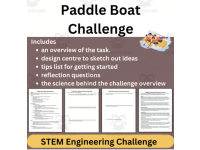
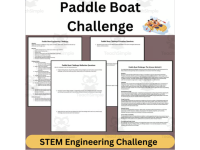
Your STEM Challenge comes with:
A full set of instructions
Reflection questions
An explanation on the science behind the challenge
Instructions on creating their design
Tips for getting started on the challenge
The Paddle Boat Challenge is an activity your students will enjoy. It will allow them to:
explore how shapes and structure affect stability.
learn principles of weight distribution.
use the engineering design process.
develop perseverance, resourcefulness and an ability to learn from setbacks and mistakes.
This activity is easy to use with step-by-step instructions and is adaptable to different learning styles and abilities as you can customize it however you like to suit your students. It encourages students to embrace productive failure and to work together to create something tangible.
Resource Tags
0 Reviews
Check out these other great products