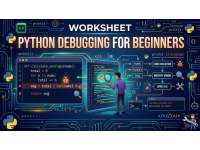
Python Debugging for Beginners

Science, Technology, Computer Science, Engineering, Research, Resources for Teachers, Classroom Management, Community Building, Special Resources, Special Education Needs (SEN)
Teacher Tools, Assessments, Lesson Plans, Quizzes and Tests, Quizzes, Tests, Worksheets & Printables, Workbooks, Worksheets, Word Searches


About This Product
Transform Frustrated Students into Confident Code Detectives with this Complete Python Debugging Unit!
Are your students hitting a wall of red error messages? Do they get stuck and frustrated, saying "my code is broken!" without knowing where to start? This comprehensive Python Debugging resource is the cure. It’s designed to shift students' mindsets from seeing errors as failures to viewing them as clues on the path to mastery.
This is not just another worksheet packet. It's a complete, scaffolded curriculum that teaches the art and science of debugging. Through a structured framework, detailed explanations, and targeted practice, students will learn to systematically identify, analyze, and resolve the most common bugs in Python, building resilience and critical thinking skills that go far beyond the computer science classroom.
What's Included in this 44-Page Resource:
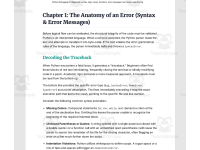
Part 1: The Debugging Guide (10 Pages): A student-friendly textbook portion that introduces the "Iterative Diagnostic Framework." It clearly explains core concepts like:
Decoding Traceback & Error Messages (SyntaxError, TypeError, NameError)
Mastering the Flow of Control (Logic Errors, Infinite Loops, Off-by-One Errors)
Modular Troubleshooting (Functions, Scope, the return vs. print fallacy)
The Detective's Toolkit (Code Tracing and Designing Test Cases)
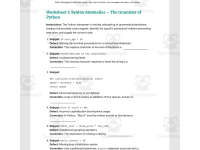
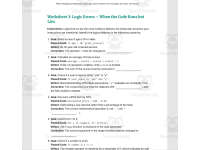
Part 2: The Student Workbook (21 Pages): Nine targeted, hands-on worksheets that provide essential practice and reinforce the concepts from the guide. Perfect for in-class activities, homework, or sub plans.
Worksheet 1: Syntax Anomalies
Worksheet 2: Error Messages
Worksheet 3: Logic Errors
Worksheet 4: Debugging Loops
Worksheet 5: Function Failures
Worksheet 6: Code Tracing
Worksheet 7: Designing Test Cases
Worksheet 8: Variable State & Data Types
Worksheet 9: Diagnostic Output (Using print())
Part 3: Teacher Resources (13 Pages): Everything you need to implement this unit flawlessly and save precious prep time!
Instructional Visuals: Three high-quality, printable diagrams (The Debugging Lifecycle, Anatomy of a Python Traceback, Loop State Tracing Matrix) perfect for posters, handouts, or slide decks.
Comprehensive Answer Key: Clear, concise answers for every single question in the student workbook.
Teacher Implementation Guide: A complete guide with pedagogical philosophy ("Normalizing Failure"), granular topic implementation ideas, and grade-banded differentiation strategies for Middle School (Grades 6-8) and High School (Grades 9-12).
This resource is perfect for any introductory Python course, AP Computer Science Principles, or STEM/coding club. Empower your students to become resilient, independent problem-solvers. Download today and watch them learn to love the bug!
Keywords: Python, Debugging, Computer Science, Programming, Coding for beginners, Error handling, Syntax error, Logic error, High school, Middle school, STEM, AP Computer Science, Digital Resource, Printable Worksheets, Teacher Guide, Answer Key, Code Tracing, python debugging, python workbook, logic errors, syntax errors, python traceback, computer science curriculum, python for beginners, python teacher resources, grades 6-12, test driven development, python functions scope, infinite loops, off by one error, Python SyntaxError, NameError, TypeError, IndexError, IndentationError, off-by-one errors, return vs print, variable scope, test-driven development (TDD)
Why Educators and Caregivers Choose This Resource :
Builds Critical Life Skills: This goes beyond coding; it teaches a systematic, analytical approach to problem-solving. Students learn resilience and how to handle frustration constructively, a skill valuable in any field.
Saves Teachers Valuable Time: This is a "plug-and-play" unit. With a comprehensive guide, ready-to-print worksheets, visual aids, and a full answer key, it eliminates hours of prep work for busy educators.
Fosters Independent Learners: The resource is designed to empower students to solve their own problems. It moves them away from immediately asking for help and toward using the computer's feedback to find a solution themselves.
Adaptable for Different Grade Levels: With built-in differentiation strategies, a teacher can use this same resource for a 7th-grade introductory class and a 10th-grade computer science course, ensuring it’s a long-lasting investment.
Makes Abstract Concepts Concrete: The visual diagrams and hands-on code tracing exercises take abstract ideas like "scope" and "variable state" and make them tangible and understandable for young learners.
Designed For :
Based on the content, language, and the explicit "Teacher Implementation Guide" (pages 42-44), target:
Primary Target: Middle School and High School Computer Science Teachers (Grades 6-12).
Specific Courses: Introductory Programming/Coding, Computer Science Principles (including AP CSP), and introductory Python-specific classes.
Secondary Target: STEM club advisors, after-school coding program instructors, and homeschooling parents teaching intermediate coding concepts.
The document provides clear differentiation strategies for both Middle School (Grades 6-8) and High School (Grades 9-12), making it highly versatile for this entire age range.
Terms of Use & Copyright Notice
© Miss Iffat Rizvi. All rights reserved.
Thank you for purchasing this educational resource. This product is protected by copyright law and is intended solely for personal and individual classroom use.
By downloading this resource, you agree to the following terms:
Permitted Use: You may use these materials with your own students.
Restrictions: You may not modify, redistribute, resell, or share any part of this document.
Digital Sharing: Posting this resource on the internet, public websites, or shared school drives where it can be publicly accessed or downloaded is strictly prohibited.
Sharing with Colleagues
If your coworkers or department peers would like to use this resource, please purchase additional multi-user licenses through Teachsimple. Thank you for respecting the time, effort, and intellectual property that went into creating this product.
Resource Tags
0 Reviews
Check out these other great products