Shrek Irony Worksheets – Verbal, Situational, Dramatic
- Grades
- Grades 8–10
- Pages
- 7
- File type
- Answer key
- Included


- Subject
- ELA, Reading Comprehension
- Topic
- Irony, Shrek
- Resource types
- Worksheets
- Answer key
- Included
- Standards
- RL.8.6
Product description
From the author
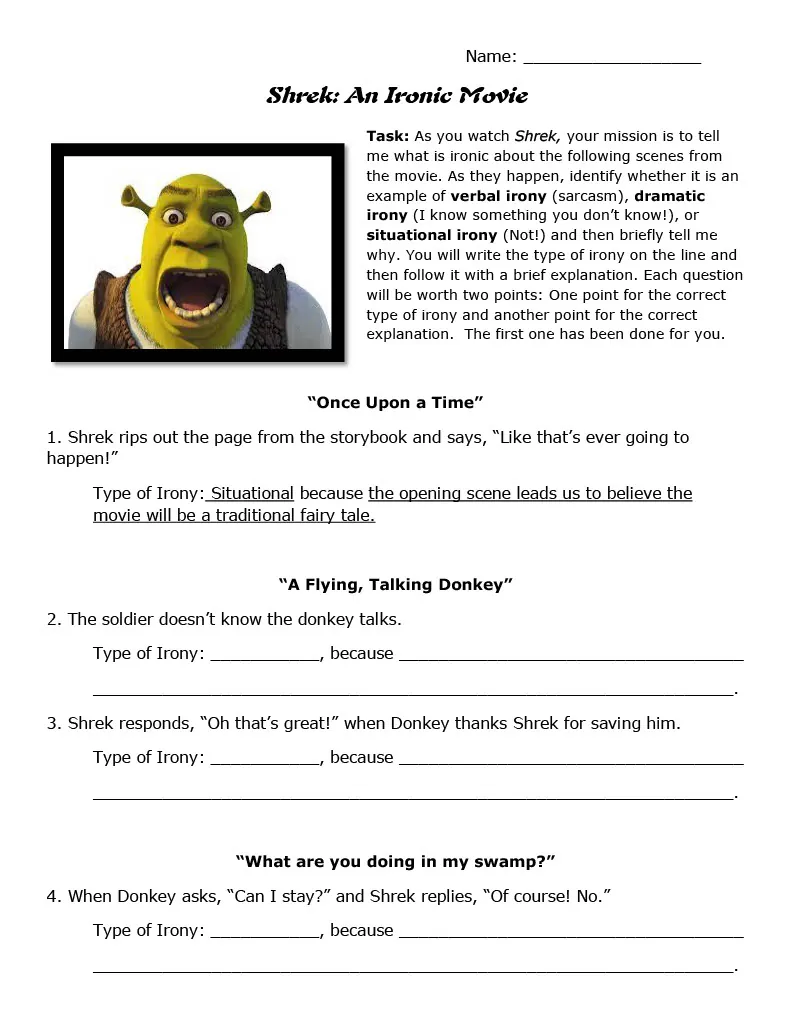
This resource is a set of Shrek Irony Worksheets.
This is all about using Shrek the movie to teach irony.
Students will learn about:
- verbal irony
- situational irony
- dramatic irony
As students watch the movie, they will identify what is ironic about certain scenes listed in the worksheet. They will also identify what type of irony it is.
Answer key included.
Related resources
More resources teachers may find useful
24 related resources were found using this product's title, contributor, categories and tags.


In the classroom
Teaching tips & learning objectives

Learning objectives
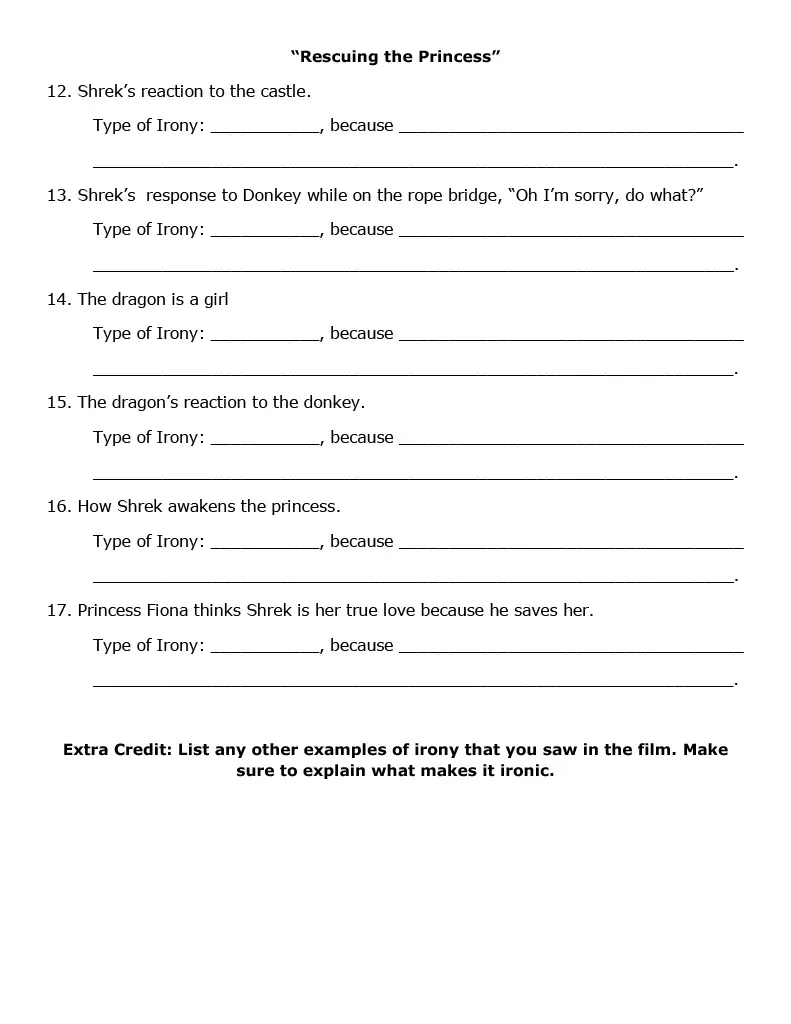
Students will classify seventeen film moments as examples of verbal, dramatic, or situational irony.
Students will explain the reasoning behind each irony classification using details from the scene.
Students will identify additional examples of irony in the film beyond the seventeen provided (extra credit).

Teaching tips
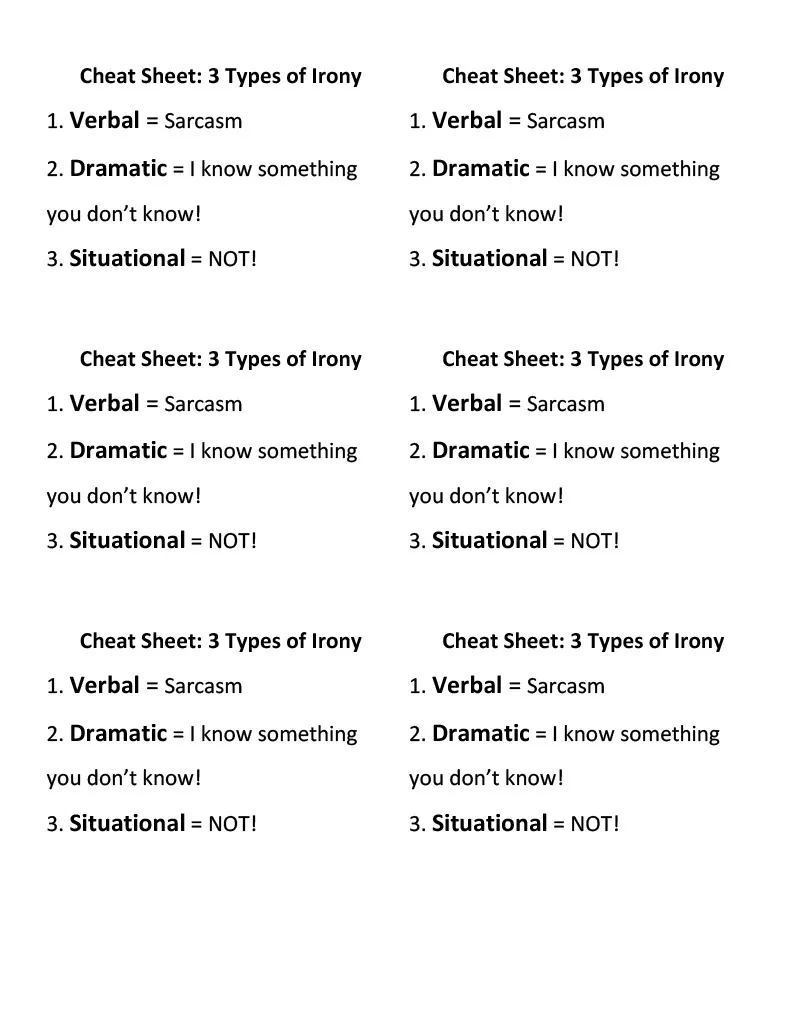
Distribute the reference slips, then expand the definitions: verbal irony involves a difference between literal words and intended meaning; sarcasm is one use. Situational irony requires a meaningful reversal of expectation, not merely something surprising.
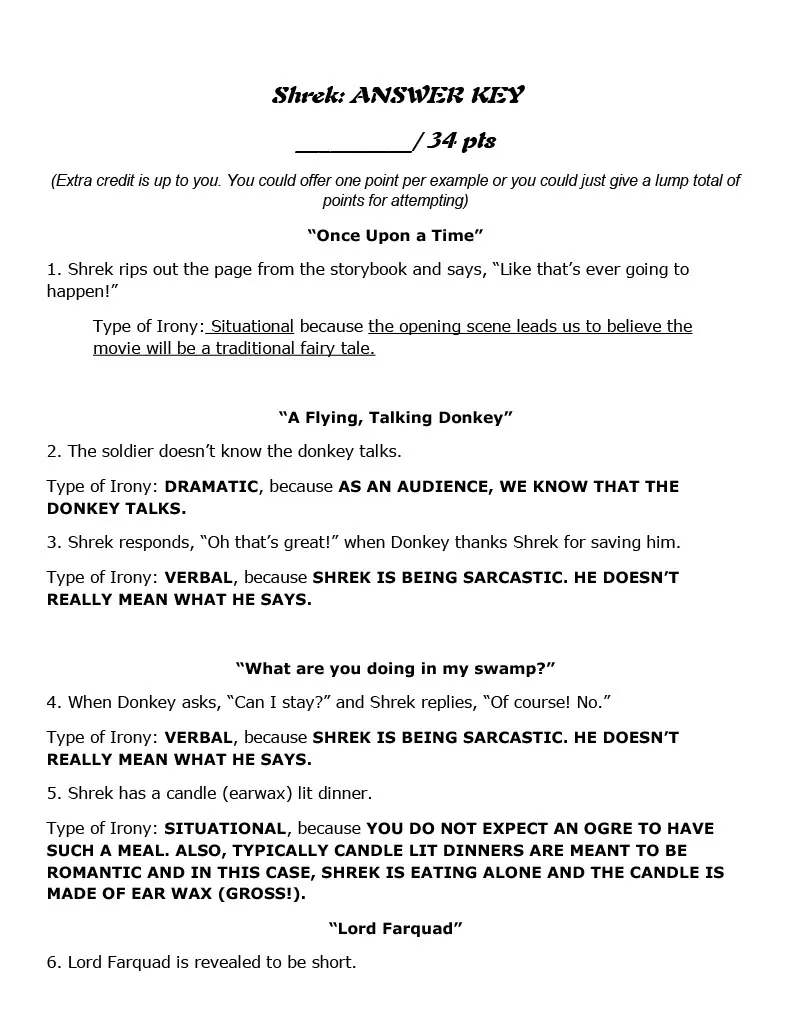
Treat the key’s classifications as models for discussion and allow alternatives supported by the scene. For example, the dragon being female alone is not sufficient proof of irony.
The first of seventeen items is already answered. If grading only the remaining sixteen at two points each, use 32 possible points rather than the key’s printed 34.

Skills covered
Dramatic irony identification — students recognize moments where the audience knows something a character does not, such as the soldier not knowing the donkey talks.
Situational irony identification — students recognize outcomes that contradict audience expectations, such as milk used as a torture device.
Verbal irony identification — students recognize sarcasm, such as Shrek's insincere "Oh that's great!"
Good to know
Questions teachers ask about this resource
How is extra credit scored on the final prompt?
Scoring is left flexible for the teacher, who can award one point per additional example a student finds, or give a single lump-sum score for the attempt.

No reviews yet
Downloaded this resource? Tell other teachers how it went.
Curriculum
Standards, concepts & topics
Standards
 Standards
- RL.8.6
Core concepts
 Core concepts
Verbal irony
Dramatic irony
Situational irony
Film analysis
Topics
 Topics
Explore more
Categories this resource belongs to
Explore related searches
More to explore
You may also like