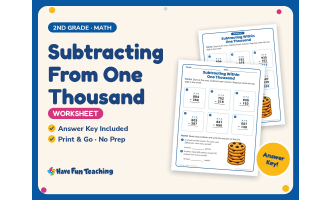
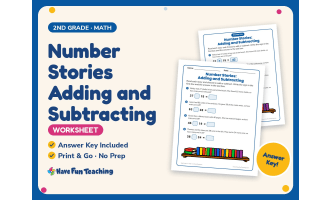
Subtracting From One Hundred Worksheet – 2nd Grade Subtraction


About This Product
Looking for simple, effective subtraction practice for second grade? The Subtracting From One Hundred Worksheet is a ready-to-print math resource that students can complete on their own after a short introduction.
Learning objective: Students will practice subtraction and apply the skill independently by completing each task on the page.
Why it works: Short, focused practice is one of the best ways to help second grade students remember a new skill. Clear directions mean students can get started quickly, and the simple format makes it easy for you to spot who needs more help.
What's included:
1 printable worksheet page
Clear, student-friendly directions
2 practice sections (Part A to Part B)
Answer key (1 page)
Cover page
How it's organized: The page opens with these directions: "Read each problem and write the answer on the line." The practice is split into 2 parts, so students can work through it in clear steps.
Grade level: Designed for second grade students. It also works well for first grade and third grade students who need extra practice or a fresh review.
How to use it: Assign it after a mini-lesson, use it in a small group, send it home as homework, keep it in your sub folder, or use it as a quick formative check.
Answer key: An answer key is included, so you can check work quickly or let students self-correct.
Teaching tips and variations:
Model the first item together, then let students finish the rest independently.
Use it as an exit ticket the day after a subtraction lesson to see who needs more support.
Pair students to compare answers and talk through any differences.
Skills covered: Subtraction, Math
Standards: Supports Common Core 2. OA.B.2, 2. NBT.B.5.
File type: PDF, ready to print.
Number of pages: 3 (1 worksheet page, 1 answer key page, 1 cover page).
Looking for more subtraction practice? Visit the Have Fun Teaching shop for related worksheets, reading passages, and activities for second grade. Have Fun Teaching on Teach Simple
Resource Tags
0 Reviews
Check out these other great products