Taking Away to Subtract Worksheet – Kindergarten Subtraction Practice




About This Product
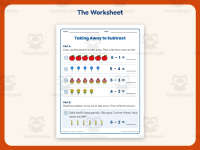
Taking Away to Subtract Worksheet helps kindergarten learners practice subtraction with clear directions and a clean, kid-friendly layout. Print it and it is ready for class, homework, or homeschool lessons.
Learning objective: Students will build accuracy and confidence with subtraction through short, focused practice that reinforces what was taught in class.
Why it works: Students stay on task because the directions are short and the practice is the right size for one sitting. Teachers save time because the page is ready to print and easy to check.
What's included:
1 printable worksheet page
Clear, student-friendly directions
2 practice sections (Part A to Part B)
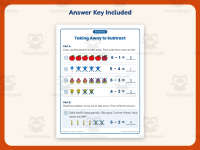
Answer key (1 page)
Cover page
How it's organized: The page opens with these directions: "Read the problem. Cross out to take away. Then write the answer." The practice is split into 2 parts, so students can work through it in clear steps.
Grade level: Designed for kindergarten students. It also works well for preschool and first grade students who need extra practice or a fresh review.
How to use it: It is a great fit for morning work, learning centers, intervention groups, test review, homeschool lessons, and take-home practice.
Answer key: An answer key is included, so you can check work quickly or let students self-correct.
Teaching tips and variations:
Slip the page into a sheet protector so students can practice again with dry-erase markers.
Keep a few copies in your early finisher bin for independent review.
Use it as an exit ticket the day after a subtraction lesson to see who needs more support.
Skills covered: Subtraction, Math
Standards: Supports Common Core K. OA.A.1, K. OA.A.5.
File type: PDF, ready to print.
Number of pages: 3 (1 worksheet page, 1 answer key page, 1 cover page).
Have Fun Teaching creates classroom-tested resources for PreK through 6th grade. Follow our shop to find more math worksheets that pair well with this page. Have Fun Teaching on Teach Simple
Resource Tags
0 Reviews
Check out these other great products