Types of Evidence: Direct, Circumstantial, Physical, Biological

Science, Physics, Life Sciences, Biology, Human Body, Research, Classroom Management, Resources for Teachers, Community Building, STEM
Worksheets & Printables, Workbooks, Worksheets, Word Searches, Teacher Tools, Lesson Plans, Quizzes and Tests, Quizzes, Tests, Assessments


About This Product
Transform your forensic science, law, or criminal justice classroom into an engaging investigative hub! This comprehensive 43-page unit provides everything you need to guide students from basic concepts to expert-level analysis of evidence. Say goodbye to hours of prep work and hello to a "no-prep" resource that makes complex legal and scientific principles accessible, engaging, and relevant.
Students will move beyond the "CSI effect" to understand the real-world challenges of evidence collection and analysis. They will learn to think critically about the differences between direct and circumstantial evidence, the reliability of eyewitnesses versus DNA, and why a "smoking gun" piece of evidence might be thrown out of court.
WHAT'S INSIDE THIS ALL-IN-ONE UNIT?
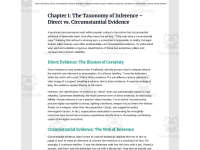
PART 1: In-Depth Theoretical Guide (Chapters 1-4): A detailed reading guide that covers the core concepts:
Direct vs. Circumstantial Evidence
Physical vs. Biological & Trace Evidence (Locard's Principle)
Class vs. Individual Characteristics
Admissibility Rules: Hearsay, Chain of Custody, Fourth Amendment, and Probative Value vs. Prejudicial Impact.
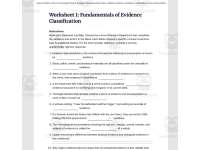
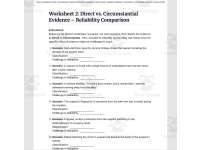
PART 2: Engaging Student Workbook (10 Worksheets): A series of scaffolded activities that build skills progressively:
Worksheets 1-5: Focus on fundamentals, definitions, and legal constraints.
Worksheets 6-9: Real-world scenario sorting, reliability comparisons, and cross-classification matrices.
Worksheet 10 (Capstone): A final evaluation where students act as paralegals, auditing a prosecutor's case file to find flaws in evidence.
PART 3: Teacher Resources & Visuals:
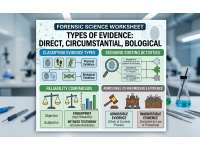
3 Professional Diagrams: Visually clear flowcharts and spectrums explaining evidence classification, reliability, and the admissibility decision process. Perfect for classroom display or as student handouts.
Comprehensive Answer Key: Detailed answers and justifications for every question in the student workbook, making assessment clear and simple.
This resource is perfect for building critical thinking, analytical reasoning, and argumentation skills. It's a must-have for any teacher looking to provide a robust and realistic introduction to the world of forensic investigation.
Keywords for SEO: Forensic Science, Criminal Justice, Law, Civics, Types of Evidence, Direct Evidence, Circumstantial Evidence, Physical Evidence, Biological Evidence, DNA, Trace Evidence, Locard's Exchange Principle, Admissibility, Hearsay, Chain of Custody, High School, Grades 10-12, Worksheet, Activity, Project, Unit Plan, No Prep, Sub Plans, Homeschool.
Why Parents/Schools Love It :
Promotes Deep Critical Thinking: This unit moves beyond simple memorization, teaching students to analyze, evaluate, and debate the strengths and weaknesses of different evidence types, just like real investigators and lawyers.
Real-World Relevance & Engagement: It connects abstract scientific and legal principles to captivating crime scenarios, making learning "sticky" and highly engaging for students interested in forensics and law.
Comprehensive & All-in-One: From foundational theory to practical application worksheets, visual aids, and a full teacher key, this resource is a complete, self-contained unit that saves teachers valuable preparation time.
Builds Essential Career Skills: It provides a realistic and robust foundation for students considering careers in law, law enforcement, or forensic science, developing their skills in logic, argumentation, and scientific reasoning.
Target Students:
The academic language, complexity of legal concepts (e.g., admissibility, Fourth Amendment, spousal privilege), and critical thinking required make this resource ideal for:
High School Students (Grades 10-12) in courses such as:
Forensic Science
Criminal Justice / Criminology
Law & Society or Street Law
Civics and Government (as a practical application unit)
Introductory College-Level Students (First Year) in similar survey courses.
Copyright/Terms of Use:
This Book was copyrighted by Syed Hammad Rizvi. This resource is for personal and single classroom use only. You may not alter, redistribute, or sell any part of this resource. In other words, you may not put it on the Internet where it could be publicly found and downloaded.
If you want to share this resource with colleagues, please purchase additional licenses from Teachsimple. Thank you for respecting these terms of use.
This product is happily brought to you by Syed Hammad Rizvi
Resource Tags
0 Reviews
Check out these other great products