resources by type
resources by grade
resources by subject
other resources

3,880 products added recently

Page 57 - Reading Activities

Discover a variety of reading activities designed to inspire and engage your students. From guided reading sessions to interactive reading journals, these resources support the development of comprehension and critical thinking skills. Tailored for different grade levels, these activities can help you create a dynamic literacy environment that fosters a lifelong love of reading.

Relevant
alt down
Any Time
alt down
filter by
alt down
All File Types
alt down
filter nav Show filters
Sort by: Relevant
CLEAR
resources by type
Activities
up arrow
Centers
Crafts
Escape Room
Experiments
down arrow
Games
Projects
Read Alouds
Songs
Classroom Decor
down arrow
Teacher Tools
down arrow
Worksheets & Printables
down arrow
resources by grade
Early Learning
down arrow
Pre-K
down arrow
Elementary
down arrow
Middle School
down arrow
High School
down arrow
Adult Education
Not Grade Specific
resources by subject
Creative Arts
down arrow
ELA
up arrow
Language Development
down arrow
Literature
down arrow
Reading
up arrow
Reading Comprehension
Library
Strategies
Writing
down arrow
Holiday & Seasonal
down arrow
Life Studies
down arrow
Math
down arrow
P.E. & Health
down arrow
Social Studies
down arrow
Special Resources
down arrow
Science
down arrow
Foreign Languages
down arrow
Resources for Teachers
down arrow
other resources
Common Core
Homeschool Resources
down arrow
Montessori
Research
STEM
Fall Animals | Reading Activity Packet

Fall Animals | Reading Activity Packet
ELA, Reading, Grade 2, Activities

This resource is a Fall Animals Reading Activity Packet. It is a week's worth of work for reading class. It can be used with any fall animals books. Included: - Sentence writing daily - Monday: Syllables - Tuesday: Nouns & Adjectives - Wednesday: Plural nouns - Thursday: Plural nouns - Friday: Syllables There is a blank writing template with primary lines for students to write!

Author Second Grade Smartypants

Tags Animals, September, Fall, Syllables, Contractions

4th Of July Reading Passage - Independence Day Reading Comprehension

4th Of July Reading Passage - Independence Day Reading Comprehension
Reading, ELA, Elementary, Read Alouds, Activities

The 4th of July, also known as Independence Day, celebrates the adoption of the Declaration of Independence on July 4, 1776. It marks the United States' independence from Great Britain. The day is celebrated with fireworks, parades, barbecues, and patriotic displays across the country. Are you looking for a fun and engaging way to celebrate Independence Day? This reading passage is a great resource for celebrating 4th Of July Day in schools while practicing reading skills. This educational resource features simple, kid-friendly pages designed to make learning both enjoyable and interactive. Great for homeschooling, classroom education, or extra practice. Number of pages: 8 pages (4 BW + 4 COLOR) Format PDF file size: 8.5*11 Inches If you and your students or your children enjoy using this educational and engaging resource. please rate it and follow my store to be the first to know about my new teaching resources and freebies. Enjoy!

Author Wonderland School

Tags Independence Day, US Independence Day, Independence Day Reading Passage, Independence DayColoring Pages, 4th Of July, 4th Of July Reading Comprehension, 4th Of July Activities, 4th Of July Worksheets, Independence Day Worksheets, Independence Day Activities

Reading Comprehension Passages Fiction Set 2 - Animals (Google Slides)

Reading Comprehension Passages Fiction Set 2 - Animals (Google Slides)
ELA, Reading, Language Development, Spelling, Common Core, ESL, Vocabulary, Reading Comprehension, Creative Writing, Writing, Grade 2, 3, Teacher Tools, Presentations, Assessments, Tests, Quizzes and Tests, Activities

Reading Comprehension Passages Fiction Set 2 Overview Fascinating reading comprehension passages, each with an array of activities included. Stories are written for the modern classroom and topics are designed to promote enthusiasm from each student. Each lesson contains a mixed questions section to check understanding, a vocabulary or spelling activity to help remember key language introduced, and a writing exercise. Full answer keys are provided. For a more detailed overview, check the section under the links at the bottom of this description. Passages Include 1.Unexpected Visitors: Terra gets an unexpected visitor. 2.Feeding Time: Allan visits an aquarium and feeds the dolphins. 3.New Pup Next Door: The neighbor has a new dog and Benny wants to see. 4.Stargazing: Jazmin loves looking at the stars. She visits the beach today. 5.On the Search: Abigail wants to find a shark tooth more than anything. 6.Tadpoles: Brittney & Stan take frogs eggs home & watch them hatch. 7.Lucky Caterpillar: Lily and Sadie watch a caterpillar crossing the road. 8.Karl the Photographer: Karl spends his summer taking photos of butterflies. 9.Chasing Pheasants: Tony and his father have a great idea...or so they think! 10.Part of the Family: Ava is nervous as her cat is about to have kittens. Additional File: Tadpoles: Blank Life Cycle Google Slides Version This is the Google Slides editable and fillable version. This download is available in GOOGLE Docs, GOOGLE Forms, GOOGLE Slides. PDF, PPT, WORD. FULL CATALOG OF DOWNLOAD LINKS HERE Grade 2/3 Links Fiction Set 1 - Nature Google Docs Google Forms Google Slides PDF PPT Word Guided Reading Materials Fiction Set 2 - Animals Google Docs Google Forms Google Slides PDF PPT Word Guided Reading Materials Fiction Set 3 - Food Google Docs Google Forms Google Slides PDF PPT Word Guided Reading Materials Fiction Set 4 - School Google Docs Google Forms Google Slides PDF PPT Word Guided Reading Materials Fiction Set 5 - Friends Google Docs Google Forms Google Slides PDF PPT Word Guided Reading Materials Fiction Set 6 - Family Google Docs Google Forms Google Slides PDF PPT Word Guided Reading Materials Fiction Set 7 - Sports Google Docs Google Forms Google Slides PDF PPT Word Guided Reading Materials Nonfiction Set 1 - Technology Google Docs Google Forms Google Slides PDF PPT Word Guided Reading Materials Nonfiction Set 2 - Nutrition Google Docs Google Forms Google Slides PDF PPT Word Guided Reading Materials Nonfiction Set 3 - Animals Google Docs Google Forms Google Slides PDF PPT Word Guided Reading Materials Reading Passages Overview Each passage is especially written for Grade 2-3 students, including key vocabulary required for this age group. Topics are varied and are accompanied by colorful graphics. Topics are meant to educate, yet entertain the modern student. These passages are perfect for the modern classroom. Whereas textbooks can become outdated in no time, any changes to technology or the world will result in updates to this product. Mixed Questions The mixed questions section of each lesson includes a variation of fivecomprehension, vocabulary and math questions. In addition, key reading strategies are frequently covered including cause & effect, summarizing, compare & contrast and making conclusions. Three of the questions will be MCQs and two will require a written response of some kind. Full answers and example responses appear at the end of the lesson. Spelling & Vocab Each reading passage contains a variety of words and phrases designed for Grade 2-3 students. Spelling and vocab activities provide the opportunity to build fluency with these words. As it can become quite mundane doing the same activities over and over, each lesson in a set will contain a different spelling and vocab activity . Writing Prompts Writing prompts are designed to continue the theme or lessons learned in the story. Students are persuaded to write in a variety of ways and each prompt includes several cues to help. As with the spelling/vocab section, writing prompts will vary. This includes research pieces, reading responses, poetry and creative writing prompts. Full Answer Keys Full answer keys and sample responses are provided so no matter how busy you are, you know you're covered! Mixed question answers provide evidence from the text, math questions contain the relevant workings. Answers are designed for use by the teacher, but also suitable as a handout to the student. Additional File One lesson will have an additional file. This is something fun to extend the lesson with. For similar downloads and other frees, do check out Cored Group on TeachSimple.

Author Cored Education

Tags Elementary, Reading, Comprehension, Vocabulary, Answers, Ccss, Common Core, Spelling, Writing, Passages

Guided Reading Level L - Firefighters Keep Us Safe (with Lesson Plan)

Guided Reading Level L - Firefighters Keep Us Safe (with Lesson Plan)
ELA, Resources for Teachers, Reading Comprehension, Reading, Pre-Reading, Language Development, Science, Engineering, Technology, Vocabulary, Grade 1, 2, 3, Worksheets & Printables, Worksheets, Teacher Tools, Centers, Activities, Literacy Readers, Quizzes, Quizzes and Tests, Assessments

This Guided Reading Book - Firefighters Keep Us Safe (Level L) with lesson plan includes: Guided Reading Color Label (front cover x1) This is a quick way to match the book’s demands to what students can generally handle.. The overall goal is to use the level/color to pick books for several smaller groups. To qualify for a certain level, a student is expected to read a book from that level with about 90–94% accuracy. If a student is consistently accurate and understands, move up a level. If the student is struggling at that level, drop down and add more support. Each student will improve at completely different rates, but it is generally one of the best ways to check progress across the class. DOWNLOAD THE CATALOG TO VIEW ALL GUIDED READING BOOKS AVAILABLE (SORTED LEVELS A-Z) Pre-Reading Question (x1) Teacher asks the prompt aloud, can be while showing the cover or first page. Students share what they already know, or make educated guesses from the cover. Prompt them to use the target vocabulary. Write some of their responses on the board to look back at during the reading. Vocabulary Words (x5) Introduce the five words, best doing it one at a time. Start by saying it, while students repeat and then see if anyone knows what it means before reading further. Read through the meaning and try to briefly connect each word to a picture or gesture so it’s meaningful. Ask students to flip through the book pages and point to where they see each of the vocabulary words. While reading the book pause upon coming across one of the vocab words or read the sentence twice to make sure students understand the word has appeared. Optional: Ask students to raise hands whenever they see/hear one of the new words. Guided Reading Pages (x10) Check the book snapshot (below) for: primary topic - do you need to prep extra reading or intro materials on this? what is taught best - decide on 1-2 bullets to focus on, use the prompt or words provided here for best results. learning goals - what you are checking for students to be able to do after the session, elicit answers using prompts or words provided. key vocabulary (see section above). questions overview - so you know what is coming up and if you need to prep extra materials to assist understanding. Run the lesson You may have already looked at a few of the pages together, but you can show them some of the pictures again first to set meaning. Depending on how much time you have and how familiar your students are with guided reading class, you may want to read the book aloud first with the group first. Students whisper or partner read, while you listen in. If time, do it as a group, one student reading a page each. Use the guided page’s prompts to coach: “Check the picture / does it make sense?” “Point under the words / try the first sound” “Reread the sentence smoothly”. Try to focus more on one student per session (rotating every time), so you can work out if they are ready to move up or need to move down a level. Comprehension Questions (back cover x3) This is your way to check that students didn’t just say the words, but actually understood the text. First, let students answer by pointing to the page/picture and saying a short sentence. After any answer, follow with: “Show me where you found that in the text.” In bigger groups, have partners answer first (10–20 seconds), then call on 2–3 students to share. Differentiation tips: Emerging speakers/struggling readers: oral + pointing On-level: oral in a full sentence Higher: one written sentence or draw + label Book Snapshot Title: Firefighters Keep Us Safe Genre: Nonfiction (informational) Subject: Social Studies (Community Helpers) / Health & Safety / Reading Primary Topic: Firefighters, tools, and how they keep people safe Estimated Guided Reading Level (A–Z): L What This Book Teaches Best How firefighters are community helpers who work at a fire station and respond to an emergency call. Why firefighters wear turnout gear and how it protects them from heat and smoke (layers resist flames and keep them cool). What a fire engine carries and how sirens and flashing lights help firefighters reach emergencies quickly (drivers move to the side). How key equipment works: hoses connect to a hydrant , nozzles change the water spray, and long ladders help with rescue and spraying from above. Firefighters’ jobs go beyond fires: they help in car accidents and medical emergencies , and training and dedication help keep the community safe. Learning Goals Students will explain how firefighters help keep a community safe using details from the text. Students will describe what turnout gear is and why firefighters wear it. Students will identify what a fire engine carries and how sirens and flashing lights help on the road. Students will describe how hoses, hydrants, and nozzles help firefighters spray water on a fire. Students will explain why firefighters use masks and air tanks in smoky buildings. Students will describe why firefighters train daily and how dedication connects to safety. Key Vocabulary From the Text community — people who live and work in the same place. emergency — a sudden problem that needs help right away. protective — made to help keep someone safe from harm. hydrant — a street pipe where firefighters can get water. dedication — working hard and not giving up. Discussion Prompts Pre-reading question: What do you think firefighters need to do their jobs safely? Comprehension questions: What is turnout gear, and how does it help firefighters around heat and smoke? What do the sirens and flashing lights on a fire engine tell other drivers to do? Why do firefighters wear a special mask and an air tank in a smoky building? Printing Tips 1. Best Printing Method (Recommended) “Booklet” Printing (Best if Available) If your printer or PDF viewer supports Booklet Printing , use this. Settings to use: Print mode: Booklet Paper size: Letter or A4 (either works) Orientation: Landscape Print on both sides: Yes Flip on: Short edge Scaling: Fit to printable area Booklet subset: First test: Front sides only Then: Back sides only This will automatically: Pair pages correctly Put the cover on the outside Align everything for folding After printing, fold in half and staple along the spine . 2. If “Booklet” Printing Is NOT Available You can still print this correctly with manual duplex printing . Step-by-step: Open the PDF. Choose Print . Set: Orientation: Landscape Pages per sheet: 1 Print on both sides: Yes Flip on: Short edge Print all pages . Because each PDF page already contains two facing book pages, the result will still fold cleanly into a book. Thousands of Cored Education products are included with your TeachSimple membership. Download links and encyclopedia index available here.

Author Cored Education

Rating

Tags Reading Comprehension, Reading Passages, Reading, Guided Reading, Guided Reading Lesson Plan, Guided Reading Activity, Pre-reading, Vocabulary, Technology, Engineering

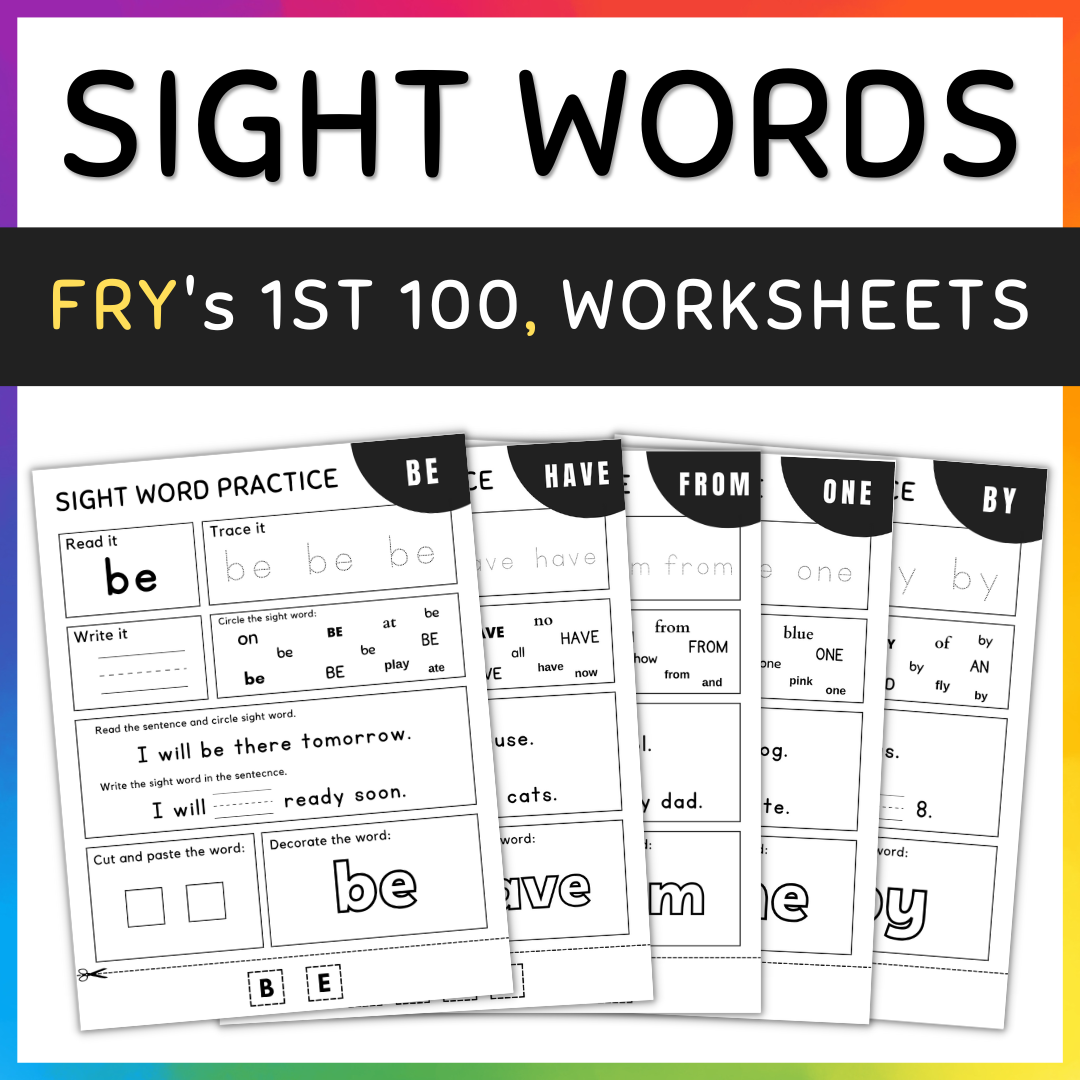
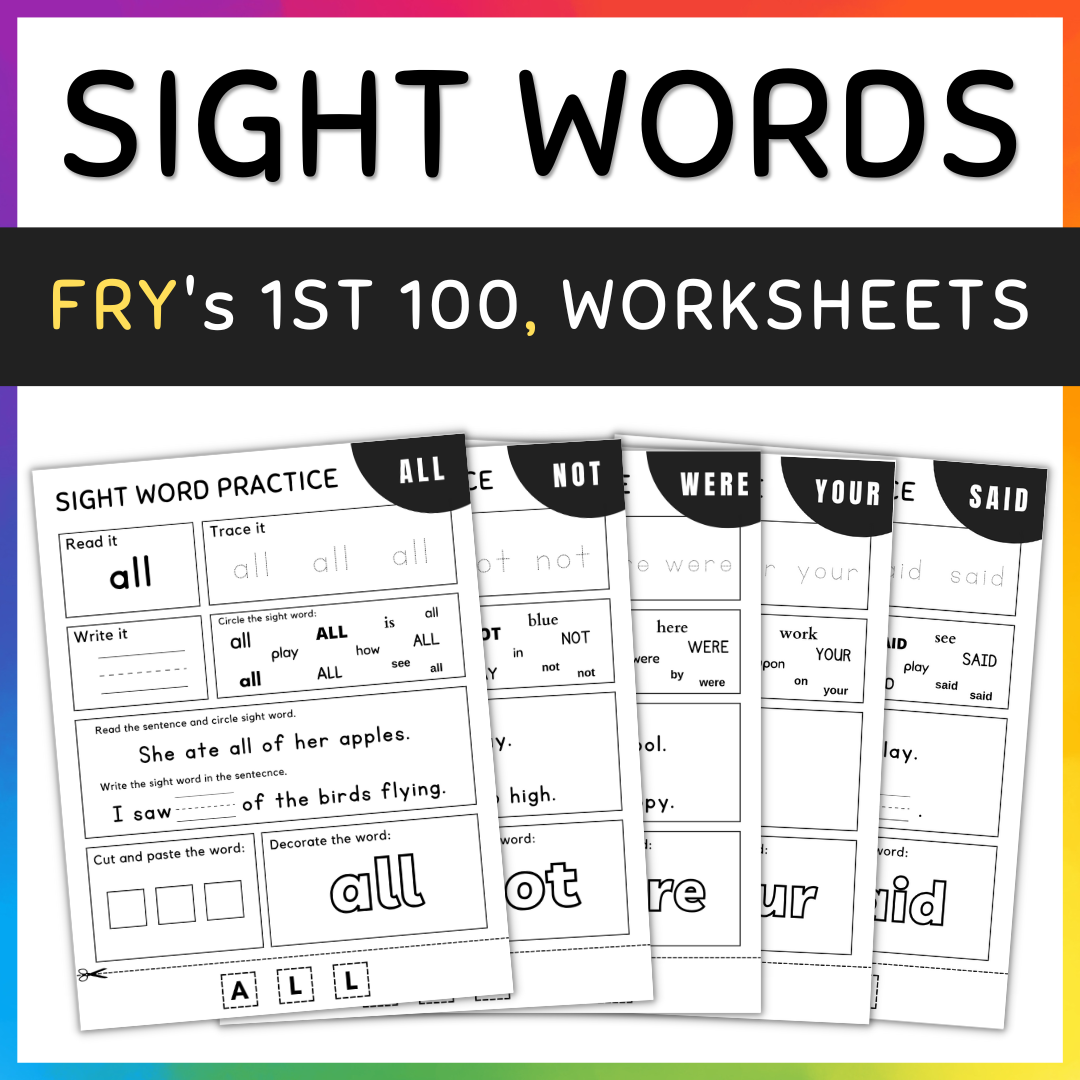
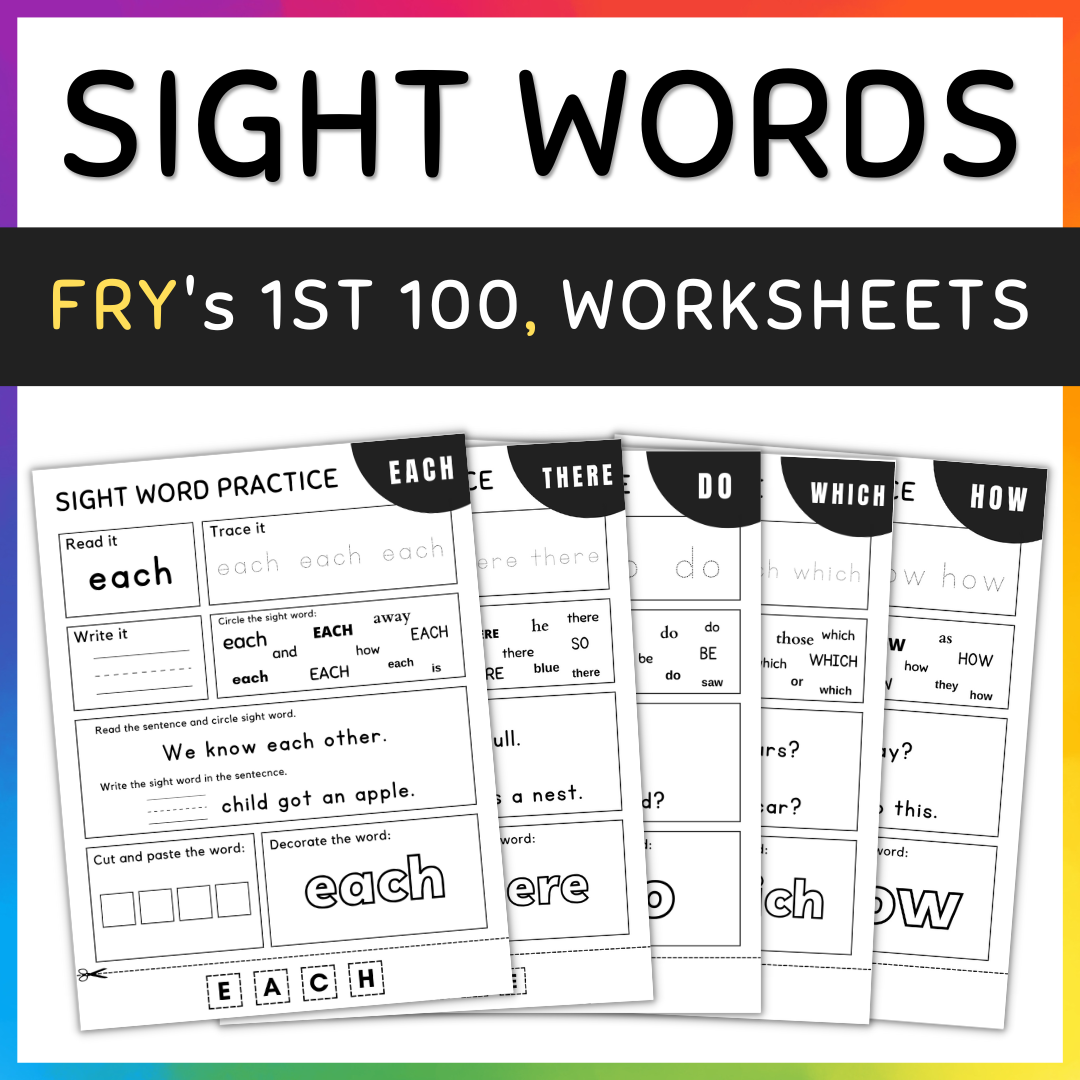
Sight Word Bingo Cards: 1st 100 Fry Sight Words, Fun Activities & Games

Sight Word Bingo Cards: 1st 100 Fry Sight Words, Fun Activities & Games
ELA, Reading, Language Development, Vocabulary, Spelling, Preschool, Grade 1, 2, Activities, Games

BINGO Cards: 1st 100, Fry Sight Words These Sight Words Bingo Cards are fun and interactive way to help children learn high frequency FRY words. These bingo cards are a great tool for parents, teachers, and homeschoolers who want to make sight word practice more engaging and enjoyable. They are perfect for fun activities in class and morning work. Not only are Sight Words Bingo Cards a fun and engaging way for children to learn sight words, but they also promote social skills, such as taking turns and following rules. Words Included: a, about, all, am, an, and, are, as, at, be, been, but, by, called, can, come, could, day, did, do, down, each, find, first, for, from, get, go, had, has, have, he, her, him, his, how, I, if, in, into, is, it, its, like, long, look, made, make, many, may, more, my, no, not, now, number, of, on, one, or, other, out, part, people, said, see, she, so, some, than, that, the, their, them, then, there, these, they, this, time, to, two, up, use, was, water, way, we, were, what, when, which, who, will, with, words, would, write, you, your

Author TeacherYouWant

Tags First 100, First Hundred, Sight Words, Bingo, Games

Always Song (MP3)

Always Song (MP3)
ELA, Reading, Preschool, Kindergarten, Grade 1, Songs, Activities

This product is the Always Song MP3, which will help students recognize the sight word ALWAYS. This is a great resource for teachers who want to build speed and fluency while reading with their students.

Author Have Fun Teaching

Tags Counting

Reading Response Activities for Fiction Books | Digital Google Forms

Reading Response Activities for Fiction Books | Digital Google Forms
Common Core, ELA, Reading, Reading Comprehension, Strategies, Grade 4, 5, 6, 7, 8, Activities

Reading Response Activities don’t have to be a struggle! If you’re tired of students giving one-word answers like “It was good” or “I liked it” , this Google Forms resource is the perfect solution. With 20 editable response questions , students will think critically about their fiction books , analyzing characters, themes, story elements and more—all in an interactive, digital format that’s easy to assign and track. What’s Inside? 20 Editable Reading Response Questions Each question guides students through 20 reading strategies , such as: Author’s Purpose Asking Questions Cause and Effect Characterization Compare and Contrast Context Clues Determining Importance Drawing Conclusions Fact and Opinion Main Idea and Details Making Connections Making Inferences Making Predictions Problem and Solution Setting Sequencing Story Elements Summarizing Synthesizing Visualizing Digital Google Forms Format – No Printing, No Prep! Students type their responses directly into Google Forms , making it easy to: ✔ Assign in Google Classroom with one click ✔ Track and review responses in real-time ✔ Provide feedback quickly—without stacks of paper! Perfect For… 📖 Book Clubs & Literature Circles – Use the questions to spark thoughtful discussions . 📚 Independent Reading – A structured way to assess comprehension . 👩‍🏫 Whole-Class Novels – Keep students engaged in meaningful analysis and reflection . 📝 Alternative to Book Reports – Encourage detailed responses instead of surface-level summaries. Why Teachers Love It! ✔ No More Vague Responses – Students have structured prompts to think deeper about their books. ✔ Saves Time on Grading – Responses are neatly organized in Google Forms for easy review. ✔ Engages Students in a Digital Format – Works with any fiction book and eliminates paper clutter! How To Access Your download is a PDF file that has the link to the 20 Reading Response Questions in a Google Form.

Author Teach2Tell

Tags Reading Responses, Reading Responses Activities, Reading Strategies, Reading Comprehension Strategies, Book Week Activities, Book Review Activities, Book Club Activities, Literature Circle Activities, Reading Response Journals, Reading Response Questions

Reading Comprehension Passages Fiction Set 1 (Fillable PDF)

Reading Comprehension Passages Fiction Set 1 (Fillable PDF)
ELA, Reading, Reading Comprehension, Common Core, Resources for Teachers, ESL, Language Development, Spelling, Vocabulary, Grade 6, 7, Worksheets & Printables, Worksheets, Assessments, Teacher Tools, Tests, Quizzes and Tests, Writing Prompts, Centers, Activities

Reading Comprehension Passages Fiction Set 1 Snapshot Title: Fiction Grade 6-7 Set 1 Genre: Fiction Subject: Reading / SEL Primary Topic: Short fiction about sports, fear, family, and change Estimated Guided Reading Level (A–Z): X What This Teaches Best Builds character analysis through stories about competition, confidence, and personal growth, including Champion , Basketball , and In the Pool . Supports social-emotional learning through sibling conflict, sportsmanship, and adjusting to change in Sister Sister and New Surroundings . Strengthens inference and theme work through emotional decision-making, such as facing fear in The Coaster! and handling disappointment in Champion . Gives students practice with realistic fiction centered on everyday school, family, and activity-based situations. Reinforces vocabulary-in-context through built-in mixed questions, vocabulary, spelling, and writing extensions tied to each story. Learning Goals Students will explain how characters respond to challenges in realistic fiction. Students will describe how dialogue and actions reveal feelings and relationships. Students will identify themes such as sportsmanship, courage, and family support using story details. Students will determine the meaning of unfamiliar words from context. Students will retell important events and explain how they lead to the ending. Students will compare how different characters handle pressure, fear, or change. Passages Include 1.Champion: Martyn and a field day competition. 2.Basketball: Evie shows her newfound basketball skills. 3.The Coaster: Angelica is afraid of the new roller coaster. 4.Sister Sister: Dora and Kathie can't stop arguing with each other. 5.New Surroundings: Lisa is upset about the move to a new city. 6.In the Pool: The story behind a 13 year love of swimming. FILLABLE PDF VERSION Worksheet-style pages, but with type-in answer boxes so students can complete and save their work digitally. Other versions are available in the links list below or in the full catalog. FULL CATALOG OF DOWNLOAD LINKS HERE For similar downloads and other frees, do check out Cored Group on TeachSimple.

Author Cored Education

Rating

Tags Elementary, Reading, Comprehension, Vocabulary, Answers, Spelling, Writing, Passages, Reading Centers, Reading Comprehension Assessment

From the Mixed Up Files of Mrs. Basil E. Frankweiler Choice Board

From the Mixed Up Files of Mrs. Basil E. Frankweiler Choice Board
ELA, Reading, Reading Comprehension, Writing, Creative Writing, Language Development, Vocabulary, Grade 3, 4, 5, Activities

Choice boards are a great way to reach many interests and abilities in diverse classrooms. Whether needing to differentiate higher or lower, the variety of assignment options allows for student choice at their appropriate response level, and allows teachers to see what students truly grasp from the texts they are reading. From the Mixed-Up Files of Mrs. Basil E. Frankweiler, written by E.L. Konigsburg, is a novel appropriate for 3rd through 5th grades. The choice board includes nine activities and multiple rubrics for teacher choice in grading. The tasks are as follows: creating a book jacket cover + summarizing research and present about a famous artist or sculptor timeline creation of important events (plot) personal writing experiences character map creation (character + plot) brochure creation compare and contrasting (characters) poem writing paragraph writing Each activity included either has a direction sheet with specific instructions or an actual worksheet to guide them through the tasks they fill out. The expectation is set for students to complete three activities in a tic-tac-toe format, but can be utilized in different ways in each classroom. Rubrics are included that allow for open response (and more information included from students), as well as teacher choice in how to assess student knowledge. Tags: choice boards, reading, writing, social studies, map skills, differentiated learning, student choice, rubrics, cross curricular File Types: PDF Number of Pages: 18

Author Kel's Klass

Tags Choice Boards, Reading, Writing, Social Studies, Map Skills, Differentiated Learning, Student Choice, Rubrics, Cross Curricular

Color by Sight Word Practice Game, High Frequency FRY Words, 5th 100 - SET 8

Color by Sight Word Practice Game, High Frequency FRY Words, 5th 100 - SET 8
ELA, Reading, Language Development, Spelling, Vocabulary, Grade 1, 2, 3, Activities

The Color by Sight Word Practice Game, High Frequency FRY Words, 5th 100 - SET 8 This engaging teaching resource is designed to assist students in grades 1 through 3 with high-frequency Fry word recognition. The game focuses on enhancing reading, spelling & vocabulary essential for language arts education. Each coloring page features five sight words. These words match shapes containing the same word written in the center and are colored accordingly. This intertwined exercise of color recognition and word recall not only strengthens sight word proficiency but also improves hand-eye coordination. Versatile Learning Tool Small group activities Whole class activities Homework assignments Homeschooling endeavors (Can be a standalone lesson or integrated into existing content such as morning work or literacy centers) No-Preparation-Required Resource Fascinatingly structured with unique coloring pages to captivate children learning to read along while being a plug-&-play resource for educators and parents. Sneak Peek into the PDF: The PDF contains twenty pages of this activity in US letter size that emphasizes reading strengthening exercises and vocabulary building whilst accommodating different individual learning paces. Included Words List: pre/able/ago/among/ball/base/became/behind/boat/box/bread bring/brought/building/built/cannot/carefully/check/circle/class clear/common contain/correct/course/dark/deep/deleted/done dry English/equation/explain/fact/filled long days Finnally four Fly force/front/full/game/gave/government/green/half dozens half father’s favorite daughter heat heavy/hot/inches/include /inside/island/ language/machine/material / minutes/note/nothing/noun/object/ocean/OH/pair/person/plane/power/produce/quickly / Ran/rest/road/ritual/scientists/ Shape/shown/six size/Special stars/stay/Stood/street strong surface/system/Ten though thousands understand verb likeli. In summary, the Color by Sight Word Practice Game provides a captivating and effective method for practice of high-frequency Fry words. It's an excellent resort to interactive pedagogy appreciated by both students and educators.

Author TeacherYouWant

Tags Sight Words, Literacy Practice, Vocabulary Enhancement, Reading Skills, Interactive Learning

Social Studies SAMPLE Passage: Food in South America (Fillable PDF)
Free Download

Social Studies SAMPLE Passage: Food in South America (Fillable PDF)
ELA, Reading, Reading Comprehension, Strategies, Resources for Teachers, Social Studies, Sociology, Grade 6, 7, 8, 9, Writing Prompts, Worksheets & Printables, Centers, Activities, Teacher Tools, Assessments, Quizzes and Tests, Quizzes, Tests

This is a ONE PASSAGE SAMPLE. The following is the description of the FULL resource and the downloading links: Social Studies Reading Comprehension Passages and Questions: Food and Culture (Fillable PDF) This resource introduces a collection of Social Studies reading comprehension passages with questions about Food, Culture, and Preservation. The passages are carefully designed to bridge the gap between social studies and literacy through strengthening reading comprehension and sparking knowledge curiosity in middle school students. Each passage blends English Language Arts skills with accurate social studies content . Ideal for interdisciplinary learning in ELA and Social Studies. Suitable for Grade 9 review, too! These worksheets are designed as fillable PDFs , which means students can type their answers directly into the document on any computer or tablet . Each page includes highlighted text fields that show them exactly where to type! What Is Included in this Collection? There are three informational passages (with full answer keys): Homemade Cottage Cheese: Food, Family, and Local Trade Salty Traditions: How Salami and Kimchi Stay Safe to Eat From Grasslands to Grill: The Foods of South America For Each Passage, students will have multiple tasks to complete as follow: 5 multiple-choice questions targeting main idea, key details, inference, vocabulary in context, and use of evidence 5 vocabulary matching items with clear, student-friendly definitions 5 text-based questions that require citing specific lines or facts 1 summary prompt that asks students to condense central ideas accurately Available Formats for this Resource PDF Word Docs Google Docs FULL CATALOG OF DOWNLOADING LINKS HERE For more Social Studies Reading Passages, check the following Links: Ancient Civilizations PDF Fillable PDF Word Docs Google Docs Early Empires and Trade Networks PDF Fillable PDF Word Docs Google Docs The Founding of the United States PDF Fillable PDF Word Docs Google Docs Language, Culture, and Meaning PDF Fillable PDF Word Docs Google Docs Psychology and Society PDF Fillable PDF Word Docs Google Docs Global Festivals and Traditions PDF Fillable PDF Word Docs Google Docs Extreme Environments and People PDF Fillable PDF Word Docs Google Docs Food, Culture, and Preservation PDF Fillable PDF Word Docs Google Docs Global Food Customs PDF Fillable PDF Word Docs Google Docs Media, Communication, and Popular Culture PDF Fillable PDF Word Docs Google Docs Human Impact on the Environment PDF Fillable PDF Word Docs Google Docs Civic Action and Social Change PDF Fillable PDF Word Docs Google Docs Fashion, Society, and Power PDF Fillable PDF Word Docs Google Docs People, Places, and Unusual Histories PDF Fillable PDF Word Docs Google Docs How to Use These PDFs Click on the highlighted area to start typing your answer. Move to the next question by clicking in the next highlighted box. When you are finished, close the document and select SAVE so your answers stay recorded. If you want to keep a blank copy for later, choose Save As and give your completed version a new name. Product Details Length: 14 pages total Grades: 6–8, also suitable for Grade 9 review Use cases: close reading, stations, homework, intervention, test prep, and sub plans Why Teachers Choose This Set Authentic social studies content paired with rigorous literacy practice Consistent task structure across all passages for easier planning and smoother student routines Clear, age-appropriate writing that builds confidence without oversimplifying Use this set to reinforce ELA skills in social studies, to add literacy to your lessons, and to support independent work. The passages strengthen main idea, evidence use, vocabulary in context, inference, cause and effect, and summary writing. With ready-to-use assessments and complete answer keys, you can provide focused practice that is simple to run and fast to review.

Author Middle & High School - CORED Education

Rating

Tags Middle School, Reading Comprehension, Reading Strategies, ELA, Centers, Reading Passage, Assessments, Vocabulary, Social Studies, Food And Culture

Guided Reading Level F - Planets in Our Solar System
Free Download

Guided Reading Level F - Planets in Our Solar System
ELA, Resources for Teachers, Reading Comprehension, Reading, Language Development, Pre-Reading, Vocabulary, Science, Earth and Environmental Sciences, Space, Kindergarten, Grade 1, 2, Worksheets & Printables, Worksheets, Teacher Tools, Centers, Activities, Literacy Readers, Quizzes, Quizzes and Tests, Assessments

This Guided Reading Book - Planets in Our Solar System (Level F) includes: Guided Reading Color Label (front cover x1) This is a quick way to match the book’s demands to what students can generally handle.. The overall goal is to use the level/color to pick books for several smaller groups. To qualify for a certain level, a student is expected to read a book from that level with about 90–94% accuracy. If a student is consistently accurate and understands, move up a level. If the student is struggling at that level, drop down and add more support. Each student will improve at completely different rates, but it is generally one of the best ways to check progress across the class. DOWNLOAD THE CATALOG TO VIEW ALL GUIDED READING BOOKS AVAILABLE (SORTED LEVELS A-Z) COMPANION VIDEO NOW AVAILABLE (EMBEDDED AFTER PREVIEW PICTURES IN PRODUCT DESCRIPTION) Pre-Reading Question (x1) The teacher says the question aloud, either while showing the cover or the first page. Students share what they already know or make sensible guesses based on the cover. Encourage them to use the target vocabulary where possible. Write a few of their ideas on the board so you can return to them during or after the reading. Vocabulary Words (x5) Introduce the five words one at a time. Say each word aloud, have students repeat it, and then ask if anyone already knows what it means. Read the meaning together and briefly connect each word to a picture, action, or gesture so it feels more memorable. Ask students to flip through the book and point to any pages where they spot the vocabulary words. While reading, pause when one of the words appears, or reread the sentence so students clearly notice and understand it in context. Optional: Ask students to raise their hands whenever they see or hear one of the new words. Guided Reading Pages (x10) Check the book snapshot below for: Primary topic — decide whether students need a quick introduction or extra background first. What this lesson teaches best — choose 1–2 key points to focus on during the session. Learning goals — keep in mind what students should be able to understand or say by the end. Key vocabulary — review and reinforce these throughout the lesson. Questions overview — look ahead so you know what students will be asked and whether any extra support is needed. Run the lesson You may already have looked at a few pages together, but it can help to revisit some of the pictures first to build meaning. Depending on your time and how confident the group is with guided reading, you may want to read the whole book aloud to them first. Students can then whisper-read or partner-read while you listen in. If time allows, you can also read as a group, with each student taking a page. Use the guided reading prompts to support them, such as: “Check the picture—does it make sense?” “Point under the words.” “Try the first sound.” “Reread the sentence smoothly.” It can be helpful to focus more closely on one student each session, rotating over time, so you can better judge whether they are ready to move up or may need more support at their current level. Comprehension Questions (back cover x3) This is where you check that students understood the text, not just the words on the page. Start by letting students answer by pointing to a page or picture and saying a short sentence. After they respond, follow up with: “Show me where you found that in the text.” In larger groups, let partners discuss their answer first for 10–20 seconds, then invite 2–3 students to share. Differentiation tips Emerging speakers / struggling readers: oral response + pointing On-level: oral response in a full sentence Higher: one written sentence or a drawing with labels Book Snapshot Title: Planets in Our Solar System Genre: Nonfiction (informational) Subject: Science Primary Topic: Basic facts about the Sun, the planets, and the Moon Estimated Guided Reading Level (A–Z): F What This Book Teaches Best Introduces the Sun as a star at the center of the solar system that gives light and heat to the planets. Teaches the order of the planets, from Mercury to Neptune, with one main fact about each one. Builds science vocabulary naturally through the text, including words like craters , surface , giant , unique , and reflects . Helps students compare planets using simple details such as color, temperature, rings, winds, and clouds. Learning Goals Students will identify the Sun’s job in the solar system using details from the text. Students will name the planets in order from Mercury to Neptune as shown in the book. Students will describe at least three planets using facts from the text. Students will explain what makes one planet “unique” in the book. Students will tell what the Moon does at night, according to the text. Key Vocabulary From the Text craters — deep holes in the ground surface — the outside layer of something giant — very, very big unique — special and different from others reflects — bounces light back Discussion Prompts Pre-reading question: What do you already know about the Sun, the Moon, and the planets? Comprehension question: Which planet does the book say is the smallest? Comprehension question: What is Saturn famous for? Comprehension question: What does the Moon reflect at night? 1. Best Printing Method (Recommended) Booklet printing is the best option if your printer or PDF viewer supports it. This method usually places the pages in the correct order automatically and makes folding much easier. Settings to use: Print mode: Booklet Paper size: Letter or A4 Orientation: Landscape Print on both sides: Yes Flip on: Short edge Scaling: Fit to printable area Booklet subset: First, print front sides only Then, print back sides only This will automatically: Pair the pages correctly Place the cover on the outside Help everything line up properly for folding After printing, fold the pages in half and staple along the spine. 2. If “Booklet” Printing Is Not Available You can still print the book correctly by using manual duplex printing . Step-by-step: Open the PDF. Click Print . Use these settings: Orientation: Landscape Pages per sheet: 1 Print on both sides: Yes Flip on: Short edge Print all pages. Since each PDF page already contains two facing book pages, the pages should still fold neatly into a book. Thousands of Cored Education products are included with your TeachSimple membership. Download links and encyclopedia index available here.

Author Cored Education

Rating

Tags Vocabulary, Reading Comprehension, Reading Passages, Leveled Reading, Nonfiction, Reading, Guided Reading, Earth Science, Space, Planets

Life Science Reading Comprehension Passage: Bioluminescence (Docs)

Life Science Reading Comprehension Passage: Bioluminescence (Docs)
Science, ELA, Reading, Reading Comprehension, Strategies, Resources for Teachers, Life Sciences, Animals, Grade 6, 7, 8, 9, Writing Prompts, Worksheets & Printables, Centers, Activities, Teacher Tools, Assessments, Quizzes and Tests, Quizzes, Tests

Life Science Reading Comprehension Passage and Questions: Bioluminescence (Docs) This very engaging life science reading passage about Bioluminescence: how living things produce light through chemical reactions . It explains how glowing organisms use light for survival , including communication, defense, camouflage, attracting prey, and escaping predators. Examples include glowing plankton, anglerfish, squid, jellyfish, fireflies, glow-worms, fungi, microbes, and marine bacteria . It also explains the science behind firefly light, especially luciferin, oxygen, and luciferase , and shows how scientists use bioluminescence in labs and possible technology. This passage is designed to bridge the gap between science and literacy through strengthening reading comprehension and sparking scientific curiosity in middle school students. The passage blends English Language Arts skills with accurate science content that supports NGSS classroom practice. Ideal for interdisciplinary learning in ELA and Science. Suitable for Grade 9 review, too! Student Tasks for The Passage: 5 multiple-choice questions targeting main idea, key details, inference, vocabulary in context, and use of evidence 5 vocabulary matching items with clear, student-friendly definitions 5 text-based questions that require citing specific lines or facts 1 summary prompt that asks students to condense central ideas accurately Full answer key for every section Available Formats for this Resource PDF Fillable PDF Word Docs FULL CATALOG OF DOWNLOADING LINKS HERE Product Details Length: 5 pages total Grades: 6–8, also suitable for Grade 9 review Use cases: close reading, stations, homework, intervention, test prep, and sub plans Standards support: reinforces informational-text skills and supports NGSS-style sense making through observation, modeling, and clear use of claim, evidence, and reasoning Why Teachers Choose This Set Authentic science content paired with rigorous literacy practice Consistent task structure across all passages for easier planning and smoother student routines Clear, age-appropriate writing that builds confidence without oversimplifying Other Science Reading Collections you May find in the store: 1. Astronomy & Space Science 2. Volcanoes, Rocks, & Mountains 3. Rock Cycle, Soil, & Sinkholes 4. Mars, Glaciers, & Antarctica 5. Water Cycle, Acid Rain, & Wastewater 6. Insects, Animals, & Ecosystems 7. Bioluminescence & Insects 8. Animal Skin, Cats, & T. Rex 9. Human Body and Senses 10. Health & Applied Bioscience 11. Waves, Light, & Imaging 12. Electricity & Energy 13. Motion & Materials 14. Chemistry and Materials Science Use this set to reinforce ELA skills in science, to add literacy to your lessons, and to support independent work. The passages strengthen main idea, evidence use, vocabulary in context, inference, cause and effect, and summary writing. With ready-to-use assessments and complete answer keys, you can provide focused practice that is simple to run and fast to review.

Author Middle & High School - CORED Education

Rating

Tags Middle School, Reading Comprehension, Reading Strategies, ELA, Centers, Reading Passage, Assessments, Vocabulary, Life Science, Bioluminescence

English Numbers 0-10, Colors, and Patterns Vocabulary Game

English Numbers 0-10, Colors, and Patterns Vocabulary Game
Life Studies, ELA, Language Development, Pre-Reading, ESL, Reading, Vocabulary, Kindergarten, Preschool, Grade 1, 2, 3, 4, 5, 6, 7, 8, 9, 10, 11, 12, Teacher Tools, Presentations, Activities, Games

Vocabulary practice made fun! This English #vocabulary #game practices 24 high-frequency #number #color and #pattern words. Editable pages make it easy to add in extra words your learners are working on. Learners will practice reading the sentence and question, "I have____. Who has?" Then classmates will search their cards to see if they have the number, color, or pattern in question! Repeated exposure is necessary for vocabulary retention. In addition, a QR code has been provided in the instructions. Simply point your phone or computer camera at the code to open a link to the Google Slides presentation. Pull up the corresponding photo for each vocabulary word to expose learners to 2+ photos of the object in question. It's common knowledge that while tangible objects are best, realistic photos are next-best when teaching vocabulary. No more clip art or cartoons here! Use the realia presentation to introduce the vocabulary words as well as to support learners during the game. Play multiple rounds, and shuffle well to give extended practice! With a minimum of 2 players, this game is perfect for pairs, small group, or whole-class practice with up to 24 players! Words included in this pack are: one, two, three, four, five, six, seven, eight, nine, ten, red, orange, yellow, green, blue, purple, pink, brown, black, white, dots, stripes, and zig zags. This PDF download includes game instructions, the easy to use QR code link to the realia presentation, three pages to print, as well as a blank page for you to add in additional vocabulary words and drawings! Be sure to check out additional "I Have, Who Has" vocabulary games in English, French, and Spanish: School and Classroom, Calendar: Days, Months, & Seasons, Food & Drink, Numbers 1-10, Colors, and Patterns, Weather & Landforms! Got questions or a request? Let me know! Get in touch on socials at @melissaisteaching.

Author Melissa Is Teaching

Tags Vocabulary, Colors, Numbers, Patterns, English Vocabulary, ELL Vocabulary, Esl Vocabulary

Steve Jobs Biography Set | Integrated Study | Sub Plan

Steve Jobs Biography Set | Integrated Study | Sub Plan
ELA, Social Studies, Reading, Reading Comprehension, Science, Inventors, Grade 3, 4, 5, Activities, Projects

This Steve Jobs Biography Set is a fun and engaging study about the life, contributions, achievements and legacy of Steve Jobs. Created for 3rd to 5th primary level learners, EFL/ESL, and homeschoolers, this resource is a meaningful and diverse tool to have in subjects associated with English Language Arts, Science, and Social Studies. This resource contains the following: •Steve Jobs Reading Passage (Steve Jobs: The Inventor of Apple) •3 The Inventor of Apple Reading Comprehension Exercises •3 The Inventor of Apple Research Activities •Steve Jobs Pop-Up Board Project With the reading passage, the students will learn the biography of Steve Jobs and equip them with the necessary knowledge to accomplish and practice their language skills for the reading comprehension activities. The accompanying research activities encourage the learners to find out more about Steve Jobs in any other resources like their schoolbooks or the internet. The pop-up board project is another form of assessment tool that can be used to after the lessons about the biography of Steve Jobs. This hands-on, creative project can be done as an individual or group project for the learners to have a concrete expression of what they have learned. Thus, the reading passage, comprehension works, and research activities are ways for students to accomplish the project. This resource can be used in so many way. First, the activities can be used as supplemental tool in teaching biographies of notable people, specifically of Steve Jobs. The whole set can also be a useful inclusion for sub plans or any other teacher-emergencies that may arise. The pop-up board project can also be a great addition as show pieces for open house events or as classroom decorations.

Author It's Teacher L

Tags Steve Jobs, Steve Jobs Biography, Biography, Reading Comprehension, ESL/EFL

Alphabet Story Book | Letter V Interactive Book

Alphabet Story Book | Letter V Interactive Book
ELA, Reading, Kindergarten, Preschool, Grade 1, 2, Activities

This resource is an Alphabet Story Book for the Letter V. Within this interactive book, you will find: -A vocabulary list -Pictures to cut and glue -An original story This story book provides great introduction and practice for learning letters and their sounds. There are an endless amount of ways you can utilize these letter books in your classroom. These stories can also be enjoyed on YouTube: https://www.youtube.com/playlist?list=PLIIm-PSqtVdou8Uy1SZfH-6mLuV1X8GEP .

Author Golden Promise

Tags Letter Sounds, Reading Activity, Reading Centers, Alphabet, Letter V, Letter V Books For Preschoolers, What Letter Is V In The Alphabet

Sight Word Emergent Reader: can
Free Download

Sight Word Emergent Reader: can
ELA, Reading, Kindergarten, Grade 1, Activities

This sight word emergent reader packet contains three different sight word reading books that help differentiate sight word instruction. This emergent reader focuses on the sight word: can. Books Included: Reading Fluency - With this book, students simply read each simple sentence and color the picture. Write and Read - Students will color the picture, write the target sight word, then read the sentences. Trace and Read - Students will color the picture, trace the target sight word, then read the sentences. This book allows students to read simple sentences with the target sight word. The different books available help support students of various levels of be successful with reading and writing sight words. How to Make: Teachers will print out the pages and give them to the students to color, write and trace. They will then cut the pages apart and staple them together to create their book. When to Use: Literacy Center - These emergent readers can be used in literacy center for students to practice these sight words. Homework - These emergent readers can be sent home from homework so parents can assist students in learning their sight words. Independent Practice - These emergent readers make great independent practice for students learning sight words. Sub Plans - Since these emergent readers have easy to follow directions, they make great activities to leave with substitutes. Reading Center - The teacher can create these emergent readers (or students can create their own copies) to be placed in a reading center or class library to read the books again and again. These emergent readers are a great no-prep activity for teachers to give to students to complete. The pages just need to be printed and given to students. Students will need scissors and a stapler (or tape) to put the book together. Skills Assessed: Students will practice recognizing sight words. If chosen, students can also practice writing or tracing the target sight word.

Author The Connett Connection

Rating

Tags Sight Words, Sight Word Recognition, Emergent Reader, Sight Word Emergent Reader, Sight Word Can

Ancient Greece Timeline Reading Comprehension & Question Worksheet Gre

Ancient Greece Timeline Reading Comprehension & Question Worksheet Gre
Reading Comprehension, Reading, ELA, History: Ancient, History, Social Studies, Grade 4, 5, Centers, Activities, Assessments, Teacher Tools

this file Engaging and Educational! Take students on a journey through the fascinating history of Ancient Greece with this reading comprehension resource focused on the major periods of Greek civilization. Designed for upper elementary and middle school learners, this activity helps students strengthen reading comprehension and critical thinking skills while exploring important events and cultures from Ancient Greece. Students will learn about the Minoans, Mycenaeans, the Archaic Period, Classical Greece, and the Hellenistic Age through five informational reading passages. Each passage includes comprehension questions that encourage students to analyze information, improve vocabulary, and deepen their understanding of world history. The resource features a clear and student-friendly format that supports both independent learning and classroom instruction. It is perfect for social studies lessons, literacy centers, homework, substitute plans, morning work, small-group instruction, and homeschool learning. Ideal for Grades 4–8, ESL and ELL learners, intervention groups, and history enrichment activities. File type: PDF

Author Sadigitalart

Rating

Tags Greece Timeline , Worksheet Greek, Minoans And Mycenaeans, Social Studies, History

This is Our House Read Aloud Book Companion Activities for IRA

This is Our House Read Aloud Book Companion Activities for IRA
ELA, Reading, Reading Comprehension, Grade 2, 3, 4, Read Alouds, Activities

Product Title: This is Our House Read Aloud Book Companion Activities for IRA A comprehensive guide designed for teachers and educators, providing 21 adaptable, printable reading activities to complement the educational book This is Our House by Michael Rosen. Detailed Overview: Activities focus on a range of comprehension and critical thinking aspects such as: Character investigation Identifying story elements Determining themes, etc. Promotes active engagement in the text via thought-provoking questions. Cultivates personal connections with characters ('Making Connections') and encourages summarization skills ('Summary') among students. Involves recalling specific scenes that impacted plot development ('Setting Influences Plot'. ) Suitable For: Ideal for Grade 2-4 classrooms but adaptable enough to fit any language arts setting focusing on reading comprehension skills development. Can be used flexibly in different settings, such as learning stations or structured mini-groups based on student strengths/weaknesses. Note: "This is Our House" book not included. The resource available in easy-to-access PDF format boosts skill development significant while saving precious prep time.

Author Creatively Gifted

Tags Read Aloud, Book Companion, IRA, Comprehension, Critical Thinking

Read CVC short u words

Read CVC short u words
ELA, Language Development, Pre-Reading, Phonics, Reading, Preschool, Grade 1, Activities

Read CVC Short u Words Help your emerging readers learn to read CVC words with the short u sound through this engaging and interactive PowerPoint . As students click through the slides, a race car moves from the first letter to the second letter to the third letter. Students should make the letter sound for each slide, blending the sounds together to read eight CVC words: sun, pug, run, cup, cut, bug, gum, and bus. This multisensory activity reinforces critical pre-reading skills like letter sounds, blending, and matching sounds to letters. Use it whole group to introduce the short u sound, small group for differentiation, or assign it digitally for reading practice. By transforming individual letter sounds into short, simple words, students gain foundational phonological awareness and reading fluency with the five major vowel sounds.

Author Primary 206 Mix

Tags Powerpoint, Cvc Words, Reading, Short U, Letter Sounds

Editable Sight Word Worksheets, Unscramble Sight Words Game Activity

Editable Sight Word Worksheets, Unscramble Sight Words Game Activity
ELA, Reading, Writing, Common Core, Kindergarten, Grade 1, 2, Worksheets & Printables, Activities, Teacher Tools

Editable Fry Sight Word Worksheets - Unscramble Game Activity In this resource, students will unscramble a set of sight words (Fry's 1st 100), promoting both word familiarity and cognitive skills. This activity focuses on unscrambling sight words, which helps students reinforce their word recognition, spelling, and cognitive skills. By rearranging the mixed-up letters to form the correct sight word, students practice essential skills that promote fluency and boost their confidence. These are NO PREP worksheets. Just download, print, and enjoy. You can also use this worksheet template for other sets of words as well. Features: Editable: Personalize the sight words to match your lesson plans. Engaging Activity: Fun for kids, and helps with spelling and word recognition. Print & Go: Easy to print and perfect for quick in-class activities. This resource includes: 17 pages (PowerPoint) US Letter (8.5" x 11") size Perfect for kindergarten, first grade, or any early learner working to master sight words.

Author GY Creations

Tags Sight Words, Sight Word Practice, Fry Sight Words, Sight Words Worksheets, Editable Worksheets, Editable Sight Words, Unscramble Sight Words, Unscramble Words, Game Activity

Guided Reading Level P - Exploring Ocean Habitats (with Lesson Plan)
Free Download

Guided Reading Level P - Exploring Ocean Habitats (with Lesson Plan)
ELA, Resources for Teachers, Reading Comprehension, Reading, Language Development, Physics, Science, Life Sciences, Earth and Environmental Sciences, Grade 2, 3, 4, Worksheets & Printables, Worksheets, Teacher Tools, Centers, Activities, Literacy Readers, Quizzes, Quizzes and Tests, Assessments

This Guided Reading Book - Exploring Ocean Habitats (Level P) with lesson plan includes: Guided Reading Color Label (front cover x1) This is a quick way to match the book’s demands to what students can generally handle.. The overall goal is to use the level/color to pick books for several smaller groups. To qualify for a certain level, a student is expected to read a book from that level with about 90–94% accuracy. If a student is consistently accurate and understands, move up a level. If the student is struggling at that level, drop down and add more support. Each student will improve at completely different rates, but it is generally one of the best ways to check progress across the class. DOWNLOAD THE CATALOG TO VIEW ALL GUIDED READING BOOKS AVAILABLE (SORTED LEVELS A-Z) Pre-Reading Question (x1) Teacher asks the prompt aloud, can be while showing the cover or first page. Students share what they already know, or make educated guesses from the cover. Prompt them to use the target vocabulary. Write some of their responses on the board to look back at during the reading. Vocabulary Words (x5) Introduce the five words, best doing it one at a time. Start by saying it, while students repeat and then see if anyone knows what it means before reading further. Read through the meaning and try to briefly connect each word to a picture or gesture so it’s meaningful. Ask students to flip through the book pages and point to where they see each of the vocabulary words. While reading the book pause upon coming across one of the vocab words or read the sentence twice to make sure students understand the word has appeared. Optional: Ask students to raise hands whenever they see/hear one of the new words. Guided Reading Pages (x10) Check the book snapshot (below) for: primary topic - do you need to prep extra reading or intro materials on this? what is taught best - decide on 1-2 bullets to focus on, use the prompt or words provided here for best results. learning goals - what you are checking for students to be able to do after the session, elicit answers using prompts or words provided. key vocabulary (see section above). questions overview - so you know what is coming up and if you need to prep extra materials to assist understanding. Run the lesson You may have already looked at a few of the pages together, but you can show them some of the pictures again first to set meaning. Depending on how much time you have and how familiar your students are with guided reading class, you may want to read the book aloud first with the group first. Students whisper or partner read, while you listen in. If time, do it as a group, one student reading a page each. Use the guided page’s prompts to coach: “Check the picture / does it make sense?” “Point under the words / try the first sound” “Reread the sentence smoothly”. Try to focus more on one student per session (rotating every time), so you can work out if they are ready to move up or need to move down a level. Comprehension Questions (back cover x3) This is your way to check that students didn’t just say the words, but actually understood the text. First, let students answer by pointing to the page/picture and saying a short sentence. After any answer, follow with: “Show me where you found that in the text.” In bigger groups, have partners answer first (10–20 seconds), then call on 2–3 students to share. Differentiation tips: Emerging speakers/struggling readers: oral + pointing On-level: oral in a full sentence Higher: one written sentence or draw + label Book Snapshot Title: Exploring Ocean Habitats Genre: Nonfiction (informational) Subject: Life Science / Earth Science (Ocean) / Reading Primary Topic: Ocean zones and how animals survive there Estimated Guided Reading Level (A–Z): P What This Book Teaches Best Ocean layers by sunlight: The ocean is divided into layers based on how much sunlight reaches the water (sunlight zone, twilight zone, midnight zone, abyssal plain, hadal zone). How living things get energy in different zones: Phytoplankton grow in the sunlight zone, plants can’t grow in the twilight zone due to limited light for photosynthesis, and deep-sea ecosystems near vents use chemosynthesis. Animal adaptations for dark habitats: Examples include large eyes in the twilight zone and bioluminescence used to attract prey, communicate, or camouflage. Survival challenges in the deep ocean: The text describes permanent darkness, high pressure, near-freezing temperatures, and how food can drift down from above (“marine snow”). Specialized predators and movement: The anglerfish uses a glowing lure to bring prey close, and the Dumbo octopus flaps ear-like fins and lacks an ink sac in total darkness. Learning Goals Students will explain how the ocean is divided into layers based on sunlight. Students will describe the sunlight zone and how deep it extends, using details from the text. Students will explain why plants cannot grow in the twilight zone, according to the book. Students will describe two survival adaptations from the text (such as bioluminescence, large eyes, or a glowing lure). Students will compare conditions in two deep-ocean habitats (midnight zone, abyssal plain, hadal zone) using text evidence. Students will explain how hydrothermal vent ecosystems can thrive without sunlight, based on the text. Key Vocabulary From the Text phytoplankton — tiny ocean organisms that grow using sunlight. photosynthesis — plants making food using light. bioluminescence — animals making their own light. cephalopods — ocean animals like octopuses and squids. chemosynthesis — making energy using chemicals, not sunlight. Discussion Prompts Pre-reading question: What might make it hard for ocean animals to live where there is very little light? Comprehension questions: What does the book say the sunlight zone is, and how deep does it go? Why does the book say plants cannot grow in the twilight zone? According to the text, what helps ecosystems thrive near hydrothermal vents? Printing Tips 1. Best Printing Method (Recommended) “Booklet” Printing (Best if Available) If your printer or PDF viewer supports Booklet Printing , use this. Settings to use: Print mode: Booklet Paper size: Letter or A4 (either works) Orientation: Landscape Print on both sides: Yes Flip on: Short edge Scaling: Fit to printable area Booklet subset: First test: Front sides only Then: Back sides only This will automatically: Pair pages correctly Put the cover on the outside Align everything for folding After printing, fold in half and staple along the spine . 2. If “Booklet” Printing Is NOT Available You can still print this correctly with manual duplex printing . Step-by-step: Open the PDF. Choose Print . Set: Orientation: Landscape Pages per sheet: 1 Print on both sides: Yes Flip on: Short edge Print all pages . Because each PDF page already contains two facing book pages, the result will still fold cleanly into a book. Thousands of Cored Education products are included with your TeachSimple membership. Download links and encyclopedia index available here.

Author Cored Education

Rating

Tags Reading Comprehension, Reading Passages, Reading, Guided Reading, Guided Reading Lesson Plan, Guided Reading Activity, Pre-reading, Vocabulary, Science Lesson Plans, Oceans

"A Night Divided" S.T.E.A.M. Activities Packet

"A Night Divided" S.T.E.A.M. Activities Packet
ELA, Literature, Reading, Grade 4, 5, 6, 7, 8, Activities, Experiments, Worksheets & Printables, Novel Studies, Projects

Influenced by the novel, A Night Divided, the S.T.E.A.M.-based activities included in this product focus on the content areas of math, science, engineering, and art. Students will learn about historical events such as the Space Race, the Cold War, the Berlin Wall, and the work of artist Keith Haring, who used artistic expression to advocate for social justice. Both PDF and Google Slides (digital) versions included! Collectively, as a class, the students will create a mural. Using the novel as a guide, students will analyze concepts such as theme, symbolism, elements of plot, character analysis, and more, then represent their understandings of these concepts through art. In addition, students become engineers as they design a method to dig through mountains to create sturdy and leak-proof tunnels; learn about simple machines in order to design and build a transportation system that can carry a load of dirt and rocks; and design and build a structure that will hold weight without collapsing. Finally, after learning more about the Space Race and how rockets work, students will build and launch a rocket. ⭐️This resource includes:⭐️ Both PDF and Google Slides (digital) versions included Mural Art Teacher’s Guide List of Materials & Teacher Notes Introduction: Videos and other resources about the Berlin Wall and the artist Keith Haring who created a mural on the Berlin Wall to advocate for social justice. Mural Art Activity Student Handouts Artist: Keith Haring Handout Mural Art Paper (3 options) Mural Art: Artist’s Note Mural Art: Rubric Critical Load Structural Design (6 pages total) Teacher’s Guide (3 pages) List of Materials & Teacher Notes Day 1: Introduction, or review, of structural engineering, efficiency ratings, & critical load; Planning Day 2: Construction, Testing, Present & Evaluate Student Handouts (3 pages) Student Planning Sheet Student Construction & Testing Sheet Student Evaluation Sheet Tunneling Through (8 pages total) Teacher’s Guide (4 pages) List of Materials & Teacher Notes Day 1: Introduction: Hook, Information about Mountain Tunneling, Planning Day 2: Construction Day 3: Testing & Evaluate Student Handouts (3 pages) Student Planning Sheet Student Evaluation Sheet (2 pages) Rubric (1 page) Wheeling Weight (8 pages total) Teacher’s Guide (4 pages) List of Materials & Teacher Notes Day 1: Introduction: Information about Simple Machines & Planning Day 2: Construction & Testing Day 3: Evaluate Student Handouts (4 pages) Student Planning Sheet Student Construction & Testing Sheet Student Evaluation Sheet (2 pages) Rocket Launch (6 pages total) Teacher’s Guide (3 pages) List of Materials & Teacher Notes Building Background: Videos and other resources on the Space Race and the Cold War. Day 1: Mini Lesson: Information and videos about how rockets work & Construction Day 2: Testing & Evaluate Student Handouts (3 pages) Student Construction Sheet Student Testing Sheet Student Evaluation Sheet You can find more of my resources here!

Author Creatively Gifted

Tags Novel Study Guide, Book Companion, S.T.E.A.M. Activities, Science, Math, Engineering, Cross Curricular, Space Race, Cold War, Berlin Wall

Guided Reading Activities and Lesson Plans Nonfiction Set 1 Technology
Free Download

Guided Reading Activities and Lesson Plans Nonfiction Set 1 Technology
ELA, Reading, Reading Comprehension, Common Core, Resources for Teachers, ESL, Language Development, Pre-Reading, Vocabulary, Grade 2, 3, Worksheets & Printables, Worksheets, Lesson Plans, Teacher Tools, Activities

Guided Reading Activities with Lesson Plans Nonfiction Set 1 Note: This download DOES NOT include the passages themselves. If you have not already done so, download in a format of your choice in the "reading links" section below. Overview The perfect companion materials for Cored Education reading comprehension downloads. This collection of guided reading lessons includes a wide array of engaging themes that aim to foster comprehension, vocabulary development, and creative thinking. Each lesson is crafted to be interactive and immersive, making learning enjoyable while promoting essential literacy skills. The lessons are designed for students to actively engage with both the material and the world around them, creating connections to their personal experiences while developing key skills. Includes Guided Reading Materials For: 1.Talking in Code 2.Power From the Sun 3.Roller Coasters 4.The History of Cars 5.The History of Ferries 6.The History of Helicopters Reading Links: This is the guided reading materials version and DOES NOT include the passages themselves. The passages related to this download are available here in GOOGLE Docs, GOOGLE Forms, GOOGLE Slides. PDF, PPT, WORD. Google Docs Google Forms Google Slides PDF PPT Word Details Pre-reading Discussions Each lesson begins with pre-reading questions that help activate prior knowledge and engage students in the theme of the lesson. This allows students to make personal connections with the content before diving into the reading material. Vocabulary Development Every lesson includes vocabulary exploration that introduces key terms students will encounter in the reading. These words are essential for understanding the passage, and activities encourage students to apply the new vocabulary in context. Comprehension Check After the reading, the lessons provide comprehension questions (typically multiple-choice) that assess students’ understanding of the story. These questions help students reflect on key events, characters, and concepts within the text, reinforcing their comprehension. Creative Writing Prompts To foster creativity, the lessons include writing activities that challenge students to apply what they've learned in imaginative ways. These prompts allow students to practice creative expression while reinforcing the lesson’s theme. Discussion Topics Each lesson ends with wrap-up discussion questions that encourage students to think critically and engage in group conversations. These discussions can enhance social learning and deepen understanding by connecting the lesson's content to broader real-world applications. Theme-Based Learning The themes (e.g., winter, nature walks, photography, flowers) are universally appealing and offer opportunities for cross-curricular connections with science, art, and environmental studies. This makes the lessons versatile for a wide range of teaching contexts. Student-Centered Approach The activities are designed to be interactive and student-driven, allowing them to explore the content through discussions, hands-on vocabulary practice, and personal reflections. This promotes active learning and keeps students engaged. FULL CATALOG OF DOWNLOAD LINKS HERE Grade 2/3 Links Fiction Set 1 - Nature Google Docs Google Forms Google Slides PDF PPT Word Guided Reading Materials Fiction Set 2 - Animals Google Docs Google Forms Google Slides PDF PPT Word Guided Reading Materials Fiction Set 3 - Food Google Docs Google Forms Google Slides PDF PPT Word Guided Reading Materials Fiction Set 4 - School Google Docs Google Forms Google Slides PDF PPT Word Guided Reading Materials Fiction Set 5 - Friends Google Docs Google Forms Google Slides PDF PPT Word Guided Reading Materials Fiction Set 6 - Family Google Docs Google Forms Google Slides PDF PPT Word Guided Reading Materials Fiction Set 7 - Sports Google Docs Google Forms Google Slides PDF PPT Word Guided Reading Materials Nonfiction Set 1 - Technology Google Docs Google Forms Google Slides PDF PPT Word Guided Reading Materials Nonfiction Set 2 - Nutrition Google Docs Google Forms Google Slides PDF PPT Word Guided Reading Materials Nonfiction Set 3 - Animals Google Docs Google Forms Google Slides PDF PPT Word Guided Reading Materials Reading Passages Overview Each passage is especially written for Grade 2-3 students, including key vocabulary required for this age group. Topics are varied and are accompanied by colorful graphics. Topics are meant to educate, yet entertain the modern student. These passages are perfect for the modern classroom. Whereas textbooks can become outdated in no time, any changes to technology or the world will result in updates to this product. Mixed Questions The mixed questions section of each lesson includes a variation of fivecomprehension, vocabulary and math questions. In addition, key reading strategies are frequently covered including cause & effect, summarizing, compare & contrast and making conclusions. Three of the questions will be MCQs and two will require a written response of some kind. Full answers and example responses appear at the end of the lesson. Spelling & Vocab Each reading passage contains a variety of words and phrases designed for Grade 2-3 students. Spelling and vocab activities provide the opportunity to build fluency with these words. As it can become quite mundane doing the same activities over and over, each lesson in a set will contain a different spelling and vocab activity . Writing Prompts Writing prompts are designed to continue the theme or lessons learned in the story. Students are persuaded to write in a variety of ways and each prompt includes several cues to help. As with the spelling/vocab section, writing prompts will vary. This includes research pieces, reading responses, poetry and creative writing prompts. Full Answer Keys Full answer keys and sample responses are provided so no matter how busy you are, you know you're covered! Mixed question answers provide evidence from the text, math questions contain the relevant workings. Answers are designed for use by the teacher, but also suitable as a handout to the student. Additional File One lesson will have an additional file. This is something fun to extend the lesson with. For similar downloads and other frees, do check out Cored Group on TeachSimple.

Author Cored Education

Tags Elementary, Reading, Comprehension, Vocabulary, Answers, Ccss, Guided Reading, Guided Reading Activity, Guided Reading Lesson Plans, Guided Reading Lesson Plan