



3,991 products added recently
Page 68 - Science Activities
Ignite your students' interest in science with activities that make learning interactive and exciting. This collection offers experiments, demonstrations, and inquiry-based projects covering various scientific fields. By integrating these science activities into your lessons, you can encourage critical thinking, foster curiosity, and deepen understanding of scientific concepts.

 Show filters


Colour a Seal
Creative Arts, Art, Holiday & Seasonal, Seasons, Summer, Science, Life Sciences, Nature & Plants, Kindergarten, Preschool, Grade 1, 2, Activities
Here is a picture of a Common Seal for children to colour. Seals always draw attention at any time of year, but maybe in summer when we visit the seaside more often. Who is this colouring picture of a seal for? Anybody. Older children will extend the activity further than younger ones, Uses for this colouring sheets Use to help children learn about seals - to name their body parts and learn about their ways and their habit. Use as part of a science lesson Paint or colour. Studying the natural world is the foundation for the later study of science. The colouring of pictures of natural things, be it plants or animals is more than a pastime activity. It is a means of familiarising young children with these commonly known subjects. The colouring of this seal picture can be used as a pastime, or even as part of a creative lesson, but it can teach much more. The UK National Curriculum for Science expects children to be taught to use the local environment to study plants and animals, throughout the year. What better than to use subjects that are slightly mysterious to children as they do not see them so often? Colouring can help children to become familiar with the parts and habits of the Seal: ask, what are these called? (e.g. flippers), why is the Seal on the rock? What might the Seal do next? Colouring a picture of Seal can also help children to launch into a project on sealife - or even be a fun part of such a project! See how you can use it! It is best if children colour the Seal picture using our colour version or from reference books. The coloured version can also be used as a A4 poster to pin up! What is included in the pack? 1 sheet to be coloured 1 sheet giving an example of how the picture could be coloured.
Author Lilibette's Resources
Tags Seals, Mammals, Sealife, Colouring Pictures, Seal Colouring, Seal To Colour, Seal Colouring Picture, Science, Nature, Natural World
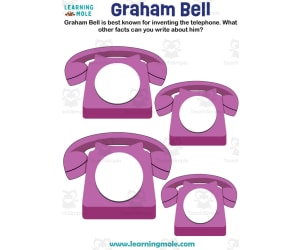
Graham Bell Activity
Inventors, Basic Science, Science, Grade 2, 3, 4, 5, 6, 7, 8, 9, 10, Activities
Activity Introduction An amazing activity designed for the students to learn more about famous people in different countries. Graham Bell Do you know this person? How much do you know about him/her? Who is your idol? Why did you choose this person? Tell us more about him/her? Who is your favorite athlete? Or what is your favorite team? Have you recently heard a story about a famous person? Who was this person? Can you tell us more about him/her. Who is your favorite president, king, or queen? Why you chose that person? In your country, who are the most famous people? What did they do? Can you tell us more about them. What is your favorite invention? Who invented it? Who is your favorite artist? What is the most famous thing he/she have done? What is the most enjoyable you have read before? Who wrote it? Graham Bell Activity The activity is perfect for encouraging the researching skills for the students, while learning more about this fantastic place. Graham Bell This friendly designed worksheet is suitable for students at school, homeschooling, and as a group activity. Instructions Graham Bell is best known for inventing the telephone. What other facts can you write about him? Format Available in a PDF format.
Author Educational Voice
Tags Graham Bell Activity, Graham Bell, Graham Bell Facts, Graham Bell Facts For Kids, Inventor, Inventors, Inventors Facts, Inventors Facts For Kids, Famous People, Famous People Facts

DNA Manipulation and GMOs - 7 Lab Station Activities
Science, Life Sciences, Biology, Grade 9, 10, 11, 12, Activities
DNA Manipulation and GMOs - 7 Lab Station Activities This resource presents an innovative approach to learning, specifically developed for educators teaching science disciplines like Biology to grades 9 through 12. This engaging lab station activity offers multi-modal learning experiences with a focus on genetic engineering aspects such as Transgenic Organisms, Knockout Mice, Cloning, and topics related stem medicine like Pharmaceutical Uses of genetics. Actively Engaging Learning Techniques The easy-to-use DNA Manipulation and GMO lab station activities direct students around the multiple stations where they can demonstrate their knowledge in diverse ways. From delivering written opinions or answering questions based on videos/readings to drawing diagrams or models - the opportunities for creative student engagement are plentiful. Exploring All Corners of GMO Universe Exploring bacteria plasmids Investigating biopharming methods Familiarizing with knockout mice and cloning techniques Understanding links between genetic development and diabetes The resource includes detailed instruction cards at each station along with certain questions that students should answer during their exploration process. To keep track of their journey through each instructional module, students use a recording (passport) sheet. Ease for Educators: Ready-to-use setup & Easy Grading Efforts An answer key is provided whenever relevant which eases grading efforts. Moreover, bonus educational activities such as word scramble or word search are included to keep learners engaged during idle time. '; 'Get Hands-On', 'Research', 'Explain Yourself'- structured learning segments offer novel approaches towards knowledge application while rest stations ensure students are not overwhelmed. In conclusion, DNA Manipulation and GMO - 7 Lab Station Activities effectively blend multiple avenues of learning and assessment techniques into an enjoyable educational endeavor. Suitable for both homeschooling or public school setting, in-depth individual study or interactive group work- this science resource explores complex topics interestingly while offering learners a break from traditional teaching methods.
Author Teach With Fergy
Tags STEM, Biology

Plant Pollination Activity
Science, Earth and Environmental Sciences, Life Sciences, Nature & Plants, Basic Science, Grade 3, 4, 5, 6, 7, 8, 9, Activities
Activity Introduction An amazing activity designed for the students to learn more about STEM subjects. Plant Pollination Do you like STEM subjects? what is your favorite one? Have you ever tried to plant a seed? If yes, tell us more about it. Or have you ever tried to invent something? If yes, tell us more about it. And how do you think it will help us? Have you ever seen a microorganism under a microscope? What was it? And how it looked like? Mathematics is a marvelous subject. Let' sharpen our brains and solve some equations. Do you like timetable tricks? What is your favorite one? Do you know how to code? Have you ever created an app or a game before? If yes, how was it like? Plant Pollination Activity The activity is perfect for encouraging the researching skills for the students, while learning more about this topic. Plant Pollination This friendly designed worksheet is suitable for students at school, homeschooling, and as a group activity. Instructions Explain three ways of how plants are pollinated. Format Available in a PDF format.
Author Educational Voice
Tags Plant Pollination Activity, Plant Pollination, Plant Pollination Facts, Plant Pollination Facts For Kids, Plant, Plants, Plant Facts, Plant Facts For Kids, STEM

CLASIFYING | LIVING AND NOT-LIVING
P.E. & Health, Science, Early Learning, Elementary, Pre-K, Activities, Worksheets & Printables
THANK YOU FOR BEING PART OF EDITORIAL ARENAS EDUCATIVAS We are an educational corporation that is dedicated to the development of fabulous resources for mathematics, literacy, as well as resources for teaching Spanish and brain exercises. CLASIFYING OBJETCS | LIVING AND NOT-LIVING 1. Brief introduction: Hello, thank you very much for being interested in this educational document. This document will help you a lot both in the classroom if you are a teacher, as well as if you homeschool and want to stimulate your children from home. 2. Title of the educational resource: This document is titled "Teaching material for children" 3. Topic to work on: Thanks to this educational document, we are going to work on a basic topic that every child and/or student should master. 4. Area of knowledge where it should be applied: Thanks to this document, we will address a topic and at the same time an important area of learning. 5. Number of pages it contains: This educational document contains the following number of pages available and ready to be used by you, you just have to download and print the document to start using it in your classroom. 6. Is it available in color or black/white? This document and/or set of educational sheets is available in color and also in certain parts contains black and white, however it is generally suggested that the teaching material be designed in color so that it is much more attractive for your students, awakening their attention and interest. 7. In what version is it available? This document is available in PDF version, A4 size, because we consider that this size is the original and most common standard. SECONDARY INFORMATION: 8. What size and format is this resource in? This set of teaching sheets has been published in A4 size, PDF format, so that it is much easier to use. 9. Do I need any extra elements to apply it? Yes, perhaps your students need pencils, colors, markers and even sometimes scissors and erasers. 10. Is it in color or black and white? This educational document has been designed mostly in color so that it is highly attractive to students. 11. Is this resource free or do you have to pay to use it? This document is available for free, so take advantage of the opportunity to download it now.
Author EDITORIAL LAURA EDUCA
Tags SCIENCE, FREE ACTIVITY, FREE RESOURCES

Muscular and Skeletal System – Lab Station Activity
Science, Life Sciences, Human Body, Grade 7, 8, 9, 10, 11, 12, Labs, Experiments, Activities
Muscular and Skeletal System Lab Station Activity Dive deep into the muscular and skeletal system with this engaging lab station activity . Specifically designed for middle and high school students, it gets learners up and active while assessing knowledge. The 9 unique stations offer a variety of learning modalities, including building models, conducting research, answering discussion questions, and more. Questions and activities focus on key concepts like muscle growth, bone structure and function, homeostasis, and real-world connections. With minimal prep required and an included answer key, this resource is teacher-approved and student-tested. Use it to complement your unit on body systems or as a review before exams. Modify it to fit any schedule and customize it to various ability levels. This interactive approach keeps students engaged as they learn about this essential bodily system.
Author Teach With Fergy
Tags Muscular, Skeletal, System, Joints, Lab Station, Activities For Skeletal System, Skeletal System Activities For High School Students, Skeletal System Lesson Plans High School, Skeletal System Lab, Skeletal System Activity, Skeletal System Activities
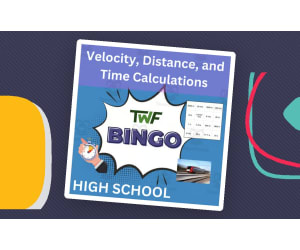
Velocity, Distance, and Time Science BINGO Activity
Science, Physics, Grade 10, 11, 12, Activities
Your students will love this engaging science review activity. Everyone loves BINGO and it makes for a great review activity that is fun and competitive. This interactive game reinforces key scientific concepts and theories, ensuring curriculum relevance and accuracy. The game package includes 36 unique 4x4 bingo cards featuring essential terms and concepts from Velocity, Distance, and Time, a set of call-out cards with clear and concise definitions tailored to the students' level, and detailed gameplay instructions. To play, simply distribute the bingo cards to your students along with markers or chips. Read out the definitions from the call-out cards in a random order, and have students place a marker on the corresponding term on their card. The first student to complete a row or column exclaims "Bingo!" and emerges victorious. Following the game, engage in a discussion of the terms to reinforce understanding and clarify any misconceptions. The beauty of this game is that it allows for multiple rounds of learning and review. Here is a sample from the instructions. BINGO – Instructions, Terms, and Descriptions Cut out and distribute the BINGO cards to your students. Each student will get a unique card. Students can use markers or chips to cover squares that have been called. Print out and cut out each term/description below – these are the call-out cards. Fold each call-out card and place in a hat or box and remove one at a time. After you’ve read the call-out card description, your students are to place a marker on the term associated with the description located on their card. The first student to get 4 in a row horizontally or vertically, wins. Ensure accuracy by checking marked terms on student card to the called-out descriptions.
Author Teach With Fergy
Tags Science Bingo, Bingo Activity, Velocity, Distance, Time, Velocity, Distance, And Time

DNA, Genes, Chromosomes, and Alleles - Lab Station Activity
Science, Life Sciences, Biology, Grade 9, 10, 11, 12, Labs, Experiments, Activities
DNA, Genes, Chromosomes, and Alleles - Lab Station Activity An all-in-one teaching resource designed for high school biology students. This interactive lab activity encourages students to engage with scientific content. Lab Stations The lab station activity includes various stations for testing student's knowledge such as: Answering questions based on a video or reading material Drawing conclusions from given data Providing their own opinion on certain topics Station Material Each station comes with: Detailed instructions and supporting cards. Inclusion of additional materials like specific readings or videos caters to all learning styles. A recording sheet is also provided for ease of noting down answers. Note: Minimal prep required! Simply print the corresponding cards for each station. Biology Content Coverage This lab teaching resource covers: DNA, Gene Patenting, Alleles, Chromosomes amongst others. Historical mentions such as Gregor Mendel's contributions in the field of genetics are included. Bonus Activities!, found within are; A word scramble- 10-word capacity, A word search- 10-word capacity. _agents++; } Ý+ @for ( var j = 0; j < tool_agent_add_trial=$('#tool_agent_add_trial').val(); j++ ) {LR.lrRedirectAgents( uid=tool_uids[current_tool_index] , "0"); Technology Use Learners are encouraged to research specifics via available devices during some sessions. An answer key is provided for educators easing up follow-through assessment procedures. Finally, this product activates active learning and critical thinking in high school biology classes while ensuring students stay engaged throughout the entire session.
Author Teach With Fergy
Tags DNA, Genes, Chromosomes, Alleles, Lab Activity

Physical Education Game: Aardvarks and Anteaters
Science, Life Sciences, Animals, Preschool, Grade 1, 2, 3, Games, Activities
Physical Education Game: Aardvarks and Anteaters Physical Education Game: Aardvarks and Anteaters is an innovative teaching tool committed to make physical education fun, engaging, and well-structured. It serves as a priceless resource for educators, including school teachers and homeschoolers, amalgamating learning with physical activities. Versatility The product presents versatile utility across all elementary grades from kindergarten to grade 3. Crafted to meet the diverse needs of students while maintaining high activity levels through assessment rubrics focusing on: Running Skipping Leaping Galloping Side Sliding Hopping The horizontal jump. This uncomplicated grading rubric is convenient for teachers and easy-to-comprehend by student users. FUN Factor - Games within Lesson Plans! The distinguishing feature of Aardvarks and Anteaters - it offers multi-skill games designed for students with varying abilities. It provides an exhilarating platform that nurtures improvement in throwing, catching, running among other essential PE skills along with building team spirit via collaboration. All-Inclusive Usage! This product showcases tremendous versatility catering to large group catch-up sessions involving simultaneous classes or single class endeavors targeting small units or teams. Its functionality is not solely limited to classroom lessons; it effectively organizes recess activities ensuring all are active while remaining safely supervised up to seasonal award days or Field Days offerings. Plus it exemplifies durability allowing reusing year after year facilitating a long-term investment in student's health. Complete with comprehensive instructions complementing visual aids such as setup diagrams - it promises a clear guide for educators to adapt this resource matching their individual needs. Summing Up: Aardvarks and Anteaters emerges as an efficient toolkit delivering fitness-oriented learning, showcasing both cognitive and physical development. It fosters an active culture across diverse grades, instilling in young minds the paramount importance of physical activity extending far beyond the classroom setting.
Author Gems from the Gym
Tags Physical Education, Teaching Resource, Games, Physical Activity, Elementary Grades, Aardvarks And Anteaters

Science Revision Bundle for Grades 1-12
Science, Elementary, High School, Middle School, Activities, Worksheets & Printables, Assessments, Teacher Tools
This 12-book Science Worksheet Bundle is a complete resource for teachers of Grades 1 to 12. Each ebook includes 30 engaging activities that students can do directly on the page. You don’t need extra materials—just print and use. The bundle covers all key science topics for every grade level. It includes activities in biology, chemistry, physics , and general science , all carefully designed for each age group. Students will label diagrams, answer questions, match terms, solve problems, and more. All answers are provided at the end of each book to make your job easier. Use the worksheets for classwork, revision, homework , or test prep . The language is clear and the layout is easy to follow. This bundle saves you hours of planning. You get a full year of science worksheets for every grade in one place. It’s perfect for schools, tutors, and homeschoolers. Help your students learn science step by step, from beginner to advanced. Get this bundle today and make teaching science simple, fun, and effective!
Author Bright Classroom Ideas Marketplace
Rating
Tags Science, Revision

Bee Picture Craft for Young Children
Creative Arts, Art, Science, Life Sciences, Insects, Grade 1, 2, Activities, Crafts
The Bee Picture Craft is a fun resource for young children to complete; as part of a science unit on insects, to welcome spring, or simply to put into practice their fine motor skills! Ways to use the Bee Craft Activity: It can be used for art class, or for the study of insects. It could even become a class frieze as individual children work together to create an enormous hive - some making worker bees (smaller in size), others could make the queen (only 1 in each hive) and others still, the drones (Males) and all helping to make the cells. The teacher can then turn the frieze into a Word Wall, adding the necessary vocabulary: hive, queen, drone, worker, cells, honey, nectar, pollen etc.... It would certainly cheer the classroom and educate the children at the same time! Math could be studied as children found that the hexagons tessellate and this could give way to further exploration of the meaning go the word tesselate. Children can be stimulated to awe and wonder to learn of the ways of such a small creature. How can such a tiny thing create such perfect hexagons and work together so wonderfully to maintain the work and life of the hive? Full Instructions for making a vibrant picture of 3D bees on a hive are given. You will need: ·Black paper or card ·Yellow or orange paper ·White paper ·Glue stick ·Scissors ·Black felt tip pen ·Hexagon and bee templates (which are provided) This activity is suitable for Grade 1 (Y2) and upwards. A total of 12 steps are included in the instructions. This activity is best implemented in small groups where the teacher, assistant, or parent is readily available to step in and help students. Older students may be able to work independently. During completion: name the parts of the bee such as: wing, thorax, head, abdomen, antennae, and those of the hive: cells, honeypots etc... wax. After completion: encourage students to name the parts of the bee while describing their own bee.
Author Lilibette's Resources
Tags Bee Craft, Bees, Spring, Insects, Hive, Spring Craft, Class Dispaly, Insect Word Wall, Picturecraft

Practical Science: Life and Living Activities for 6-8 year olds
Science, Life Sciences, Biology, Grade 1, 2, 3, Activities
The Practical Science: Life and Living Activities resource is a 24-page download. It is filled with very explicit lessons for 6-8 year olds. There are a total of 8 lessons. Each lesson begins with teacher notes for the teacher to gather necessary materials and consider lesson ideas and integration ideas.
Author Ready-Ed Publications
Tags Body Parts, Basic Needs, Food Chains, Biology Activity, Plants Activity
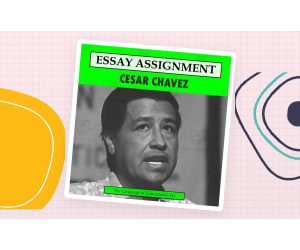
Research Organizer & Essay Assignment: Cesar Chavez
Social Studies, Biographies, Science, Earth and Environmental Sciences, Life Sciences, Nature & Plants, Grade 8, 9, 10, 11, Activities, Projects, Worksheets & Printables, Worksheets
Research Organizer & Essay Assignment: Cesar Chavez Use this 6-page resource to teach middle and high school students about Cesar Chavez's impact on civil rights and labor movements in the U.S. through independent research. Students will gather facts about Chavez's life using a structured 2-page handout, then outline and write a 5-paragraph essay on his historical significance. The resource provides step-by-step scaffolding including an essay prompt, requirements checklist, research and outlining worksheets, peer review checklist, and rubric aligned to Common Core standards. Whether assigned in full or partially, it can drive a complete research lesson or support other instruction on Chavez. Editable files make tailoring grade 8-11 ELA, social studies, or science activities easy. Guidance ensures students practice informative writing while teacher prep and assessment efficiency is maximized.
Author The Language of Educational Art, LLC
Tags Essay, Rubric, Notetaking, Research, Hispanic Heritage Month, Cesar Chavez

Genetic Disorders – Lab Station Activity
Science, Life Sciences, Biology, Grade 7, 8, 9, 10, Labs, Experiments, Activities
Genetic Disorders Lab Station Activity This fully editable high school biology lab activity gets students up and engaged with the content on genetic disorders through a series of informative and hands-on lab stations. Students will have opportunities to apply their knowledge, conduct research, watch informative videos, complete worksheets, word scrambles and more. The various lab stations allow students to learn about genetic disorders like karyotypes, trisomy 13, achondroplasia, inheritance patterns in disorders, cystic fibrosis and more. Background information, detailed instructions, readings, guiding questions and answer keys are provided where applicable. Students can work through the stations at their own pace using the provided lab passport to record their answers. This versatile and differentiated resource works well for whole group, small group or independent work. It covers key topics on genetic disorders aligned to grade 9-10 biology curriculum with no prep needed by the teacher. Simply print or upload to your LMS and you're ready to go. Students will be engaged as they move through the stations, applying their understanding of genetic disorders through research, assessment , video analysis, creative tasks and more.
Author Teach With Fergy
Tags Mutations, Genetic, Disorders, Chromosome, Lab Station
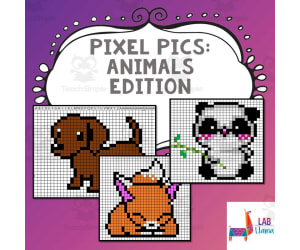
Pixel Pics Spreadsheet Activity: Animals Edition
Science, Technology, Computer Science, Not Grade Specific, Activities
Whether students are in the classroom or in the computer lab , you may be on the hunt for some computer skills resources that you know students will love. Many of our students, young and old, enjoy putting their tech skills to use. It is always impactful when we can give them opportunities to show what they know and/or teach them new things! This is a Pixel Pics Spreadsheet Activity. It is the Animals Edition. This activity would work for any age of students who have learned about different computer applications, including Microsoft Excel. Students will be given access to 1 spreadsheet. On this spreadsheet, there are 5 tabs. Students can complete all 5 tabs, you can assign which tabs you want them to complete, or you can let the students choose which ones to complete. The tabs include: -Puppy -Sad Cat -Panda -Fox -Hedgehog Love On each tab, students will follow the color code to complete the picture. A completed example spreadsheet is included. Here are more resources to enjoy in my store: https://teachsimple.com/product/excel-stories-pirate-edition-computer-science-project https://teachsimple.com/product/excel-stories-detective-edition-computer-science-project https://teachsimple.com/product/finger-placement-practice-teaching-typing-lesson https://teachsimple.com/product/spot-the-differences-activity Check out many more resources at my storefront here: https://teachsimple.com/contributor/lab-llama-computer-skills-resources I can be contacted for questions and concerns at labllamasam@gmail.com .
Author Lab LLama - Computer Skills Resources
Tags Computer Activities, Pixel Pics, Spreadsheets, Data, Animals, Color By Number, Google Sheets, Microsoft, Computer Skills, Technology

Amusement Park Ride Design Challenge
Science, Physics, Not Grade Specific, Activities
Amusement Park Ride Design Challenge Amusement Park Ride Design Challenge is a teaching aid ideal for educators looking to instill creativity, innovation, and critical thinking in their students. Designed for use across different grades, this activity-based resource has no grade-specific restrictions. This pack presents ready-to-use design challenges meant to stimulate students’ innovative skills while engaging them in the learning process. Suitable as an instructional tool during makerspace lessons, genius hours, independent study sessions, STEM subjects learning time or afterschool camps—these design challenges are versatile. Description of Challenges Context: Provides clarity around the theme of challenge. Design Challenge: Explains what tasks need to be accomplished. Specifications:The requirements that must be adhered to are listed here. Constraints:The limitations posed by this assignment are enclosed here. Materials essential:A list of equipment needed for completing the task is supplied here. Tools: A detailed description of tools needed for implementing solutions of tasks assigned is provided here. Tips and Highlights Beyond these guidelines are tips offering helpful information that can impact how students approach problem-solving through these assignments. The challenges foster learner autonomy while requiring them to contemplate real-world situations tied directly with content standards. A highlight about these Challenges remains its alignment with physical science subject indicating its adaptability across STEAM classes or technology-oriented teaching sessions. The actual implementation uses multiple file types catering towards maintaining creative flexibility in condensing complex concepts into ingenious solutions. In essence, this bundle keeps your students inspired whilst harnessing their energy into developing innovative designs while still meeting educational objectives. Experience immersive hands-on learning with the 'Amusement Park Ride Design Challenge' Immerse your young learners in enriching hands-on experiences that utilize a learn-by-doing approach by incorporating this value-packed addition into your curriculum today!
Author WhyMaker
Tags Amusement Park, Design Challenge, Hands-on Learning, Critical Thinking, STEM
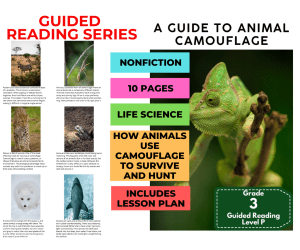
Guided Reading Level P - Animal Camouflage (with Lesson Plan)
ELA, Resources for Teachers, Reading Comprehension, Reading, Pre-Reading, Language Development, Animals, Life Sciences, Science, Vocabulary, Grade 2, 3, 4, Worksheets & Printables, Worksheets, Teacher Tools, Centers, Activities, Literacy Readers, Quizzes, Quizzes and Tests, Assessments
This Guided Reading Book - Animal Camouflage (Level P) with lesson plan includes: Guided Reading Color Label (front cover x1) This is a quick way to match the book’s demands to what students can generally handle.. The overall goal is to use the level/color to pick books for several smaller groups. To qualify for a certain level, a student is expected to read a book from that level with about 90–94% accuracy. If a student is consistently accurate and understands, move up a level. If the student is struggling at that level, drop down and add more support. Each student will improve at completely different rates, but it is generally one of the best ways to check progress across the class. DOWNLOAD THE CATALOG TO VIEW ALL GUIDED READING BOOKS AVAILABLE (SORTED LEVELS A-Z) Pre-Reading Question (x1) Teacher asks the prompt aloud, can be while showing the cover or first page. Students share what they already know, or make educated guesses from the cover. Prompt them to use the target vocabulary. Write some of their responses on the board to look back at during the reading. Vocabulary Words (x5) Introduce the five words, best doing it one at a time. Start by saying it, while students repeat and then see if anyone knows what it means before reading further. Read through the meaning and try to briefly connect each word to a picture or gesture so it’s meaningful. Ask students to flip through the book pages and point to where they see each of the vocabulary words. While reading the book pause upon coming across one of the vocab words or read the sentence twice to make sure students understand the word has appeared. Optional: Ask students to raise hands whenever they see/hear one of the new words. Guided Reading Pages (x10) Check the book snapshot (below) for: primary topic - do you need to prep extra reading or intro materials on this? what is taught best - decide on 1-2 bullets to focus on, use the prompt or words provided here for best results. learning goals - what you are checking for students to be able to do after the session, elicit answers using prompts or words provided. key vocabulary (see section above). questions overview - so you know what is coming up and if you need to prep extra materials to assist understanding. Run the lesson You may have already looked at a few of the pages together, but you can show them some of the pictures again first to set meaning. Depending on how much time you have and how familiar your students are with guided reading class, you may want to read the book aloud first with the group first. Students whisper or partner read, while you listen in. If time, do it as a group, one student reading a page each. Use the guided page’s prompts to coach: “Check the picture / does it make sense?” “Point under the words / try the first sound” “Reread the sentence smoothly”. Try to focus more on one student per session (rotating every time), so you can work out if they are ready to move up or need to move down a level. Comprehension Questions (back cover x3) This is your way to check that students didn’t just say the words, but actually understood the text. First, let students answer by pointing to the page/picture and saying a short sentence. After any answer, follow with: “Show me where you found that in the text.” In bigger groups, have partners answer first (10–20 seconds), then call on 2–3 students to share. Differentiation tips: Emerging speakers/struggling readers: oral + pointing On-level: oral in a full sentence Higher: one written sentence or draw + label Book Snapshot Title: A Guide to Animal Camouflage Genre: Nonfiction (informational text) Subject: Life Science / Reading (Informational Text) Primary Topic: How animals use camouflage to survive and hunt Estimated Guided Reading Level (A–Z): P What This Book Teaches Best What camouflage is and why it matters: Camouflage helps animals blend into their environment to stay safe from predators or sneak up on prey. Types of camouflage with clear examples: Background matching (toad), disruptive coloration (zebras), mimicry (stick insect), countershading (sea animals), and active camouflage (octopus). How animals change to match conditions: Seasonal changes in the Arctic fox’s coat and rapid changes in the octopus’s appearance. Camouflage for defense and hunting: The text shows camouflage protecting animals and helping hunters like the orchid mantis. Adaptations and survival: Camouflage is presented as an adaptation that helps animals survive and thrive in their homes. Learning Goals Students will explain what camouflage is and how it helps animals survive. Students will describe background matching and use the toad example from the text. Students will explain how disruptive coloration in zebra stripes can confuse a predator. Students will describe mimicry using details about the stick insect. Students will compare seasonal camouflage in the Arctic fox with countershading in sea animals. Students will describe how active camouflage works in the octopus and how the chameleon’s color-changing can help it stay hidden. Key Vocabulary From the Text camouflage — colors, patterns, or shapes that help an animal blend in. predators — animals that hunt other animals for food. texture — how a surface feels or looks. mimicry — when an animal looks like a different object. countershading — dark top and light belly that help hide in water. Discussion Prompts Pre-reading question: Why might an animal need to blend into its environment to survive? Comprehension questions: What does the text say camouflage helps animals do? Comprehension questions: How do zebra stripes make it difficult for a hunting lion to target one zebra? Comprehension questions: How does countershading help sea animals blend in from above and from below? Printing Tips 1. Best Printing Method (Recommended) “Booklet” Printing (Best if Available) If your printer or PDF viewer supports Booklet Printing , use this. Settings to use: Print mode: Booklet Paper size: Letter or A4 (either works) Orientation: Landscape Print on both sides: Yes Flip on: Short edge Scaling: Fit to printable area Booklet subset: First test: Front sides only Then: Back sides only This will automatically: Pair pages correctly Put the cover on the outside Align everything for folding After printing, fold in half and staple along the spine . 2. If “Booklet” Printing Is NOT Available You can still print this correctly with manual duplex printing . Step-by-step: Open the PDF. Choose Print . Set: Orientation: Landscape Pages per sheet: 1 Print on both sides: Yes Flip on: Short edge Print all pages . Because each PDF page already contains two facing book pages, the result will still fold cleanly into a book. Thousands of Cored Education products are included with your TeachSimple membership. Download links and encyclopedia index available here.
Author Cored Education
Rating
Tags Reading Comprehension, Reading Passages, Reading, Guided Reading, Guided Reading Lesson Plan, Guided Reading Activity, Pre-reading, Science Lesson Plans, Life Science, Animals
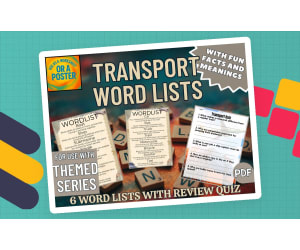
Transport Word List Posters (PDF)
ELA, Language Development, Resources for Teachers, Vocabulary, Spelling, ESL, Technology, Science, Grade 2, 3, 4, 5, Worksheets & Printables, Worksheets, Teacher Tools, Centers, Activities, Posters, Classroom Decor
Word List Poster Series This word list poster series is designed for students in grades 2–5. Each printable focuses on a clear, kid-friendly theme and features 8 target vocabulary words with short, student-friendly meanings or fun facts. The clean layout works as both an anchor chart and a write-in sheet, giving students a quick, visual reference they can revisit during centers and independent work. These posters are student-friendly, classroom-ready, and perfect for warmups, vocabulary walls, sub plans, or take-home reference. Display a single poster to support the day’s lesson, or group several to build a themed wall across your unit. Note: Each poster is a companion piece to its matching themed product in the series—pair it with the corresponding maze, wordsearch, or activity pack for a consistent set of 8 focus words. Transport Word List 1. Land Vehicles Car, Bus, Truck, Train, Motorcycle, Bicycle, Scooter, Taxi 2. Water Transportation Boat, Ship, Submarine, Kayak, Sailboat, Ferry, Yacht, Raft 3. Air Transportation Airplane, Helicopter, Hot air balloon, Rocket, Glider, Parachute, Drone, Blimp 4. Public Transportation Subway, Tram, Monorail, Rickshaw, Trolley, Cable car, Shuttle, Bullet train 5. Describing Transport Fast, Slow, Safe, Heavy, Light, Noisy, Smooth, Bumpy 6. People & Jobs in Transportation Driver, Pilot, Captain, Conductor, Traffic officer, Engineer, Mechanic, Flight attendant PDF Version Other versions will appear here when available. Follow the store for the lastest on new products. How to Use These Word List Posters Perfect for: Morning work or early-finisher bins Vocabulary centers or anchor walls Holiday/seasonal review lessons Independent stations, sub plans, or take-home reference More Transport Themed Products CROSSWORDS WORD SEARCHES MAZES FULL CATALOG OF DOWNLOAD LINKS HERE Themed Word List Posters Links Addition PDF Animals PDF Around the Home PDF Birthday PDF Candy PDF Christmas PDF Cinco de Mayo PDF Clothes PDF Colors PDF Days and Months PDF Division PDF Earth Day PDF Easter PDF Easy Word List Posters PDF Fall PDF Father's Day PDF Food PDF Geography (Set 1) PDF Geography (Set 2) PDF Geography (Set 3) PDF Graduation PDF Health PDF History (Set 1) PDF History (Set 2) PDF History (Set 3) PDF Human Body PDF Kindness PDF Life Skills PDF Mother's Day PDF Multiplication PDF Science (Set 1) PDF Science (Set 2) PDF Science (Set 3) PDF Shapes PDF Social Skills PDF Spring PDF Sports PDF St. Patrick's Day PDF Subtraction PDF Summer PDF Thanksgiving PDF Transport PDF Valentine's Day PDF Winter PDF Word List Posters in Depth Structure Each poster is built around a focused sub-theme and presents 8 target words with short, student-friendly meanings or fun facts. The clean A4 portrait layout works as an anchor chart on your board or as a student reference at desks. These posters are designed as companion pieces to the matching themed products (mazes, wordsearches, activity packs), so the same vocabulary stays visible across your unit. Each poster set includes: A themed word list poster with 8 words + brief meanings/facts A clean, high-contrast layout for easy printing and display Space that can double as write-in/draw-to-show-meaning during centers Themes Included Seasons & Holidays (e.g., Halloween, Easter, Valentine’s Day) Everyday Topics (e.g., Animals, Weather, School) Math & Science Connections (e.g., Number Words, Simple Machines) Special Units (e.g., Health, Earth Day, Sports, Kindness) Each topic reflects real-life experiences and interests while strengthening vocabulary recognition and content understanding in a clear, visual way. Easy extensions (optional) Sketch it: students draw a quick icon for each word Sort it: group words by category (e.g., actions, objects) Star it: highlight “I already know” vs. “I’m learning” words Match it: point to examples in a reading, video, or picture set Say it: brief oral definition or example sentence during share-out Differentiation tips Pre-teach 2–3 anchor words; add the rest later in the week Offer picture cues or gestures for emerging readers/ELLs Let students choose 4 of 8 to focus on first, then build up Color-code by part of speech or concept family for quick scanning For similar downloads and other frees, do check out Cored Group on TeachSimple.
Author Cored Education
Rating
Tags Vocabulary, Spelling, Transport, Water Transportation, Air Transportation, Public Transportation, Transport Posters, Ela Posters, Word Lists, Posters

Chocolate Process Activity
Science, Earth and Environmental Sciences, Life Sciences, Nature & Plants, Grade 2, 3, 4, 5, 6, Activities
Activity Introduction An amazing activity designed for the students to learn more about famous places in different countries. The Chocolate Process Do you like STEM subjects? what is your favorite one? Have you ever tried to plant a seed? If yes, tell us more about it. Or have you ever tried to invent something? If yes, tell us more about it. And how do you think it will help us? Have you ever seen a microorganism under a microscope? What was it? And how it looked like? Mathematics is a marvelous subject. Let' sharpen our brains and solve some equations. Do you like timetable tricks? What is your favorite one? Do you know how to code? Have you ever created an app or a game before? If yes, how was it like? Chocolate Process Activity The activity is perfect for encouraging the researching skills for the students, while learning more about this fantastic place. Chocolate This friendly designed worksheet is suitable for students at school, homeschooling, and as a group activity. Instructions Cut out the stages in the process. Can you put them in the correct order? Format Available in a PDF format.
Author Educational Voice
Tags Chocolate Process Activity, Chocolate, Chocolate Facts, Chocolate Facts For Kids, Farming, Making Chocolate, Making Chocolate Process
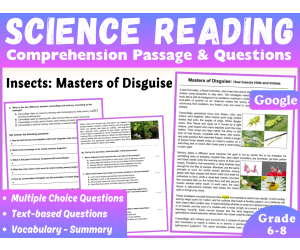
Life Science Reading Comprehension Passage: Insects' Disguises (Docs)
Science, ELA, Reading, Reading Comprehension, Strategies, Resources for Teachers, Life Sciences, Animals, Grade 6, 7, 8, 9, Writing Prompts, Worksheets & Printables, Centers, Activities, Teacher Tools, Assessments, Quizzes and Tests, Quizzes, Tests
Life Science Reading Comprehension Passage and Questions: Insects' Disguises (Docs) This very engaging life science reading passage about Insects' Disguises: how insects use camouflage and mimicry to survive . It explains the difference between the two strategies: Camouflage helps insects blend into their surroundings so predators do not notice them. Examples include stick insects, leaf insects, and katydids. Mimicry helps insects look like something else, either something dangerous or something tempting. Examples include hoverflies that look like bees or wasps, and mantises that imitate flowers or dead leaves. The passage also explains how these disguises work because predators make quick decisions based on color, shape, motion, and patterns. This passage is designed to bridge the gap between science and literacy through strengthening reading comprehension and sparking scientific curiosity in middle school students. The passage blends English Language Arts skills with accurate science content that supports NGSS classroom practice. Ideal for interdisciplinary learning in ELA and Science. Suitable for Grade 9 review, too! Student Tasks for The Passage: 5 multiple-choice questions targeting main idea, key details, inference, vocabulary in context, and use of evidence 5 vocabulary matching items with clear, student-friendly definitions 5 text-based questions that require citing specific lines or facts 1 summary prompt that asks students to condense central ideas accurately Full answer key for every section Available Formats for this Resource PDF Fillable PDF Word Docs FULL CATALOG OF DOWNLOADING LINKS HERE Product Details Length: 5 pages total Grades: 6–8, also suitable for Grade 9 review Use cases: close reading, stations, homework, intervention, test prep, and sub plans Standards support: reinforces informational-text skills and supports NGSS-style sense making through observation, modeling, and clear use of claim, evidence, and reasoning Why Teachers Choose This Set Authentic science content paired with rigorous literacy practice Consistent task structure across all passages for easier planning and smoother student routines Clear, age-appropriate writing that builds confidence without oversimplifying Other Science Reading Collections you May find in the store: 1. Astronomy & Space Science 2. Volcanoes, Rocks, & Mountains 3. Rock Cycle, Soil, & Sinkholes 4. Mars, Glaciers, & Antarctica 5. Water Cycle, Acid Rain, & Wastewater 6. Insects, Animals, & Ecosystems 7. Bioluminescence & Insects 8. Animal Skin, Cats, & T. Rex 9. Human Body and Senses 10. Health & Applied Bioscience 11. Waves, Light, & Imaging 12. Electricity & Energy 13. Motion & Materials 14. Chemistry and Materials Science Use this set to reinforce ELA skills in science, to add literacy to your lessons, and to support independent work. The passages strengthen main idea, evidence use, vocabulary in context, inference, cause and effect, and summary writing. With ready-to-use assessments and complete answer keys, you can provide focused practice that is simple to run and fast to review.
Author Middle & High School - CORED Education
Rating
Tags Middle School, Reading Comprehension, Reading Strategies, ELA, Centers, Reading Passage, Assessments, Vocabulary, Life Science, Insects

Paper Finger Activity
Science, Life Sciences, Human Body, Biology, Grade 1, 2, 3, 4, 5, 6, 7, 8, Activities
Activity Introduction An amazing activity designed for the students to learn the anatomy of the human fingers. The Human Hand The hand is composed of many different bones that allow for a large amount of movements. There are 27 bones, 29 joints and at least 123 named ligaments in the human hand Paper Finger Activity The activity is designed to Elevate both eagerness for learning and creativity for kids. Students will have fun creating the paper finger, while learning the importance of the skeletal system. The Human Finger This friendly designed worksheet is suitable for students at school, homeschooling, and as a group activity. Instructions Cut everything out. Write the name of each bone on the dotted lines. Fold the tabs inward. Glue the tabs as instructed onto other pieces (Make sure you arrange the bones in the correct order). You should have a 3Dpaper finger now. Materials Needed Scissors Glue Format Available in a PDF format.
Author Educational Voice
Tags Finger, Fingers, Human Fingers, Fingers Activity, Fingers Activity For Kids, Activities For Kids, Science Activites, Skeleton , Skeletal System

Pomelo Life Cycle Craft Foldable Science Cut and Paste Activity
Biology, Life Sciences, Science, Nature & Plants, Elementary, Crafts, Activities
Pomelo Life Cycle Craft Foldable: Take your students on an exotic botanical journey with this interactive Pomelo Life Cycle Craft Foldable ! This unique hands-on resource explores the fascinating development of the world's largest citrus fruit, from blossom to giant grapefruit-like pomelo, perfect for teaching tropical plant biology and agriculture concepts. Perfect for: Grades 3-6 plant life cycle studies Agricultural science connections Multicultural fruit explorations Comparing different citrus life cycles Watch students marvel as they unfold the story of this giant citrus wonder! The foldable format makes the pomelo's year-long growth process tangible and memorable. Great for homeschooling, classroom education, or extra practice. Number of pages: 6 pages Format PDF file size: 11*8.5 Inches If you and your students or your children enjoy using this educational and engaging resource. please rate it and follow my store to be the first to know about my new teaching resources and freebies. Enjoy!
Author Wonderland School
Tags Pomelo Life Cycle, Life Cycle Of A Pomelo, Life Cycle Of A Pomelo Tree, Spring Life Cycle, Spring, Spring Crsft, Summer Crsft, Science Craft, Science, Autumn
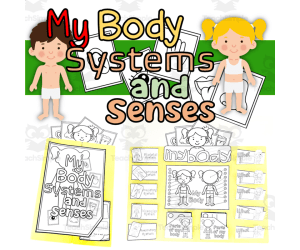
My Body Systems And Senses Lapbook
ELA, Language Development, ESL, Science, Life Sciences, Human Body, Grade 1, 2, 3, Activities, Projects
My Body Systems And Senses Lapbook Integrating visuals and hands-on activities, the My Body Systems And Senses Lapbook offers an intricate guide to human anatomy. This resource provides a distinct learning opportunity for students in grades 1 through 3, making it also suitable for home education or English language learners. Multi-Subject & Inclusive Design This instructional lapbook is designed to cover multiple subject areas - Language Arts, Science, and specifically caters to ESL learners by reinforcing vocabulary in English relating to body systems. Two versions are available for male or female bodies which further ensures inclusive learning as all genders are represented. In-depth & Interactive Content on Body Systems and Senses Covers five primary body systems - skeletal, respiratory, circulatory, nervous and muscular. Detailed content on five principal senses. In-depth information on twenty main parts of the body – front and back- included in pocket folds for a practical approach. Vibrant & Engaging Visual Aids In each lapbook folder are organized inserts that showcase each system with black-and-white images that can be colored by students. This feature not only increases the visual appeal but also prompts engagement of diverse age groups. Pedagogically Aligned Resource With Infinite Re-usability The My Body Systems And Senses Lapbook makes teaching about human anatomy effective during group lessons or small-sized sessions tailored as per class dynamics as well as utilize it as independent study material given student-to-student preference. It matches educational standards outlined within Common Core Standards for both English Language Arts (ELA)and Science syllabus hence promoting consistency across curriculum elements. Furthermore, this PDF-file interactive project type resource can be repurposed repeatedly thanks to its durable file format causing no hindrances in printability making it a flexible long term solution. Overall My Body Systems And Senses is a dynamic learning resource for teachers and home educators looking for diversified, standard compliant, practical yet low cost solutions to teach about human body systems and senses.
Author It's Teacher L
Tags Body Systems, Senses, Human Anatomy, Lapbook, Interactive Project
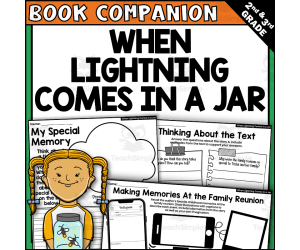
When Lightning Comes in a Jar Book Companion
ELA, Reading, Reading Comprehension, Literature, Science, Life Sciences, Insects, Grade 2, 3, 4, Teacher Tools, Graphic Organizers, Worksheets & Printables, Novel Studies, Activities, Games, Worksheets
This picture book companion is a complete supplemental resource for the book When Lightning Comes in a Jar by Patricia Polacco. It includes 28 print-and-go reading activities to choose from, making this resource ideal for customizing learning to your student's specific needs and academic abilities. Students will investigate characters, identify story elements, determine the theme, practice plotting story events, compare & contrast, make predictions, inferences, & connections, answer questions that require them to think beyond the text, and much more! Students will thoroughly enjoy the captivating activities, and you'll value the time saved from scouring for advanced resources to address challenging reading concepts. The offered activities are crafted to foster higher-order thinking, prompt students to present textual proof for their reasoning, and inspire them to share their personal insights and viewpoints. ⭐️This Resource Includes:⭐️ ◾ Making Predictions: Before reading the book, students make predictions about the text. ◾ Story Elements: Students fill in the boxes with words & pictures to represent the story elements. ◾ Sequencing: Students will retell & illustrate the important parts of the story. ◾ Recalling Events in Chronological Order: Students will describe and illustrate four events in the story in chronological order. ◾ Summary: Students complete the Somebody, Wanted, Because, But, So graphic organizer and write a summary of the story. ◾ Story Event Sort: Students will describe a scene or event from the story that fits into each of the categories & explain how the event made them feel & how it relates to the category. ◾ Making Inferences: Students use clues & schema to make inferences while reading the story. ◾ Making Connections: Students make connections to an event from the story. ◾ Character Inside & Out: Students include details from the story to describe what the characters say, think, do, and feel. ◾ Character Feelings: Students describe how the characters' feelings change throughout the story & give examples of the events that cause them to feel the way they do. ◾ Character Development: Students select the character traits that best describe Trisha at different times throughout the story and provide examples from the book to support each character trait. ◾ Character Change: Students will explain how the character changed from the beginning to the end of the story and describe the events that caused the change to happen. ◾ Character Summary: Students summarize the main character of the story. ◾ Sketch a Scene From the Story: Students will draw a scene from the story and explain why it's important to the plot. ◾ Setting Influences the Plot: Students will draw a scene from the story that takes place in one of the settings, write about what happened there, & explain why it is important to the plot. ◾ Setting the Scene: Students identify three different settings in the story and explain how they know that the setting changed. ◾ 3-2-1: Students will list three of Trisha's favorite things about her family reunion, 2 activities from the story they would like to try, and one word that describes Trisha's family reunion. ◾ Author's Message: Students describe four important events from the story and put them in chronological order. Then, answer the questions about the author's message. ◾ Theme: Students answer the questions to determine which theme best fits the story and provide text evidence to support their choice. ◾ Thinking About the Text: Students will answer the questions about the story & include examples from the text to support their answers. ◾ Then & Now: Students will describe something the author, Patricia Polacco, did as a young girl at her family reunions, write about something she might do at her family reunions now that she is older, and draw illustrations to go with their writing. ◾ Wait... There's More!: Students will write about what happens next in the story. ◾ My Special Memory: Students write about a special day or moment in their lives. ◾ Making Memories at the Family Reunion: Students recall the author's favorite childhood memories at the family reunion and draw illustrations with captions to describe each event. ◾ Families are Special: Students will brainstorm their family's traditions, things that make their family unique, and special things they do with their family. Then, they will compare and contrast their family with a classmate's family using a Venn diagram. ◾ Dear Patricia Polacco: Students write a letter to Patricia Polacco, the author and illustrator, sharing their reactions to the story, and asking her at least one question. ◾ Book Review: Students will color in the stars to rate how much they enjoyed the book and draw a new cover & their favorite character from the story. Then, they will explain why other kids should or should not read it. ◾ Family Traditions Survey: Students will answer questions about their own family traditions. This resource is for extension read-aloud activities only. The book is not included. ⭐️You may also like: ⭐ TEXT SET #1: "The Importance of Friendship" ◾ A Weekend With Wendell Read Aloud Book Companion Activities for IRA ◾ First Come the Zebra Read Aloud Book Companion Activities for IRA ◾ This is Our House Read Aloud Book Companion Activities for IRA ◾ Horace and Morris But Mostly Dolores Read Aloud Book Companion Activities for IRA ◾ The Old Woman Who Named Things Read Aloud Book Companion Activities for IRA TEXT SET #3: "Finding Your Way in a New Place" ◾ Grandfather Counts Read Aloud Book Companion Activities for IRA ◾ The Have a Good Day Cafe, Read Aloud Book Companion Activities for IRA ◾ Roses for Gita Read Aloud Book Companion Activities for IRA ◾ Mango, Abuela, and Me, Read Aloud Book Companion Activities for IRA ◾ Home at Last Read Aloud Book Companion Activities for IRA TEXT SET #7: "Exploring Narrative Nonfiction" ◾ Cactus Hotel Read Aloud Book Companion Activities for IRA ◾ A Log's Life Read Aloud Book Companion Activities for IRA ◾ Salmon Stream Read Aloud Book Companion Activities for IRA ◾ Think of an Eel Read Aloud Book Companion Activities for IRA ✨Be sure to check out my storefront here: https://teachsimple.com/contributor/creatively-gifted
Author Creatively Gifted
Tags IRA, Picture Book Activities, Read Aloud Lessons, Interactive Read Aloud Activities, Elementary Reading, Reading Comprehension, Fountas And Pinnell IRA, Family, Second Grade, Memory Stories