



3,990 products added recently
Page 86 - Science Activities
Ignite your students' interest in science with activities that make learning interactive and exciting. This collection offers experiments, demonstrations, and inquiry-based projects covering various scientific fields. By integrating these science activities into your lessons, you can encourage critical thinking, foster curiosity, and deepen understanding of scientific concepts.

 Show filters

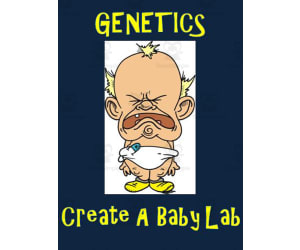
Genetics ~ Create a Baby Lab
Science, Life Sciences, Human Body, Grade 8, 9, 10, 11, 12, Activities
Have your students “Create a Baby” based on specific dominant or recessive traits! The Create A Baby lab can be used during any unit on genetics, all that is needed are some pennies and colored pencils. Students will “create” or draw a baby based on traits acquired through chance. This lab is very flexible as it will work for any level student from English Learner - EL - to more advanced students. This product includes a complete lab, brief guidelines, an answer key and discussion questions.
Author The Teacher Team
Tags Anatomy, Biology, Genetics, Lab, ELL

Independent, Dependent & Controlled Variables Lesson
Science, Basic Science, Grade 4, 5, 6, 7, 8, Activities, Experiments
This fun science lesson is a great introduction for a science fair unit or a beginning of the year scientific method unit when you need to teach your students how to carry out a true experiment . It teaches students about independent, dependent and controlled variables using humour and real-life situations. The first page has fill-in-the blank notes about a pretend experiment I completed that had some mistakes in the design. Students should stay engaged and focused throughout the lesson component as they have to fill in the blanks. They should start to think about why controlling variables matters, and they learn the relevant vocabulary. The second page gives students a chance to start brainstorming some basic experimental design ideas on their own or in pairs. They are given three situations and need to think of independent variables they could alter, what dependent variable that would affect, and all of the other variables they would need to carefully control. At the end, there is a quick review to reinforce the relevant vocabulary. Grades to Use With: This lesson can easily work in a variety of grades in the middle years, from grades 4-8 and possibly beyond! Standards: NGSS3-5-ETS1-3 Plan and carry out fair tests in which variables are controlled and failure points are considered to identify aspects of a model or prototype that can be improved. If you enjoy this science activity, check out some other options in my store: Personal Carbon Emissions /Footprint: Integrated Math and Earth Sciences Lesson: Ways to Slow Climate Change Periodic Table: Element Baseball Cards STEM Project: Extreme Environment Technology Design and "Shark Tank" Presentation STEM Project: Climate Change Solutions 8 Low-Prep STEM Tasks for Elementary and Middle School Students: Simple Handouts for Each Experiment
Author Grace Under Pressure
Rating
Tags Science Experiments, Independent Variable, Dependent Variable, Science Fair, Scientific Method, Control Variable, Experiment, STEM, Science, Elementary Science, Variables In Science Experiments, Independent And Controlled Variables, Controlled Scientific Experiment, Examples Of Independent Dependent And Controlled Variables, Controlled Variables In Science, Independent Dependent And Control Variables, What Are Independent Dependent And Controlled Variables, Science Experiment Control, Variables For Science Projects, Worksheet, Lesson, Science Worksheet, Science Lesson
Reading Passages on Weather and Solar System (Videos)
ELA, Reading, Reading Comprehension, Science, Earth and Environmental Sciences, Earth Sciences, Common Core, ESL, Language Development, Pre-Reading, Grade 5, 6, 7, Teacher Tools, Activities
Accompanying Videos Based on Reading Passages on Weather and Solar System for Earth Science These accompanying videos contain scripts extracted from the Science Reading Passages series. With stock footage, subtitles, voiceovers, animation and diagrams, they will help students understand the topic more. Ideal for starting or ending a lesson, each video runs at less than 5 minutes and is at least 95% identical to the passage itself. What's inside? Part 3 Videos - Weather & Solar System Reading Passage 1: Earth Moon and Sun Reading Passage 2: Weather Measurement Causes and Changes Reading Passage 3: Classification of the Sun and Other Stars Reading Passage 4: Inner and Outer Solar System Science Reading Comprehension Outline: Introducing a comprehensive resource tailored for 5th and 6th graders, this product offers enriching reading passages supplemented with illustrative pictures and graphs to clarify key concepts. Aligned with the Common Core State Standards (CCSS), it offers a hassle-free approach to teaching, given that the bulk of the preparation is already done for you. The passages present a diverse set of questions – from multiple choice to data analysis and fill-in-the-blanks. This ensures a rich blend of high-interest content and fundamental curriculum-based science themes. With its versatility, you can seamlessly integrate these lessons into various classroom settings, whether it's whole class discussions, morning exercises, independent desk tasks, small group engagements, contingency plans for substitute teachers, regular homework assignments, or even themed activities for holidays. FULL CATALOG OF DOWNLOAD LINKS HERE Grade 5/6 Links: Physical Science Part 1 - Physical and Chemical Properties Google Docs/Slides/Forms PDF PPT Word Free Supplementary Pack Accompanying Videos Physical Science Part 2 - Motion and Energy Google Docs/Slides/Forms PDF PPT Word Free Supplementary Pack Accompanying Videos Physical Science Part 3 - Electricity and Magnets Google Docs/Slides/Forms PDF PPT Word Free Supplementary Pack Accompanying Videos Life Science Part 1 - Cells, Reproduction and Genetics Google Docs/Slides/Forms PDF PPT Word Free Supplementary Pack Accompanying Videos Life Science Part 2 - Human Body Systems Google Docs/Slides/Forms PDF PPT Word Free Supplementary Pack Accompanying Videos Life Science Part 3 - Plant Parts and Ecosystems Google Docs/Slides/Forms PDF PPT Word Free Supplementary Pack Accompanying Videos Earth Science Part 1 - Plate Tectonics and Rock Cycle Google Docs/Slides/Forms PDF PPT Word Free Supplementary Pack Accompanying Videos Earth Science Part 2 - Ocean Exploration and Natural Resources Google Docs/Slides/Forms PDF PPT Word Free Supplementary Pack Accompanying Videos Earth Science Part 3 - Weather and Solar System Google Docs/Slides/Forms PDF PPT Word Free Supplementary Pack Accompanying Videos For similar products and other frees, do check out Cored Group on TeachSimple .
Author Cored Education
Rating
Tags Science, Elementary, Reading, Comprehension, Vocabulary, Answers, Ccss, Common Core, Earth Science

Research: World of Mammals: Lagomorphs
Science, Life Sciences, Biology, Grade 8, 9, 10, Activities, Projects, Worksheets & Printables, Worksheets
This Research: World of Mammals: Lagomorphs book contains science and literary activities. It has a mixture of activities including a cartooning component. There are anatomical activities,essay, data worksheets on a variety of 13 rabbits, and additonal literary segments. There is a quiz on content knowledge. It is a fun learning independent work book. This Research: World of Mammals: Lagomorphs includes the following topics to be researched to complete the booklet: 1 Essay: What really is a rabbit? 2 Terminology 3 Anatomy of a Rabbit 4 Life Cycle of a Rabbit: Art/ Drawing Activity 5 Pygmy Rabbit 6 Antelope Jackrabbit 7 Snowshoe Hare 8 Arctic Hare 9 Black-tailed Jackrabbit 10 European Hare 11 Alaskan Hare 12 Swamp Rabbit 13 Desert Cottontail 14 Brush Rabbit 15 Eastern Cottontail 16 Mountain Cottontail 17 Marsh Rabbit 18 Science Acrostic Activity : A literary/ stem activity combination 19 Create a Limerick: A literary activity 20 Word Search 21 Cartoon Activity 22 Science Vocabulary Jumble Puzzle 23 Answer key: Science Jumble Puzzle 24 Quiz: Stem/ Science Content Knowledge 25 Answer key: Quiz This Research: World of Mammals: Lagomorphs is designed to be completed either individually, in groups, or pairs of students. It can also be assigned all together or in parts.
Author THE LANTERN OF KNOWLEDGE
Tags Rabbits, World Of Mammals, Lagomorphs, Independent Research, Science Research
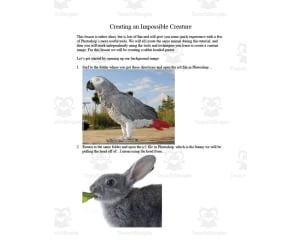
Impossible Creature Photoshop Activity
Science, Technology, Grade 7, 8, 9, 10, Activities
Students will work with digital tools in the Impossible Creature Photoshop Activity . Students will use images to create an impossible creature. Step by step directions are included.
Author OK Products
Tags Technology, Computer Science, Science Lesson, Technology Activity, Clip Art, Graphic Designs, Photoshop

Galaxy Photoshop Activity
Science, Technology, Grade 7, 8, 9, 10, Activities
Students will work with digital tools in the Galaxy Photoshop Activity . Students will work with a variety of tools to create a galaxy. Step by step directions are included.
Author OK Products
Tags Photoshop, Mobile Applications, Computer Lesson, Computer Activity, Technology, Graphic Design, Design Concepts, Galaxy, Astronomy

Sharecropping and Tenant Farm Game
Science, Earth and Environmental Sciences, Life Sciences, Nature & Plants, Grade 9, 10, Activities, Games
This is a Sharecropping and Tenant Farming Game. National Curriculum Standards: Learners will understand how scarcity and uneven distribution of resources result in economic decisions, and foster consequences that may support cooperation or conflict Specific Objective: Students will be able to evaluate the systems of sharecropping and tenant farming, to see whether they were fair and equitable systems by which freedmen and women could have a sustainable life. Materials: Budget worksheets provided Lesson: After you have covered the bulk of Reconstruction, you can then touch on how the land was distributed among freedmen and women. There were basically two ways in which it was done. Since the vast majority of freedmen and women had practically nothing, they had to somehow rent the land and tools in order to farm. Those that did not have neither, would be sharecroppers. The owner of the land would allow them to use the land and also lend them tools but they would typically have to pay half the profits to the landlord. For those fortunate enough to have their own tools, they could rent the land for a fixed price. They were typically known as tenant farmers. After this has been explained, tell your students that they will experience firsthand how the system worked or (not worked). Divide the class into two groups: tenant farmers and sharecroppers. Also, divide them into pairs within each group. Tell them that they are a married couple trying to make ends meet. Then to half the class give the sharecropper budget worksheet and to the other half, the tenant farmer budget worksheet. Tell them that for each year, they will have to fill out the budget sheet. At the beginning of each year, they will have to select a crop to plant on their little parcel of land. They will have three choices: corn, wheat and cotton. (They may not choose a combination, but they can change their selection each year). Each year, each crop will perform differently depending on the weather and market forces. But they don’t know how each crop will do until the round starts. They’ll just have to guess and try to make it through. Also, for each year, make sure they understand to deduct payments to the landlord, and a fixed living expense.
Author Creative Educator
Tags Sharecropping, Farming, Farm Game, Tenants, Sharecroppers, Farmers, Economic Decisions, U.S. History, Small Group Games, Social Studies, Sharecropping Vs Tenant Farming, Tenant Farming Vs Sharecropping, What Are Tenant Farmers And Sharecroppers, What Were Tenant Farmers And Sharecroppers, Sharecropping And Tenant Farming, Sharecroppers Or Tenant Farmers

Facts about Mars Activity
Science, Earth and Environmental Sciences, Space, Grade 3, 4, 5, 6, 7, 8, 9, 10, Activities
Activity Overview An amazing activity designed for the students to learn more about space facts. Facts about Mars Do you like reading about space? If yes, what is your favorite topic? What do you know about our solar system? What is the smallest planet in our solar system? What is the biggest plant in our solar system? What is the hottest plant in our solar system? And what is the coldest one? Do you think there are aliens? If yes, what do you think they look like? What do they eat and how they speak to each other? Where do they live? What is a galaxy? And what is a milky way? Have you recently saw a shooting star? If yes, tell us more about it, like when did it happen and where? What is a blackhole? Can a blackhole gets bigger by time? Do you like counting the stars? What do you think a star is made of? Facts about Mars Activity The activity is perfect for encouraging the researching skills for the students, while learning more about the fantastic space. Facts about Mars This friendly designed worksheet is suitable for students at school, homeschooling, and as a group activity. Instruction What is Mars's order from the Sun? Colour the correct circle. Format Available in a PDF format.
Author Educational Voice
Tags Facts About Mars Activity, Mars Activity, Mars, Mars Facts, Mars Facts For Kids, Space, Space Facts, Space Facts For Kids, Planet, Planet Facts
Technology Time Centers Activity
ELA, Writing, Science, Technology, Preschool, Grade 1, Centers, Activities
This activity is designed to help students explore a variety of digital tools to produce and publish writing, including in collaboration with peers. This is a great way to help students learn about technology and how to use it to improve their writing skills.
Author Have Fun Teaching
Tags Essays

Domesticated Animals Identification
Science, Life Sciences, Animals, Basic Science, Kindergarten, Activities
Domesticated Animals Identification: An Engaging Teaching Resource Domesticated Animals Identification is explicitly designed for early learning and preschool students. This product focuses on familiarization with various domestic animals, serving as a fundamental tool in understanding zoology and basic science. - Cards Overview - The resource features 12 different cards, each representing a distinct domestic animal. Through each card, learners will recognize animals such as: Cow Sheep Goat Horse Duck etc. * Real-World Photos – Minimizing Confusion * The use of real-world photos within this learning aid works to minimize confusion among young students who often find it challenging distinguishing one animal from another. User Flexibility: Group Discussions or Individual Learning? This resource promotes learning in multiple settings; large group discussions or small study circles whereby individual learners can progress at their own pace without pressure. Teachers may also assign these resources for home-based reinforcement activities . Operational Simplicity – Demystifying Tech Integration! Fear not about steep membership costs! Post your initial free 90-days trial period that comes with your purchase, you may choose to continue using our services through either our complimentary accounts or opt-for our premium services to avail enhanced assignment tools coupled with student performance tracking abilities—catering to everyone's varied needs. In Summary—A Valuable Addition! A Final Word! In essence Domesticated Animals Identification is a valuable addition to any educator's toolkit reinforcing key life sciences basics while promoting a dynamic learning experience across diverse platforms — in public school classrooms, homeschools or virtual classrooms!
Author Disha Digital School
Tags Domestic Animals, Identification, Zoology, Science Education, Interactive Learning
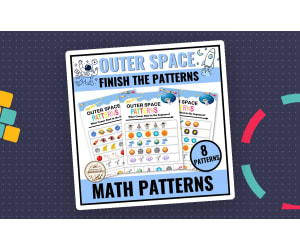
Outer Space Worksheets Finish the Pattern Puzzle for Pre-K, Kindergart
Basic Science, Science, Earth and Environmental Sciences, Patterns, Early Math, Math, Kindergarten, Preschool, Grade 1, Games, Activities
Blast Off Into Math Mastery! Do you want an Outer Space Math Activity for your Preschool, Kindergarten or 1st-grade students? This Fine Motor Skills Patterning Pack comes in handy. Executive function, sequencing, and hand-eye coordination are targeted at once. You can choose between a worksheet or a reusable math center; There are images of rocket ships, stars, planets, and astronauts in this pack, which children will enjoy. Reasons why you need this; It helps in learning math patterns like AB, ABB, AAB and ABC. It also aids motor skills with its cutting and pasting element. It can be used in ways. Math Centers, morning work or Occupational Therapy. Who can use this pack; It’s good for English language learners or children with special needs. The pictures and instructions are simple enough to understand. You can play in two ways: Print and go worksheets: Cutting pictures and gluing them in order. Laminated task boxes: Set up a math station with Velcro dots and pattern strips. So here is the information about what the inner well is. PDF to send home with students More levels of patterns for kids to try! Sequencing tasks with planets, stars and rockets. This pack is, for; Kids who are interested in space and science. Homeschooling children who enjoy space. Students who need assistance with patterns. Teachers who need a fun activity. Identification: For PreK, Kindergarten, 1st Grade and 2nd Grade. For math, geometry, patterns and fine motor skills. You can download it away (PDF). Get this patterning pack today! Help your students get better at math!
Author Bambolina55
Rating
Tags Outer Space Patterns, Outer Space Finish The Pattern, Outer Space, Outer Space Kindergarten, Outer Space Kindergarten Activities, Outer Space Preschool Game, Ouer Space Preschool Activities, Outer Space Kindergarten Game
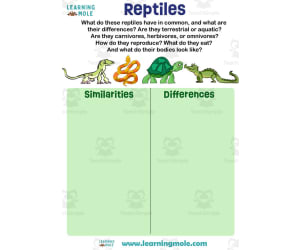
Reptiles Activity
Science, Life Sciences, Biology, Animals, Grade 3, 4, 5, 6, 7, 8, 9, Activities
Activity Introduction An amazing activity designed for the students to learn more about famous places in different countries. The Reptiles Do you like animals? what is your favorite one? Do you own a pet? If yes, tell us more about it, like what its name? And what do you like most about it? What are the animal kingdoms? Can you write down the characteristics of each animal class like mammals, birds, reptiles, amphibian, fish and mollusks. Do you know that some animals can sing, can you name any of them? What is the largest and the smallest mammal in the world? What is the largest and the smallest bird in the world? What is the largest and the smallest fish in the world? Reptiles Activity The activity is perfect for encouraging the researching skills for the students, while learning more about this fantastic place. Reptiles This friendly designed worksheet is suitable for students at school, homeschooling, and as a group activity. Instructions What do these reptiles have in common, and what are their differences? Are they terrestrial or aquatic? Are they carnivores, herbivores, or omnivores? How do they reproduce? What do they eat? And what do their bodies look like? Format Available in a PDF format.
Author Educational Voice
Tags Reptiles Activity, Reptiles, Reptile, Reptiles Facts, Reptiles Facts For Kids, Animal, Animals, Animals Facts For Kds, Animals Facts

Clouds Mini Project Resource Pack
Science, Earth and Environmental Sciences, Earth Sciences, Preschool, Grade 1, 2, Activities, Projects
This Clouds Mini Project Resource Pack gives the teacher a multitude of ideas for how to design a full science project for with geography, language, science, and art ideas. Students get to apply their knowledge through writing and drawing activities to apply to their projects.
Author Lilibette's Resources
Tags Clouds Project, Science Project, Clouds Printables, Geography, Clouds
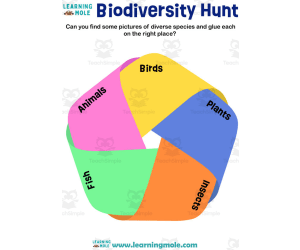
Biodiversity Hunt Activity
Environmental Science, Earth and Environmental Sciences, Science, Grade 2, 3, 4, 5, 6, 7, 8, 9, 10, 11, 12, Activities
Activity Introduction An amazing activity designed for the students to learn more about STEM. Biodiversity Hunt Do you like STEM subjects? what is your favorite one? Have you ever tried to plant a seed? If yes, tell us more about it. Or have you ever tried to invent something? If yes, tell us more about it. And how do you think it will help us? Have you ever seen a microorganism under a microscope? What was it? And how it looked like? Mathematics is a marvelous subject. Let' sharpen our brains and solve some equations. Do you like timetable tricks? What is your favorite one? Do you know how to code? Have you ever created an app or a game before? If yes, how was it like? Biodiversity Hunt Activity The activity is perfect for encouraging the researching skills for the students, while learning more about this fantastic topic. Biodiversity Hunt This friendly designed worksheet is suitable for students at school, homeschooling, and as a group activity. Instructions Can you find some pictures of diverse species and glue each on the right place? Format Available in a PDF format.
Author Educational Voice
Tags Biodiversity Hunt Activity, Biodiversity Hunt, Biodiversity Activity, Biodiversity, Biodiversity Facts, Biodiversity Facts For Kids, Environment, Animals, Birds, Plants

White Light, Dispersion and Colour Filters Dominoes Game for Middle School
Science, Physics, Grade 5, 6, 7, 8, 9, Games, Activities
The White Light, Dispersion and Colour Filters Dominoes Game for Middle School The White Light, Dispersion and Colour Filters Dominoes Game for Middle School is an innovative teaching resource designed to enhance student understanding of complex scientific concepts. This enjoyable and engaging tool focuses on aiding middle school students (Grade 5, Grade 6, Grade 7, Grade 8, and Grade 9) in mastering the foundational concepts related to the dispersion of light. Instead of traditional numbers or dots, these dominoes feature statements and questions on key topics such as white light dispersion, the order of colours in the spectrum and how colour filters operate. Prior knowledge needed to grasp this game includes awareness about primary (red, green, blue ) and secondary colours (magenta cyan & yellow )of light. Likewise knowing that any two primary colours when mixed give a secondary colour strengthens the comprehension further. If all three primaries are mixed it gives white light. Cleverly integrating symbols or descriptions within sketches or circuit diagrams prompts playful matches during domino play sessions; thereby ushering in visual learning. The game also trains learners' observational skills by instilling that any object only reflects its own collinear while absorbing all other types. About Resource Content: The resource contains ninety dominos along with an animated PowerPoint presentation detailing gameplay rules ensuring teachers can quickly grasp this new pedagogical concept for their science classes. In gameplay, if players spot a wrong match, they have the opportunity to challenge it promoting critical thinking. This product creatively bridges learning gaps by turning typical class assignments into interactive group activities thereby making physics more approachable. Versatility: One could use this versatile tool individually for homework assignments as well as collectively within small specific learning groups inside classrooms catalyzing collaborative learning. They come in multiple file types providing ease across different digital formats ensuring convenience at every step. In conclusion, educators seeking fresh perspectives towards theoretical physics teachings would appreciate the White Light, Dispersion and Colour Filters Dominoes Game as it leads the way through scientific exploration in a non-traditional yet profoundly impactful manner.
Author Elf off the Shelf Resources
Tags White Light, Dispersion, Colour Filters, Dominoes Game, Middle School

Solar Wind Activity
Space, Earth and Environmental Sciences, Science, Earth Sciences, Grade 2, 3, 4, 5, 6, 7, 8, Activities
Activity Introduction An amazing activity designed for the students to learn more about space facts. Solar Wind Do you like reading about space? If yes, what is your favorite topic? What do you know about our solar system? What is the smallest planet in our solar system? What is the biggest planet in our solar system? What is the hottest planet in our solar system? And what is the coldest one? Do you think there are aliens? If yes, what do you think they look like? What do they eat and how they speak to each other? Where do they live? What is a galaxy? And what is a milky way? Have you recently saw a shooting star? If yes, tell us more about it, like when did it happen and where? What is a blackhole? Can a blackhole gets bigger by time? Do you like counting the stars? What do you think a star is made of? Solar Wind Activity The activity is perfect for encouraging the researching skills for the students, while learning more about the fantastic space. Solar Wind This friendly designed worksheet is suitable for students at school, homeschooling, and as a group activity. Instructions Can you explain the following photo to someone who doesn't understand solar winds? Format Available in a PDF format.
Author Educational Voice
Tags Solar Wind Activity, Solar Wind, Solar Wind Facts, Solar Wind Facts For Kids, Sun, Sun Facts, Sun Facts For Kids, Earth, Earth Facts, Earth Facts For Kids

Algorithms (Unplugged Coding #1)
Science, Technology, Computer Science, Grade 1, 2, 3, 4, 5, 6, 7, 8, Activities
You want to introduce or teach your students about programming / coding however you don’t have access to computers? No problem. This “Unplugged Coding” resource works without computers. After completing these printable activities, your students can apply similar logic and strategies to coding websites and apps. This is a great alternative or additional resources before using code.org or Scratch. This resource is apart of an unplugged coding series. In each, a different main concept is focused on. To use this resource, just print the PDF and have your students coding, unplugged today. The main focus of this resource is Algorithms. The purpose is to demonstrate that computer code follows a set of rules. This resource includes the following type of activities and worksheets: Algorithms info page. Explains what an Algorithm is and why it is useful to computers. This handout also has real life examples. It is a great starting point. Brushing Your Teeth Algorithm Activity Making a Sandwich Algorithm Activity Watching TV Algorithm Activity Making a Pizza Algorithm Activity Planting a Seed Algorithm Activity Decorating a Christmas Tree Algorithm Activity Curving a Pumpkin Algorithm Activity
Author Roombop
Tags Coding, Unplugged Coding, Programming, Printables
Python Programming Activity - Tic Tac Toe (Noughts and Crosses)
Science, Technology, Computer Science, Grade 7, 8, 9, Activities
Python Programming Activity - Tic Tac Toe (Noughts and Crosses) An engaging educational resource crafted for students aged eight to sixteen. Its purpose is to enhance their knowledge of foundational programming concepts through an exciting journey into game creation using Python, a popular text-based programming system. Key Programming Components Sequences: The game sheds light on programming sequences, which are crucial for learning every aspect of software development. If statements and Variables: The learners use IF statements carried by variables to create specific program flows or outcomes. Conditional and Count-controlled loops: Helps understand looping techniques that form the basis of many software operations The use of 1D and 2D arrays:This activity not only brings in an enjoyable perspective but also enhances interactive learning experiences. Ten printable PDF pages are also included for hands-on learning offline—a consideration that caters to varied learner preferences and circumstances—from whole group instruction in classrooms through homework assignments bolstering individual comprehension. Suitable Target Group This resource attunes perfectly with grade 7 through grade 9 science streams—specifically those focusing on propelling advancements in computer science studies. Activities focus on real-life implications syncs up with fostering future-ready skills via applying acquired knowledge onto learned topics. In Essence, The Python Programming Activity - Tic Tac Toe fosters a holistic environment for computational enrichment via teaching reinforcement married with practical application via creating a fun game together—a tool pivoting education plus entertainment—to keep learners motivated during their coding journeys. </p
Author Edulito
Tags Python Programming, Tic Tac Toe, Game Creation, Programming Concepts, Arrays

Paper Helicopter STEM Project: Gr 5-7 Scientific Method Mini Unit
Science, Basic Science, Technology, Engineering, STEM, Grade 5, 6, 7, Activities
Here's a great science mini-unit for the start of the year to help your middle school or intermediate students learn about the scientific method, design, and independent variables in a fun and hands-on way! This is also a great project to complete before a science fair unit! How to Use: Print a booklet (double-sided) for each student with pages 2-9. Print a single page 10 for each student. o Types of Variables: Read through as a class, give students time to identify the mistake, and teach students the three types of variables. o Designing Experiments : Students can work in pairs or small groups to think of how they would design experiments for the following situations. Come back together and share as a class, then ensure students complete the bottom section on their own to assess comprehension. o Paper Helicopter STEM Activity: Carefully go through the instructions. Choose a date in a couple of weeks for Registration Day (students will need at least 3 hours of class time to test models). The class after that can be Finals Day. Next, students use their single sheet (p. 10) to make the initial design and test it several times to see how long it takes to fall. o Helicopter Logbook: Students make at least three new designs. Each time they should only change one variable from the previous design. So, they could first change the wing length. After that, they could change the type of paper, and finally, they could change the size of the model, etc. Each time they explain, predict, make the model, observe 3 trials, and reflect. o Registration Day: Once students have tested at least 3 designs and have their best one, they make a fresh template of that design to hand in. Finals Day: Students have 10 minutes to create their final helicopter from their template. Everyone tests three times, and the class winner can be determined! [Note: The best design usually ends up being a simple, tiny square of paper!] o Reflection: Students complete the three questions and put all their pages together to be marked out of 50.
Author Grace Under Pressure
Tags STEM, Paper Airplane, Paper Helicopter, Scientific Method, Experiments, Independent Variable, Back To School, 6th Grade, Design, Science Project
Tinkercad Tips and Challenge
Science, Technology, Computer Science, Not Grade Specific, Activities
All the tips you need for understanding how to use Tinkercad-- helpful hints for both students and teachers! Plus, a challenge to help test your knowledge and put those tips and tricks to good use.
Author WhyMaker
Tags Computer Science - Technology, Instructional Technology, Tinkercad Projects For Middle School
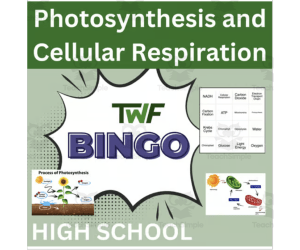
Photosynthesis and Cellular Respiration Science BINGO Activity
Science, Life Sciences, Biology, Nature & Plants, Grade 6, 7, 8, 9, 10, 11, Activities, Worksheets
Your students will love this engaging science review activity. Everyone loves BINGO and it makes for a great review activity that is fun and competitive. This interactive game reinforces key scientific concepts and theories, ensuring curriculum relevance and accuracy. The game package includes 36 unique 4x4 bingo cards featuring essential terms and concepts from Photosynthesis and Cellular Respiration, a set of call-out cards with clear and concise definitions tailored to the students' level, and detailed gameplay instructions. To play, simply distribute the bingo cards to your students along with markers or chips. Read out the definitions from the call-out cards in a random order, and have students place a marker on the corresponding term on their card. The first student to complete a row or column exclaims "Bingo!" and emerges victorious. Following the game, engage in a discussion of the terms to reinforce understanding and clarify any misconceptions. The beauty of this game is that it allows for multiple rounds of learning and review. Teachers will appreciate the game's ability to encourage active participation and engagement in the classroom setting, catering to various student learning styles and promoting differentiated learning. By matching definitions to terms on their bingo cards, students actively engage with the material, enhancing their retention and comprehension of complex scientific theories. Here is a sample from the instructions. BINGO – Instructions, Terms, and Descriptions Cut out and distribute the BINGO cards to your students. Each student will get a unique card. Students can use markers or chips to cover squares that have been called. Print out and cut out each term/description below – these are the call-out cards. Fold each call-out card and place in a hat or box and remove one at a time. After you’ve read the call-out card description, your students are to place a marker on the term associated with the description located on their card. The first student to get 4 in a row horizontally or vertically, wins. Ensure accuracy by checking marked terms on student card to the called-out descriptions.
Author Teach With Fergy
Tags Science Bingo, Bingo Activity, Ecology, Ecosystems, Photosynthesis, Cellular Respiration, Photosynthesis And Cellular Respiration
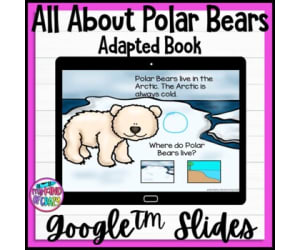
All About Polar Bear: Adapted Book
Science, Life Sciences, Animals, Preschool, Kindergarten, Grade 1, Activities
"All About Polar Bear: Adapted Book" is a science teaching resource primarily targeted at: Preschoolers Kindergartners First Graders This resource, with its 12 engaging and innovative slides, familiarizes young pupils with some fascinating aspects of polar bears. Its content encompasses both vocabulary and reading comprehension. The adapted book uses an interactive Google Slide format, making it a boon for traditional classroom teachers as well as homeschooling parents. Versatility in Use: The slide activities are designed to be incorporated: During whole group instruction to initiate class discussions. In small groups for detailed exploration. In one-on-one teaching sessions for personalized engagement levels. It can also be allocated efficiently as homework assignments, reinforcing classroom-taught concepts while promoting self-study skills. Purpose Beyond Science: Besides being an interesting science module on Polar Bears, this product helps in developing necessary language skills among young learners through their exposure to new vocabulary lists and reading comprehension questions. Zoological Concepts: The subject matter revolves around zoology - specifically introducing kids early into fundamental biological concepts using real-world examples like polar bears' adaptation nuances. Equipped with drag-and-drop elements within the Google Slide activities, children are likely to enjoy active participation in lessons - enhancing retention of information acquired. Motivate your kids towards learning with the ""All About Polar Bear: Adapted Book""! Get hold of this excellent tool for lesson planning, enabling you more time to do what teachers do best- TEACH!
Author My Kind of Crazy
Tags Polar Bear, Adapted Book, Interactive Learning, Zoology, Vocabulary

Five Senses Sense Quest Activity
Science, Life Sciences, Biology, Preschool, Grade 1, 2, Activities
This activity is designed to help students identify objects related to each of the five senses. By playing Sense Quest, students will have the opportunity to practice using their sense of sight, smell, touch, taste, and hearing. This activity is a great way for students to learn more about the world around them and to develop their critical thinking skills.
Author Have Fun Teaching
Tags Human Body

Honey Bee July | Kindergarten Unplugged / Digital Coding
Science, Technology, Computer Science, Preschool, Kindergarten, Grade 1, Activities
Honey Bee July | Kindergarten Unplugged / Digital Coding The Honey Bee July | Kindergarten Unplugged/Digital Coding resource has been thoughtfully developed for educators seeking to introduce their kindergarten students to the concepts of programming and coding. Designed for accessibility, it can be used regardless of whether you have computer access or not. This resource transforms coding into a fun and engaging STEM activity that is both simplified yet effective. Based on a honey bee theme, perfect for July lessons, this resource leads children into the world of basic logic puzzles. By actively solving these puzzles, students implicitly train in strategies they can later apply to actual coding applications and websites. These hands-on activities make learning interactive and also support the Hour of Code initiative. The resources include: Convenient printable activities Cuttable command pieces that allow children to physically manipulate code sections Worksheets dedicated specifically to mapping and cracking codes along with colorful map pieces which enhance the visual learning process. In addition, educators are provided with PDF files that include guidelines on how best to use this resource in their classroom. There is also an instructional sheet designed for pupils which explains how exactly they should play with these puzzles. In recognition of today's increasingly digital classrooms, this packet comes as an editable Google Slide alongside its standard 8.5 x 11 printable PDF format so you can tweak the content according your needs or remove any unnecessary elements before sharing it digitally inside Google Classrooms enabling drag-and-drop interaction—making it perfectly suitable even for distance learning situations! Possibilities are endless! Whether used as a whole group activity or in smaller groups or perhaps even assigned as engaging homework tasks—the possibilities are broad and each implementation guarantees informative fun while furnishing practical skills crucial in today's tech-fired era—not just limited within computer science study but penetrating universally across all future-leaning academic fields!
Author Roombop
Tags Coding, Programming, STEM, Logic Puzzles, Interactive_learning