



3,952 products added recently
Page 251 - Activities By Subject
Simplify lesson planning by accessing activities organized by subject. Whether you're focusing on math, science, language arts, or social studies, these resources provide targeted support to enrich your teaching. Incorporate them to align with curriculum standards and engage students effectively.

 Show filters


A Song (MP3)
ELA, Reading, Preschool, Kindergarten, Grade 1, Songs, Activities
This resource is great for teachers who are looking for a fun and engaging way to help their students learn the sight word A. The A Song is a catchy tune that students will love while they learn to recognize, spell, and use the word A in sentences. This is a great resource for any teacher working with young students.
Author Have Fun Teaching
Tags Counting

ANIMAL CRAFT | 5 FUNNY DESIGNS
Creative Arts, Art, Early Learning, Elementary, Homeschool Resources, Pre-K, Crafts, Activities, Classroom Decor
ANIMAL CRAFT | 5 FUNNY DESIGNS THANK YOU SO MUCH FOR PREFERRING "EDITORIAL LAURA EDUCA", PLEASE DOWNLOAD TOO THESE RESOURCES I HAVE MADE FOR YOU: -FUNCTIONS OF OBJECTS: https://teachsimple.com/product/arriba-abajo-up-down-16-spanish-flashcards -PUZZLES OF ANIMALS: https://teachsimple.com/product/spanish-puzzles-of-animals-10-exercises -ANIMAL SHADOWS: https://teachsimple.com/product/animal-shadows-1-free-worksheet -LEARNING COLORS: https://teachsimple.com/product/learning-the-spanish-colors-4-free-worksheets?srsltid=AfmBOoo23hM8LUpUVjtzwIU3c2wZk9jfDEm4Vahzn3_C3ahrwEvPOsaW MAIN INFORMATION: -Provide a brief overview of this resource. Hello! First of all, thank you so much for your interest in my products, as they have been created with great dedication and care. -Explain the learning goal or objective of this material. The objective of this document is, firstly, to promote fun learning for students. Another objective is to ensure that students develop most of their cognitive processes. -Describe the sequence, organization, and steps included in this resource. This document begins with a cover page introducing the topic, followed by the content, and finally, some details about my store. -Indicate the recommended grade level(s) or age group(s). This educational document has been developed for young children/students in general; however, it could be said that this document could be used by students of different grade levels who are interested in learning. SECONDARY AND COMPLEMENTARY DESCRIPTION: -Describe the format in which this resource is provided. I could also explain that most of my resources are designed in PDF format, but you will also find some presented in PPT. -Confirm if answer keys are included and their usefulness. Due to their nature, most of my resources do not include answer keys. -Suggest SEO-friendly tags or keywords for this product. I could give you some keywords: resources, resources for children, educational resources, education, early childhood education. -Explain how educators can use this resource and possible adaptations. In the educational process, teachers have complete freedom to use this document in whatever way they see fit, so at this point I could say that educators can adapt this product as they see fit. -Mention any standards or curriculum alignment. It has not been developed based on any specific standards.
Author EDITORIAL LAURA EDUCA
Rating
Tags FREE, FREE RESOURCES, ART, CRAFT, CRAFTS, ARTS, ANIMALS, CLASSROOM DECOR, DECOR
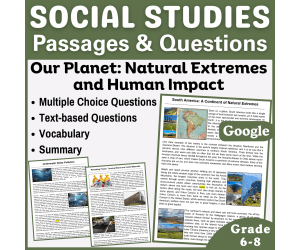
Social Studies Reading Passages: Our Planet and Human Impact (Docs)
ELA, Reading, Reading Comprehension, Strategies, Resources for Teachers, Social Studies, Geography, Grade 6, 7, 8, 9, Writing Prompts, Worksheets & Printables, Centers, Activities, Teacher Tools, Assessments, Quizzes and Tests, Quizzes, Tests
Social Studies Reading Comprehension Passages and Questions: Our Planet: Natural Extremes and Human Impact (Word) This resource introduces a collection of Social Studies reading comprehension passages with questions about Our Planet: Natural Extremes and Human Impact. The passages are carefully designed to bridge the gap between social studies and literacy through strengthening reading comprehension and sparking knowledge curiosity in middle school students. Each passage blends English Language Arts skills with accurate social studies content . Ideal for interdisciplinary learning in ELA and Social Studies. Suitable for Grade 9 review, too! What Is Included in this Collection? There are three informational passages (with full answer keys): Remaking Plastic: Turning Waste into Useful Materials Underwater Noise Pollution South America: A Continent of Natural Extremes For Each Passage, students will have multiple tasks to complete as follow: 5 multiple-choice questions targeting main idea, key details, inference, vocabulary in context, and use of evidence 5 vocabulary matching items with clear, student-friendly definitions 5 text-based questions that require citing specific lines or facts 1 summary prompt that asks students to condense central ideas accurately Available Formats for this Resource PDF Fillable PDF Word Docs FULL CATALOG OF DOWNLOADING LINKS HERE For more Social Studies Reading Passages, check the following Links: Ancient Civilizations PDF Fillable PDF Word Docs Google Docs Early Empires and Trade Networks PDF Fillable PDF Word Docs Google Docs The Founding of the United States PDF Fillable PDF Word Docs Google Docs Language, Culture, and Meaning PDF Fillable PDF Word Docs Google Docs Psychology and Society PDF Fillable PDF Word Docs Google Docs Global Festivals and Traditions PDF Fillable PDF Word Docs Google Docs Extreme Environments and People PDF Fillable PDF Word Docs Google Docs Food, Culture, and Preservation PDF Fillable PDF Word Docs Google Docs Global Food Customs PDF Fillable PDF Word Docs Google Docs Media, Communication, and Popular Culture PDF Fillable PDF Word Docs Google Docs Human Impact on the Environment PDF Fillable PDF Word Docs Google Docs Civic Action and Social Change PDF Fillable PDF Word Docs Google Docs Fashion, Society, and Power PDF Fillable PDF Word Docs Google Docs People, Places, and Unusual Histories PDF Fillable PDF Word Docs Google Docs Product Details Length: 15 pages total Grades: 6–8, also suitable for Grade 9 review Use cases: close reading, stations, homework, intervention, test prep, and sub plans Why Teachers Choose This Set Authentic social studies content paired with rigorous literacy practice Consistent task structure across all passages for easier planning and smoother student routines Clear, age-appropriate writing that builds confidence without oversimplifying Use this set to reinforce ELA skills in social studies, to add literacy to your lessons, and to support independent work. The passages strengthen main idea, evidence use, vocabulary in context, inference, cause and effect, and summary writing. With ready-to-use assessments and complete answer keys, you can provide focused practice that is simple to run and fast to review.
Author Middle & High School - CORED Education
Rating
Tags Middle School, Reading Comprehension, Reading Strategies, ELA, Centers, Reading Passage, Assessments, Vocabulary, Social Studies, Geography

SEL: CANDY Mindfulness Breathing Calming Activity Valentine's Day
Special Resources, Social Emotional Learning (SEL), Not Grade Specific, Activities
SEL: CANDY Mindfulness Breathing Calming Activity Students take a mindful moment to breathe and trace different objects with their fingertips. This activity teaches students how to calm down emotionally while focusing on their breathing. Help your students relax by teaching them the Trace and Breathe technique, which is a part of social emotional learning (SEL). This technique helps students feel calmer by focusing on their breath and making small movements. When they feel upset or overly excited, they can use this technique to calm themselves down. Lots of cute and colorful designs to choose from! Black and White also provided! This SEL: CANDY Mindfulness Breathing Calming Activity comes with: A Description of the Trace and Breathe skill A Poster with Trace and Breathe A Colored Copy of the resource A Copy that is Black and White Ideas for Teachers to use this resource: With individual students Print out pictures based on student interest! To teach the Trace and Breathe Technique To help students to calm down as needed Ideas for Whole Class SEL: Use the technique after recess, after and assembly, etc... Address the needs of Individual Student: Allow student to use when they need a moment to calm down Create a calm down station in the classroom, have several of these printed and laminated for students to choose from and use as needed Steps to engage in this SEL: CANDY Mindfulness Breathing Calming Activity: Take a deep breathe in Begin to trace the picture with your finger Breathe out as you trace Breathe out as long as you can Pause and repeat Other Designs Available here! Animal Bundle- Cat Dog Elephant Monkey Sloth Snake Food Bundle- Pizza Watermelon Popsicle Grapes French Fries Hotdog Transportation Bundle- Airplane Car Bicycle Motorcycle Scooter Train Spring Bundle- Bunny Carrot Chick Flowers Lamb Watering Can Fall Bundle - Bat Candy Corn Ghost Leaf Pumpkin Turkey Winter Bundle - Pine Tree Snow Globe Fireplace Sled Hot Coco Snowman Valentine's Day Bundle: Stegosaurus Balloon Valentine Cupcake Candy Hearts Cupid Need some inspiration on how to use the Trace and Breathe activity in your classroom? READ BELOW! Do your students come in from recess/specials/an assembly/any activity out of the norm all sorts of hyped out and out of control? This is the PERFECT activity to get them to calm-down and transition productively! With TONS of different designs to choose from- each student can pick out a picture that speaks to them! You can laminate each student's page or place them in a protective sheet so that they can stay nicely in their desks. Display the directions on the board or have them printed-out on large poster paper. Teaching the "Trace and Breathe" skill is essential to providing your students a structured way to practice mindfulness, control their heart rate and breathing, and transition from a high to a low-energy activity. The Trace and Breathe series can also be used as an essential piece to a calming corner in your classroom! Create a comfortable, calm space where your students can go when they need to cool down. Teach expectations around when it is appropriate for students to use this corner in the beginning of the year. Then, create a binder with lots of different designs the students can choose from. Place the directions to the Trace and Breathe activity on the wall near the calming corner. Then, as needed, students can visit the calming corner, pull-out the Trace and Breathe binder, pick a design that speaks to them, and engage in a moment of meaningful mindfulness!
Author Mrs Bonie Just Teach
Tags Mindfulness , Breathing, Breathing Activity , Calm Down, Calm Dowm Activity , Calm Down Skill, Sel Lesson, Sel Skill , Valentinesday, Valentine

Finger puppets - Ancient Egypt - People of the Past
Social Studies, First Peoples (Native), Grade 3, 4, 5, 6, Activities
Finger Puppets: Ancient Egypt – Bringing History to Life Immerse yourself in the exciting world of the Ancient Egypt with these creative finger puppet templates! This interactive material brings history lessons to life in a fun and vivid way, while encouraging students' creativity. What's included? The set contains finger puppet templates in two variants: Colorful templates: Ready to cut out and use immediately. Black and white templates: These can be designed and colored by the students themselves. In addition, there are suitable backdrops for finger puppet theater as well as instructions on how the pupils can make a storage bag for their puppets, which they can place in their folder. Who is the material suitable for? The finger puppets are ideal for science and history lessons in grades 3 to 6. They offer an exciting opportunity to discover historical content in a playful and creative way. A wide range of possible applications in the classroom. Here are some ideas on how the finger puppets can be used in the classroom: Role-play: Students can re-enact scenes from Incas history to deepen what they have learned. Dialogues: The students let characters talk to each other and thus develop a more profound understanding of historical contexts. Inventing stories: The students create their own stories based on the Ancient Egypt themes. Presentations: With the finger puppets as a visual aid, students can create lectures about the Ancient Egypt. Group work: Developing scenes or stories together promotes teamwork and social learning. Why finger puppets? Finger puppets are a creative way to bring historical content to life and tangible. They support action-oriented learning, encourage collaboration, and provide students with a playful approach to complex topics. You can find many more finger puppet sets in my TeachSimple shop - e.g. on biblical stories, fairy tales or epochs of history. Best wishes, Die Relitante - Doreen Blumhagen
Author Die Relitante
Tags Finger Puppets, ElementarySchool, MiddleSchool, CreativeLearning, HistoryClass, SocialStudies, InteractiveLearning, Crafts, Ancient Egypt, History
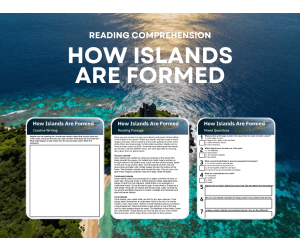
Islands Free Reading Comprehension Passage
ELA, Reading Comprehension, Reading, Language Development, ESL, Library, Science, Earth Sciences, Earth and Environmental Sciences, Strategies, Grade 2, 3, 4, 5, Worksheets & Printables, Worksheets, Teacher Tools, Centers, Activities, Writing Prompts, Assessments, Quizzes and Tests, Quizzes, Tests
Islands reading comprehension: Snapshot Title: How Islands Are Formed Genre: Nonfiction Subject: Earth Science Primary Topic: How different types of islands form Estimated Guided Reading Level (A–Z): S What This Lesson Teaches Best Explains that islands can form in several different ways. Compares volcanic islands, continental islands, and coral islands. Teaches sequence and process through volcano eruptions, lava layers, and island growth. Connects landforms to Earth processes such as magma, sea-level rise, and tectonic plates. Explains why low coral islands are vulnerable to rising oceans. Learning Goals Students will define islands using details from the passage. Students will explain how volcanic islands form over time. Students will describe how continental islands can separate from a mainland. Students will identify coral islands as atolls built by tiny sea creatures. Students will compare volcanic islands and continental islands using text evidence. Key Vocabulary From the Text Magma — hot melted rock beneath Earth. Crust — Earth’s outer rocky layer. Tectonic — related to moving plates of Earth. Atolls — ring-shaped coral islands. Polyps — tiny sea creatures that build coral. Did you know there are thousands of Cored Education products included with a TeachSimple membership? Click here for the free catalog. This product includes: Reading Passage The text is a high-interest reading passage with set paragraphs, roughly three to four paragraphs long. It contains a variety of themes about the topic, anywhere from history to technology. The passage is between 250 and 350 words in length. First, ask students to look at the headings and see what they’ll learn about today. What do they know about the topic/heading? First read options: Teacher read-aloud (best for support). Partner reading (paragraph by paragraph). While reading, students underline important details, and vocabulary words they think may come up in the questions section. Mixed Questions The first question page contains four multiple-choice questions, each with a choice of four answers, and three written response questions that require a sentence or two from the student. Students complete the mcqs first independently, then review quickly as a class. For the 3 written responses, try to get students giving the answer with some form of evidence: “I think ___ because the text says ___.” If students get stuck, send them back to check the passage. Creative Writing In this question, the student will be required to write a five to eight sentence paragraph on a question related to the topic. Before starting, ask students write down 3 key ideas they are going to include in their piece. Ask students for ideas to share around the class to help those struggling. Pro writing expectations: 5–8 sentences At least 2 facts or details from the passage At least 2 vocabulary words from the previous page Students read their paragraphs while classmates listen for facts and vocabulary words. Answer Key There are answers for the multiple-choice questions, written response questions have sample answers, vocabulary answers and if there is a summary question then a sample summary will be provided as well.
Author Cored Education
Rating
Tags Reading Comprehension, Reading Passages, Reading, Ela Mcqs, Creative Writing, Comprehension, Free, Free Reading, Science, Earth Science

Light Optics and The Production of Light – Lab Station Activity
Science, Physics, Grade 8, 9, 10, 11, Labs, Experiments, Activities
Light Optics and The Production of Light – Lab Station Activity Build student understanding and engagement with light and its properties with this interactive lab station activity . Students move through stations to explore concepts like luminous vs non-luminous objects, the electromagnetic spectrum, color blindness, and light production. Activities range from hands-on drawing to opinion writing and viewing short educational videos. Questions throughout assess comprehension and provide a chance for written explanation. The resource also includes a word scramble and word search for added student engagement between stations. Suitable for whole class or small groups, this versatile physics lab requires almost no prep, just print and go! Learning objectives focus on deepening understanding of light while having fun through a combination of activities, reading, writing and media. Supports grade 8-11 curriculum standards on light, ideal for both review and introductory lessons.
Author Teach With Fergy
Tags Light, Electromagnetic, Lab Station, Ultraviolet, Infrared

Research Organizer & Essay Assignment: Franklin D. Roosevelt
Social Studies, ELA, History, History: USA, Writing, Grade 8, 9, 10, 11, 12, Activities, Projects, Worksheets & Printables, Worksheets
Few U.S. presidents have had as large an impact as Franklin Delano Roosevelt. This resource provides your students with the opportunity to independently learn about and synthesize the life of the president who led the Allies through World War II with this engaging research planner and essay assignment. This carefully scaffolded and easy-to-assign-AND-assess resource has been designed to guide student learning from FDR fact-collection to the careful development of a five-paragraph research essay. Teaching this resource could not be easier! Start by handing out the background research and note-taking worksheet (you could also ONLY hand this out if you want a shorter lesson!). Once students have found their facts and sources, provide them with the essay outline activity, which guides them step-by-step through the requirements of a short research essay. From there, drafting their essay, using the provided peer review checklist, and submitting their final draft will be no problem at all. And then you can assess their work with the provided Common Core rubric! Use this entire resource as a complete research lesson or just part of it as a short research activity or sub plan! This TeachSimple download includes: - A Franklin Delano Roosevelt essay writing assignment with directions, requirements, research essay writing tips, a peer review checklist, and Common Core-tied grading rubric - An editable rubric, provided as a link, that lets you make adjustments to the grade values and guidelines. This link is provided as as Google Sheet specifically built for integration into Google Classroom, although you can also modify it for use in other Learning Management Systems (LMSs) - An FDR biography and note-taking worksheet that will guide your students through information gathering. This straightforward two-page handout includes instructions for background research, a fun drawing section, and an area to cite quality sources and organize conducted research - A research essay outlining worksheet, so students build on their Franklin Delano Roosevelt notes in a clear and simple manner as they build their work towards a draft and final paper - All 6-pages of this lesson are provided in full-color and B&W versions Although this resource can be fitted for any secondary Language Arts classroom, it has been carefully designed to work best in grades 8 through 11. The included rubric is subtly but specifically tied to Common Core ELA Standards for Language (3) and Writing (2 and 7). This resource is provided as a print-ready, bookmarked, and adjustable PDF file. The rubric is also included as an editable Google Sheet. This resource contains 6 pages and 1 Google Sheet.
Author The Language of Educational Art, LLC
Tags Essay, Rubric, Research, Notetaking, Outlining

Animated Story: I Want a Pet - Possessive + Pronoun Practice
ELA, Grammar, Grade 2, 3, 4, Read Alouds, Activities
The Animated Story: I Want a Pet is an interactive step-by step story for your little learners to enjoy. There are 20 slides for students to follow along with. Students will practice possessives and pronouns in this story. Here is a link to my store for more: https://teachsimple.com/contributor/bloom
Author Bloom Resources
Tags Grammar, Pets, Possessives, Animated Step-by-Steps, SEN
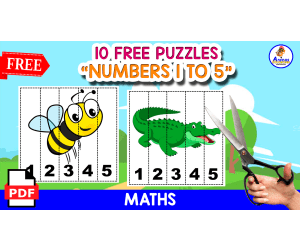
10 PUZZLES | NUMBERS 1 TO 5
Math, Numbers, Kindergarten, Preschool, Activities, Games
HELLO! THANK YOU FOR BEING PART OF EDITORIAL ARENAS EDUCATIVAS. ON THIS OCCASION WE BRING YOU THESE 10 FABULOUS PUZZLES SO THAT YOUR STUDENTS CAN PRACTICE COUNTING NUMBERS FROM 1 TO 5. GENERAL INFORMATION OF THIS PRODUCT: - Product name: 10 puzzles of numbers from 1 to 5. Thank you very much for being part of this community of educational resources. A. The name of this educational resource is The title of this educational document is "10 puzzles of numbers from 1 to 5" B. This document contains this number of pages This educational document is made up of 10 pages, on each page you will find 1 puzzle. C. This educational resource has been prepared by: This educational document has been prepared and published by EDITORIAL ARENAS EDUCATIVAS. D. You can apply this educational document in different contexts such as: You can apply this document in class if you are a teacher and you are teaching the first numbers from 1 to 5, you can also apply it at home if you are a mother or father and you want your children to learn the first numbers from 1 to 5. E. Is this document in black and white or color? This document has been prepared in color so that it is much more attractive for your students. F. For what ages is this document recommended? Recommended for children from 3 to 6 years old who are learning their first numbers from 1 to 5. G. At what point in class can I apply it? You can apply it during class or perhaps at the end by sending it as homework for your students. H. Should I apply it individually or in groups? It is preferable to apply it individually or in groups of 2 to 3 children because the activity is simple and they can finish it quickly. I. Keywords that describe the product: puzzle, number puzzle, numbers 1 to 5, numbers, math puzzles, math games . This file is for personal use only. It is not allowed to be resold or shared with others.
Author EDITORIAL LAURA EDUCA
Tags NUMBERS, NUMBERS 1 TO 5, NUMBERS 1 TO 10, PUZZLE, NUMBERS PUZZLES

It Song (Animated Music Video)
ELA, Reading, Preschool, Kindergarten, Grade 1, 2, Songs, Activities
The IT Song (Animated Music Video) is a great resource for helping students recognize the sight word IT. The song is catchy and the visuals are engaging, making it a great tool for helping students learn.
Author Have Fun Teaching
Tags Counting
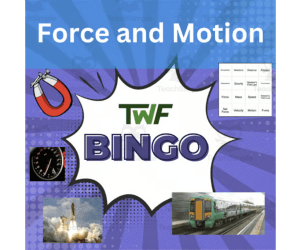
Force and Motion Science BINGO Activity
Science, Physics, Grade 6, 7, 8, 9, 10, 11, Activities
Your students will love this engaging science review activity. Everyone loves BINGO and it makes for a great review activity that is fun and competitive. This interactive game reinforces key scientific concepts and theories, ensuring curriculum relevance and accuracy. The game package includes 36 unique 4x4 bingo cards featuring essential terms and concepts from Force and Motion, a set of call-out cards with clear and concise definitions tailored to the students' level, and detailed gameplay instructions. The included terms encompass a wide range of topics, such as; Force, Motion, Gravity, Friction, Mass, Acceleration, Velocity, Newton's First Law, Displacement, Speed, Distance, Newton's Third Law, Newtons, Electromagnetic, Net Force, F=ma. To play, simply distribute the bingo cards to your students along with markers or chips. Read out the definitions from the call-out cards in a random order, and have students place a marker on the corresponding term on their card. The first student to complete a row or column exclaims "Bingo!" and emerges victorious. Following the game, engage in a discussion of the terms to reinforce understanding and clarify any misconceptions. The beauty of this game is that it allows for multiple rounds of learning and review. Teachers will appreciate the game's ability to encourage active participation and engagement in the classroom setting, catering to various student learning styles and promoting differentiated learning. By matching definitions to terms on their bingo cards, students actively engage with the material, enhancing their retention and comprehension of complex scientific theories. Here is a sample from the instructions. BINGO – Instructions, Terms, and Descriptions Cut out and distribute the BINGO cards to your students. Each student will get a unique card. Students can use markers or chips to cover squares that have been called. Print out and cut out each term/description below – these are the call-out cards. Fold each call-out card and place in a hat or box and remove one at a time. After you’ve read the call-out card description, your students are to place a marker on the term associated with the description located on their card. The first student to get 4 in a row horizontally or vertically, wins. Ensure accuracy by checking marked terms on student card to the called-out descriptions.
Author Teach With Fergy
Tags Science Bingo, Bingo Activity, Force, Motion, Force And Motion

Fox Activity
Science, Life Sciences, Biology, Animals, Grade 3, 4, 5, 6, 7, 8, Activities
Activity Introduction An amazing activity designed for the students to learn more about famous places in different countries. The Fox Do you like animals? what is your favorite one? Do you own a pet? If yes, tell us more about it, like what its name? And what do you like most about it? What are the animal kingdoms? Can you write down the characteristics of each animal class like mammals, birds, reptiles, amphibian, fish and mollusks. Do you know that some animals can sing, can you name any of them? What is the largest and the smallest mammal in the world? What is the largest and the smallest bird in the world? What is the largest and the smallest fish in the world? Fox Activity The activity is perfect for encouraging the researching skills for the students, while learning more about this fantastic place. Fox This friendly designed worksheet is suitable for students at school, homeschooling, and as a group activity. Instructions How much do you know about foxes? Let's figure out! Format Available in a PDF format.
Author Educational Voice
Tags Fox Activity, Fox, Foxes, Fox Facts For Kids, Fox Facts, Animal, Animals, Animals Facts, Animals Facts For Kids
Sight Word Foldable Book: and
ELA, Reading, Preschool, Grade 1, Activities
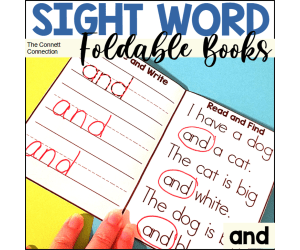
Sight Word Foldable Book: and This sight word resource helps students learn the common sight word "and" through reading, writing, and hands-on practice. The foldable books contain seek-and-find activities, tracing practice, reading sentences with the target word, and emergent readers to build sight word recognition. To use, print the no-prep pages and have students fold along the lines to create mini-books. Then they can complete the activities in any order: finding and coloring the word, tracing practice, reading and/or writing sentences with "and," and reading the emergent reader stories. These books work well for literacy centers , independent practice, homework, and sub plans in kindergarten and first grade. The foldable format gives students hands-on practice recognizing, reading, and writing the high-frequency sight word "and."
Author The Connett Connection
Tags Sight Words, Sight Word Recognition, Foldable Book, Sight Word And
Beginning Sounds Matching Game
ELA, Language Development, Phonics, Kindergarten, Preschool, Activities, Games
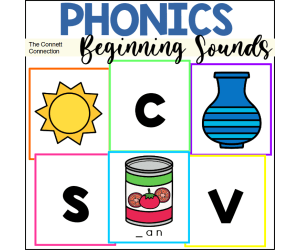
Students can practice recognizing the beginning sounds in words with this matching game. The bold, colorful, and easy to recognize images will assist students in completing this activity independently or with a partner. The colorful nature of this game will keep students engage as they match each picture to its beginning sound. What is Included There 136 different picture cards in two different formats, one with just the picture and one with the picture and the word with the beginning sound missing for students to fill in. capital and lowercase letter cards for students to match with each picture. How to Use: This set of cards can be used as a traditional matching game, where students work together or independently to match each picture to the beginning sound. This set can be used as a concentration game where students lay all the cards face down and they work to match the picture with its beginning sound or to match two cards with the same beginning sound. The picture cards with words can be laminated and students can use dry erase markers to write the beginning sound of each word on the blank line. Students can match the capital and lowercase letters. Where to Use: Literacy Centers - These beginning sound cards can be placed inside a literacy center for students to work alone or with a partner to complete. Morning Bins - These cards can be used as a morning activity for students to complete while waiting on classmates to arrive to class. Small Group Activity - Students who need extra help identifying sounds in words can be put in a small group to get further practice with this skill. Skills Assessed: With these cards teachers can assess a student's ability to identify beginning sounds in words, matching the beginning sound with its appropriate letter, and matching two pictures that begin with the same beginning sound.
Author The Connett Connection
Tags Beginning Sounds, Matching Game, Phonics Game
12 FREE EXERCISES OF MATCHING ICONS |ANIMALS THEMED
, Not Grade Specific, Activities
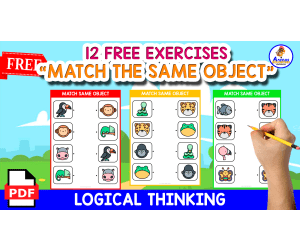
Hello! I thank you infinitely for your interest in my educational store! I am a teacher who strives every day to produce these great educational resources for children, so I thank you because with your downloads you are helping a lot to promote my personal and professional work. Thank you very much for being part of this educational resource community. A. The name of this educational resource is The name of this educational resource is "8 exercises for children to find the object that is similar" B. This document contains this number of pages This document is made up of 3 fabulous color pages. C. This educational resource has been prepared by: This educational resource has been designed, prepared and published by EDITORIAL ARENAS EDUCATIVAS. D. You can apply this educational document in different contexts such as: Yes, you can apply it in the classroom if you are a teacher and you want your students to practice visual reasoning. Also, if you are a parent, you can also apply it with your children, if you want them to make better use of their free time with healthy and entertaining leisure activities . It is also recommended that this document be printed as it is so that it is easy for students to use. E. Is this document in black and white or color? This document has been prepared in color so that it is much more attractive for students. F. For what ages is this document recommended? It is recommended to apply this document to children from 3 to 7 years old due to its ease. G. At what point in the class can I apply it? You can apply it at any time during the development of your class. It can be either at the beginning as a motivation or also at the end as an evaluation or even send it as homework. H. Is this resource free or do I have to pay to use it? This document is free to download so take advantage of the opportunity to download and use it now. I. How many pages does this educational resource have? This document is made up of 3 pages. J. Does it have an attached answer key? It does not contain an answer key. This file is for personal use only. It may not be resold or shared with others.
Author EDITORIAL LAURA EDUCA
Tags PUZZLE, PUZZLES, FREE ACTIVITIES

MATH RESOURCE | 10 PUZZLES OF THE NUMBERS 1 TO 5
Math, Numbers, Kindergarten, Preschool, Grade 1, Activities
HELLO AND WELCOME TO THE EDITORIAL ARENAS EDUCATIVAS RESOURCE STORE! Today I bring you this fantastic worksheet that contains 10 puzzles with which you can work on numbers from 1 to 5. SO TAKE ADVANTAGE OF THIS OPPORTUNITY BECAUSE THIS RESOURCE IS NOW AVAILABLE FOR FREE. INFORMATION REGARDING THIS PRODUCT: 1. Why should teachers use educational material in the classroom? As is known, the use of educational material in class is extremely useful because this way students can actively build their knowledge. For this reason, we encourage teachers to continue acquiring educational material so that we can motivate the learning of mathematics in a highly didactic way. 2. What is the name of this document? The name of this document is "10 puzzles with numbers from 1 to 5" 3. What topic will they address in this resource? Thanks to this resource, children will address the topic of numbers from 1 to 5. 4. For what ages is it recommended? Its use is recommended for children from 3 to 5 years old who are learning numbers. 5. Who is the author of this document? The author of this document is EDITORIAL ARENAS EDUCATIVAS. 6. In what area of knowledge can it be applied? You can apply this in the area of mathematics learning. 7. Should I apply it individually or as a group in my class? You can apply it individually or in groups of 2 to 3 children. 8. In what size and format is this resource? This document is available in PDF format, A4 size. 9. At what point in class can I apply it? You can apply it during class or perhaps at the end by sending it as homework for your students. 10. Should I apply it individually or in groups? It is preferable to apply it individually or in groups of 2 to 3 children because the activity is simple and they can finish it quickly. 11. Keywords that describe the product: puzzle, number puzzle, numbers 1 to 5, numbers, math puzzles, math games . This file is for personal use only. It is not allowed to be resold or shared with others.
Author EDITORIAL LAURA EDUCA
Tags PUZZLE, PUZZLES, PRINTABLES, NUMBERS, NUMBERS 1 TO 5
Juneteenth Readers Theatre Script
Social Studies, History, History: USA, Grade 6, 7, 8, 9, 10, 11, Activities
Juneteenth Readers Theatre Script: An Engaging Teaching Resource This essential teaching resource, the Juneteenth Readers Theatre Script, is perfect for public school and homeschooling environments. The product adapts seamlessly to whole group discussions, small group activities or homework assignments. Diverse Scripts for Varied Instructional Needs This product comes with three versions of a two-page script explaining the origins and significance of Juneteenth. These scripts provide roles for 15 speakers along with parts that all students can participate in, ensuring that everyone in your class remains engaged. A detailed two-column version perfect for stage performances. An easy-to-read one-column adaptation ideal for screen projection or distance learning setups. A fill-in-the-blanks version that promotes student engagement through research or recall tasks. The Advantages: Embodied Cognition Mechanism and More! The use of gestures while reading enhances multiple memory systems simultaneously. Also, students delight in producing sound effects as indicated by stage directions. Further more, re-reading becomes appealing due to its script formation offering repetitive fluency enhancing their speech delivery skills. Additionally, this Readers Theatre Script works fabulously well with audio dramas/podcasts too garnishing auditory skills efficiently! A good reading session usually completes within 8 minutes rendering it proficiently time-efficient too. Offered primarily to cater to Grades 6-11 within Social Studies/History – USA region lessons yet robust enough to stretch its realm into ‘Other’ subjects - The Juneteenth Readers Theatre Scripts stand out as highly adaptable resources fitting seamlessly into diverse pedagogical methods - aiding you at every step ensuring your instruction ends up impactful! Preview and Resources Please review the preview copy available on our online store platform for a comprehensive understanding of this teaching resource. Additionally, we have an additional free copy of CURRICULUM -BASED READERS THEATRE: A Guide to the Classroom Use of this Strategy available to support and optimize your lesson plans. Get Your Copy Now! The Juneteenth Readers Theatre Script comes in a user-friendly PDF format ready to download and enrich your classroom experience today!
Author Rosalind Flynn
Tags Juneteenth, Readers Theatre, Teaching Resource, Interactive Learning, History Education, Holiday Readers Theaters

WHAT DO THEY EAT? | 10 FREE EXERCISES
Animals, Life Sciences, Science, Early Learning, Elementary, Homeschool Resources, Not Grade Specific, Pre-K, Worksheets, Worksheets & Printables, Escape Room, Activities
WHAT DO THEY EAT? | 10 FREE EXERCISES ABOUT THE AUTHOR: Hi there! We are EDITORIAL LAURA EDUCA 🎓✨. We love designing educational materials that make children’s learning joyful, dynamic, and motivating. I invite you to visit my educational store, explore the variety of resources available, and find the perfect one for your students. MAIN DESCRIPTION: What is the name of your product and what makes it special? This beautiful product is called "WHAT DO THEY EAT? | 10 FREE EXERCISES”, and it is very special because it was carefully designed or compiled. With this educational resource, we want students to learn with enthusiasm and fun, because we believe learning is fun. How many pages are included in this resource? This fabulous document contains the following number of pages: 5 What size is it designed in (A4, letter, etc.)? This resource is designed in A4 format and compiled as a PDF. This makes downloading and printing simple and convenient, and PDFs are also easy to store and carry anywhere. PDF Is the material in color or black and white? This pedagogical document comes in both black and white and color. This makes it more attractive for your learning sessions, but you have the freedom to choose how to print it. COLOR SECONDARY AND COMPLEMENTARY INFORMATION: What type of material is it (book, workbook, activity pack, posters, flashcards)? EDITORIAL ARENAS EDUCATIVAS creates a variety of materials such as packs, worksheets, games, and assessments. This resource belongs to one of those categories. For what ages, levels, or grades is it designed? My specialty is creating educational resources for children, especially for preschool (ages 3–5) and primary (ages 6–12). Sometimes, I also create Spanish resources for learners of all ages. What subject, skill, or topic does it cover? This resource is designed to cover essential learning areas for children, generally literacy and math. What learning objectives does it achieve? This document fulfills a playful objective—it’s meant to be attractive and engaging for children. At the same time, it ensures that students learn or reinforce their knowledge.
Author EDITORIAL LAURA EDUCA
Rating
Tags FREE, FREE RESOURCES, ANIMALS, SCIENCE, FLASHCARDS, EXERCISES

Sight Word Flip Book: again
ELA, Reading, Kindergarten, Grade 1, Activities
Practice sight word recognition. reading, and writing with this sight word flip book. This book contains a flip book for the sight word: again. The pages included in this product are: There is one cover page for students to color any way they want. Find and Color – Color or use a dot marker to mark each time the sight word appears. Trace and Write – The student will trace and write the sight word on the provided lines. Spell It – The student can use a variety of methods to spell the sight word. You can use the letters provided, use stamps, letter stickers, or you can cut out letters from a magazine. Cut and Paste – The student can use the provided word cards or look for the target word in magazines or other printed material to cut out and glue to this page. Read Write Draw – Students will read the sentence, copy the sentence, and then, illustrate the sentence. Fluency Reading – Students will read the passages that contain the sight word in context of a paragraph. Write and Draw – This page can be subbed for the Read Write Draw page and can be used for students who are ready to create their own sentences. Write and Read – This page can be subbed for the Fluency Reading page and can be used for students who need practice writing the sight word before reading the sentences. This flip book can be differentiated for multiple student levels. When to Use: Literacy Center - These flip books can be used in literacy center for students to practice these sight words. Homework - These flip books can be sent home from homework so parents can assist students in learning their sight words. Independent Practice - These flip books make great independent practice for students learning sight words. Sub Plans - Since these flip books have easy to follow directions, they make great activities to leave with substitutes.
Author The Connett Connection
Rating
Tags Sight Words, Sight Word Flip Book, Sight Word Recognition, Sight Word Again
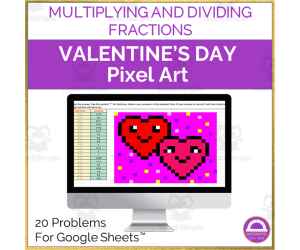
Valentine's Day Multiplying and Dividing Fractions Pixel Art
Math, Fractions, Common Core, Grade 5, 6, 7, Activities
Valentine's Day Multiplying and Dividing Fractions Pixel Art This resource is an exciting, hands-on activity designed to help grade 5, 6, and 7 students master the concept of multiplying and dividing fractions in a fun way. The art-based math activity combines the heart-warming spirit of Valentine’s Day with educational goals to produce a compelling learning experience. It is perfect for use in various settings such as whole group instruction, small group work, individual assignments, or even as a unique homework task. Teachers will appreciate the ease of incorporating this digital resource into their lesson plans due to its compatibility with Google Sheets. Saving: After saving a copy of this document into your Google Drive... Assigning: Assign it through Google Classroom allowing each student their individual copy. This process is easy! The Task The students are tasked with solving 20 operations revolving around multiplication and division of fractions. The end goal? Uncover a mystery picture—a blend that invites engagement while reinforcing understanding. As students correctly answer the problems linked within cells on Google Sheets, they gradually reveal segments of an enigmatic pixel art image making learning energetic yet substantial. Educational Alignments This engaging activity aligns directly with Common Core Standards CCSS 5.NF.B.4a about interpreting product and CCSS 6.NS.A1 involving interpreting quotients; making it an effective tool for bolstering fraction comprehension while providing insightful data on student progress during teacher assessments. Inclusive in this teaching package are solutions provided alongside every task enhancing practicality for teachers who may need them for reference or quick grading activities. Note: Access to this resource requires a Google Account given its application on Google Sheets platform which integrates seamlessly into today's tech-oriented classroom setup. In summary – Valentine's Day Multiplying and Dividing Fractions Pixel Art offers educators robust mathematical content delivered in an appealing pixel-art based format promoting independent learning among grade schoolers across different settings - classroom or homeschooled.
Author Matemaths
Tags Valentine's Day, Multiplying Fractions, Dividing Fractions, Pixel Art, Hands-on Activity

Iguanas Reading Comprehension Passage - Cored Ed Encyclopedia
ELA, Reading Comprehension, Reading, History, Social Studies, Science, Physics, Earth and Environmental Sciences, Life Sciences, Geography, Grade 2, 3, 4, 5, Worksheets & Printables, Worksheets, Teacher Tools, Centers, Activities, Writing Prompts, Assessments, Quizzes and Tests, Quizzes, Lesson Plans
This Iguanas reading comprehension with lesson plan includes: Visualization (on the front cover) Start your lesson by taking a minute to think and share something about the topic. Read the script aloud (slowly), perhaps prepare some music or sound effects. Student close their eyes and let their imaginations wander. Students open their eyes, read the question aloud and give them a few minutes to complete. Ask a few students to share or keep answers until the end to compare with what they learn in the passage. Quick pause—thousands of Cored Education products are included with your TeachSimple membership. Download links and encyclopedia index available here. Pre-Reading Trivia Students will write down one thing they already know about the subject and then read five more facts and discuss. These facts are fun, and the students will enjoy learning about the subject before reading more. Give 1 minute for students to write what they already know (no pressure—best guess is fine). Read the five facts together. After each fact, do ask a student for their opinion, was it surprising? Set a purpose by asking students to highlight/underline one fact they want to learn more about during the reading. Reading Passage The text is a high-interest reading passage with set paragraphs, roughly three to four paragraphs long. It contains a variety of themes about the topic, anywhere from history to technology. The passage is between 250 and 350 words in length. First, ask students to look at the headings and see what they’ll learn about today. What do they know about the topic/heading? First read options: Teacher read-aloud (best for support). Partner reading (paragraph by paragraph). While reading, students underline important details, and vocabulary words they think may come up in the questions section. Mixed Questions The first question page contains four multiple-choice questions, each with a choice of four answers, and three written response questions that require a sentence or two from the student. Students complete the mcqs first independently, then review quickly as a class. For the 3 written responses, try to get students giving the answer with some form of evidence: “I think ___ because the text says ___.” If students get stuck, send them back to check the passage. Vocabulary Questions Practice seven key words from the text in this section across two activities. First section is scrambled words where students will unscramble three words given a clue for each. The second section is a word to meaning matching activity. Before starting, have some students read out words they underlined in the passage. Ask students to say the word and read aloud the sentence(s) around each word. Ask students to do scrambled words and the matching exercise in pairs then go through answers as a class. For the scrambled spelling task, get four pairs to come up to the board and write the words for extra practice with the other student reading out the clue. For the matching task, prompt students to give full sentences: “I matched ___ with ___ because ___.” Creative Writing In this question, the student will be required to write a five to eight sentence paragraph on a question related to the topic. Before starting, ask students write down 3 key ideas they are going to include in their piece. Ask students for ideas to share around the class to help those struggling. Pro writing expectations: 5–8 sentences At least 2 facts or details from the passage At least 2 vocabulary words from the previous page Students read their paragraphs while classmates listen for facts and vocabulary words. Extension Activities This page is optional for fast finishers or to take home. There are several activities, each one requiring a different skill. Do some, do none, do all, completely optional - but you will feel reassured knowing every possibility is planned for. Includes summary writting question and additional facts. Answer Key There are answers for the multiple-choice questions, written response questions have sample answers, vocabulary answers and if there is a summary question then a sample summary will be provided as well. Lesson Plan Included Customized lesson plan for this lesson is included. Lesson Snapshot Title: Iguanas Genre: Nonfiction (informational text) Subject: Reading (Informational Text) / Life Science Primary Topic: Green vs. marine iguanas: tails, habitat, survival Estimated Guided Reading Level (A–Z): R What This Lesson Teaches Best Describes key iguana features and what they look like (dewlap, a line of spines). Explains where iguanas live and notes that most live in the Americas, with some relatives on islands. Shows how a green iguana’s long tail helps with survival (whip-like defense and strong tail strokes for swimming away). Compares two related iguanas by habitat and behavior (tree-climbing green iguana vs. sea-foraging marine iguana that eats algae and basks on dark rocks). Builds awareness of changing habitats and reasons protection matters (building on land, hunting/capturing, predators, El Niño, oil spills). Learning Goals Identify details that describe what an iguana looks like and where it lives. Explain how a green iguana uses its tail when danger comes near water. Describe how the marine iguana finds food and what it does after a cold swim. Compare the green iguana and marine iguana using evidence from the passage. Describe at least two reasons iguanas might need protection based on changes in their habitats. Key Vocabulary From the Text dewlap — loose throat skin that can hang in a fold. spines — pointed bumps that may rise along its back. forages — searches for food. predators — animals that hunt other animals. habitats — places animals need to live. FULL CATALOG OF DOWNLOAD LINKS AND ENCYCLOPEDIA INDEX HERE
Author Cored Education
Rating
Tags Vocabulary, Reading Comprehension, Reading Passages, Lesson Plans, Ela Lesson Plans, Reading Comprehension Lesson Plans, Pre-reading, History, Science Lesson Plans, Life Science
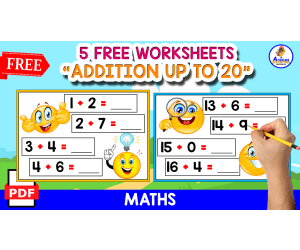
ADDITION UP TO 20 | 5 FREE PAGES OF EXERCISES
Math, Addition and Subtraction, Addition, Early Learning, Elementary, Pre-K, Activities, Worksheets & Printables
5 FREE WORKSHEETS WITH ADDITIONS UP TO 20 EMOJIS THEMED INTRODUCTION: HELLO! WELCOME TO THE EDITORIAL ARENAS EDUCATIVAS RESOURCE STORE! This time we bring you these fantastic resource for you! Your children's afternoons will no longer be boring thanks to these fantastic resource. MAIN INFORMATION ABOUT THIS PRODUCT: 1. Why should teachers use educational material in the classroom? As is known, educational material helps students build their knowledge autonomously and, above all, in an unforgettable way. 2. What is the name of this document? This document is titled "Educational material for children" 3. What topic will be addressed in this resource? This document will address an educational topic that every child should learn in a basic way. 4. For what ages is it recommended? This set of educational sheets is recommended for children in general who are in the learning age and these sheets will be of great help to them. 5. Who is the author of this document? The author, who was in charge of producing and compiling this educational material, is EDITORIAL ARENAS EDUCATIVAS. 6. In what area of knowledge can it be applied? You can apply this set of educational sheets according to your criteria, in the corresponding area. 7. Should I apply it individually or as a group in my class? Also, according to your criteria, see if it is better for these sheets to be applied individually or as a group. SECONDARY INFORMATION: 8. Editable/Non-Editable: This educational document and/or set of educational sheets is not editable, because this way you will be able to use it much more easily. 9. Age at which it can be applied: This educational resource can be applied to children of all ages, that is, students from 3 to 12 years old, who must acquire some basic knowledge that thanks to this document they will be able to address. 10. Tags or keywords that describe the content: didactic material, teaching sheets, material for children, printable educational material, printable material. 11. Ways to print: I suggest you print this document in A4 format, and check if your printer has enough ink for the printout to be of quality and so that your students can complete their worksheet without any problem.
Author EDITORIAL LAURA EDUCA
Tags ADDITION, ADDITIONS, FREE RESOURCES, PRINTABLES, WORKSHEETS, MATH, MATH RESOURCES
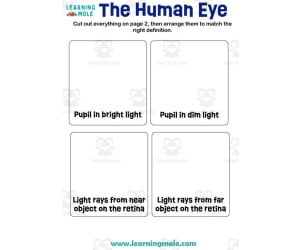
The Human Eye Activity
Science, Basic Science, Life Sciences, Human Body, Grade 3, 4, 5, 6, 7, 8, 9, 10, Activities
Activity Introduction An amazing activity designed for the students to learn more about STEM subjects. The Human Eye Do you like STEM subjects? what is your favorite one? Have you ever tried to plant a seed? If yes, tell us more about it. Or have you ever tried to invent something? If yes, tell us more about it. And how do you think it will help us? Have you ever seen a microorganism under a microscope? What was it? And how it looked like? Mathematics is a marvelous subject. Let' sharpen our brains and solve some equations. Do you like timetable tricks? What is your favorite one? Do you know how to code? Have you ever created an app or a game before? If yes, how was it like? The Human Eye Activity The activity is perfect for encouraging the researching skills for the students, while learning more about this topic. The Human Eye This friendly designed worksheet is suitable for students at school, homeschooling, and as a group activity. Instructions Cut out everything on page 2, then arrange them to match the right definition. Format Available in a PDF format.
Author Educational Voice
Tags The Human Eye Activity, The Human Eye, Human Eye Activity, Eyes, Eyes Facts, Eyes Facts For Kids, Human Body, Human Body Facts, Human Body Facts For Kids