



3,994 products added recently
Page 442 - Activities By Subject
Simplify lesson planning by accessing activities organized by subject. Whether you're focusing on math, science, language arts, or social studies, these resources provide targeted support to enrich your teaching. Incorporate them to align with curriculum standards and engage students effectively.

 Show filters

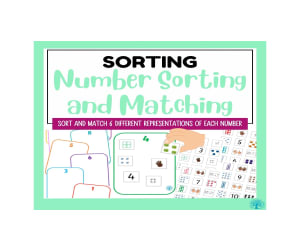
Number Sorting and Matching for Numbers 1-10
Math, Early Math, Numbers, Preschool, Kindergarten, Grade 1, Activities
Building number sense through hands-on exploration is key in early childhood math. These Number Sorting and Matching activities allow kids to concretely connect numeral symbols, quantities and representations in an engaging way. This set includes 10 colorful number boards numbered 1-10. Each board has space to place the matching image cards - dienes, numicon pieces, dice, cubes, and counting fingers cards numbered 1-10. By sorting and matching the images to the correct numeral, students reinforce the symbolic, quantity and visual relationships. The tactile experience helps cement foundational number concepts. Kids will gain intuition for relative magnitude as they see that numbers with more dots or cubes are greater. The versatile activities can be used in small groups, centers and whole class instruction. Teachers can assess understanding of numerals, counting skills and number relationships. Students will love the hands-on practice manipulating the pieces! Providing concrete ways for students to explore numbers sets them up for math success. This Number Sorting and Matching set is a must-have for reinforcing essential number sense. Early childhood educators will love having these durable, versatile math manipulatives! For continues use i recommend laminating the boards and cards and then using velcro to place them. The clipart images are courtesy of Arty Clips Graphics.
Author SEN Resource Source
Tags Numbers, Counting, Sorting, Matching, Early Math
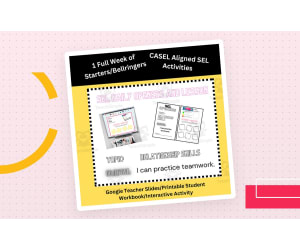
Teamwork | SEL Daily Openers/Bellringers and Weekly Activity
Special Resources, Social Emotional Learning (SEL), Social Skills, Life Skills, Grade 3, 4, 5, 6, Activities
Teamwork | SEL Daily Openers/Bellringers and Weekly Activity This vital teaching resource focuses on a critical skill - teamwork. Targeted at grades 3 to 6, it boosts social-emotional learning (SEL), social skills, and life skills through captivating daily activities and a coherent weekly lesson. Students kick off the day with a structured ten-minute session using their no-prep workbook. Teachers showcase the corresponding slides, instigating thought-inducing discussions about teamwork and allowing mental health check-ins. The connection between teachers and students gets nurtured right from the start of the day, intertwining essential SEL skills into regular routines. The unique feature of this product lies in its dual delivery style: bellringers' daily exercise along with an elaborate weekly activity . These are tied together under one umbrella theme - Teamwork. The weekly lesson enables an immersive exploration into relationship building for students under the aim 'I Can Practice Teamwork'. You can implement this handy aid across various setups; during whole group instruction or smaller group interaction - even as self-directed homework assignments! Included Materials: Detailed teacher slides (PDF & Google Slide Deck versions) arranged for each weekday, A printable student workbook including five daily tasks plus title slide options (color & b&w). A fun printable book/ activity designed to enhance teamwork amongst children -available in full-page & half-page formats. This resource does not promise miracles nor extraordinary outcomes; however, it offers a vibrant pathway for educators aiming to integrate SEL smoothly into everyday classrooms. It empowers students to tackle life's hurdles by building meaningful relationships and effective teamwork skills.
Author Mrs Bonie Just Teach
Tags Teamwork, Social-emotional Learning, SEL Skills, Daily Openers/bellringers, Weekly Activity

Types of Text Activity
ELA, Reading, Preschool, Grade 1, Activities
This activity is great for helping students to recognize different types of texts and build their understanding of different genres. It's a great way to help them become more familiar with the types of texts they'll encounter in school and in the real world.
Author Have Fun Teaching
Tags Genres

World Cerebral Palsy Day Word Search 2rd 3th 4th 5th Grade worksheet
Language Development, ELA, Vocabulary, Spelling, Social Studies, Grade 2, 3, 4, 5, Games, Activities, Word Searches, Worksheets, Worksheets & Printables
Celebrate World Cerebral Palsy Day with this informative Word Search! 💙 Students will learn about vocabulary that relates to cerebral palsy, accessibility, inclusion, and the supports surrounding it + they will practice spelling, scanning, and word recognition skills. This engaging, no-prep printable will have students thinking about inclusivity and empathy in a fun way! Goals: This activity will help students to: - Learn and practice vocabulary that intersects disability awareness and inclusion ♿ - Build spelling, literacy, and focus skills ✏️ - Develop empathy, respect, and understanding of diversity 🌟 - Initiate discussions about supports, accessibility, and inclusion 💙 Procedure / Steps: 1️⃣ Give students the World Cerebral Palsy Day Word Search worksheet. 2️⃣ Read through the word list + introduce the key words. 3️⃣ Students search the word find and circle those words or highlight those words. 4️⃣ Follow-up with a class discussion about inclusion and supports for people with disabilities. 5️⃣ Use the answer key provided for a quick class review ✅ Grades or Age: Designed for 2nd–5th grade. 🌟 Way of Implementation: Can be done as independent work, as part of a Social Emotional Learning (SEL) lesson, for early finishers, for partner work, or as a substitute version. 🤝 It works well with social studies units or units about disability awareness.Answer Keys: ✅ Provided for the easy use of teachers and for students to self-check How to Use and Variations: Timed challenge ⏳ - see who finds all of the words first Partner puzzle 🤝 - work together Vocabulary extension ✏️ - write sentences or paragraphs about inclusion, empathy, and support Create-your-own 🧩 - students create their own disability-awareness word search Standards: Supports CCSS/ELA vocabulary development and encourages/awareness of SEL skills centered on empathy, diversity, and inclusion. 🌍📘 File Types & Pages: Utilizing PDF format 🖨️ Color + B&W versions Printable ink-friendly option Answer key : included Teacher Encouragement: To promote World Cerebral Palsy Day while simultaneously building literacy and empathy with this fun, no-prep, word search; encouraging learning, reflection, and engagement with a purpose! 💙🧩✨
Author Classsim
Rating
Tags World, Cerebral , Day, Word Search , 2rd 3th 4th 5th Grade , Worksheet , Activity, World Cerebral Palsy Day , World Cerebral Palsy Day Word Search 2rd 3th 4th 5th Grade , World Cerebral Palsy Day Word Search 2rd 3th 4th 5th Grade Worksheet Activity
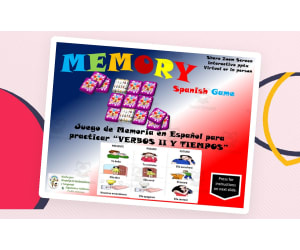
Free Spanish Interactive Memory Game - Verb Tense: Present=Past-Future
ELA, Grammar, Not Grade Specific, Games, Activities
Spanish Verb Tense Memory Game : Present, Past and Future Reinforce Spanish verb tenses with this interactive memory game . Students strengthen language skills while having fun matching present, past and future tense verbs. First, review the verb tenses following the slide deck. Then play the game , revealing and matching cards to test knowledge. Flip mismatched cards back over to keep guessing until all pairs are matched. Replay as many rounds as desired by selecting the restart button. Use this 19-slide PowerPoint game for whole group practice or independent review. Compatible for virtual or in-classroom activities. Extend learning with additional Spanish language resources for grades K-5 from the ShapeUp-N-Matematicas y Lenguaje store. Find hangman games, worksheets and more activities to engage students mastering Spanish.
Author ShapeUp-N-Matematicas y Lenguaje
Tags GAMES, SPANISH GRAMMAR, INTERACTIVE ACTIVITY, SMALL OR WHOLE GROUP, VERBOS, TIEMPOS VERBALES, VERBOS PRESENTE, VERBOS PASADOS, VERBOS FUTUROS

Alphabet BINGO
ELA, Language Development, Phonics, Preschool, Kindergarten, Grade 1, 2, Activities
This Alphabet BINGO is a great way for students to practice their letter names and sounds! It's a fun game that will help them in their studies.
Author Have Fun Teaching
Tags Alphabet

Philosophical Chairs Activity
ELA, Not Grade Specific, Activities
This resource is a Philosophical Chairs Activity. This is an engaging and interactive activity that will allow students to expand upon their listening and speaking skills. There are graphic organizers and reflection bubbles for students complete. Directions are included.
Author Creativity Overload
Tags Listening Skills, Speaking Skills, Graphic Organizers, Philosophical Chairs, Student Reflection, Philosophical Chairs Topics

Interactive Paper Clock Craft
Math, Time, Grade 2, 3, Crafts, Activities
Interactive Paper Clock Craft When students are learning new math strategies, it is always good for us to have as many interactive and engaging resources as we can. Teaching our young students how to tell time usually means we have many useful strategies that we can teach them to make time easier! This is an Interactive Paper Clock Craft that you can bet students will love. What You Get: This Interactive Paper Clock Craft is a 4-page PDF complete with a variety of options to choose from to meet your classroom’s needs. This pack comes equipped with clock faces and a set of clock hands. How To Implement This Interactive Paper Clock Craft: You will print as many copies as you need for each student to have a clock. Printing the clocks on card stock will provide some much need durability when students begin to manipulate these. Students will follow the directions to cut around the edge of the clock and then cut along the 12 dotted lines. During your math lessons on telling time, students can use these clocks to practice showing different times. I hope you enjoy! Here are links to similar resources in my store: Character Analysis Worksheet Happy Culture Day Poster Darkling Beetle Life Cycle Display First Days of 2nd Grade Flipbook All About My Country Research Project Types of Communities Anchor Chart Check Out More Resources from My Store: A Traveling Maestra
Author CraftEdPrints
Tags Math Crafts, Telling Time, Time Lessons, Math Unit, Interactive Clock, Paper Clock, Digital Clocks, Analog Clocks

Letter P Counting to 10 Puzzles
Math, Early Math, Numbers, Kindergarten, Preschool, Activities
Practice counting, number recognition, and letter recognition with these fun Letter P Counting to 10 Puzzles. This set includes 5 puzzles with pieces students put in order to create a path from 1 to 10. As they count, students see images of things that start with P like pizza, pants, and pig. These self-checking puzzles allow students to build early math skills with one-to-one correspondence while recognizing numbers and practicing P words. Use these puzzles for small groups, centers, morning work, or even assessments . Skills practiced include counting 1-10, number ordering, fine motor skills, and letter recognition. Made for PreK-K students, these hands-on puzzles are easy to prep, print, laminate, and reuse again and again. Students enjoy completing them independently or with peers. Store puzzles in bags or containers for an engaging, differentiated math activity students will ask for again and again!
Author The Connett Connection
Tags Alphabet Activities, Alphabet Puzzles, Counting To 10, Counting To Ten, Preschool Math, Math Puzzles, Number Puzzles, Number Order, Letter P, Letter P Activities
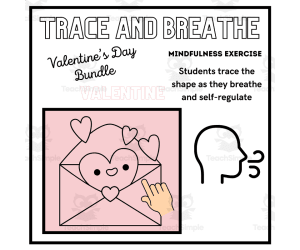
SEL: Valentine Mindfulness Breathing Calming Activity Valentine's Day
Special Resources, Social Emotional Learning (SEL), Not Grade Specific, Activities
SEL: Valentine Mindfulness Breathing Calming Activity Students take a mindful moment to breathe and trace different objects with their fingertips. This activity teaches students how to calm down emotionally while focusing on their breathing. Help your students relax by teaching them the Trace and Breathe technique, which is a part of social emotional learning (SEL). This technique helps students feel calmer by focusing on their breath and making small movements. When they feel upset or overly excited, they can use this technique to calm themselves down. Lots of cute and colorful designs to choose from! Black and White also provided! This SEL: Valentine Mindfulness Breathing Calming Activity comes with: A Description of the Trace and Breathe skill A Poster with Trace and Breathe A Colored Copy of the resource A Copy that is Black and White Ideas for Teachers to use this resource: With individual students Print out pictures based on student interest! To teach the Trace and Breathe Technique To help students to calm down as needed Ideas for Whole Class SEL: Use the technique after recess, after and assembly, etc... Address the needs of Individual Student: Allow student to use when they need a moment to calm down Create a calm down station in the classroom, have several of these printed and laminated for students to choose from and use as needed Steps to engage in this SEL: Valentine Mindfulness Breathing Calming Activity: Take a deep breathe in Begin to trace the picture with your finger Breathe out as you trace Breathe out as long as you can Pause and repeat Other Designs Available here! Animal Bundle- Cat Dog Elephant Monkey Sloth Snake Food Bundle- Pizza Watermelon Popsicle Grapes French Fries Hotdog Transportation Bundle- Airplane Car Bicycle Motorcycle Scooter Train Spring Bundle- Bunny Carrot Chick Flowers Lamb Watering Can Fall Bundle - Bat Candy Corn Ghost Leaf Pumpkin Turkey Winter Bundle - Pine Tree Snow Globe Fireplace Sled Hot Coco Snowman Valentine's Day Bundle: Stegosaurus Balloon Valentine Cupcake Candy Hearts Cupid Need some inspiration on how to use the Trace and Breathe activity in your classroom? READ BELOW! Do your students come in from recess/specials/an assembly/any activity out of the norm all sorts of hyped out and out of control? This is the PERFECT activity to get them to calm-down and transition productively! With TONS of different designs to choose from- each student can pick out a picture that speaks to them! You can laminate each student's page or place them in a protective sheet so that they can stay nicely in their desks. Display the directions on the board or have them printed-out on large poster paper. Teaching the "Trace and Breathe" skill is essential to providing your students a structured way to practice mindfulness, control their heart rate and breathing, and transition from a high to a low-energy activity. The Trace and Breathe series can also be used as an essential piece to a calming corner in your classroom! Create a comfortable, calm space where your students can go when they need to cool down. Teach expectations around when it is appropriate for students to use this corner in the beginning of the year. Then, create a binder with lots of different designs the students can choose from. Place the directions to the Trace and Breathe activity on the wall near the calming corner. Then, as needed, students can visit the calming corner, pull-out the Trace and Breathe binder, pick a design that speaks to them, and engage in a moment of meaningful mindfulness!
Author Mrs Bonie Just Teach
Tags Mindfulness , Breathing, Breathing Activity , Calm Down, Calm Dowm Activity , Calm Down Skill, Sel Lesson, Sel Skill , Valentinesday, Valentine

Scratch: Game Mechanics Bundle
Science, Technology, Computer Science, Grade 3, 4, 5, 6, 7, 8, 9, 10, Games, Activities
Introducing the Scratch: Game Mechanics Bundle This comprehensive teaching tool is well-suited for grades 3 through 10. Designed to guide students in creating their own games using Scratch, this platform is ideal for exploring Computer Science subjects. Understanding Game Mechanics Built around understanding game mechanics, students start with basic elements like Sprites scrolling, running, walking and jumping. As they further hone their skills, they master more advanced techniques fundamental to designing video games. This includes the logic that powers complex features in 3D games and platformers. Flexible for Both Students and Educators Independent Study: Suitable for students with some understanding of Scratch already under their belts; Educator-driven Instruction:Able to be used as an engaging component in whole-group instruction or computer-science driven small-group exercises; Setting Assignments:Makes homework much more exciting by encouraging students to create pieces they are proud of while deepening understanding of game development. Diverse File Types & Platforms Supported The bundle provides multiple file types making it adaptable across various platforms ensuring its reach no matter what your digital classroom setup may look like. It's specifically developed towards enriching science curriculum standards which simplifies teaching coding principles and modern IT literacy goals through hands-on engagement cleverly disguised as fun game creation sessions! In Summation... This resource encourages progress at individual pace offering plenty chances for trial and error before mastering a skill set eventually. Note though that the joyfulness weaved into learning process via creative gaming undertakings doesn't discard the value instilled during traditional teachings, but supplements them resulting in well-rounded education fostering the next generation's digital minds!
Author Roombop
Tags Scratch, Game Mechanics, Computer Science, Video Games, Educational Resource

Musical Hangman (Instruments) | Interactive Games Activities
Creative Arts, Art, Music, Grade 1, 2, 3, 4, Songs, Activities
Musical Hangman (Instruments) | Interactive Games Activities An engaging teaching resource designed to introduce learners to the exciting world of music. This unique version of the classic game hangman includes more than 50 slides exploring different instrument families and introducing students to a variety of instruments, both common and rare. What it offers: A robust learning experience with musical instruments ranging from 4-10 letters long. An interactive model where learners get immediate feedback on each guess, promoting quick learning and growth. A comprehensive round that tests knowledge on all previous sections. A perfect score leads to the printing out of a certificate, instilling a sense of achievement in young learners. Included: The package also includes answer booklets which make it easily manageable for substitute teachers or those not specialized in music education. The module is thoughtfully constructed allowing flexibility for educators: They can choose whether they want to use it as part of whole-group activities, during small group sessions or even as homework assignments. Compatibility & Set-up: No need concern over compatibility or setup issues. The process is intricately detailed within the supplied PDF document making easy projection or download procedures for users operating Windows-based computers or tablets.Articulate mobile player—a free application—is needed for tablet users wishing to access this resource; instructions comprehensively listed within your PDF guide taking you through each step required for first-time users. Unfortunately, at present Mac computer owners can only host via their tablet link but note: no offline downloads possible nor unzipping options available thus far specifically for Mac systems. Targeting primary grades 1-4 pupils exploring their artistic voices through Art & Music classes—mainly Music Subsections—this Game type teaching tool makes complex musical concepts comprehensible and enjoyable! Conclusion: Focused on providing a meaningful educational journey, Musical Hangman (Instruments) | Interactive Games Activities creates a friendly environment for learning the intricate beauty of music. Engaging and informative, it's set to strike a chord with learners and teachers alike!
Author Hbmusicsolutions's Shop
Tags Music Education, Interactive Game, Instrument Families, Hangman Game, Engaging Learning

Tools Number Cards
Math, Early Math, Numbers, Kindergarten, Preschool, Activities, Worksheets & Printables, Flashcards
These tool themed number cards are perfect for students who are learning with a community helper theme. They make the perfect tool for students to learn numbers up to 20. What is Included: This set includes one number card and one number word card for all numbers up to 20. Ideas for Using the Number Cards: Invite students to play a matching activity by pairing each number with its corresponding number word. Turn the cards into a hands on fishing game by attaching paper clips and using a magnetic fishing rod for students to “catch” the numbers. Place the cards in a sand or salt tray so students can trace or write the numbers and number words for tactile practice. Hide the cards around the classroom and have students go on a number scavenger hunt to find and identify each one. Challenge students to arrange the cards in correct numerical order, working independently or as a group. Use a pocket chart to create a guessing game by placing the cards in the chart and hiding a picture behind one number. Students take turns guessing which number is hiding the picture. Add small manipulatives (such as counters, cubes, or pom-poms) and have students count objects to match the number shown on each card. When to Use: Math Centers – Add the number cards to a math center for students to practice matching independently or with a partner. Morning Tubs or Baskets – Place the number cards in a morning bin for students to work on as classmates arrive. Small Group Instruction – Use the number cards during small group time to provide extra support for students who need additional practice recognizing numbers and number words. Make number recognition fun with these tool number cards! This low-prep activity is easy for teachers to prepare. Teachers just simply print, cut, and laminate for durability. The number cards fit perfectly in a task box for effortless setup, cleanup, and storage. Skills Assessed: These cards, depending on the materials added, can assess both number recognition and number word recognition.
Author The Connett Connection
Rating
Tags Number Recognition, Counting, Number Activities, Counting To 20

Comparing Numbers 1-20- Comparing Numbers activites
Math, Early Math, Not Grade Specific, Activities
Comparing Numbers 1-20 Activities: A Comprehensive Teaching Resource The Comparing Numbers 1-20 activities are indispensable teaching tools for all educators - be it public school teachers or homeschoolers. Aimed primarily at instilling a robust understanding of number comparisons from 1 to 20, this digital resource employs fun and engaging methods for effective learning. Nature of the Exercises These tasks are typically introduced to young learners in order to strengthen their numerical comprehension through sensory skills development, mental calculations and independent problem-solving capability within numeracy. Importance in Early Math Education Comparison exercises play an integral role in early math education. They leverage foundational knowledge from counting up to ten and apply it within new scopes. For students facing difficulties, these structured practices build confidence in comparing larger numbers. Packaging & Utilization - The Five Unique Worksheets This digital resource comes as five distinct worksheets designed methodically for whole-group lessons or individual study time like homework or catch-up sessions with smaller groups needing extra support. Suitable as a quick warm-up activity during the start of math classes or as supplementary material during evaluation sessions, this package has wide application across various instructional scenarios. Contents Upon Download To ensure diverse practice and reinforcement of the concept that numbers can be 'more than', 'less than' or ‘equal to’ others, each sheet within this PDF file uses ten unique frames configured variably. Suitability & Practical Benefit This product is ideal for kindergarten students or first graders learning early mathematical principles at home. Its versatility lies in transitioning learners from simple tasks towards complex numerical associations gradually while fostering a deep understanding of numeracy - a vital step towards lifelong math learning growth.
Author successful teachers resource
Tags Number Comparison, Counting, Math Skills, Numerical Relationships, Early Math
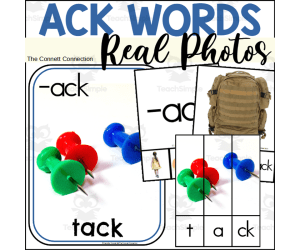
ACK Words Activities with Real Photographs
ELA, Language Development, Phonics, Preschool, Grade 1, Activities
Enhance your students' grasp of ACK words with these engaging literacy centers featuring actual photographs. These 6 diverse activities facilitate learning about the CK ending digraph in an interactive way. What's Inside? Guidelines on how to print poster pages. Full-page word family posters/cards - ideal for display or small group instruction. Tracing Cards - Laminating these allows repeated use in a writing center, helping students practice writing word family words. Beginning Sound Cards - Students identify and fill in the correct initial sound for each picture. Spelling Cards: Students practice spelling the words depicted on the word cards. Digraph Clip Cards - Students select and clip the correct ACK word or picture on each card. Sorting Activity - Students distinguish between pictures that are part of the word family and those that are not. Word Family Puzzles - Engage students in assembling 3-piece puzzles that spell out AB words. Word Family Word Poster - An effective reference poster incorporating numerous AB words. Real photographs in these activities ensure that students remain engaged, offering them tangible examples of each ACK word to aid understanding. Students will practice reading, tracing, and spelling CVCC and CCVCC words. Appropriate Uses: In Literacy Centers As Wall Displays In Writing Centers During Small Group Activities For Independent Practice In Morning Tubs or Baskets Dry erase markers can be used with beginning sound and spelling cards for a write-and-wipe activity , while magnet letters or letter tiles can facilitate a hands-on spelling activity . Skills Evaluated: Reading ACK Words Writing ACK Words Spelling ACK Words Each center requires minimal preparation. Just print, cut out, and laminate for longevity. Once prepared, each center can be utilized repeatedly.
Author The Connett Connection
Tags Real Photohraphs, Literacy Centers, Phonics Centers, ACK Words, Digraphs, Ending Digraphs, Phonics Activities, Literacy Activities, Kindergarten Literacy, CK Digraph
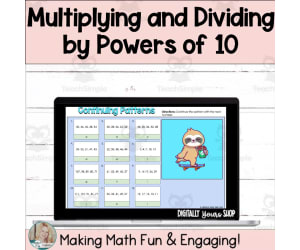
Multiplying and Dividing by Powers of 10 Digital Activity
Math, Patterns, Decimals, Multiplication and Division, Division, Grade 5, Activities
Multiplying and Dividing by Powers of 10 Digital Activity : An All-in-One Teaching Resource This exciting teaching tool is perfectly suited for educators - including public school teachers and homeschoolers. The tool serves as a performance-enhancing resource, offering students a unique way to reinforce their understanding of Powers of 10 through multiplication and division. Product Features: A twelve-question math activity : Designed in a 'Scramble Picture Reveal' game format on Google Sheets where correct answers reveal parts of a scrambled picture. A student recording sheet: This feature allows pupils to systematically record their process and solutions, complementing the digital activities wonderfully. Treasure for Teachers:An included answer key benefits educators by saving time and effort during assessment or grading tasks.. Versatile Applications: The Multiplying & Dividing by Powers of 10 Digital Activity can be seamlessly incorporated into various elements of your curriculum. It works excellently as morning work, homework, bell ringer exercises or exit tickets after lessons. Other suitable uses include warm-up exercises before diving deep into math topics or as quick checks for understanding during lessons. Reteach/Review Sessions: Encourage Mastery Over Rote Learning! This tool also shines when used in reteach/review sessions. It provides students with another opportunity to master previously-taught material while focusing on comprehension rather than rote learning. The Convenience Factor: Zero Preparations & High Engagement! Leverage the benefits offered by this tool without any preparations! The product integrates smoothly with Google Drive - simply add it there, assign to your students using Google Classroom, and let the tool do the rest. This hands-free facilitator ensures more time for face-to-face engagement with students, driving them towards self-directed learning. The Multiplying and Dividing by Powers of 10 Digital Activity is an invaluable resource for educators seeking easily implementable tools in classrooms or for at-home practices.
Author Digitally Yours Shop
Tags Powers Of 10, Multiplication, Division, Digital Activity, Math Game

Main Idea and Details Concentration Game
ELA, Reading, Reading Comprehension, Grade 2, 3, 4, Activities, Games
This resource is a Main Idea and Details Concentration Game. All you have to do is print, laminate and cut to prepare this game! Students will match a main idea and detail card to win. Answer key included.
Author Literacy Life
Tags Main Idea, Supporting Details, Concentration Game, Comprehension, Literacy Centers, Concentration Topics Game, Topics For Concentration Game

Light - Reflection and Refraction Find the Pair Game for Middle School
Science, Physics, Grade 5, 6, 7, 8, 9, Games, Activities
This is an engaging and enjoyable memory game on reflection in plane mirrors and refraction. Pupils work in teams of three or four. Each team lays out their 42 cards face down in a square and take it in turn to turn over two cards. If the cards are a question and its correct answer, the pupil keeps the pair. If they are not a match they are turned face down and the next pupil gets a turn. This process continues until all cards are matched and the winner is the pupil with the most pairs. If a team member thinks that the selectors pair is not a correct match, they can challenge. Pupils are encouraged to check their books for the correct answer but the teacher also has a quick-check answer sheet. If the challenge is correct, the challenger keeps the pair. Included in this Pack. > 42 question and answer cards > Teacher’s answer sheet. > Instruction sheet Preparation > Use double-sided printing to copy 1 set per group of 4 pupils. > Sheets could be laminated to enable year-on-year use. > Cut sheets into cards. Prior Knowledge Required > The more dense the medium the slower the speed of light. > When light travels from a less dense medium to a more dense medium it is bent towards the normal. > When light travels from a more dense medium to a less dense medium it is bent away from the normal. > Light hitting a boundary at 900 is not refracted. > Light is not refracted at a curved boundary. > Complete ray diagrams showing refraction. > Design an experiment and results table to investigate refraction through a semi - circular glass block > Why lightning is seen before thunder is heard when a cloud discharges. > Real and apparent depth. > Transparent, translucent and opaque materials > Luminous and non-luminous objects > Labelling the incident and reflected rays, the angles of incidence and reflection, the normal and the point of incidence > Virtual experiment to prove i = r > Ray diagram showing how the eye sees an image in a plane mirror > The image formed in a plane mirror is upright, virtual (appears to be formed behind the mirror) laterally inverted, the same size as the object and as far behind the mirror as the object is in front. > Ray diagram showing how the eye sees an image in a periscope > Specular and diffuse images See more Elf Off the Shelf resources on this topic and many others
Author Elf off the Shelf Resources
Tags Refraction, Reflection, Angle Of Incidence, Angle Of Reflection
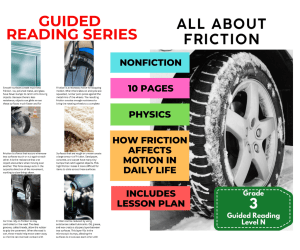
Guided Reading Level N - All About Friction (with Lesson Plan)
ELA, Resources for Teachers, Reading Comprehension, Reading, Language Development, Science, Physics, Engineering, Technology, Pre-Reading, Grade 2, 3, 4, Worksheets & Printables, Worksheets, Teacher Tools, Centers, Activities, Literacy Readers, Quizzes, Quizzes and Tests, Assessments
This Guided Reading Book - All About Friction (Level N) with lesson plan includes: Guided Reading Color Label (front cover x1) This is a quick way to match the book’s demands to what students can generally handle.. The overall goal is to use the level/color to pick books for several smaller groups. To qualify for a certain level, a student is expected to read a book from that level with about 90–94% accuracy. If a student is consistently accurate and understands, move up a level. If the student is struggling at that level, drop down and add more support. Each student will improve at completely different rates, but it is generally one of the best ways to check progress across the class. DOWNLOAD THE CATALOG TO VIEW ALL GUIDED READING BOOKS AVAILABLE (SORTED LEVELS A-Z) Pre-Reading Question (x1) Teacher asks the prompt aloud, can be while showing the cover or first page. Students share what they already know, or make educated guesses from the cover. Prompt them to use the target vocabulary. Write some of their responses on the board to look back at during the reading. Vocabulary Words (x5) Introduce the five words, best doing it one at a time. Start by saying it, while students repeat and then see if anyone knows what it means before reading further. Read through the meaning and try to briefly connect each word to a picture or gesture so it’s meaningful. Ask students to flip through the book pages and point to where they see each of the vocabulary words. While reading the book pause upon coming across one of the vocab words or read the sentence twice to make sure students understand the word has appeared. Optional: Ask students to raise hands whenever they see/hear one of the new words. Guided Reading Pages (x10) Check the book snapshot (below) for: primary topic - do you need to prep extra reading or intro materials on this? what is taught best - decide on 1-2 bullets to focus on, use the prompt or words provided here for best results. learning goals - what you are checking for students to be able to do after the session, elicit answers using prompts or words provided. key vocabulary (see section above). questions overview - so you know what is coming up and if you need to prep extra materials to assist understanding. Run the lesson You may have already looked at a few of the pages together, but you can show them some of the pictures again first to set meaning. Depending on how much time you have and how familiar your students are with guided reading class, you may want to read the book aloud first with the group first. Students whisper or partner read, while you listen in. If time, do it as a group, one student reading a page each. Use the guided page’s prompts to coach: “Check the picture / does it make sense?” “Point under the words / try the first sound” “Reread the sentence smoothly”. Try to focus more on one student per session (rotating every time), so you can work out if they are ready to move up or need to move down a level. Comprehension Questions (back cover x3) This is your way to check that students didn’t just say the words, but actually understood the text. First, let students answer by pointing to the page/picture and saying a short sentence. After any answer, follow with: “Show me where you found that in the text.” In bigger groups, have partners answer first (10–20 seconds), then call on 2–3 students to share. Differentiation tips: Emerging speakers/struggling readers: oral + pointing On-level: oral in a full sentence Higher: one written sentence or draw + label Book Snapshot Title: All About Friction Genre: Nonfiction (informational) Subject: Physical Science Primary Topic: How friction affects motion in daily life Estimated Guided Reading Level (A–Z): N What This Book Teaches Best Defines friction as a force that happens when surfaces touch or rub, and explains it acts against motion to slow things down. Compares rough/uneven surfaces (more friction) and smooth surfaces (less friction), using examples like sandpaper, carpet, ice, metal, and glass. Shows real-world uses of friction for safety, including bicycle brakes, soccer cleats gripping grass, and car tire treads gripping wet roads. Explains how friction can create heat energy and how lubricants reduce friction by forming a slippery layer between surfaces. Extends the idea of friction to air and water as drag/air resistance , and explains why friction makes movement controlled and “predictable.” Learning Goals Students can explain what friction is, using details from the text. Students can compare how rough/uneven surfaces and smooth surfaces affect sliding and distance. Students can describe how friction helps stop motion in the bicycle brake example. Students can explain one way friction is increased for safety or performance (cleats, tire treads). Students can explain how lubricants change what happens when two surfaces touch. Students can describe friction in air or water (drag/air resistance) using the parachute example. Key Vocabulary From the Text resistance — a push-back that makes movement harder. uneven — not smooth; bumpy. treads — deep grooves that help tires grip the road. lubricants — slippery substances that help things slide more easily. microscopic — so tiny you need a microscope to see it. Discussion Prompts Pre-reading question: When have you noticed something slow down because two surfaces rubbed together? Comprehension questions: What does the text say friction is? How does friction help a bicycle come to a complete stop? What do lubricants do between two surfaces to reduce friction? Printing Tips 1. Best Printing Method (Recommended) “Booklet” Printing (Best if Available) If your printer or PDF viewer supports Booklet Printing , use this. Settings to use: Print mode: Booklet Paper size: Letter or A4 (either works) Orientation: Landscape Print on both sides: Yes Flip on: Short edge Scaling: Fit to printable area Booklet subset: First test: Front sides only Then: Back sides only This will automatically: Pair pages correctly Put the cover on the outside Align everything for folding After printing, fold in half and staple along the spine . 2. If “Booklet” Printing Is NOT Available You can still print this correctly with manual duplex printing . Step-by-step: Open the PDF. Choose Print . Set: Orientation: Landscape Pages per sheet: 1 Print on both sides: Yes Flip on: Short edge Print all pages . Because each PDF page already contains two facing book pages, the result will still fold cleanly into a book. Thousands of Cored Education products are included with your TeachSimple membership. Download links and encyclopedia index available here.
Author Cored Education
Rating
Tags Reading Comprehension, Reading Passages, Reading, Guided Reading, Guided Reading Lesson Plan, Guided Reading Activity, Pre-reading, Vocabulary, Science Lesson Plans, Physics
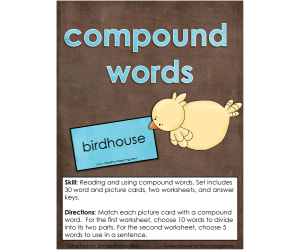
Compound Words Activity
ELA, Grammar, Math, Numbers, Grade 1, 2, 3, Activities
This activity is perfect for students who are struggling to read compound words. By matching pictures to compound words, they will build their reading fluency and be able to read more complex words.
Author Have Fun Teaching
Tags Statistics
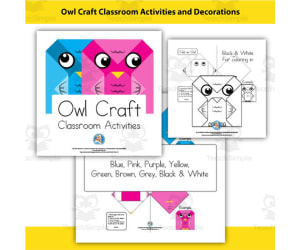
Owl Craft Classroom Activity
Creative Arts, Art, Grade 1, 2, 3, 4, Activities, Crafts
This resource is an Owl Craft Classroom Activity. This makes a great back to school activity as it can serve as decor in your classroom. It is also great for any owl units you might complete! The owl printable craft is offered in 7 colors plus black and white! Directions are included for how to create the owl craft !
Author Surfer Kids Clip Art
Tags Owl, Craft, Animals, Clipart, Back To School, Owl Craft Preschool

Spatial Concepts Next To
Special Resources, Speech Therapy, Preschool, Kindergarten, Grade 1, Activities
There are 16 slides for the spatial concepts next to. These are fun and engaging for students while teaching them the concept of being behind and in front of and encouraging conversation. These are great for Pre-K, Kindergarten, First Grade, Special Ed, and Speech. There are 8 slides where students need to circle the answer and 8 slides where students need to follow directions.
Author My Kind of Crazy
Tags Special Education, Speech Therapy, Spatial Concepts, Next To

Business Profit Activity
Life Studies, Social Studies, Business, Finance, Grade 3, 4, 5, 6, 7, 8, 9, 10, 11, 12, Activities
Activity Introduction An amazing activity designed for the students to learn more about STEM subjects. Business Profit Do you like to learn more about financial matters? what is your favorite subject? Do you like to be an entrepreneur someday? If yes, who is your favourite entrepreneur? What your business will be about? Have you ever tried to calculate your monthly spendings? If yes, tell us more about it. Have you ever seen a grownup using a credit card to making a money transaction online? If yes, do you think it is safe? Mathematics is a marvelous subject. Let' sharpen our brains and solve some equations in our daily life. What are the different types of bank cards? Can you tell what is the job of every type? Using credit cards online is a little bit tricky. What do you think? Have you ever read about investments? If yes, tell us more about it. Business Profit Activity The activity is perfect for encouraging the researching skills for the students, while learning more about this topic. Business Profit This friendly designed worksheet is suitable for students at school, homeschooling, and as a group activity. Instructions Imagine you owned a burger truck, use the following information to figure out your business profit. Format Available in a PDF format.
Author Educational Voice
Tags Business Profit Activity, Business Profit, Business Profit Facts, Business Profit Facts For Kids, Finance, Financial Literacy, Financial Literacy Facts, Financial Literacy Facts For Kids
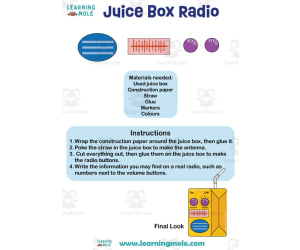
Juice Box Radio Activity
Science, Technology, Basic Science, Physics, Grade 2, 3, 4, 5, 6, 7, 8, Activities
Activity Introduction An amazing activity designed for the students to learn more about famous places in different countries. The Juice Box Radio Do you like STEM subjects? what is your favorite one? Have you ever tried to plant a seed? If yes, tell us more about it. Or have you ever tried to invent something? If yes, tell us more about it. And how do you think it will help us? Have you ever seen a microorganism under a microscope? What was it? And how it looked like? Mathematics is a marvelous subject. Let' sharpen our brains and solve some equations. Do you like timetable tricks? What is your favorite one? Do you know how to code? Have you ever created an app or a game before? If yes, how was it like? Juice Box Radio Activity The activity is perfect for encouraging the researching skills for the students, while learning more about this fantastic place. Radio This friendly designed worksheet is suitable for students at school, homeschooling, and as a group activity. Instructions Wrap the construction paper around the juice box, then glue it. Poke the straw in the juice box to make the antenna. Cut everything out, then glue them on the juice box to make the radio buttons. Write the information you may find on a real radio, such as numbers next to the volume buttons. Materials Needed Used juice box Construction paper Straw Glue Markers Colors Format Available in a PDF format.
Author Educational Voice
Tags Juice Box Radio Activity, Radio, Radio Facts, Radio Facts For Kids, Stem, Stem Facts, Stem Facts For Kids, Activities For Kids