



3,885 products added recently
Page 79 - Activities By Subject
Simplify lesson planning by accessing activities organized by subject. Whether you're focusing on math, science, language arts, or social studies, these resources provide targeted support to enrich your teaching. Incorporate them to align with curriculum standards and engage students effectively.

 Show filters

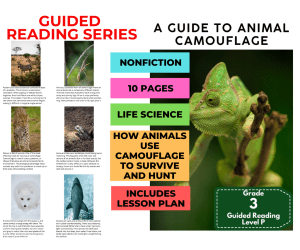
Guided Reading Level P - Animal Camouflage (with Lesson Plan)
ELA, Resources for Teachers, Reading Comprehension, Reading, Pre-Reading, Language Development, Animals, Life Sciences, Science, Vocabulary, Grade 2, 3, 4, Worksheets & Printables, Worksheets, Teacher Tools, Centers, Activities, Literacy Readers, Quizzes, Quizzes and Tests, Assessments
This Guided Reading Book - Animal Camouflage (Level P) with lesson plan includes: Guided Reading Color Label (front cover x1) This is a quick way to match the book’s demands to what students can generally handle.. The overall goal is to use the level/color to pick books for several smaller groups. To qualify for a certain level, a student is expected to read a book from that level with about 90–94% accuracy. If a student is consistently accurate and understands, move up a level. If the student is struggling at that level, drop down and add more support. Each student will improve at completely different rates, but it is generally one of the best ways to check progress across the class. DOWNLOAD THE CATALOG TO VIEW ALL GUIDED READING BOOKS AVAILABLE (SORTED LEVELS A-Z) Pre-Reading Question (x1) Teacher asks the prompt aloud, can be while showing the cover or first page. Students share what they already know, or make educated guesses from the cover. Prompt them to use the target vocabulary. Write some of their responses on the board to look back at during the reading. Vocabulary Words (x5) Introduce the five words, best doing it one at a time. Start by saying it, while students repeat and then see if anyone knows what it means before reading further. Read through the meaning and try to briefly connect each word to a picture or gesture so it’s meaningful. Ask students to flip through the book pages and point to where they see each of the vocabulary words. While reading the book pause upon coming across one of the vocab words or read the sentence twice to make sure students understand the word has appeared. Optional: Ask students to raise hands whenever they see/hear one of the new words. Guided Reading Pages (x10) Check the book snapshot (below) for: primary topic - do you need to prep extra reading or intro materials on this? what is taught best - decide on 1-2 bullets to focus on, use the prompt or words provided here for best results. learning goals - what you are checking for students to be able to do after the session, elicit answers using prompts or words provided. key vocabulary (see section above). questions overview - so you know what is coming up and if you need to prep extra materials to assist understanding. Run the lesson You may have already looked at a few of the pages together, but you can show them some of the pictures again first to set meaning. Depending on how much time you have and how familiar your students are with guided reading class, you may want to read the book aloud first with the group first. Students whisper or partner read, while you listen in. If time, do it as a group, one student reading a page each. Use the guided page’s prompts to coach: “Check the picture / does it make sense?” “Point under the words / try the first sound” “Reread the sentence smoothly”. Try to focus more on one student per session (rotating every time), so you can work out if they are ready to move up or need to move down a level. Comprehension Questions (back cover x3) This is your way to check that students didn’t just say the words, but actually understood the text. First, let students answer by pointing to the page/picture and saying a short sentence. After any answer, follow with: “Show me where you found that in the text.” In bigger groups, have partners answer first (10–20 seconds), then call on 2–3 students to share. Differentiation tips: Emerging speakers/struggling readers: oral + pointing On-level: oral in a full sentence Higher: one written sentence or draw + label Book Snapshot Title: A Guide to Animal Camouflage Genre: Nonfiction (informational text) Subject: Life Science / Reading (Informational Text) Primary Topic: How animals use camouflage to survive and hunt Estimated Guided Reading Level (A–Z): P What This Book Teaches Best What camouflage is and why it matters: Camouflage helps animals blend into their environment to stay safe from predators or sneak up on prey. Types of camouflage with clear examples: Background matching (toad), disruptive coloration (zebras), mimicry (stick insect), countershading (sea animals), and active camouflage (octopus). How animals change to match conditions: Seasonal changes in the Arctic fox’s coat and rapid changes in the octopus’s appearance. Camouflage for defense and hunting: The text shows camouflage protecting animals and helping hunters like the orchid mantis. Adaptations and survival: Camouflage is presented as an adaptation that helps animals survive and thrive in their homes. Learning Goals Students will explain what camouflage is and how it helps animals survive. Students will describe background matching and use the toad example from the text. Students will explain how disruptive coloration in zebra stripes can confuse a predator. Students will describe mimicry using details about the stick insect. Students will compare seasonal camouflage in the Arctic fox with countershading in sea animals. Students will describe how active camouflage works in the octopus and how the chameleon’s color-changing can help it stay hidden. Key Vocabulary From the Text camouflage — colors, patterns, or shapes that help an animal blend in. predators — animals that hunt other animals for food. texture — how a surface feels or looks. mimicry — when an animal looks like a different object. countershading — dark top and light belly that help hide in water. Discussion Prompts Pre-reading question: Why might an animal need to blend into its environment to survive? Comprehension questions: What does the text say camouflage helps animals do? Comprehension questions: How do zebra stripes make it difficult for a hunting lion to target one zebra? Comprehension questions: How does countershading help sea animals blend in from above and from below? Printing Tips 1. Best Printing Method (Recommended) “Booklet” Printing (Best if Available) If your printer or PDF viewer supports Booklet Printing , use this. Settings to use: Print mode: Booklet Paper size: Letter or A4 (either works) Orientation: Landscape Print on both sides: Yes Flip on: Short edge Scaling: Fit to printable area Booklet subset: First test: Front sides only Then: Back sides only This will automatically: Pair pages correctly Put the cover on the outside Align everything for folding After printing, fold in half and staple along the spine . 2. If “Booklet” Printing Is NOT Available You can still print this correctly with manual duplex printing . Step-by-step: Open the PDF. Choose Print . Set: Orientation: Landscape Pages per sheet: 1 Print on both sides: Yes Flip on: Short edge Print all pages . Because each PDF page already contains two facing book pages, the result will still fold cleanly into a book. Thousands of Cored Education products are included with your TeachSimple membership. Download links and encyclopedia index available here.
Author Cored Education
Rating
Tags Reading Comprehension, Reading Passages, Reading, Guided Reading, Guided Reading Lesson Plan, Guided Reading Activity, Pre-reading, Science Lesson Plans, Life Science, Animals
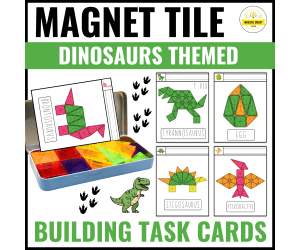
Dinosaur Magnetic Magnet Tile Task Cards Printables Building Activity
STEM, Kindergarten, Preschool, Activities
Dinosaur Magna Tile Pattern Cards | Dinosaur STEM Activity Bring prehistoric adventures to your classroom with these 10 Dinosaur Magna Tile Pattern Cards ! Children will love recreating their favorite dinosaurs and prehistoric objects while strengthening fine motor skills, creativity, problem-solving, and early STEM concepts through hands-on magnetic tile play. Included Designs Stegosaurus Tyrannosaurus Volcano Palm Tree Triceratops Brontosaurus Dinosaur Egg Dinosaur Bone Pterodactyl Ankylosaurus Perfect For ✔ Block Center ✔ Light Table or Light Panel ✔ Magnet Tile Center ✔ STEM Center ✔ Small Group Activities ✔ Morning Tubs ✔ Tabletop Learning ✔ Fine Motor & Pre-Writing Practice ✔ Preschool, Pre-K, Kindergarten, and Homeschool Why You'll Love These Dinosaur Magna Tile Cards Hands-On Learning – Encourage children to explore the fascinating world of dinosaurs by building prehistoric creatures and themed objects with magnetic tiles. Builds Essential Skills – Strengthens fine motor control, visual perception, spatial reasoning, creativity, problem-solving, and early engineering skills. Low-Prep Resource – Simply print in color, laminate if desired, and enjoy a reusable STEM activity all year long. Highly Engaging – Magnetic tiles are a classroom favorite that inspire imaginative play while keeping children actively involved in learning. STEM-Focused Fun – Promote critical thinking, planning, and design skills as children recreate exciting dinosaur-themed creations.
Author Magical smart teaching
Rating
Tags Dinosaur STEM, Magnetic Tile Task Cards, Dinosaur Morning Tubs, Dinosaur Centers, Kindergarten Dinosaur Unit, Magna Tile Ideas, Preschool Fine Motor, Dino Theme Activities, STEM Manipulatives, Early Finishers

Nests Reading Comprehension Passage - Cored Ed Encyclopedia
ELA, Language Development, Resources for Teachers, Reading Comprehension, Reading, Pre-Reading, Science, Writing, Animals, Life Sciences, Grade 2, 3, 4, 5, Worksheets & Printables, Worksheets, Teacher Tools, Centers, Activities, Writing Prompts, Assessments, Tests, Quizzes and Tests, Quizzes
This nests reading comprehension contains the following: Visualize on the Cover (Teacher Read Aloud Script) Start your lesson by taking a few moments to visualize the topic and share thoughts or feelings about it. COMPANION VIDEO NOW AVAILABLE (EMBEDDED AFTER PREVIEW PICTURES IN PRODUCT DESCRIPTION) Pre-Reading Trivia Students will write down one thing they already know about the subject and then read five more facts and discuss. These facts are fun, and the students will enjoy learning about the subject before reading more. Reading Passage The text is a high-interest reading passage with set paragraphs, roughly three to four paragraphs long. It contains a variety of themes about the topic, anywhere from history to technology. The passage is between 250 and 350 words in length. Mixed Questions The first question page contains four multiple-choice questions, each with a choice of four answers, and three written response questions that require a sentence or two from the student. Vocabulary Questions Practice seven key words from the text in this section across two activities. First section is scrambled words where students will unscramble three words given a clue for each. The second section is a word to meaning matching activity. Creative Writing In this question, the student will be required to write a five to eight sentence paragraph on a question related to the topic. Extension Activities This page is optional for fast finishers or to take home. There are several activities, each one requiring a different skill. Do some, do none, do all, completely optional - but you will feel reassured knowing every possibility is planned for. Includes summary writting question. Answer Key There are answers for the multiple-choice questions, written response questions have sample answers, vocabulary answers and if there is a summary question then a sample summary will be provided as well. FULL CATALOG OF DOWNLOAD LINKS AND ENCYCLOPEDIA INDEX HERE Lesson Snapshot Title: Nests Genre: Nonfiction Subject: Life Science (animal behavior & habitats) Primary Topic: How animals build nests to protect young Estimated Guided Reading Level (A–Z): N What This Lesson Teaches Best Explains the purpose of nests as “a special place” animals make to protect eggs or young. Shows that nests aren’t only for birds—some fish, insects, and mammals make nests too. Describes how nests are built from nearby materials (twigs, dry grass, leaves, soft feathers), and how some birds use mud or sticky spider silk. Compares different nest types and locations (smooth cups, simple scrapes, tree holes, burrows, hanging woven bags, domes with entrance tunnels). Connects nesting to safety and care: nests help hide eggs, block harsh weather, hold warmth while parents brood, and staying litter-free helps wild nests stay safer. Learning Goals Define a nest using details from the passage. Explain that many kinds of animals (not only birds) make nests. Identify materials the passage says nests can be made from. Describe at least two different nest shapes or structures mentioned in the text. Explain how nests help eggs and young stay safe and warm, using evidence from the passage. Describe one way people can help keep wild nests safer, based on the passage. Key Vocabulary From the Text Cliffs — steep rocky sides of land. Burrows — holes in the ground used as homes. Scrape — a shallow dip in sand or soil. Instinct — a natural feeling that guides what to do. Brood — sit on eggs to keep them warm. Cored Ed Encyclopedia Overview The Cored Ed Encyclopedia is a weekly series of lessons that you can pick up and use right away. These short readings fit into whatever time you have available. Each one includes a warm-up, a reading, and a set of questions, but it’s flexible — you can do just the reading, the full lesson, or skip the writing section if you need to. Each lesson focuses on a single topic so students don’t get lost. The writing is clear but never childish, making it perfect for grades two through five. Topics range from animals and science to history, inventions, and everyday things. No matter the level of the student, everyone should take away at least one new idea or fact from each lesson. The materials are easy to print, easy to explain, and require no setup. They work well for whole-class teaching, partner work, or independent study.
Author Cored Education
Rating
Tags Vocabulary, Spelling, Reading Comprehension, Reading Passages, Reading, Creative Writing, Reading Strategies, Writing Prompts, Nests, Life Science

Baseball sports bingo game vocabulary P.E physical education activity
Sports, P.E. & Health, Early Learning, Pre-K, Elementary, Games, Activities
No Prep Baseball Bingo Game is a fun and engaging way to introduce students to baseball vocabulary, game equipment, and basic sports concepts. Since bingo is a familiar game, it's easy to set up and encourages active participation while reinforcing physical education and sports terminology. I like using this activity during physical education classes, sports units, baseball season, and classroom review games. It's a low-prep resource that helps students build sports vocabulary while having fun. What You Will Get This resource includes printable bingo boards and calling cards featuring baseball-themed images and vocabulary. Simply print and play for an exciting learning activity. What's Included in this Bingo Game? You'll get a variety of bingo cards so each player has a unique board. The calling cards feature baseball-related vocabulary such as bat, ball, glove, helmet, pitcher, catcher, bases, home plate, umpire, scoreboard, and other equipment and game terms that help students build sports knowledge. This resource is perfect for: • Physical education lessons • Baseball and sports units • Sports vocabulary practice • Classroom centers and review games • Homeschool learning • Group activities and team building Why you will love this? • Super easy to prepare • Reinforces baseball vocabulary • Supports physical education learning • Encourages participation and teamwork • Great for individual, small group, or whole class activities • Makes sports learning fun and interactive This baseball bingo game is a simple and engaging way to help students learn baseball vocabulary, understand the game, and build confidence while enjoying an exciting classroom activity.
Author The Clever Llama
Rating
Tags Baseball Bingo, Sports Vocabulary, Physical Education, PE Activities, Baseball Game, Sports Activity, Team Sports, Printable Bingo, Classroom Games, Baseball Terms

After Song (Animated Music Video)
ELA, Reading, Preschool, Kindergarten, Grade 1, 2, Songs, Activities
The AFTER Song (Animated Music Video) is a great resource for helping students recognize the sight word AFTER. The song is catchy and easy to follow, and the animation is clear and engaging. This is a great tool for teachers to use in the classroom to help their students learn and remember the sight word AFTER.
Author Have Fun Teaching
Tags Counting

Feelings Memory Matching Game | Printable Emotions Cards for SEL
Vocabulary, Language Development, ELA, Social Emotional Learning (SEL), Special Resources, Not Grade Specific, Flashcards, Worksheets & Printables, Games, Activities
Help kids explore emotions through play! This printable feelings memory matching game is a fun and engaging way for children to practice emotional recognition, memory skills, focus, and social interaction while playing a classic matching game. Children flip the cards, look for matching emotion pairs, and talk about different feelings as they play. The activity naturally encourages conversations about emotions and helps build social-emotional learning skills in a playful, low-pressure way. Perfect for preschool, kindergarten, early elementary classrooms, homeschool activities, therapy sessions, morning meetings, SEL centers, and small group learning. What’s Included Printable emotions memory game 10 different emotions 20 matching cards total Matching card backs Ready-to-print PDF format 6 printable pages Skills Kids Practice Emotional recognition Memory and concentration Turn-taking and social interaction Vocabulary development Focus and attention Great For Social Emotional Learning (SEL) Preschool & Kindergarten ESL / EFL learners Homeschool activities Counseling and therapy sessions Centers and quiet-time activities Classroom games Simple to Prepare Just download, print, cut out the cards, and play. You can print the cards on regular paper or cardstock and laminate them for longer use. This emotions matching game combines learning and play in a simple activity kids genuinely enjoy.
Author English with Rita
Rating
Tags SEL, Matching Game, Memory Game, Flashcards, Feelings, Emotions, Vocabulary Cards
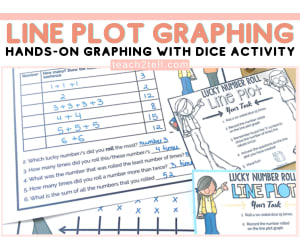
Line Plot Graphing Activity Math Centers Line Plots Graphs
Math, Graphing, Numbers, Homeschool Templates, Homeschool Curriculum, Grade 1, 2, 3, Centers, Activities, Task Cards, Worksheets & Printables, Templates, Teacher Tools
Need a practical, engaging way to teach line plots? This Line Plot Graphing Activity is a classroom-tested favorite that helps students make sense of data—by collecting it themselves. With just a six-sided dice and a pencil, your students will build a simple line plot from real results, interpret what they see, and walk away with a solid foundation in graphing skills. Designed for Grades 1–3 , this resource is perfect for introducing line plots or reinforcing graphing concepts through a hands-on math center. Why This Activity Works Instead of analyzing someone else’s data, students get to roll a dice 15 times, record their own results, and use tally marks and Xs to build a line plot. Then, they answer scaffolded questions to reflect on what their data shows. This simple shift—from passive to active learning—helps students understand what a line plot actually represents. It’s no longer abstract. It’s their data, their graph, their conclusions. What’s Included: Task cards with clear step-by-step instructions (color + blackline) Line plot templates (single and 2-per-page formats) Response sheets with easy-to-follow reflection questions Sample answer key Optional file folder cover to set up as a grab-and-go math center Classroom Uses: Independent math centers Partner work Whole-group practice Sub plans Fast-finisher activity Whether you’re introducing line plots for the first time or circling back for a review, this resource keeps the process simple, visual, and meaningful. It’s low-prep, high-impact, and easy to reuse. If you're ready to make line plots click for your students, this is the activity to start with.
Author Teach2Tell
Rating
Tags Line Plots, Graphing, Data Analysis, Line Plot Activity, Line Plots Graphs, Line Plot Worksheets, Grade 2 Math Center, Grade 3 Math Center, Line Plots And Data, Math Graphing Activity
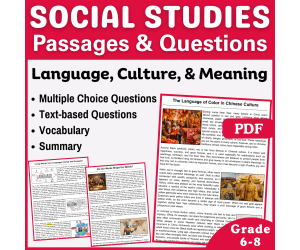
Social Studies Reading Passages: Language, Culture, Meaning (PDF)
ELA, Reading, Reading Comprehension, Strategies, Resources for Teachers, Social Studies, Geography, Sociology, Grade 6, 7, 8, 9, Writing Prompts, Worksheets & Printables, Centers, Activities, Teacher Tools, Assessments, Quizzes and Tests, Quizzes, Tests
Social Studies Reading Comprehension Passages: Language, Culture, Meaning (PDF) This resource introduces a collection of Social Studies reading comprehension passages about Language, Culture, and Meaning. The passages are carefully designed to bridge the gap between social studies and literacy through strengthening reading comprehension and sparking knowledge curiosity in middle school students. Each passage blends English Language Arts skills with accurate social studies content. Ideal for interdisciplinary learning in ELA and Social Studies. Suitable for Grade 9 review, too! What Is Included in this Collection? There are three informational passages (with full answer keys): Living Words: How Languages Change and Disappear The Language of Color in Chinese Culture Do Our Words Shape Our Minds For Each Passage, students will have multiple tasks to complete as follow: 5 multiple-choice questions targeting main idea, key details, inference, vocabulary in context, and use of evidence 5 vocabulary matching items with clear, student-friendly definitions 5 text-based questions that require citing specific lines or facts 1 summary prompt that asks students to condense central ideas accurately Available Formats for this Resource Fillable PDF Word Docs Google Docs FULL CATALOG OF DOWNLOADING LINKS HERE For more Social Studies Reading Passages, check the following Links: Ancient Civilizations PDF Fillable PDF Word Docs Google Docs Early Empires and Trade Networks PDF Fillable PDF Word Docs Google Docs The Founding of the United States PDF Fillable PDF Word Docs Google Docs Language, Culture, and Meaning PDF Fillable PDF Word Docs Google Docs Psychology and Society PDF Fillable PDF Word Docs Google Docs Global Festivals and Traditions PDF Fillable PDF Word Docs Google Docs Extreme Environments and People PDF Fillable PDF Word Docs Google Docs Food, Culture, and Preservation PDF Fillable PDF Word Docs Google Docs Global Food Customs PDF Fillable PDF Word Docs Google Docs Media, Communication, and Popular Culture PDF Fillable PDF Word Docs Google Docs Human Impact on the Environment PDF Fillable PDF Word Docs Google Docs Civic Action and Social Change PDF Fillable PDF Word Docs Google Docs Fashion, Society, and Power PDF Fillable PDF Word Docs Google Docs People, Places, and Unusual Histories PDF Fillable PDF Word Docs Google Docs Product Details Length: 13 pages total Grades: 6–8, also suitable for Grade 9 review Use cases: close reading, stations, homework, intervention, test prep, and sub plans Why Teachers Choose This Set Authentic social studies content paired with rigorous literacy practice Consistent task structure across all passages for easier planning and smoother student routines Clear, age-appropriate writing that builds confidence without oversimplifying Use this set to reinforce ELA skills in social studies, to add literacy to your lessons, and to support independent work. The passages strengthen main idea, evidence use, vocabulary in context, inference, cause and effect, and summary writing. With ready-to-use assessments and complete answer keys, you can provide focused practice that is simple to run and fast to review.
Author Middle & High School - CORED Education
Rating
Tags Middle School, Reading Comprehension, Reading Strategies, ELA, Centers, Reading Passage, Assessments, Vocabulary, Social Studies

Tool Alphabet Cards
ELA, Language Development, Pre-Reading, Kindergarten, Preschool, Activities, Flashcards, Worksheets & Printables, Games
These tool themed alphabet cards are perfect for students learning with a fun community helper theme. They are a simple, engaging way to help students practice recognizing the letters of the alphabet. What is Included: This set of alphabet cards includes one capital letter and one lowercase letter card for each letter of the alphabet with a fun tool theme. Ways to Use the Cards: Play a matching game by pairing capital letters with their lowercase counterparts. Attach a paper clip to each letter card and use a magnetic fishing pole to “catch” letters in a fun fishing game. Provide a sand or salt tray so students can practice writing the letters shown on each card. Hide the letter cards around the classroom and have students search for them during an exciting letter hunt. Have students place the cards in alphabetical order. Create a pocket chart game by placing the cards in a pocket chart and hiding a picture behind one letter. Students guess which letter is hiding the picture. Add small objects or pictures that begin with each letter for students to match to the correct letter card. When to Use: Literacy Centers – Add the letter cards to a literacy center for students to practice matching independently or with a partner. Morning Tubs or Baskets – Place the letter cards in a morning bin for students to work on as classmates arrive. Small Group Instruction – Use the letter cards during small group time to provide extra support for students who need additional practice recognizing the letters of the alphabet. Make letter recognition fun with these tool letter cards! This low-prep activity is easy for teachers to prepare. Teachers just simply print, cut, and laminate for durability. The letter cards fit perfectly in a task box for effortless setup, cleanup, and storage. Skills Assessed: These cards, depending on the materials added, can assess both letter recognition of capital and lowercase letters as well as identifying beginning sounds.
Author The Connett Connection
Rating
Tags Alphabet Activities, Letter Recognition, Alphabet Games, Alphabet Cards

Black Song (MP3)
ELA, Reading, Preschool, Kindergarten, Grade 1, Songs, Activities
This resource is great for teachers who are looking for fun and creative ways to help their students learn sight words. The BLACK Song is a fun and catchy way for students to learn and remember the sight word BLACK.
Author Have Fun Teaching
Tags Counting
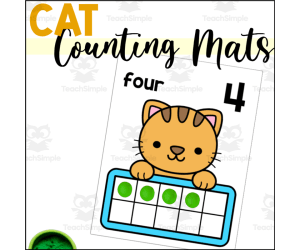
Cat Counting Mats with Tens Frames
Math, Early Math, Numbers, Kindergarten, Preschool, Activities
Students will have fun counting up to 10 and practicing fine motor skills with these cat tens frames counting mats. These mats allow students to get ample practice counting to 10 with the colorful and fun images centered around a pet theme. Students will want to complete these cards again and again. What is Included: There is one cat themed mat for each number 1 through 10. Each mat includes colorful and bright images to keep students engaged in counting. How to Use: Students will take a mat. They will look at the number or number word at the top of the mat, and then use playdough, or other manipulatives to count to the given number by adding the manipulatives to the cookie tray. When to Use: Math Center - These mats can be used in a math center by simply placing the mats and playdough inside each center . Students can work independently or with a partner to complete these mats. Morning Activity - These mats can be placed inside a morning tub or basket for students to work on as classmates arrive to class. Quiet Activity - These mats make a great quiet time activity for students who do not nap. Small Group Activity - Teachers can pull aside small groups of students to practice working on counting. These playdough counting mats are a low prep activity for teachers to prepare for students. They just need to be printed and laminated for durability. These cards can be stored inside a task box which allows for easy set up, clean up, and storage. The added fine motor component makes these a perfect activity for students to work on their counting skills as well as improving their hand strength by squeezing and shaping the playdough. Skills Assessed: Counting to 10 One to one correspondence Number recognition Fine motor skills
Author The Connett Connection
Tags Counting To 10, Counting To Ten, Counting Objects, Counting With Tens Frames, Tens Frames, Pets

Desserts Dot Painting - A Fine Motor Art Activity
Creative Arts, Art, Kindergarten, Preschool, Grade 1, Activities, Crafts
Practice fine motor skills while creating a fruit dot art painting with these fine motor q-tip dot painting sheets. This fruit themed art activity is a perfect anytime craft for preschoolers and early elementary students to practice hand eye coordination. The following dot painting pages are included in this set: apple pie, cake, chocolate, chocolate covered strawberry, cookie, cupcake, doughnut, ice cream, ice pop, lollipop, and s'more. Each page is designed with a different fruit item for students to practice their fine motor skills and create a fun art picture to display in the classroom or in their home. Students will have fun choosing their colors to make their pictures their own unique masterpieces. When to Use Dot Painting Pages Art or Fine Motor Center: Place dot painting pages in the center with a variety of paint colors and cotton swabs. Students build fine motor skills, hand-eye coordination, and creativity while completing their designs. Whole Class Craft Activity: Use as an independent art activity at student desks. Each student selects and completes their own dot painting page, encouraging choice, focus, and creative expression. Early Finisher Activity: Provide as a no-prep enrichment option for students who finish work early. Keeps students engaged, on-task, and productive. Quiet Time Activity: Offer during rest time for students who do not nap. Supports quiet engagement, calm behavior, and independent work skills. Classroom Displays: Use completed pages for bulletin boards, door decorations, or hallway displays to showcase student work and enhance the classroom environment. All of these dot painting pages are no prep. They just need to be printed and given to students to decorate. The teacher will simply need to provide paints of various colors and cotton swabs. An alternative to using cotton swabs and paint is to have students decorate their pictures with dots of colored glue. Older students may want to try creating their pictures this way for a more tactile way to complete this art activity.
Author The Connett Connection
Rating
Tags Fine Motor Art, Fine Motor Skills, Dot Painting, Qtip Painting

Algebra: Memory Match Game for 6th-8th | MAC Software
Math, Algebra, Common Core, Grade 6, 7, 8, Activities, Games
Algebra: Memory Match Game for 6th-8th | MAC Software An interactive MAC software teaching tool designed to facilitate comprehension of core algebra concepts for students in grades 6-8. With its engaging memory match game, this resource guarantees not just understanding but enhanced retention of concepts. Unique Teaching Method Educators can step away from traditional classroom methods and employ a game that students find enjoyable and entertaining, creating an environment conducive to learning. Aligned with Academic Principles The content complies with the Five Strands of Math principles bridging learning gaps. This unique resource increases student proficiency in critical thinking. The content aligns with The Common Core State Standards and follows STEM initiatives as per the National Council of Teachers of Mathematics (NCTM). Versatile Application Modes Tailored for various settings - whole group studies, small groups or independent learning sessions at home. Making it flexible according to individual class dynamics or specific academic needs. Simple Installation: Available via one zip file installation. In Conclusion: The Algebra: Memory Match Game ensures an engaging platform remembering that successful student comprehension is paramount while ensuring fun alongside gameplay - skillfully crafted inside every matching pair hidden within its puzzle component.
Author Classroom Complete Press
Tags Memory Match Game, Algebra Memory Game, Algebra Questions, Digital Math Game, MAC Software

Free Science Sun, Moon & Earth Vocabulary Interactive Memory Game
Science, Earth and Environmental Sciences, Space, Earth Sciences, Environmental Science, Grade 8, Games, Activities
Sun, Moon N Earth Vocabulary Words to Review and Reinforce Definitions of the 8TH Grade Science Curriculum . Students will learn and practice terms through definitions and characteristics. The engaging activity promotes collaboration and class discussion as students review terms definitions, and more with multiple visuals and learning formats like multiple choice questions, memory games, hang-man, and others. This versatile resource can be used for whole-group instruction, small-group practice, or independent work, just practice the words and then review them by choosing the correct one, it will self-correct you until you choose the correct answer Practice your Vocabulary with this Free Interactive Game Introduce young learners to a variety of visuals with this entertaining digital game. Students will see the names and images of different words and definitions; exercising visual memory and concentration. This self-checking activity can be played independently or as a whole class game projected on a smartboard. The vibrant slideshow stimulates engagement while building construction classification skills. students will build their knowledge of important terms and definitions while having fun playing games. This activity stimulates intelligence, builds concentration, reinforces letter recognition, improves spelling and pronunciation, and engagingly expands vocabulary. It's a perfect supplement for your lesson. Check our shop, material, and products for more interactive construction vocabulary reviews covering other topics like human microbiome, metabolism, and more grade levels in science and Spanish language arts. Download this versatile 21-slide PowerPoint today!
Author ShapeUp-N-Matematicas y Lenguaje
Tags SCIENCE, Scientific Argument, Sun Moon Earrth, Moon, Sun, Earth, Solar System, Yeat, Orbit, Terminator

Guided Reading Activity The Chalkbox Kid Trifold Book Report
ELA, Reading, Grade 2, 3, 4, Projects, Activities, Teacher Tools, Graphic Organizers, Worksheets & Printables, Novel Studies
The Chalk Box Kid by Clyde Robert Bulla tells the story of Gregory, a boy adjusting to a new home, a new school, and a difficult family situation. Feeling out of place, Gregory discovers an abandoned chalk factory where he creates a secret garden with his drawings, allowing his creativity to flourish. Through his art, Gregory finds a sense of belonging and learns that self-expression can bring hope and healing. This trifold activity is created to help students practice reading comprehension skills while providing differentiated instruction for various reading levels. This tool can be used during guided reading, as independent seat work, or within literature circles. The included writing wrap-up allows for assessing multiple skills in one cohesive project, making it an ideal, standards-aligned resource for busy teachers. Grading opportunities for reading comprehension, reading skill work, and writing are available. What’s Included in This Resource: Each trifold is broken into chapters to allow for teacher skill guidance and manageable chunking for student comprehension. Skill Development Activities: Making Connections: Encourage students to relate the story to their own lives, other texts, and the wider world. Making Inferences: Help students combine text evidence with prior knowledge to draw logical conclusions. Using Context Clues: Teach students to deduce the meaning of unfamiliar words using hints from the text. Visualization: Support students in creating mental images of characters, events, and settings. Evaluation: Develop critical thinking by analyzing characters, themes, and the author’s message. Writing Wrap-Up: A creative assessment tool for reflection and deeper understanding. How This Resource Benefits Teachers: ✔ Provides differentiated instruction for diverse learners. ✔ Fosters deeper text engagement and critical thinking. ✔ Offers flexibility for grades, seat work, or group discussions. What Teachers Are Saying: ⭐ "This resource made my guided reading groups more organized and productive!" - Rebecca T. ⭐ "Perfect for differentiation and keeping all students engaged at their level." - Larraine C. ⭐ "My students loved the activities, and it worked seamlessly in our literature circles!" - Celia N.
Author Kel's Klass
Tags Making Inferences, Reading Strategies, Guided Reading Activity, Making Connections, Visualization, Context Clues, Evaluation, Trifold Project, Novel Study, The Chalkbox Kid
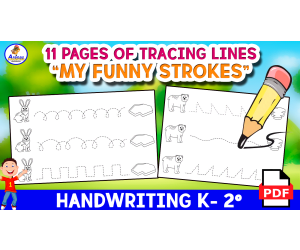
MY FUNNY STROKES - 11 Activity Page for Tracing Kids FREE
ELA, Writing, Handwriting, Kindergarten, Preschool, Grade 1, 2, Activities
1. Introduction As everyone knows, reviewing lines is a very beneficial activity for the development of our students' motor and cognitive skills. For this reason, today I have prepared this fascinating educational sheet that contains 11 beautiful pages for your students and/or children (in case you are a parent), to review these beautiful graphics, and at the same time entertain themselves, they They learn and improve their graphomotor skills. 2.Objective Some of the objectives of this fascinating worksheet are: - Develop fine motor skills: As you know, reviewing lines supports and helps children and/or students improve their hand-eye coordination and thus they will also strengthen the small muscles of their hands, which is very fundamental and essential for the development of their fine motor skills. Then, these types of skills are also an essential part so that they can later perform tasks such as writing, fastening buttons and even manipulating small objects in their daily life. - Improve coordination and control: As is known, the practice of reviewing lines contributes to the development of coordination between the non-dominant hand and the dominant hand, as well as the control of the pencil or crayon with which the child is writing. This set of skills is essential and crucial for the correct development of the writing process. -Encourage the improvement of concentration and attention: When your students and/or children follow the lines attentively, they improve their ability to pay attention and concentrate, which are essential skills for learning in the classroom as well as other daily activities in the classroom. daily life. - Stimulate the brain: When reviewing lines, different areas of the brain are being activated, including those related to motor coordination and visual perception. This will stimulate the connection between the brain and the hands, which will promote comprehensive brain development. - Preparation for writing: By reviewing lines, students are also preparing for formal writing. This will help students and/or children become familiar with the movement of the hand when holding a crayon or pencil, thus facilitating the transition to writing and then tracing letters and numbers. 3.Order, scheme and stages First, start with motivation, so that your students awaken their attention and interest in the programmed activity . Then enter the current token. 4.Grades or ages This sheet is aimed at children of 3, 4, 5, 6 and even 7 years old who are beginning their writing process and their first strokes. 5. Form of application This sheet can be applied individually and in groups. 6. Answer keys This game does not require answers. 7.Use text labels graphomotor skills, strokes, strokes and lines, lines, fine motor skills, stroke books, line books, first strokes, first lines, line and stroke activities. 8.Rules Specified above. 9.File types The archive is in PDF format. 10.Number of pages This document contains 11 pages.
Author EDITORIAL LAURA EDUCA
Tags Handwriting, Tracing, Strokes, Tracing Lines

Beginner Music Theory : The Treble Clef - US Version
Creative Arts, Art, Music, Grade 1, Activities
Beginner Music Theory: The Treble Clef - US Version The Beginner Music Theory: The Treble Clef - US Version is a comprehensive resource for Grade 1 teachers who aim to simplify music theory for their students. This product offers a seventeen-part module, with each segment containing six sections to provide an in-depth understanding of music theory fundamentals and treble clefs. What sets this resource apart Each of the seventeen sections contains materials formatted for tablets, web browsers, and computers, making it adaptable to different teaching setups. Whether you are teaching in traditional classrooms or conducting distance learning instructions, this resource can adapt to your needs. Convenience at its Best This product has been created with utmost convenience in mind. Provided as PDF links easily opened on any device. For tablet users, a free app enables quick launching and easy learning on-the-go. The Practical Application Ideal for whole group activities where everyone can learn together; Suitable for small group sessions for more focused instruction; An ideal homework assignment that children can confidently tackle alone while still gaining critical comprehension knowledge in music theory. Please note: At present time this product isn't suited for Mac users; alternative mediums such access through tablets or PCs ensure no learner misses out regardless their computing preference. In consistent use will see students improve their understanding about treble clefs—which eventually leads them into becoming more confident musicians themselves. Note: The Beginner Music Theory: The Treble Clef - US Version – interactive and varied instruction makes complex subjects accessible—and enjoyable—even for beginners!
Author Hbmusicsolutions's Shop
Tags Beginner Music Theory, Treble Clef, Music Fundamentals, Interactive Learning, Multi-platform Resource

300 Bell Ringers - Fun Challenges and Puzzles (Editable)
Special Resources, Life Skills, Grade 6, 7, 8, 9, 10, 11, 12, Activities
This resource has Language, Math, and Logic based fun and challenging puzzles and riddles. They are GREAT for grades 7 through 12. There is enough bell ringers for a whole year! They provide a great fun way to keep your students engaged during the last 5 minutes of class or to fill in those gaps during transition. These were all created to have your students think, engage and just have fun. Each challenge has a challenge page, followed by a solution page. You can provide one per day for a whole school year. Included is 300 challenges and solutions! Make back to school fun for the students! This resource comes in a printable PDF as well as an editable Google Slide. You can print it out and provide a copy to your students or display it on a smartboard.
Author Roombop
Tags Bell Ringers, Whole Year, Google Slides, Fun, Funny Bell Ringers, Fun Bell Ringers
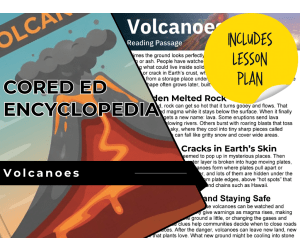
Volcanoes Reading Comprehension Passage - Cored Ed Encyclopedia
ELA, Language Development, Reading Comprehension, Reading, Pre-Reading, Earth Sciences, Earth and Environmental Sciences, Science, Geography, Social Studies, Grade 2, 3, 4, 5, Worksheets & Printables, Worksheets, Teacher Tools, Centers, Activities, Writing Prompts, Assessments, Quizzes and Tests, Quizzes, Lesson Plans
This volcanoes reading comprehension with lesson plan includes: Visualization (on the front cover) Start your lesson by taking a minute to think and share something about the topic. Read the script aloud (slowly), perhaps prepare some music or sound effects. Student close their eyes and let their imaginations wander. Students open their eyes, read the question aloud and give them a few minutes to complete. Ask a few students to share or keep answers until the end to compare with what they learn in the passage. Quick pause—thousands of Cored Education products are included with your TeachSimple membership. Download links and encyclopedia index available here. Pre-Reading Trivia Students will write down one thing they already know about the subject and then read five more facts and discuss. These facts are fun, and the students will enjoy learning about the subject before reading more. Give 1 minute for students to write what they already know (no pressure—best guess is fine). Read the five facts together. After each fact, do ask a student for their opinion, was it surprising? Set a purpose by asking students to highlight/underline one fact they want to learn more about during the reading. Reading Passage The text is a high-interest reading passage with set paragraphs, roughly three to four paragraphs long. It contains a variety of themes about the topic, anywhere from history to technology. The passage is between 250 and 350 words in length. First, ask students to look at the headings and see what they’ll learn about today. What do they know about the topic/heading? First read options: Teacher read-aloud (best for support). Partner reading (paragraph by paragraph). While reading, students underline important details, and vocabulary words they think may come up in the questions section. Mixed Questions The first question page contains four multiple-choice questions, each with a choice of four answers, and three written response questions that require a sentence or two from the student. Students complete the mcqs first independently, then review quickly as a class. For the 3 written responses, try to get students giving the answer with some form of evidence: “I think ___ because the text says ___.” If students get stuck, send them back to check the passage. Vocabulary Questions Practice seven key words from the text in this section across two activities. First section is scrambled words where students will unscramble three words given a clue for each. The second section is a word to meaning matching activity. Before starting, have some students read out words they underlined in the passage. Ask students to say the word and read aloud the sentence(s) around each word. Ask students to do scrambled words and the matching exercise in pairs then go through answers as a class. For the scrambled spelling task, get four pairs to come up to the board and write the words for extra practice with the other student reading out the clue. For the matching task, prompt students to give full sentences: “I matched ___ with ___ because ___.” Creative Writing In this question, the student will be required to write a five to eight sentence paragraph on a question related to the topic. Before starting, ask students write down 3 key ideas they are going to include in their piece. Ask students for ideas to share around the class to help those struggling. Pro writing expectations: 5–8 sentences At least 2 facts or details from the passage At least 2 vocabulary words from the previous page Students read their paragraphs while classmates listen for facts and vocabulary words. Extension Activities This page is optional for fast finishers or to take home. There are several activities, each one requiring a different skill. Do some, do none, do all, completely optional - but you will feel reassured knowing every possibility is planned for. Includes summary writting question. Answer Key There are answers for the multiple-choice questions, written response questions have sample answers, vocabulary answers and if there is a summary question then a sample summary will be provided as well. Lesson Plan Included Customized lesson plan for this lesson is included. Lesson Snapshot Title: Volcanoes Genre: Nonfiction (Informational text) Subject: Science (Earth Science) Primary Topic: What volcanoes are, how they form, and safety clues Estimated Guided Reading Level (A–Z): P What This Lesson Teaches Best What a volcano is (more than a “mountain”): Explains a volcano as an opening/vent or crack in Earth’s crust where hot melted rock, ash, and gases escape from an underground storage place called a magma chamber. Magma vs. lava: Defines melted rock as magma underground and lava once it reaches open air. How volcanic ash forms and spreads: Describes eruptions that toss bits of magma into the sky, cooling into tiny sharp pieces called volcanic ash that can fall like gritty snow and cover wide areas. Why volcanoes form where they do: Connects volcano locations to Earth’s outer layer being broken into huge moving plates (pulling apart or sliding under another), and also to “hot spots” that can form island chains such as Hawaii. Warning signs and community safety: Notes that rising magma can cause small earthquakes, ground swelling, or changes in gases and heat, and that these clues help communities decide when to close roads or move to safer places. Learning Goals Students will explain what the text says a volcano is and where the material comes from. Students will describe the difference between magma and lava using the passage’s definitions. Students will identify one way volcanic ash forms and describe what it is like when it falls. Students will describe how moving plates and hot spots help explain where volcanoes form. Students will list warning signs in the passage that may happen as magma rises. Students will explain how scientists’ observations can help communities stay safer. Key Vocabulary From the Text crust — Earth’s hard outer layer. magma — melted rock below Earth’s surface. lava — melted rock after it reaches open air. eruptions — times when a volcano sends material out. plates — huge moving pieces of Earth’s outer layer. FULL CATALOG OF DOWNLOAD LINKS AND ENCYCLOPEDIA INDEX HERE
Author Cored Education
Rating
Tags Vocabulary, Reading Comprehension, Reading Passages, Lesson Plans, Ela Lesson Plans, Reading Comprehension Lesson Plans, Pre-reading, Science Lesson Plans, Earth Science, Social Studies Lesson Plans

10 MATH PUZZLES PF NUMBERS 1 TO 5 | FREE RESOURCE
Math, Numbers, Kindergarten, Preschool, Grade 1, Activities, Games
HELLO! THANK YOU FOR BEING PART OF THE EDITORIAL ARENAS EDUCATIVAS RESOURCE STORE! Today we bring you this fantastic resource consisting of 10 puzzles for learning numbers from 1 to 10. So take advantage of this opportunity now because this document is available for free. MAUN INFORMATIPN OF THIS PRODUCT: 1. Product name: The title of this document is "10 puzzles with numbers from 1 to 10" 2. Number of pages: This document is made up of 10 pages. 3. Is it editable or not? This document is not editable, so it will be much easier for you to use it. 4. Subject: The subject of this document is numbers from 1 to 10. 5. Document version: This document is available in PDF version, A4 size. 6. Color or black/white: This document is available in color. 7. Aimed at children ages: This document is aimed at children ages 3 to 6 who are learning their first numbers from 1 to 5. 8. Area: This document can be applied in the area of mathematics. 9. Keywords: puzzle, puzzle of numbers from 1 to 5, numbers from 1 to 10, numbers from 1 to 5. 10. How do I print it? Print this document as it is, in A4 format. COMPLEMENTARY INFORMATION ABOUT THIS PRODUCT: A. At what point in class can I apply it? You can apply it during class or perhaps at the end by sending it as homework for your students. B. Should I apply it individually or in groups? It is preferable to apply it individually or in groups of 2 to 3 children because the activity is simple and they can finish it quickly. C. Keywords that describe the product: puzzle, number puzzle, numbers 1 to 5, numbers, math puzzles, math games . This file is for personal use only. It is not allowed to be resold or shared with others.
Author EDITORIAL LAURA EDUCA
Tags NUMBERS, NUMBERS 1 TO 10, NUMBERS 1 TO 5, PUZZLES

Guided Reading Lesson Plan & Activities for Grade 5
Reading, ELA, Grade 5, Activities, Lesson Plans, Teacher Tools
Teaching guided reading in 5th grade is one of the most rewarding aspects of teaching this grade. The standards and text levels are more rigorous than in primary grades, and the students are much more independent. The books they read are more engaging, making the teaching experience enjoyable. When actively in the classroom, use a flexible approach that promotes student choice and variety, paired with explicit instruction and engaging reading practice. Try to teach reading in a way that promotes discussion and enjoyment of reading. Focus on three key areas: 1. Learning to Read: Developing or growing skills to decode and comprehend grade-level texts. 2. Reading to Learn: Acquiring the skills needed to extract details and information from a text or story and synthesizing it. 3. Reading to Analyze: Building on reading to learn by focusing on specific skills and then being able to write about them. This ebook contains a detailed 90-minute lesson plan and activities for your Grade 5 students. Suggested answers are provided as well.
Author Bright Classroom Ideas Marketplace
Tags Guided, Reading, Lesson, Plan, Activities, Language, Grade 5

Speed Dating Get to Know Activity for Older Grades
, Grade 5, 6, 7, 8, 9, Activities
Grab this engaging back-to-school Speed Dating/Speed Meeting icebreaker activity! This activity encourages fast-paced conversations where students discuss fun get-to-know-you questions using 30 printable 3-D foldable tent cards. Start the school year by having students make meaningful connections, and relationships. Break the ice quickly and help build a positive classroom environment. This is different than any BINNGO board you may have tried in the pass. The questions are new and current. The three different BINGO boards keep the activity fresh and new. This will become a favorite! It can be used year after year. Activity Highlights: 30 FUN & Reflective Question Cards: Each card folds into a 3-D tent for easy display and interaction. Teacher Tips: Helpful suggestions to ensure the activity runs smoothly and effectively. This engaging icebreaker is perfect for establishing rapport and creating a welcoming atmosphere in your classroom. Use it to set a positive tone for the school year and encourage students to connect in a fun and meaningful way! Includes: 30 Question Cards (3-D Foldable Tents) Teacher Tips: Guidance to enhance the implementation of the activity for optimal results
Author Creativity Overload
Tags Speed Dating, Get To Know You Activity, Back To School, Older Grade Icebreaker, BOY Activity, Print And Go
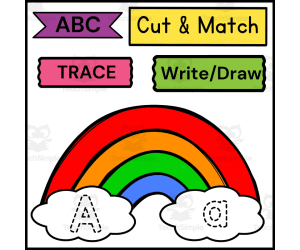
Rainbow Letters: Uppercase & Lowercase Match - Prek/K Fun!
ELA, Creative Arts, Art, Writing, Handwriting, Kindergarten, Preschool, Grade 1, Activities, Crafts
This activity , "Rainbow Letters," is fun & perfect for little learners in PreK, preschool, and kindergarten. This resource includes letter recognition, tracing, writing, and drawing in a way that feels like play. Your students will love matching uppercase & lowercase letters while creating their own special rainbows! What's Included: Rainbow Templates: 13 pages of templates to spark creativity. Uppercase & Lowercase Match: 26 rainbows featuring uppercase letters for kids to cut and match (17 pages). Write and Draw: 26 rainbows where children can write lowercase letters or draw pictures that start with those letters (13 pages). Tracing Practice: 26 rainbows with both uppercase and lowercase letters for tracing (13 pages). How to Use: This resource is perfect for different classroom activities—whether it's whole group, small group, or morning work. Kids will enjoy matching letters and getting creative with their drawings. The rainbow theme makes learning letters exciting and enjoyable! Once you download this resource, it’s super simple to get started—just print & go! You’ll find both color & B/W versions available... Make letter learning fun and colorful with "Rainbow Letters"! Grab your copy today and watch your students engage with letters like never before!!!
Author 1 Teaches 2 Learn
Rating
Tags Alphabet, Abc, Upper Case Letters, Lower Case Letters, Trace Letter, Trace, Write Letter, A-Z
Compound and Contraction Word Jigsaws
ELA, Grammar, Language Development, Vocabulary, Reading, Spelling, Grade 1, 2, 3, Activities
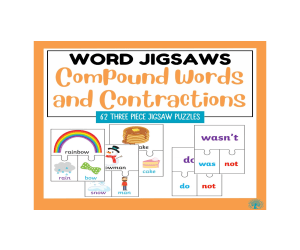
Grasping compound words and contractions are key milestones for early reading and writing fluency. These engaging jigsaw sets provide hands-on practice recognizing, reading, and manipulating these two complex word forms. With self-correcting three piece puzzles, students actively build lexical skills vital for literacy development. The 34 contraction puzzles feature words like can't, don't and I'll. Children must sound out and assemble the individual components like "can" and "not" to make the combined word. The 28 compound word jigsaws include vocabulary like football, pancake, butterfly. Students blend the meaning of the individual words like "foot" and "ball" to decode the new compound term. Moving and connecting the jigsaw pieces provides kinesthetic reinforcement of how smaller words combine to make larger vocabulary. The physicality cements reading comprehension and spelling skills. Teachers can use these materials repeatedly in literacy centers , small groups or phonics lessons. With illustrated compound words and movable contraction parts, children are immersed in the mechanics of language. Manipulating the words into unified puzzles delivers “aha” moments. The engaging, self-checking activities make complex linguistic concepts tangible and fun. Students will delight in these hands-on games while gaining abilities to recognize, read, and apply multifaceted vocabulary. This pack includes 34 three piece contraction jigsaws and 28 three piece compound word jigsaws. Clipart images courtesy of Kari Bolt Clipart, Flycatcher Clipart and Little Red
Author SEN Resource Source
Tags Vocabulary, Grammar, Compound Words, Contraction Words, Language Arts