



3,928 products added recently
Page 2 - Other Experiments
Introduce your students to a range of unique experiments that cover unconventional topics and methods. This collection includes interdisciplinary projects, environmental studies, and innovative demonstrations. By integrating these experiments into your lessons, you can broaden students' horizons and spark curiosity.

 Show filters


Interactive Chemistry Quiz: GHS Symbols – Genially + PDF Version
Science, STEM, Chemistry, Physics, Life Sciences, Earth and Environmental Sciences, Technology, Basic Science, Biology, P.E. & Health, Homeschool Templates, Grade 6, 7, 8, 9, 10, 11, Teacher Tools, Experiments, Activities, Labs, Worksheets & Printables, Escape Room, Games, Presentations, Quizzes and Tests, Quizzes
Interactive Chemistry Quiz: GHS Symbols – Genially (+ PDF Version) Bring lab safety to life with this interactive quiz on the GHS (Globally Harmonized System) hazard symbols – perfect for middle and high school chemistry lessons. Whether you're starting the unit or wrapping up a safety review, this quiz adds variety, visual appeal, and a bit of fun to your lesson plan. You’ll get two versions of the quiz: – A PDF version that can be used digitally or printed (but it works not well) – A Genially link that leads to an animated, interactive version (includes sound – which can be muted) Both versions test students on the meanings of the various GHS symbols – from corrosive substances to environmental hazards. The quiz includes original clipart and my own glitter-animated GHS symbols to make the content more visually appealing without distracting from the important safety message. I usually use the Genially quiz for individual work in the computer lab or on tablets, so each student can go at their own pace. But it also works well as a station activity , a class-wide quiz , or even as homework , depending on your classroom setup. At the end of the PDF, you’ll find: A QR code to scan directly to the Genially A clickable link for browser access An iframe embed code , if you want to use it on your (non-commercial) learning platform Attention: The interactive PDF does not contain the full scope of the material. The quiz works. Unfortunately, the additional tasks do not. Using Genially is therefore recommended and much more motivating for the pupils. For the interactive quiz you need an internet connection and a terminal device. The quiz can be carried out with the whole class or as partner or individual work. I prefer individual work at each student's own pace. To get to the Genially link, either scan the QR code at the end of the document or click on the link button available there. You can also copy the iframe code and embed the Genially on a learning platform or other... The Genially can be used either at the beginning of the topic or as a backup. It is also worth using as a station in station work. The interactive version includes motivating sound effects , a self-paced structure , and a clear, age-appropriate design for grades 7–10. 📌 Important note : The Genially quiz is protected by copyright. It’s for your own classroom use only . Please don’t share the link or embed it outside a private, secure learning environment. Sharing with colleagues, online platforms, or social media is not permitted. I hope your students enjoy reviewing GHS symbols as much as mine do! – Heike from @Lernfitness Did You Know? I teach with a certified therapy dog, and together we create a positive and welcoming learning environment. 🐶
Author Lernfitness
Rating
Tags GHS, Science, Lab, Chemistry, Pictograms, Genially, Interactive, Lab Safety, Hazard Symbols, Individual Work

Easter Chemistry Bunting – Color, Decorate & Learn Chemical Elements
STEM, Science, Chemistry, Physics, Life Sciences, Biology, Grade 6, 7, 8, 9, 10, 11, 12, Activities, Worksheets & Printables, Banners, Classroom Decor, Bulletin Boards, Door Decor, Posters, Labs, Experiments, Drawing Templates & Outlines
Easter Chemistry Bunting A Creative Way to Learn the Periodic Table! 🐰🔬🎨 Every year, I like to add a bit of seasonal fun to my classroom. But instead of just decorating, why not make it educational too? That’s why I created this Easter-themed chemistry bunting—a simple but effective way to help students get familiar with the periodic table while being creative. Each pennant features an element’s symbol, name, and atomic number. Instead of memorizing, students color and decorate while naturally recognizing the elements they see every day. It’s low prep for you, fun for them, and adds a nice science-themed touch to your classroom! 🌟 What Makes This So Useful? ✔ Students are learning without even realizing it – They’ll see the elements daily, making them easier to remember. ✔ A great mix of science and creativity – Not just a decoration, but also an interactive classroom activity. ✔ No complicated prep – Just print, color, cut, and hang. ✔ Works for different ages – Ideal for chemistry, STEM, or general science. ✔ Perfect for individual or group work – Let students personalize their elements! 📌 What’s Included? 📜 127 Printable Pennants, featuring: ✔ All 118 main group elements ✔ Element name, symbol, and atomic number 🎨 Bonus: Extra Easter-Themed Pennants – Just for fun! 🖨 Black-and-White Format – Great for coloring and personalizing. 🎨 How to Use It 1️⃣ Print the pennants. 2️⃣ Let students color & decorate their element. 3️⃣ Cut them out and decide how to display them. 4️⃣ Hang them up – either as a bunting or pinned to the board. 💡 Try this: Assign each student an element and have them share one cool fact about it with the class! 🐣 Why Teachers Love It ✔ "I love that it gets students involved in decorating the classroom while reinforcing chemistry!" ✔ "They actually asked about elements while coloring – win-win!" ✔ "Easy to set up, fun, and looks great in my lab!" 🔬 A Simple Way to Make Chemistry Fun! Want to add some springtime energy to your science lessons without extra work? This bunting is an easy way to mix creativity with learning—perfect for chemistry labs, classrooms, and bulletin boards. 🚀 Print, color, and hang—it’s that easy! 📍 Best wishes, Heike from Lernfitness Did You Know? I teach with a certified therapy dog, and together we create a positive and inspiring learning environment. 🐶✨
Author Lernfitness
Tags Chemistry, Lab, Biology, Laboratory Equipment, Lab Tools, Physics, Bunting, Pennant Banner, Classroom Banner, Chemical Elements

Mole and Avogadro’s Number – Lab Station Activity
Science, Chemistry, Grade 8, 9, 10, 11, Labs, Experiments, Activities
Practical Chemistry Lab for Middle and High School Students Mole and Avogadro's Number Lab Stations provide an engaging hands-on learning experience for 8th-12th grade chemistry students. Learners will rotate through 9 interactive stations focused on key concepts like molar mass, Avogadro’s number, stoichiometry calculations, and real-world applications. Activities range from creative tasks like drawing models to knowledge checks through video and reading comprehension. The variety builds interest while allowing learners to demonstrate understanding. Use this lab to complement instruction on the mole or as review before exams. Includes teacher instructions, recording sheets, answer keys, bonus vocabulary puzzles to minimize idle time between stations. Suitable for individual or group work in classroom or homeschool environment.
Author Teach With Fergy
Tags Calculation, Application, Mole, Avogadro, Lab Station, Avogadro And The Mole Lab Key

Easter Chemistry Bunting - Learn Chemical Elements with Festive Banner
STEM, Science, Chemistry, Physics, Life Sciences, Biology, Grade 6, 7, 8, 9, 10, 11, 12, Activities, Worksheets & Printables, Banners, Classroom Decor, Bulletin Boards, Door Decor, Posters, Word Walls, Labs, Experiments
Easter Chemistry Bunting A Fun & Educational Decoration for Your Science Classroom! 🐰🔬 I love decorating my classroom for different seasons, but I also want my decorations to be educational and useful. That’s why I created this Easter Chemistry Bunting—it brings a bit of spring energy into the classroom while helping students get familiar with the periodic table! Each pennant features an element symbol, name, and atomic number, so students see and recognize them every day—without even thinking about it. It’s such a simple way to reinforce learning while brightening up the room! 🌸 Why This Works So Well in Class ✔ No extra work for you – Just print, cut, and hang. ✔ Students see chemistry every day – Without pressure, they start recognizing elements naturally. ✔ Festive, but not distracting – A bit of color and seasonal fun, while still focused on learning. ✔ Perfect for any science room – Whether in a chemistry class, lab, or hallway, it works anywhere. ✔ Easy to use in lessons – You can even make it interactive with a classroom game! 📌 What’s Included? 📜 127 Printable Pennants – One for each element, showing: ✔ Symbol ✔ Name ✔ Atomic Number 🎨 Colorful, Easter-Themed Designs – Cheerful and bright, but still focused on learning. 🖨 Easy to Print & Adjust – Scale it to fit your classroom space. 📎 Two Hanging Options: ✔ String them together for a banner. ✔ Attach with fasteners for a flexible display. 💡 Ideas for Using It in Class 1️⃣ Print and cut the pennants. 2️⃣ Hang them up in your classroom, hallway, or science lab. 3️⃣ Use them for a quick challenge – Call out an atomic number, and students find the right pennant! 💡 Another idea: Assign an element to each student and have them share a fun fact about it. 🐣 Why Other Teachers Like It ✔ “Students actually look at it and ask about elements—great conversation starter!” ✔ “A simple way to make the classroom feel more engaging.” ✔ “No prep, looks great, and makes chemistry more visible every day.” 🔬 Bring Chemistry into Your Easter Decorations! Instead of just hanging up generic classroom decorations, why not make them meaningful? This bunting adds a touch of spring while keeping students engaged with science. 🚀 Try it out and see how it works in your classroom! 📍 Best wishes, Heike from Lernfitness Did You Know? I teach with a certified therapy dog, and together we create a positive and inspiring learning environment. 🐶✨
Author Lernfitness
Tags Chemistry, Lab, Biology, Laboratory Equipment, Lab Tools, Physics, Bunting, Pennant Banner, Classroom Banner, Chemical Elements

Let's Investigate! Hands-On Science - Grades 1-2
, Grade 1, 2, Activities, Experiments, Teacher Tools, Lesson Plans
Let's Investigate! Hands-On Science - Grades 1-2 Let's Investigate! Hands-On Science - Grades 1-2 is a complete teaching aid packed with brain teasing activities aimed to introduce students to the mesmerizing world of science. Covering three main areas of science: physical, earth, and life sciences. A Comprehensive Teaching Toolbox This guide is designed as a comprehensive teaching toolbox filled with actionable activities geared towards fostering independent learning among students. Each activity encompasses an easy-to-follow set of instructions ensuring direct comprehension and engagement. These tasks are not merely focused on rote learning but also encourage observation skills and foster critical thinking development through guided questions. Beyond just Activities Rather than just presenting fun activities, this guide includes interesting facts throughout its contents adding another layer of enrichment to students' learning journey. Extension activities are also added providing more avenues for knowledge exploration beyond classroom discussions. List: Fascinating Science Facts Extension Activities An Activity Guide About the Activity Guide: The Activity Guide located towards the end offers useful background information along with tips that can be leveraged by educators to ensure an enjoyable yet valuable scientific exploration experience for their classes. Note:The Let's Investigate! Hands-On Science - Grades 1-2 package comes as a single PDF made up of 64 pages prepared in advance waiting to be printed whenever you need them – maximizing accessibility without sacrificing time-efficiency. Whether for whole-class instruction or small group teachings or even homework assignments – this highly adaptable tool Line by Teach Simple aims at empowering Grade 1 & Grade 2 learners in their curious journey into the realm of Science. Get started today, grab your digital copies and experience how physical sciences, earth sciences, or life science concepts can become incredibly tangible learning experiences for your students.
Author Classroom Complete Press
Tags Let's Investigate, Hands-on Science, Science Experiments, Fossil Fun, Underwater Test

Let's Investigate! Hands-On Science - Grades 5-6
, Grade 5, 6, Activities, Experiments, Teacher Tools, Lesson Plans
Let's Investigate! Hands-On Science - Grades 5-6 Let's Investigate! Hands-On Science - Grades 5-6 takes students on a thrilling journey of scientific discovery. It offers educators an effective tool for stimulating curiosity and encouraging independent learning in the fields of physical science, earth science, and life science.The particular emphasis is on experiential learning made possible through engaging activities. About This Teaching Resource This teaching resource contains 64 pages filled with mind-stretching activities designed to foster exploration into the fascinating world of science. It presents an ideal blend of fun, simplicity, and education that makes even complex concepts easily digestible for fifth or sixth-grade students. The Activities: Easy yet Engaging! The interesting activities contained within this resource require minimal preparation time from educators yet yield maximum student engagement. Each assignment provides clear step-by-step instructions to allow for seamless classroom execution. Whether implemented in a whole group setting or smaller clusters, these hands-on experiments will stimulate young minds at varying levels of comprehension. Critical Thinking Skills: Let's Investigate! Hands-On Science studies significantly focus on developing critical thinking skills espeially needed in scientific explorations. Puzzling Questions: Guided questions accompanying each activity serve as pivotal challenges that cultivate the art of observation and reasoning among pupils. Facts Reinforcement: Captivating snippets of facts scattered throughout the book reinforce students' understanding while feeding their natural curiosity. "Extension Activities": They lend further depth to their knowledge by prompting exploration beyond what's covered in class discussions. Extra Teacher Resources Included! To help educators navigate effortlessly through each experiment and secure better results with every endeavor at teaching scientifically-geared topics, this resource includes two invaluable assets: a comprehensive background information section and an insightful Activity Guide. Each aid is carefully crafted to provide teachers with data-rich content about relevant subject matter as well as beneficial tips to utilize exactly how you wish during lessons or even for homework assignments! In a Nutshell Available in handy PDF format ready-to-print format, Let's Investigate! Hands-On Science - Grades 5-6 stands as a versatile addition to any curriculum intended for fifth to sixth-grade science instruction. Whether you are a public school teacher or you educate at home, this resource ensures an enriching hands-on learning experience steeped in elements of fun, understanding and scientific wonder.
Author Classroom Complete Press
Tags Air Pressure Experiment , Tornado In A Bottle, Let's Investigate, Hands-on Science, Earth Science Experiments
One and Two Dimensional Motion – Lab Station Activity
Science, Physics, Grade 9, 10, 11, 12, Labs, Experiments, Activities
Physics Lab Station Activity: Exploring One and Two-Dimensional Motion In this inquiry-based physics lab activity, students will actively investigate concepts of one and two-dimensional motion through nine interactive stations. As students move through stations testing knowledge, drawing models, conducting research, and more, they will gain hands-on experience with topics like SI units, scalars, vectors, speed, velocity, position, and displacement. The activity can be used for independent student work or whole class instruction. Implementation ideas such as using it as a review, homework assignment, or summative assessment are also provided. This customizable resource contains station description cards, a recording sheet, word puzzles, and answer keys. It covers core physics topics on motion while getting learners out of their seats.
Author Teach With Fergy
Tags Motion, Physics, Linear, Lab Station, Dimensional, Cell Motion Laboratories
Bridge to Terabithia STEM Experiment + STEM Project for Grades 4, 5, 6
Science, Technology, Engineering, STEM, Grade 4, 5, 6, Experiments, Activities, Projects, Diagrams, Teacher Tools, Graphic Organizers, Rubrics
Bring literature to life with this exciting STEM activity inspired by Bridge to Terabithia! This challenge sparks creativity and problem-solving as students plan and construct a bridge for King Jesse as he plans to make entrance to Terabithia safer. Perfect for blending literature with science, it allows students to explore engineering concepts using simple supplies while promoting teamwork and critical thinking. What’s Inside This Resource: Student Letter: A letter from Jesse introduces the challenge, linking the story to a real-world engineering task. Design Loop Graphic: A visual students can attach to their science journals, serving as a step-by-step guide throughout the activity. Detailed Instructions: Choose to print the guide as a packet or have students record each stage in their journals for an interactive experience. Teacher Tips: Practical guidance for crafting a clear problem statement with time constraints, materials, and success criteria tailored to your classroom. Skills Your Students Will Build: ✔ Problem-Solving: Identify obstacles and create inventive solutions. ✔ Engineering Design: Navigate the design loop—plan, construct, test, and refine. This page can easily be enlarged for a classroom poster. ✔ Critical Thinking: Assess their prototype’s performance and pinpoint ways to enhance it. ✔ Teamwork: Collaborate effectively to accomplish shared goals. Versatile Classroom Application: Whether as guided instruction or part of an integrated literature and science unit, this STEM activity encourages students to think creatively, document their process, and meet science and engineering standards. The rubric included is based on engineering concepts, but can also be used as a nonfiction writing rubric for cross-curricular options. Why Educators Love This Resource: ⭐ “My students were fully engaged, combining their passion for reading with STEM!” ⭐ “Simple to set up and encourages creativity and teamwork.” ⭐ “A seamless connection between literature and science for cross-curricular learning!” Empower your students to solve Jesse’s challenge and experience the excitement of engineering with this standards-aligned STEM adventure!
Author Kel's Klass
Tags 4th Grade Science Project, 4th Grade Science Experiment, 5th Grade Science Project, 5th Grade Science Experiment, 6th Grade Science Project, 6th Grade Science Experiment, Engineering Diagram, Science Graphic Organizer, Science Rubric, Bridge To Terabithia

Types of Bonds – Lab Station Activity
Science, Chemistry, Grade 9, 10, 11, 12, Labs, Experiments, Activities
Types of Bonds – Lab Station Activity Types of Bonds – Lab Station Activity is a dynamic learning resource designed for educators teaching Grades 9 to 12 Chemistry. It offers an engaging approach to educating students about various types of bonds through hands-on exploration and active participation. About The Activity Rather than standard one-dimensional lessons, this activity prompts students to move around the room, visiting different stations. Each station provides a unique method for understanding the topic. These methods include: Drawing or constructing models, Researching specific questions related to electricity production sources, Forming opinions on pertinent issues and expressing them in writing, Reading articles that link theory with real-world applications, and Finding answers through multiple-choice questions. The main aspects considered during this activity encompass these eight critical themes: Reweable Sources; Non-renewable Sources; Fossil Fuels; Nuclear Power; Solar Power; ;nd; > fully chosen tongetsumontextualize whatuir Learing in a tangible manner ensures no student energy is wasted but continually augmented. Conclusion Therefore,, integrate Type of Bonds – Lab Statio Activity iy your eaching, tt’sthan efrectve nedhod o addressing scientific facts about bonds with a kyeyemphasis on independent thinking creative exploration and collaborative learning.
Author Teach With Fergy
Tags Bonds, Chemistry, Lab Activity, Renewable Sources, Energy Production
Stone Fox STEM Experiment + STEM Project for Grades 3, 4, 5
Science, Technology, Engineering, STEM, Grade 3, 4, 5, Experiments, Activities, Projects, Diagrams, Teacher Tools, Graphic Organizers, Rubrics
Little Willy is looking for a way to build a sled that will honor Searchlight, in this STEM project inspired by Stone Fox. This science project encourages problem-solving as students plan and construct a sled that will be able to carry Willy safely across a block of ice. Perfect for blending literature with science, it allows students to explore engineering concepts using simple supplies while promoting teamwork and critical thinking. What’s Inside This Resource: Student Letter: A heartfelt letter from Little Willy introduces the challenge, linking the story to a real-world engineering task. Design Loop Graphic: A visual students can attach to their science journals, serving as a step-by-step guide throughout the activity. Detailed Instructions: Choose to print the guide as a packet or have students record each stage in their journals for an interactive experience. Teacher Tips: Practical guidance for crafting a clear problem statement with time constraints, materials, and success criteria tailored to your classroom. Skills Your Students Will Build: ✔ Problem-Solving: Identify obstacles and create inventive solutions. ✔ Engineering Design: Navigate the design loop—plan, construct, test, and refine. This page can easily be enlarged for a classroom poster. ✔ Critical Thinking: Assess their prototype’s performance and pinpoint ways to enhance it. ✔ Teamwork: Collaborate effectively to accomplish shared goals. Versatile Classroom Application: Whether as guided instruction or part of an integrated literature and science unit, this STEM science project encourages students to think creatively, document their process, and meet science and engineering standards. The rubric included is based on engineering concepts, but can also be used as a nonfiction writing rubric for cross-curricular options. Why Educators Love This Resource: ⭐ “My students were fully engaged, combining their passion for reading with STEM!” ⭐ “Simple to set up and encourages creativity and teamwork.” ⭐ “A seamless connection between literature and science for cross-curricular learning!” Encourage your students to help Little Willy achieve his goals and experience the excitement of engineering with this standards-aligned STEM adventure!
Author Kel's Klass
Tags 4th Grade Science Project, 4th Grade Science Experiment, 5th Grade Science Project, 5th Grade Science Experiment, Engineering Diagram, Science Graphic Organizer, Science Rubric, 3rd Grade Science Project, 3rd Grade Science Experiment, Stone Fox

Power – Lab Station Activity
Science, Physics, Grade 8, 9, 10, 11, Labs, Experiments, Activities
The Power-Lab Station Activity : An all-inclusive teaching resource designed specifically for passionate middle and high school educators. The ultimate goal is to facilitate a profound understanding of power physics through an engaging, interactive learning ecosystem presented via multiple activity stations, each comprising unique student engagement modes. Key Teaching Focus: Primarily focuses: On key physics concepts such as: Power Horsepower Energy efficiency Work and energy. Bonus Activities: The riveting word scrambles and searches related to the topic prevent idle-time between sessions. Diverse Stations: The Power-Lab Station Activity incorporates nine different stations. A station encourages students to "release their creativity". A station that uses technology for research purposes - enhancing their analytical skills. Incorporates writing tasks :This encourages learners' critical thinking abilities whilst getting them involved in reflective writing processes. Solely dedicated rest stations: Gives diligent learners time off or those with some extra work can catch up on unfinished tasks. Note: Last but not least another station motivates pupils creating multi-format questions stimulating strategic thought processes behind question framing consequential in collaborative educational environments. Advantageous features: One of the benefits is short readings that check comprehension by connecting the instruction with real-life applications and also testing knowledge through multiple-choice questions that require written explanations from learners. In line with today’s digital age, one of the stations compels students to watch a related video clip and dissect its aspects through inquiry-based learning techniques Ease of use: Teachers of grades 8-11 will find this package easy to use – simply print out or upload digitally! The resource is also editable and comes along with an answer key for easy assessments. The Power-Lab Station Activity : Conclusively, it meshes knowledge and creativity perfectly, making it an indispensable educational tool.
Author Teach With Fergy
Tags Power Physics, Interactive Learning, Student Engagement, Real-life Applications, Critical Thinking
Sound, Sound Energy, and Speed – Lab Station Activity
Science, Physics, Grade 8, 9, 10, 11, Labs, Experiments, Activities
Product Overview: The product under consideration is the Sound, Sound Energy, and Speed – Lab Station Activity . This interactive teaching resource invites students to explore key scientific concepts around sound and energy in an engaging, hands-on way. Suitable for use with students in Grade 8 through to Grade 11, this learning tool aligns particularly well with physics coursework. Main Features: A core element of this lab station activity hinges on active participation. It requires learners to interact directly with the content materials available at each station—ranging from video clips to informative readings or related assignments/tasks. Rather than a one-size-fits-all approach, this resource considers varying student speeds and comprehensions by including intermittent rest stations where additional catch-up time can be spent on previous activities or preparing for upcoming ones. This product file is multi-format—a detail that allows seamless deployment in any classroom setup whether traditional school environment or homeschool setting—an advantage that greatly benefits today's varied educational contexts. Unique Attributes: Each unique station offers the chance for learners to deepen their understanding of topics like renewable energy sources or future technologies while simultaneously honing skills such as research techniques and opinion-forming. The lesson's adaptability shines with its included bonus activities- a word scramble for academically stronger groups or a word search for those needing simpler tasks. Another attribute that sets Sound, Sound Energy, and Speed – Lab Station Activity apart is its creative integration of different learning modalities. From having students express personal opinions in paragraph form (station 3), watching educational videos (station 7), or creating their own assessment items (station 9), there are plenty of opportunities catering towards diverse learning styles. Lastly, whether utilized as a lab activity during regular instruction sessions or employed as productive revision tools leading up to exam periods—the flexibility offered by these stations allows educators maximum control over how best they are utilized within their unique classroom settings.
Author Teach With Fergy
Tags Sound, Energy, Speed, Lab Activity, Hands-on Learning
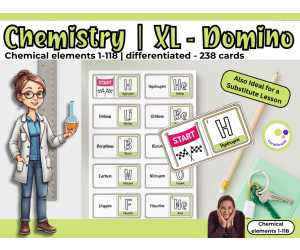
XL Domino – Chemical Elements 1–118 | exploring element names + symbol
STEM, Science, Chemistry, Physics, Life Sciences, Montessori, Basic Science, Grade 7, 8, 9, 10, 11, 12, Activities, Games, Worksheets & Printables, Task Cards, Quizzes and Tests, Teacher Tools, Word Problems, Flashcards, Escape Room, Experiments
XL Domino – Chemical Elements 1–118 An interactive domino game for exploring element names and symbols 🧪🎲 This printable XL domino game offers a fun and flexible way for students to practice the names and symbols of all 118 chemical elements. Designed for use in grades 7–10, this resource supports both introductory lessons and ongoing review in chemistry class. Whether used in small groups, as a full-class activity, or even spread out along the hallway floor, it encourages active learning and collaboration. Each card features either the name or the symbol of a chemical element. By matching these correctly, students build a long domino chain – all while reinforcing their knowledge of atomic numbers, symbols, and the layout of the periodic table. What’s included: 238 printable domino cards (PDF format) Two complete versions of the game (119 cards each): – Beginner version: element names on both sides – Advanced version: name on one side, symbol on the other Covers all elements from hydrogen (1) to oganesson (118) Tips for setup and gameplay included How I’ve used it: This game works well before introducing the periodic table in depth. It gives students time to get comfortable with element names and symbols in a low-pressure setting. The larger card format makes it ideal for group work or movement-based activities, such as arranging the cards on the floor or in the hallway. Why it works: The visual repetition and active gameplay help students internalize key facts more effectively than passive memorization. Group dynamics also support peer learning – students naturally help each other recall unfamiliar elements. And because it feels like a game, students stay engaged longer and show more willingness to participate. The material is easy to prepare: print, laminate if you like, and cut out the cards. From there, you can adapt it for differentiated learning levels or turn it into a competitive classroom challenge. This is not just a game – it’s a versatile teaching tool that brings the periodic table to life. 📍 Best wishes, Heike from @Lernfitness Did You Know? I teach with a certified therapy dog, and together we create a positive and welcoming learning environment. 🐶
Author Lernfitness
Rating
Tags Educational Card Games, Chemistry, Physics, STEM Science Matching Game, Chemical Elements, Periodic Table Matching Game, Game, Domino, Differentiation
Fun with Chemistry: 20 Exciting Chemical Reaction Experiments For Kids
Chemistry, Science, Elementary, Experiments, Activities
Welcome, young scientists and teachers! This eBook is full of fun and colorful experiments that show how different substances can react to create amazing effects. You will see bubbles, color changes, fizzing eruptions, and even “rockets” that zoom up into the air. As you explore these experiments, remember that science is all about asking questions, observing closely, and having fun learning about the world around us. There are 20 exciting chemistry experiments included. They all involve simple chemical reactions that can be safely performed by kids. For each experiment, the materials are listed, and the step-by-step procedure. Finally, an explanation is given, so as to highlight the science behind the experiment. Last but not least: All experiments must be conducted under strict adult supervision. Always wear safety goggles (or ask an adult to help you wear them) and use the experiments in a safe area where spills can be easily cleaned up.
Author Bright Classroom Ideas Marketplace
Tags Chemistry, Experiment, Kids, Lab, Reaction

Cells and The Cell Theory – Lab Station Activity
Science, Life Sciences, Biology, Grade 7, 8, 9, 10, Labs, Experiments, Activities
Cells and The Cell Theory – Engaging Lab Station Activity Bring cells and cell theory to life for your middle or high school science students with this interactive lab station activity . Students will rotate through 9 stations, each offering a unique hands-on opportunity to build their understanding of cells, organelles, cell types, diseases, and more. Activities range from drawing cells to answering questions based on videos and readings to creating their own quiz questions. Almost no prep needed - just print the self-contained station cards and guides. Bonus word scramble and word search activities ensure students stay engaged. This versatile resource works for both learning new content or reviewing before a test. With 9 lively stations packed with visual, written and creative interactions, your students will love discovering cells and cell theory!
Author Teach With Fergy
Tags Cells, Plant, Animal, Cell Theory, Lab Station, Cell Structure Lab, Cell Theory For Middle School

Classification of Living Things – Lab Station Activity
Science, Life Sciences, Biology, Grade 7, 8, 9, 10, Labs, Experiments, Activities
This fully editable Lab Station Activity on the Classification of Living Things is meant to get your students out of their seats and engaged in the content. Each station not only offers a unique opportunity to test your students' knowledge (offer an opinion, answer questions based on a video or reading, draw, etc.), but also provides a fantastic learning opportunity where your kids are learning through assessment. Each station comes with a description card while some also contain more detailed instructions, a reading, questions to answer, etc. Students are equipped with a recording sheet (passport) to write their answers. There is almost no prep for you. Simply print the cards, lay them out around the room and you're all set. An answer key is also provided where applicable. --------------------------------------------------------------------------------------------- This lab activity covers: - The Classification of Living Things - The 7 Kingdoms - Taxonomy ---------------------------------------------- Bonus Activities: To ensure your students don’t have any downtime between stations, your lab also includes a 10-word word scramble and word search, both with an answer key. You can use them as part of their mark, as a bonus so it’s not mandatory, etc. However you choose to use it, it will ensure that your students are always busy and never idle. Note: For stronger classes, I give the word scramble and for weaker ones, the word search. ----------------------------------------------- How do the Lab Stations work? Each station is specially designed to be a unique complement to the material while at the same time, provide a valuable learning experience. Below is an overview of how each station works. In your activity , each will be tailored to the specific content. Station 1: Get Hands-On – using their creative skills, students are required to draw or build. Station 2: Research – using a classroom computer or their own device, students must research a specific question/issue surrounding the topic. Station 3: Explain yourself – students write down an opinion to a question in paragraph form. Station 4: Rest Station - students can use this time to catch up on work they didn't have time to complete at a previous station or prepare themselves for an upcoming one. Station 5 - Applicability reading – students read a short passage from an article, website, etc. which directly connects the classroom content to a real life application. Station 6: Test your knowledge – students answer 5 multiple choice questions then provide a written explanation for how/why they came to their conclusions. Station 7: Learn from the expert – using a classroom computer or their own device, students must watch a short video clip and answer the associated questions. They may stop, rewind and restart as often as they like during the time frame. Station 8 - Rest Station. Station 9: Become the question master – Students must create 2 multiple-choice questions, 2 true/false questions and 1 short answer question. Students must also supply the answers. ------------------------------- You might also be interested in my other lab station activities Ecology and the Environment: • Ecosystems • The Classification of Living Things • Biodiversity and Invasive Species • The Carbon and Water Cycle • Climate Change • Photosynthesis • Cellular Respiration and Photosynthesis • Ecological Succession • Plant Sexual and Asexual Reproduction • Earth's Seasons • Interactions Within Ecosystems Biology: • Cell and the Cell Theory • The Human Digestive System • The Circulatory System • The Human Respiratory System • Mitosis and the Cell Cycle • Cellular Respiration and Photosynthesis • Photosynthesis • Cancer: Cell Division Gone Wrong - Volume I • Cancer: Cell Division Gone Wrong - Volume II • Cell Membrane and Transport • Hearing and the Human Ear • The Human Eye • Genetic Material: DNA and RNA • The Nervous System • Energy Flow In Ecosystems Physics: • Newton's Three Laws of Motion • Kinetic and Gravitational Potential Energy • Current Electricity and Circuit Diagrams • Static Electricity • Light Optics and the Production of Light • Sound, Sound Energy and Speed • One and Two-Dimensional Motion • Uniform Acceleration • How Planes Fly • Refraction • Friction • Energy and Its Forms • Density and Buoyancy Space Science: • The Life and Death of Stars • The Moon and its Phases • Life In Space • Our Solar System • Solar and Lunar Eclipse • Earth's Seasons • Asteroids, Comets and Meteors Chemistry: • Atomic Model, Notation and Atoms • Chemical Reactions and Balancing Equations • Molecular and Ionic Compounds • Physical and Chemical Properties & Changes • Acids, Bases, and Neutralization Reactions • The Periodic Table • Single and Double Displacement Reactions • Balancing Chemical Equations • Synthesis, Decomposition and Combustion Reactions • Atomic Theory, Atomic Structure and Isotopes • Types of Bonds and Intermolecular Forces • The Mole/Avogadro's Number • Density and Buoyancy These station cards are meant to be used as a lab activity but can also be utilized in a review task before a test or a quiz. Used either way, your students will love it! I know mine do and I'm telling you from first-hand experience as I've used this activity in my own class. Thank you for your interest in my products. If you have any questions, please send me an email - devon@teachwithfergy.com
Author Teach With Fergy
Tags Taxonomy, Living Things, Classification, Lab Station, Activities, Classification Activity Middle School, Classification Activities High School, Classification Activities Middle School, Classification Activity, Living Things Zip

Engaging Science Activities for PreK
, Preschool, Kindergarten, Grade 1, 2, Activities, Experiments
You’re never too young to learn about Science! Includes these fun, easy-to-do craft projects : Fossil Factory, Grow a Bean Plant, and Gobs of Goop.
Author Twin Sisters Digital Media
Tags Plants, Fossils, Water, Science, Experiments
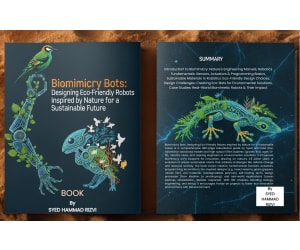
Biomimicry Bots: Designing Eco-Friendly Robots Inspired by Nature
Science, Earth and Environmental Sciences, Earth Sciences, Environmental Science, Geology, Life Sciences, Animals, Biology, Human Body, Insects, Grade 6, 7, 8, 9, 10, 11, 12, Activities, Experiments, Labs, Teacher Tools, Assessments, Diagrams, Lesson Plans, Rubrics, Workbooks, Worksheets & Printables
Biomimicry Bots: Designing Eco-Friendly Robots Inspired by Nature for a Sustainable Future 380-Page Comprehensive STEM Guide for Grades 8-12 | Robotics + Biomimicry + Environmental Science Curriculum Resource Unlock the future of green technology with this revolutionary 380-page educational tour de force! Authored by Syed Hammad Rizvi, Biomimicry Bots is the definitive interdisciplinary resource that empowers students to design sustainable, nature-inspired robots that address real-world environmental issues, ranging from ocean cleanup and reforestation to air quality sensing and biodiversity preservation. Ideal for advanced middle school and high school students (Grades 8-12, ages 13-18), robotics teams, STEM education, homeschoolers, and future engineers and environmental scientists. This book seamlessly integrates biology, engineering, programming fundamentals, sustainable materials, AI, swarm intelligence, soft robotics, and eco-design challenges to create a fun and interactive learning journey. With 100 expertly designed chapters, students will discover: Robotics basics (sensors, actuators, microcontrollers, programming) Nature’s brilliance (gecko adhesion, octopus arms, bird flight, insect colonies) Green materials (biodegradable plastics, self-healing materials, recycled composites) Practical applications (robotic fish, agricultural robots, disaster response drones) Eco-bot design activities with CAD and prototyping support Meets NGSS, IB, and AP Environmental Science curriculum standards. Perfect for robotics clubs (VEX, FIRST), science fairs, classroom instruction, or a full-semester course. Empower the next generation of eco-innovators now! Why Parents & Schools Adore It: Completely integrates with NGSS engineering design and Earth systems standards — administrators rave about it for its standards alignment. Teaches a true sustainability mindset, not just "build a robot" — parents are thrilled that their kids finally get why eco-design is important. 100 bite-sized chapters that are extremely teacher-friendly: assign 1-2 chapters a week or choose projects to avoid overwhelming kids. Very project-intensive with real-world applications (ocean cleanup robots, reforestation drones, and so on) — kids actually build portfolios that colleges care about. One of the only resources that combines cutting-edge robotics with environmental science — closes a huge gap in the curriculum. Target Audience (Based on Full Book Analysis) : Primary: Advanced STEM students in grades 8-12 (especially honors/AP level classes) Best Fit Classes/Courses: – Robotics/Engineering/Introduction to Engineering Design – Environmental Science/AP Environmental Science – Biology (ecology/biomimicry units) – Technology/Computer Science (Arduino, AI, programming fundamentals) – Gifted & Talented programs, Science Olympiad, FIRST Robotics, VEX teams – Homeschool co-ops emphasizing project-based learning Also great for teachers seeking a comprehensive year-long interdisciplinary curriculum (biology, physics, sustainability) Copyright/Terms of Use: This Book is copyrighted by Syed Hammad Rizvi. This resource is for personal and single classroom use only. You may not alter, redistribute, or sell any part of this resource. In other words, you may not put it on the Internet where it could be publicly found and downloaded. If you want to share this resource with colleagues, please purchase additional licenses from Teachsimple. Thank you for respecting these terms of use. This product is happily brought to you by Syed Hammad Rizvi
Author Creative Book Store
Rating
Tags BiomimicryBots, EcoFriendlyRobots, NatureInspiredRobotics, SustainableRobotics, BiomimicryEducation, STEMCurriculum, RoboticsForKids, HighSchoolSTEM, MiddleSchoolScience, EnvironmentalEngineering

Fossils and Geologic Time – Lab Station Activity
Science, Earth and Environmental Sciences, Grade 8, 9, 10, 11, 12, Labs, Experiments, Activities
Fossils and the Geologic Time Scale - Lab Station Activity Bring the fossil record to life in your middle or high school science classroom with this engaging lab activity. Students will rotate through 9 stations to analyze fossils, date rocks, explore timescales, and more. The self-guided format allows them to work at their own pace while answering questions, watching videos, doing research, and getting creative. Topics span fossilization, radiometric dating, rock strata, the La Brea Tar Pits, and major boundaries in Earth's history. This customizable resource includes reading passages, comprehension questions, creative prompts, and bonus vocabulary builders to maximize the learning potential. Students will love moving freely around the classroom as they dive into hands-on archaeology.
Author Teach With Fergy
Tags Fossils, Fossilization, Rock, Strata, Lab Station, Photosynthesis And Cellular Respiration Word Search Answer Key, Geological Timeline Activity Answer Key, Geologic Time Word Search Answer Key, Geologic Time Activity, Geologic Time Scale Activity Middle School, Geologic Time Scale Activity High School, Geologic Time Line Activity

Science Projects for Preschoolers: Volume 1
, Preschool, Kindergarten, Grade 1, 2, Activities, Experiments, Projects
You’re never too young to learn about Science! Includes these fun, easy-to-do crafts projects: Mystery Box, Color Lab , and Ramp Race.
Author Twin Sisters Digital Media
Tags Ramps, Science, Mystery, Experiment, Project
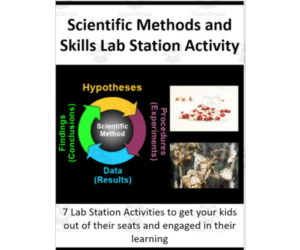
Scientific Method and Science Skills – Lab Station Activity
, Grade 7, 8, 9, 10, Labs, Experiments, Activities
Lab Station Activities: The Scientific Method and Science Skills Engage students in learning science skills and the scientific method with this hands-on lab station activity . Students rotate through 9 stations, each offering a unique way to apply and practice concepts like using the scientific method, identifying variables, drawing inferences, analyzing data, and more. The carefully designed stations allow students to get out of their seats while learning. Activities include drawing models, conducting research, writing explanations, answering test questions, learning from video clips, and even creating their own questions. Helpful station cards provide instructions and guidance for students at each station. To complement the hands-on stations, the activity also includes a word scramble and word search for students to work on, ensuring they stay engaged during any transition times. An answer key is provided for applicable stations and activities. This versatile resource can be used as an introductory or review lab activity for the scientific method and science skills. It requires almost no prep-work for teachers - simply print and distribute the station cards and students are ready to learn by doing. This activity keeps students engaged through assessment-based learning stations, promoting retention and deeper understanding. Use it to teach or review topics like: - The scientific method - Scientific theories - Making observations and inferences - Identifying independent and dependent variables - Understanding gravity, motion, and other key concepts Other Lab Station Activities: The product creator offers a wide variety of lab station activities for science topics including biology, chemistry, physics, ecology, space science, and more. Search [insert teacher name] to find hands-on activities on cell theory, ecosystems, chemical reactions, electricity, the solar system, and much more.
Author Teach With Fergy
Tags Scientific, Method, Theory, Variables, Lab Station, Scientific Method Lab Activity

Refraction – Lab Station Activity
Science, Physics, Grade 7, 8, 9, 10, Labs, Experiments, Activities
Refraction – Lab Station Activity is a physics teaching resource for educators to engage students in hands-on learning. Through nine interactive stations, students explore key concepts like apparent depth, index of refraction, and more. Activities range from creative drawing prompts and videos to answering knowledge checks and writing explanations. This self-directed 30-45 minute lab gives students exposure to real-world examples while providing built-in support materials like reading passages, answer keys, word games, and recording sheets to keep students focused. Teachers can implement whole-class, but sessions also work for small groups or independent practice. This multifaceted refraction lab is one module in a physics series exploring concepts like motion, energy, light, sound, and flight through inquiry-based activities customizable for grades 7-10.
Author Teach With Fergy
Tags Refraction, Speed, Light, Physics, Lab Station, Refraction Of Light Lab

Science Action Labs Earth Science
Science, Earth and Environmental Sciences, Earth Sciences, Grade 1, 2, 3, Labs, Experiments, Activities
Science Action Labs Earth Science A practical teaching resource, Science Action Labs Earth Science, aims to stimulate the natural curiosity of young learners and expose them to the marvels of our planet. It emphasizes exploration and discovery through hands-on activities that deepen 1st to 3rd graders' understanding of Earth science concepts. About The Resource: The material encompasses 64 printable PDF pages. The pages are rich with diverse experiments and activities focusing on key subjects such as continents, earthquakes, Earth's air, water, soil as well as its motion and layers. The flexibility of these activities is extensive. You can either carry out whole group sessions or assign small group tasks each with distinct exercises that foster teamwork and creativity among students. Bonus Feature: The added review quizzes serve as effective tools for progress assessment letting educators evaluate student comprehension levels on newly learnt topics with ease. Versatile Application: This educational tool’s versatility makes it perfect for structured class lessons or homework assignments while also offering potential enhancements to an existing earth science curriculum. Its flexible usage fosters increased engagement levels leading to improved academic performance over time. Ease Of Access: You can readily access this resource kit in PDF format which offers convenient dissemination without compromising quality. In Summation... This pragmatic approach offered by our earth science exploration kit bridges knowledge acquisition with actual hands-on experiences delivering a holistic learning journey. This integrated learning experience could spark potential Geologists or Meteorologists within your class paving the way towards creating scientific explorers one lab activity at a time.
Author Classroom Complete Press
Tags Science Labs, Earth Sciences, Art Challenge, Flying Into Space, Moon Facts

Number the Stars STEM Experiment + STEM Project for Grades 4, 5, 6
Science, Technology, Engineering, STEM, Grade 4, 5, 6, Experiments, Activities, Projects, Diagrams, Teacher Tools, Graphic Organizers, Rubrics
This hands-on activity combines creativity and problem-solving as students design and build a basket for Anne Marie to get the package safely to Uncle Henrik, based on the novel Number the Stars! Perfect for integrating literature and science, this challenge encourages students to apply engineering principles using simple materials while fostering teamwork and critical thinking. What’s Inside This Resource: Student Letter: A letter from Anne Marie introduces the challenge, linking the story to a real-world engineering task. Design Loop Graphic: A visual students can attach to their science journals, serving as a step-by-step guide throughout the activity. Detailed Instructions: Choose to print the guide as a packet or have students record each stage in their journals for an interactive experience. Teacher Tips: Practical guidance for crafting a clear problem statement with time constraints, materials, and success criteria tailored to your classroom. Skills Your Students Will Build: ✔ Problem-Solving: Identify obstacles and create inventive solutions. ✔ Engineering Design: Navigate the design loop—plan, construct, test, and refine. This page can easily be enlarged for a classroom poster. ✔ Critical Thinking: Assess their prototype’s performance and pinpoint ways to enhance it. ✔ Teamwork: Collaborate effectively to accomplish shared goals. Versatile Classroom Application: Whether as guided instruction or part of an integrated literature and science unit, this STEM activity encourages students to think creatively, document their process, and meet science and engineering standards. The rubric included is based on engineering concepts, but can also be used as a nonfiction writing rubric for cross-curricular options. Why Educators Love This Resource: ⭐ “My students were fully engaged, combining their passion for reading with STEM!” ⭐ “Simple to set up and encourages creativity and teamwork.” ⭐ “A seamless connection between literature and science for cross-curricular learning!” Empower your students to solve Anne Marie's immediate need and experience the excitement of engineering with this standards-aligned STEM adventure!
Author Kel's Klass
Tags 4th Grade Science Project, 4th Grade Science Experiment, 5th Grade Science Project, 5th Grade Science Experiment, 6th Grade Science Project, 6th Grade Science Experiment, Engineering Diagram, Science Graphic Organizer, Science Rubric, Bridge To Terabithia