



5,176 products added recently
Page 129 - Newest Teaching Resources

 Show filters

Side Hustle Profit & Loss Basics
Math, Money, Multiplication and Division, Statistics, Order Of Operations, Fractions, Measurements, Time, Number Lines, Addition and Subtraction, Grade 6, 7, 8, 9, 10, 11, 12, Worksheets & Printables, Workbooks, Worksheets, Word Searches, Teacher Tools, Assessments, Lesson Plans, Quizzes and Tests, Quizzes, Tests
Transform your students' understanding of math with this engaging, real-world project on the mathematics of e-commerce! "Side Hustle Profit & Loss Basics" is a comprehensive, no-prep curriculum designed to teach teens the essential financial literacy skills needed to run a profitable online business. Gone are the days of abstract math problems. This resource bridges the gap between classroom learning and practical entrepreneurship, using relatable examples like flipping vintage sneakers ("Sneakerhead Sam") and selling handmade goods ("Jewelry Jenna"). Students will move from being passive digital consumers to analytical business operators. This project-based learning package is perfect for Math, Business, Career and Technical Education (CTE), Financial Literacy, and Homeschool settings. It systematically deconstructs the anatomy of an online sale, from calculating the cost of goods sold (COGS) to navigating complex platform fees and understanding the devastating impact of shipping miscalculations. What's Included in this 45-Page Resource: Part 1: In-Depth Lesson Guide (13 pages): A detailed teacher/student guide explaining core concepts like Revenue vs. Profit, COGS, Platform & Payment Fees (Etsy, eBay, Shopify), Logistics, Dimensional Weight, Net Profit, and ROI. Part 2: Student Workbook (18 pages): Features 10 scaffolded worksheets with over 100 questions, applying the concepts through real-world scenarios and fill-in-the-blank exercises. Worksheet 10: The Ultimate P&L Capstone Project: A final project where students synthesize all learned skills to construct a complete Profit & Loss statement for a hypothetical sneaker-flipping business. Part 3: Comprehensive Answer Key (6 pages): A full answer key for all 10 student worksheets, including the final capstone project. Part 4: Teacher-Led Visual Aids (8 pages): Includes high-quality flowcharts and diagrams perfect for classroom projection (The E-Commerce Profit Equation, Fee Matrix, Shipping Cost Matrix) and a master teacher answer key with deep-dive rationales and common student error alerts. Equip your students with the critical math and business skills they need to succeed in the modern digital economy. This isn't just a math lesson; it's a blueprint for their future financial success. Why Parents/Schools Love It: Connects Math to the Real World: It makes abstract concepts like percentages and formulas tangible by applying them to something teens are passionate about: making money online. Teaches Essential Financial Literacy: It goes beyond basic math to teach critical life skills like budgeting, cost analysis, and understanding profitability—skills not always covered in traditional curricula. Fosters an Entrepreneurial Mindset: This resource empowers students to think like producers, not just consumers, by teaching them to identify costs, manage risks, and create value. Comprehensive & No-Prep: It's a complete, ready-to-use package. The detailed lessons, student worksheets, visual aids, and in-depth answer keys save teachers and parents valuable preparation time. Target Student Audience : Based on the content and mathematical complexity, target: Primary Audience: 7th to 10th Grade students. This is the sweet spot mentioned in the PDF, and the level of math (percentages, formulas, multi-step arithmetic) is perfectly aligned with this curriculum. Secondary Audience: Advanced 6th Graders in a gifted or enrichment program. 11th and 12th Grade students in introductory Business, Economics, or Career/Life Skills classes as a practical, foundational unit. Homeschool Co-ops looking for practical, project-based learning modules for middle and high school students. Copyright/Terms of Use: This Book was copyrighted by Syed Hammad Rizvi. This resource is for personal and single classroom use only. You may not alter, redistribute, or sell any part of this resource. In other words, you may not put it on the Internet where it could be publicly found and downloaded. If you want to share this resource with colleagues, please purchase additional licenses from Teachsimple. Thank you for respecting these terms of use. This product is happily brought to you by Syed Hammad Rizvi
Author Creative Book Store
Rating
Tags Financialliteracy, Businessmath, Realworldmath, Projectbasedlearning, Entrepreneurship, Sidehustle, Ecommerce, Ppliedmath, Financialeducation, Profitandloss

Golf sports bingo game vocabulary physical education sub activities
Sports, P.E. & Health, Early Learning, Pre-K, Elementary, Games, Activities
No Prep Golf Bingo Game is a fun and engaging way to introduce students to golf vocabulary, equipment, and basic game concepts. Since bingo is a familiar game, it's easy to set up and encourages active participation while reinforcing physical education and sports terminology. I like using this activity during physical education classes, golf units, sports lessons, indoor recess, and as an easy sub plan. It's a low-prep resource that keeps students engaged while helping them learn golf-related vocabulary in an interactive way. What You Will Get This resource includes printable bingo boards and calling cards featuring golf-themed images and vocabulary. Simply print and play for an exciting educational game. What's Included in this Bingo Game? You'll get a variety of unique bingo cards so each player has a different board. The calling cards feature golf-related vocabulary such as golf club, golf ball, tee, putter, driver, fairway, green, bunker, hole, flagstick, caddie, cart, and other equipment and game terms that build sports knowledge. This resource is perfect for: • Physical education lessons • Golf and sports units • Sports vocabulary practice • PE substitute plans • Classroom centers and review games • Homeschool learning Why you will love this? • Super easy to prepare • Reinforces golf vocabulary and concepts • Supports physical education learning • Great for substitute teacher activities • Encourages participation and teamwork • Perfect for individual, small group, or whole class activities This Golf Bingo Game is a simple and engaging way to help students learn golf vocabulary, explore the sport, and build confidence through an enjoyable physical education activity that is perfect for regular lessons or substitute teacher plans.
Author The Clever Llama
Rating
Tags Sports Vocabulary, Physical Education, PE Activities, Sports Activity, Team Sports, Printable Bingo, Classroom Games, Golf Bingo, Gold Activities, Golf Terms

Basketball sports bingo game vocabulary physical education activities
Sports, P.E. & Health, Early Learning, Pre-K, Elementary, Games, Activities
No Prep Basketball Bingo Game is a fun and engaging way to introduce students to basketball vocabulary, equipment, player positions, and game fundamentals. Since bingo is a familiar game, it's easy to set up and encourages active participation while reinforcing physical education concepts and sports terminology. I like using this activity during physical education classes, sports units, basketball season, and classroom review games. It's a low-prep resource that helps students learn basketball vocabulary while enjoying an exciting and interactive game. What You Will Get This resource includes printable bingo boards and calling cards featuring basketball-themed images and vocabulary. Simply print and play for an engaging classroom activity. What's Included in this Bingo Game? You'll get a variety of unique bingo cards so each player has a different board. The calling cards feature basketball-related vocabulary such as basketball, hoop, backboard, dribble, pass, shoot, rebound, free throw, referee, jersey, whistle, court, and other equipment and game terms that reinforce sports knowledge. This resource is perfect for: • Physical education lessons • Basketball and sports units • Sports vocabulary practice • Classroom centers and review games • Homeschool learning • Group activities and team building Why you will love this? • Super easy to prepare • Reinforces basketball vocabulary • Supports physical education learning • Encourages teamwork and communication • Great for individual, small group, or whole class activities • Makes sports learning fun and interactive This Basketball Bingo Game is a simple and engaging way to help students build sports vocabulary, understand the game of basketball, and participate in an exciting classroom activity that supports physical education learning.
Author The Clever Llama
Rating
Tags Sports Vocabulary, Physical Education, PE Activities, Sports Activity, Team Sports, Printable Bingo, Classroom Games, Basketball Bingo, Basketball Game, Basketball Terms

Baseball sports bingo game vocabulary P.E physical education activity
Sports, P.E. & Health, Early Learning, Pre-K, Elementary, Games, Activities
No Prep Baseball Bingo Game is a fun and engaging way to introduce students to baseball vocabulary, game equipment, and basic sports concepts. Since bingo is a familiar game, it's easy to set up and encourages active participation while reinforcing physical education and sports terminology. I like using this activity during physical education classes, sports units, baseball season, and classroom review games. It's a low-prep resource that helps students build sports vocabulary while having fun. What You Will Get This resource includes printable bingo boards and calling cards featuring baseball-themed images and vocabulary. Simply print and play for an exciting learning activity. What's Included in this Bingo Game? You'll get a variety of bingo cards so each player has a unique board. The calling cards feature baseball-related vocabulary such as bat, ball, glove, helmet, pitcher, catcher, bases, home plate, umpire, scoreboard, and other equipment and game terms that help students build sports knowledge. This resource is perfect for: • Physical education lessons • Baseball and sports units • Sports vocabulary practice • Classroom centers and review games • Homeschool learning • Group activities and team building Why you will love this? • Super easy to prepare • Reinforces baseball vocabulary • Supports physical education learning • Encourages participation and teamwork • Great for individual, small group, or whole class activities • Makes sports learning fun and interactive This baseball bingo game is a simple and engaging way to help students learn baseball vocabulary, understand the game, and build confidence while enjoying an exciting classroom activity.
Author The Clever Llama
Rating
Tags Baseball Bingo, Sports Vocabulary, Physical Education, PE Activities, Baseball Game, Sports Activity, Team Sports, Printable Bingo, Classroom Games, Baseball Terms

High School Rooted in Radiant Confidence - 5-Day Teen Self-Esteem Mini
ELA, Writing, Reading, Research, Resources for Teachers, Homeschool Resources, High School, Teacher Tools, Templates, Outlines, Activities, Worksheets & Printables, Writing Prompts
Navigating the teenage years often feels like a high-stakes balancing act where academic pressure and social expectations collide daily. As a homeschool mom, I have walked through those seasons of uncertainty with my own high schooler and understand the struggle firsthand. I created this High School Rooted in Radiant Confidence - 5-Day Teen Self-Esteem Mini-Devotional resource to provide a grounded, faith-based anchor that helps teens move past the noise of digital comparison and self-doubt. It is designed to be more than just a devotional; it is a supportive companion for your student’s journey toward true, lasting identity. By shifting the focus from external achievements to internal worth, this High School Rooted in Radiant Confidence - 5-Day Teen Self-Esteem Mini-Devotional helps students/homeschoolers see themselves through the lens of a loving Creator. Ultimately, my goal is to provide a user-friendly tool that fosters deep introspection while lightening your load as a busy educator. Furthermore, this resource offers a structured way to nurture your student's/homeschooler's heart during a time when they are beginning to define their own path. It serves as a gentle reminder that their value is secure regardless of the changing opinions of the world around them. INCLUDED IN THIS RESOURCE: Five-day devotional guide with Scripture prompts. Daily reflection questions for meaningful journaling. Structured goal-setting templates for future growth. Dedicated note pages for tracking personal insights. TOPICS COVERED: Embracing unique God-given personality and gifts. Overcoming self-doubt through reliance on Christ. Purpose-driven living and service to others. Finding strength within moments of personal weakness. Finally, the conclusion is intentionally crafted to help teens carry this momentum forward into their everyday lives. I suggest simple methods, such as using "scripture anchors" or maintaining the journal for monthly reviews, to ensure the impact continues indefinitely. Because we all know that teenage life can be unpredictable, this section provides a "reset" button for those inevitable days of discouragement. By sharing these prompts with trusted mentors or parents, students/homeschoolers also build a community of support that reinforces their new perspective. Ultimately, this devotional is meant to be a foundational building block for a lifetime of faith-based self-esteem. Whether used during a quiet morning or a weekly check-in, this High School Rooted in Radiant Confidence - 5-Day Teen Self-Esteem Mini-Devotional resource offers a steady path toward walking in radiant, Christ-centered confidence. It is my sincere hope that this resource will serve as a constant reminder of who they are and whose they are. May it provide them with the encouragement they need to face every challenge with courage and grace. If you and your students/homeschoolers enjoyed this resource, please leave a review. Thank you for your support! Tina - Big Easy Homeschooling Mom
Author Homeschool with Big Easy Homeschooling Mom
Rating
Tags Teen Bible Study, High School Resources, Faith-based Curriculum, Christian Teen Life, Biblical Encouragement, Teen Growth, Teen Empowerment, Faith Development, Character Lessons, High School Devotional

SEL Curriculum | G9-12 | Yearlong Social Emotional Learning | 36 Weeks
Social Emotional Learning (SEL), Special Resources, Grade 9, 10, 11, 12, Lesson Plans, Teacher Tools, Worksheets & Printables
High School Social Emotional Learning Curriculum | 36-Week SEL Program for Grades 9–12 | Mental Wellness, Life Skills & Character Education Looking for a comprehensive Social Emotional Learning (SEL) curriculum for high school that challenges students to think critically while building essential life skills? This 36-week Social Emotional Learning curriculum for Grades 9–12 provides meaningful, evidence-based lessons that move beyond simple worksheets. Through engaging case studies, ethical debates, real-world scenarios, role-play activities, reflective journals, and practical decision-making exercises, students develop the confidence, resilience, communication skills, and emotional intelligence they need for success in school, college, careers, and everyday life. Designed specifically for high school students , this year-long curriculum encourages mature discussion, critical thinking, and self-reflection while giving teachers everything they need to deliver consistent, engaging SEL instruction with minimal preparation. ⭐ What's Included This complete year-long curriculum includes: ✅ 36 fully scripted teacher lesson plans ✅ Comprehensive Teacher Guide ✅ Scope and Sequence ✅ Assessment Rubrics ✅ Observation Records ✅ Safeguarding Guidance ✅ Editable Family Letter ✅ 36-Week Pacing Calendar ✅ Six complete instructional units ✅ 15 student pages for every lesson ✅ Bell Ringer Activities ✅ Original Case Studies & Articles (700–900 words) ✅ Evidence-Based Discussion Questions ✅ Ethical Dilemmas & Classroom Debates ✅ Scenario-Based Problem Solving ✅ Decision-Making Flowcharts ✅ Self-Assessments & Reflection Activities ✅ Role-Play Scenarios with Cut-Out Role Cards ✅ Reflection Journals ✅ Personal Action Plans ✅ Exit Tickets ✅ Extension Activities With over 650 printable pages , this curriculum provides everything needed to teach Social Emotional Learning for an entire school year. ❤️ Topics Covered Students explore six comprehensive units featuring 36 engaging lessons: Unit 1: Self-Awareness Personal Strengths Values Identity Self-Confidence Growth Mindset Emotional Awareness Unit 2: Emotional Regulation Managing Stress Healthy Coping Strategies Resilience Sleep & Well-Being Time Management Balancing Responsibilities Unit 3: Relationships Healthy Friendships Communication Skills Active Listening Healthy Boundaries Conflict Resolution Empathy Unit 4: Digital Wellness Social Media Screen Time Digital Citizenship Cyberbullying Online Reputation Artificial Intelligence & Responsible Technology Unit 5: Future Readiness Goal Setting Career Planning Financial Responsibility Leadership Decision Making Work Ethic Unit 6: Life Skills Problem Solving Critical Thinking Healthy Habits Community Involvement Gratitude Personal Growth Lessons revisit the five core SEL competencies throughout the year while increasing in complexity and depth as students build confidence and independence. 🏫 How It Works in the Classroom Teach one lesson each week throughout the school year or incorporate lessons into: Advisory Homeroom Health Education Character Education SEL Classes Counseling Groups Student Support Programs Whole-Class Instruction Small Group Intervention Homeschool Programs Each lesson follows a consistent instructional sequence to maximize student engagement: Essential Question Learning Objectives Bell Ringer Original Case Study or Article Evidence-Based Discussion Ethical Debate Applied Scenarios Decision-Making Flowchart Self-Assessment Role-Play Activity Reflection Journal Personal Action Plan Reflection Activity Exit Ticket Extension Task Lessons are designed for 50–60 minute class periods or can easily be divided across multiple shorter sessions. 🎯 Standards & Learning Goals Students will learn to: Develop greater self-awareness and emotional intelligence Build healthy coping strategies and resilience Manage stress and balance responsibilities Strengthen communication and relationship skills Practice empathy and active listening Resolve conflicts respectfully Navigate social media and digital citizenship responsibly Make informed and ethical decisions Develop leadership and career readiness skills Set meaningful goals and create action plans Strengthen critical thinking and problem-solving skills Build lifelong habits for personal growth and success ❤️ Why Teachers Love It ⭐ Complete 36-week high school SEL curriculum ⭐ Scripted lessons save hours of planning ⭐ Original case studies feel authentic and relatable for teenagers ⭐ Ethical debates encourage respectful discussion and critical thinking ⭐ Real-world scenarios help students connect learning to everyday life ⭐ Includes assessments, rubrics, pacing guides, and teacher supports ⭐ Consistent lesson structure creates predictable classroom routines ⭐ Print-and-go student pages require minimal preparation ⭐ Perfect for Grades 9, 10, 11, and 12 ⭐ Ideal for classroom teachers, advisory programs, counselors, health educators, intervention specialists, and homeschool families 📚 Give Your Students the Life Skills They Need Beyond Graduation Prepare students for success in school, the workplace, and everyday life with this engaging High School Social Emotional Learning Curriculum . By combining authentic case studies, thoughtful discussion, ethical decision-making, and practical life skills, this 36-week SEL curriculum for Grades 9–12 helps students become more self-aware, resilient, responsible, and confident while making SEL instruction meaningful, rigorous, and easy to teach.
Author Bright Classroom Ideas Marketplace
Rating
Tags Sel, Social, Emotional, Learning, Yearlong, Curriculum, Full Year, Weekly, Back To School
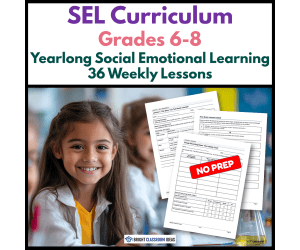
SEL Curriculum | G6 -8 | Yearlong Social Emotional Learning | 36 Weeks
Social Emotional Learning (SEL), Special Resources, Grade 6, 7, 8, Lesson Plans, Teacher Tools, Worksheets & Printables
Social Emotional Learning Curriculum | 36-Week SEL Program for Grades 6–8 | Middle School Mental Wellness & Life Skills Help middle school students build the social, emotional, and decision-making skills they need to thrive with this comprehensive 36-week Social Emotional Learning (SEL) curriculum for Grades 6–8 . Through realistic case studies, classroom debates, reflective writing, decision-making activities, and practical life skills, students develop self-awareness, resilience, healthy relationships, and responsible decision-making in ways that feel authentic and age-appropriate—not scripted or simplistic. Designed specifically for middle school students , every lesson encourages critical thinking, evidence-based discussion, and personal reflection while giving teachers a complete year of ready-to-teach SEL instruction. ⭐ What's Included This complete middle school SEL curriculum includes: 36 fully scripted teacher lesson plans Complete Teacher Guide with differentiation strategies Scope and sequence Assessment rubrics Observation records Family letter 36-week pacing calendar Four complete student units 13 student pages for every lesson Real-life scenarios Original case studies (600–900 words) Case analysis activities Structured classroom debates Decision trees Two practice worksheets per lesson Private journal writing pages Personal action plans Reflection pages Exit tickets With over 600 printable pages , this curriculum provides everything needed for an entire year of meaningful SEL instruction. ❤️ Topics Covered Throughout the Year Students explore twelve essential middle school SEL topics: Identity Emotional Regulation Peer Pressure Anxiety & Stress Management Healthy Friendships Online Behavior & Digital Citizenship Time Management Resilience Leadership Conflict Resolution Career Mindset Positive Habits The curriculum revisits the five core SEL competencies throughout the year, helping students build increasingly sophisticated social-emotional skills over time. 🏫 How It Works in the Classroom Teach one lesson each week across the school year or use lessons in: Advisory SEL Class Health Character Education Homeroom Counseling Groups Intervention Programs Whole-Class Instruction Small Groups Homeschool Each lesson follows a consistent instructional sequence: Essential Question Real-Life Scenario Case Study Evidence-Based Analysis Classroom Debate Decision Tree Activity Practice Pages Journal Reflection Personal Action Plan Reflection & Exit Ticket Lessons are designed for 50–60 minutes or can easily be split into two shorter class periods. 🎯 Standards & Learning Goals Students will learn to: Develop greater self-awareness Regulate emotions using healthy strategies Navigate peer pressure with confidence Manage anxiety and stress Build and maintain healthy friendships Make responsible choices online Improve time management and organization Build resilience after setbacks Strengthen leadership skills Resolve conflict effectively Develop positive long-term habits Make thoughtful, responsible decisions Lessons emphasize evidence, respectful discussion, perspective-taking, and personal growth rather than memorizing "right" answers. ❤️ Why Teachers Love It Complete 36-week middle school SEL curriculum Scripted lessons save hours of planning time Highly engaging case studies that feel realistic for adolescents Structured debates encourage critical thinking and respectful discussion Consistent lesson format builds classroom routines Includes differentiation and assessment tools Ready-to-print student pages Perfect for Grades 6, 7, and 8 Ideal for classroom teachers, counselors, advisory programs, and homeschool educators Encourages authentic reflection rather than surface-level SEL activities Give your students meaningful opportunities to think deeply, communicate respectfully, and develop lifelong social-emotional skills with this engaging Middle School Social Emotional Learning Curriculum for Grades 6–8 . Combining authentic scenarios, rigorous discussion, and practical application, this year-long SEL program makes it easy to deliver impactful instruction every week.
Author Bright Classroom Ideas Marketplace
Rating
Tags Sel, Social, Emotional, Learning, Yearlong, Curriculum, Full Year, Weekly, Back To School

SEL Curriculum | G3-5 | Yearlong Social Emotional Learning | 36 Weeks
Social Emotional Learning (SEL), Special Resources, Grade 3, 4, 5, Lesson Plans, Teacher Tools, Worksheets & Printables
Social Emotional Learning Curriculum | 36-Week SEL Program for Grades 3–5 | Year-Long Mental Wellness & Character Education Looking for a complete Social Emotional Learning (SEL) curriculum for Grades 3–5 that goes beyond surface-level lessons? This comprehensive 36-week SEL curriculum helps upper elementary students develop emotional intelligence, critical thinking, communication, resilience, and responsible decision-making through engaging reading passages, meaningful discussions, collaborative activities, and reflective practice. With scripted teacher lessons and ready-to-use student pages, you'll have everything needed for consistent, high-quality SEL instruction all year long. Designed specifically for students in Grades 3–5 , this curriculum encourages deeper conversations about real-life challenges while building the essential social-emotional skills students need to succeed academically and personally. ⭐ What's Included This year-long SEL curriculum includes: ✅ 36 fully scripted teacher lesson plans ✅ 36 student lessons with 12 printable pages per lesson ✅ Original high-interest reading passages (500–700 words) ✅ Warm-up activities ✅ Close reading comprehension questions ✅ Structured classroom discussions with sentence stems ✅ Two differentiated practice worksheets per lesson ✅ Collaborative group activities with student roles ✅ Reflection pages ✅ Exit tickets for formative assessment ✅ Assessment rubrics ✅ Scope and sequence ✅ 36-week pacing guide ✅ Editable family letter ✅ Print-friendly black-and-white pages for easy copying The complete bundle contains over 500 printable pages , making it an ideal year-long SEL resource for classroom teachers, counselors, intervention specialists, and homeschool educators. ❤️ Social Emotional Learning Topics Covered Students explore 13 essential SEL topics, including: Self-Awareness Self-Management Empathy Respect Bullying Prevention Digital Citizenship Goal Setting Stress Management Growth Mindset Communication Teamwork Responsibility Decision Making Lessons are intentionally aligned with the five core SEL competency areas: self-awareness, self-management, social awareness, relationship skills, and responsible decision-making. 🏫 How It Works in the Classroom Teach one lesson each week throughout the school year or incorporate lessons into: SEL Block Morning Meeting Character Education Health Classroom Community Lessons Counseling Sessions Small Groups Whole Group Instruction Advisory Period Homeschool Each lesson follows the same consistent structure, helping students become familiar with routines while allowing teachers to focus on meaningful discussions and skill development. Lessons are designed for 40–50 minutes or can be divided across multiple shorter sessions throughout the week. 🎯 Standards & Learning Goals Students will learn to: Build self-awareness and emotional regulation Strengthen self-management strategies Develop empathy and perspective-taking Show respect through everyday actions Prevent and respond to bullying Practice responsible digital citizenship Set and achieve meaningful goals Manage stress in healthy ways Build a growth mindset Improve communication skills Collaborate effectively in teams Demonstrate responsibility Make thoughtful, responsible decisions ❤️ Why Teachers Love It ⭐ Complete year-long SEL curriculum with no additional planning required ⭐ Scripted teacher lessons save valuable prep time ⭐ Rich reading passages encourage deeper thinking and discussion ⭐ Consistent lesson format builds student confidence and independence ⭐ Collaborative activities promote meaningful classroom conversations ⭐ Differentiated practice supports diverse learners ⭐ Reflection and exit tickets provide ongoing assessment opportunities ⭐ Perfect for Grades 3, 4, and 5 classrooms ⭐ Ideal for classroom teachers, school counselors, interventionists, and homeschool families Help your students develop the confidence, resilience, communication skills, and emotional intelligence they need to thrive both inside and outside the classroom. This comprehensive Social Emotional Learning curriculum for Grades 3–5 provides everything you need for engaging, meaningful SEL instruction all year long.
Author Bright Classroom Ideas Marketplace
Rating
Tags Sel, Social, Emotional, Learning, Yearlong, Curriculum, Full Year, Weekly

SEL Curriculum | K - 2 | Yearlong Social Emotional Learning | 36 Weeks
Social Emotional Learning (SEL), Special Resources, Kindergarten, Grade 1, 2, Lesson Plans, Teacher Tools, Worksheets & Printables
Mental Wellness & Social Emotional Learning Curriculum | 36-Week SEL Program for Grades K-2 | Printable Activities & Teacher Lessons Help your students build lifelong social-emotional skills with this comprehensive 36-week Social Emotional Learning (SEL) curriculum for Kindergarten, 1st Grade, and 2nd Grade . Designed to make SEL instruction simple and meaningful, this year-long resource includes scripted teacher lessons, engaging student activities, original stories, discussion prompts, games, crafts, reflection pages, and family connection activities that help reinforce learning at home. Whether you're teaching weekly SEL lessons, morning meetings, health, or character education, this low-prep curriculum provides everything you need to foster emotional awareness, positive relationships, self-management, problem-solving, kindness, resilience, gratitude, and safety skills. The curriculum includes 36 weekly lessons across 12 essential SEL topics , organized into four easy-to-follow units. ⭐ What's Included This complete SEL curriculum includes: ✅ 36 scripted teacher lesson plans ✅ 36 student lessons with 9 printable pages per lesson ✅ Original read-aloud stories ✅ Vocabulary and learning goals ✅ Class discussion prompts ✅ Two student worksheets per lesson ✅ Coloring pages with original artwork ✅ Hands-on games, crafts, and movement activities ✅ Student reflection pages ✅ Family Connection (Family Link) pages ✅ Assessment tools ✅ Scope and sequence ✅ Print-friendly black-and-white design The full resource contains over 400 printable pages , making it an ideal year-long SEL program. ❤️ Social Emotional Learning Topics Covered Students develop skills through engaging lessons focused on: Feelings & Emotional Awareness Friendship Sharing Kindness Respect Listening Skills Self-Control Asking for Help Problem Solving Gratitude Growth Mindset Personal Safety Lessons are intentionally aligned with the five core SEL competency areas, including self-awareness, self-management, social awareness, relationship skills, and responsible decision-making. 🏫 How It Works in the Classroom This curriculum was designed for busy teachers. Use one lesson each week throughout the school year, or adapt the activities for: Morning Meeting SEL Block Character Education Health Class Counseling Lessons Small Groups Whole Group Instruction Centers Intervention Homeschool Each lesson can be completed in 30–40 minutes or broken into shorter activities throughout the week for flexible implementation. 🎯 Standards & Learning Goals Students will learn to: Recognize and regulate emotions Build healthy friendships Practice kindness and empathy Develop respectful communication Strengthen listening skills Improve self-control Solve everyday social problems Ask trusted adults for help Develop gratitude habits Build a growth mindset Make safe, responsible choices Reflect on personal growth ❤️ Why Teachers Love It ⭐ Year-long SEL curriculum with no planning required ⭐ Scripted lessons make teaching easy ⭐ Engaging stories children relate to ⭐ Consistent lesson format every week ⭐ Print-and-go activities ⭐ Family connection pages encourage home-school partnerships ⭐ Developmentally appropriate for Kindergarten, First Grade, and Second Grade ⭐ Covers every major elementary SEL topic in one resource ⭐ Perfect for classroom teachers, counselors, interventionists, and homeschool families If you're looking for a complete Social Emotional Learning curriculum for Kindergarten, 1st Grade, and 2nd Grade , this resource provides everything you need to confidently teach SEL all year while helping students build emotional intelligence, positive relationships, and lifelong social skills.
Author Bright Classroom Ideas Marketplace
Rating
Tags Sel, Social, Emotional, Learning, Wellness, Yearlong, Curriculum, Weekly, Full Year
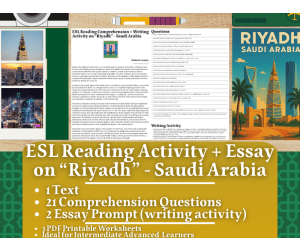
ESL Reading Comprehension + Writing Activity - Riyadh - Saudi Arabia
ELA, Language Development, ESL, Vocabulary, Reading Comprehension, Reading, Formal Writing, Writing, Creative Writing, Grade 7, 8, 9, 10, 11, 12, Writing Prompts, Worksheets & Printables, Worksheets
ESL Reading Comprehension + Writing Activity Worksheets - Riyadh - Saudi Arabia This ESL - EFL Teaching Resource on "Riyadh - Saudi Arabia - Middle East - West Asia" (3 PDF Worksheets Slides - Reading Comprehension + Writing Activity) can be ideal to improve Language skills in English. Ideal students for this ESL EFL TESOL Reading + Writing Activity are Foreign Students at middle and High School (7th - 12th Grade; teens) . Newcomers or any ESL Learner is also more than suitable for this ESL - EFL - TESOL - TEFL (English as a Second or Foreign Language) Activity on "Riyadh - Saudi Arabia - Middle East - West Asia" ( location + origins and history + famous sights + activities + typical food ). This Teaching Educational Resource Product can also be ideal for ESL EFL TESOL Centers worldwide or any English second language tutor. Intermediate Advanced English as a Second or Foreign Language (ESL - EFL - TESOL - TEFL) learners are suitable for this ESL - EFL - TESOL - TEFL Teaching Resource on "Riyadh - Saudi Arabia - Middle East - West Asia" (Worksheet; 3 PDF Printable slides) In this English Second or Foreign Language (ESL - EFL - TESOL - TEFL) Reading Comprehension + Essay Writing Activity Worksheet on "Riyadh - Saudi Arabia - Middle East - West Asia" ( location + origins and history + famous sights + activities + typical food ), the following ESL - EFL - TESOL - TEFL ( English Second or Foreign Language ) activities are included: 1 text on "Riyadh - Saudi Arabia - Middle East - West Asia" ( location + origins and history + famous sights + activities + typical food ) 21 Comprehension Questions related to the previous text on "Riyadh - Saudi Arabia - Middle East - West Asia" ( with related space where students can answer to this text's comprehension questions ) 2 essay prompts for a writing activity on "Riyadh - Saudi Arabia - Middle East - West Asia" ( writing an essay on your own personal opinion on Riyadh, Saudi Arabia; whether you have ever been in Riyadh or not and whether you would ever like to visit this city + pretending to spend a week in Riyadh, Saudi Arabia and to write everyday a page of diary on your experiences ) This ESL - EFL - TESOL - TEFL ( English Second or Foreign Language ) Teaching Resource Reading + Writing Activity (essay prompts) on "Riyadh - Saudi Arabia - Middle East - West Asia" ( location + origins and history + famous sights + activities + typical food ) is great for Intermediate Advanced English as a second or foreign language learners (ESL- EFL - TESOL - TEFL). This English Second Language Worksheet on "Riyadh - Saudi Arabia - Middle East - West Asia" ( location + origins and history + famous sights + activities + typical food ) aims to train and Reading Comprehension + Writing Skills. "Learning with Alan" is a teaching resources store that aims to provide high quality teaching resources and educational materials for ESL EFL TESOL (English Second or Foreign Language) teachers, tutors and educators. It aims to support teachers, educators, and tutors in both online and offline environments, helping them achieve their teaching goals while creating a fun, stimulating atmosphere for learning English. Always remember: learning is fun, and so is English! If you want to find more ESL - EFL - TESOL - TEFL ( English Second or Foreign Language ) Teaching Resources and Educational Material click here Learning with Alan!
Author Learning with Alan
Rating
Tags ESL, English Second Language, English, Riyadh, Saudi Arabia, Middle East, Reading Comprehension, Writing Activity, Worksheets, Printable
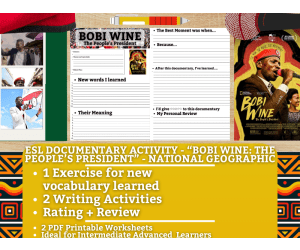
ESL Documentary Activity - Bobi Wine: The People's President
ELA, Language Development, ESL, Vocabulary, Writing, Creative Writing, Formal Writing, Not Grade Specific, Middle School, High School, Adult Education, Worksheets & Printables, Worksheets, Writing Prompts
ESLDocumentary ActivityWorksheets -Bobi Wine: The People's President This English Second or Foreign Language ( ESL - EFL - TESOL - TEFL ) teaching resource is a 2 page printable PDF Documentary Activity guide for "Bobi Wine: The People's President" (2022documentary film that follows the presidential campaign of popular Ugandan singer and opposition leaderBobi Wineas he challenged long-time rulerYoweri Museveni - National Geographic) is designed to help English as a Second Language (ESL - EFL - TESOL - TEFL) learners. This teaching resource can be ideal for post documentary activities and is ideal for Middle School and High School students , from 7th to 12th grade . This ESL EFL TESOL ( English Second or Foreign Language) Documentary Activity Guide can be great for newcomers and any English language learners, making it an amazing teaching toolbox to use in ESL EFL classrooms, language centers, or by tutors around the World. Within this ESL EFL Documentary Activity Guide on "Bobi Wine: The People's President" (2022documentary film that follows the presidential campaign of popular Ugandan singer and opposition leaderBobi Wineas he challenged long-time rulerYoweri Museveni - National Geographic), ESL EFL TESOL teachers can find the following English Second or Foreign Language ( ESL - EFL - TESOL - TEFL ) documentary guide activity: General Information – Students fill in key details about the documentary, including the director, themes and release year etc. Vocabulary Builder – An activity dedicated to new words and phrases , to improve ESL - EFL students’ English vocabulary 2 Writing Activities (best part + what I have learned) 1 part dedicated to the documentary's rating 1 part dedicated to the documentary's review This "Bobi Wine: The People's President" (2022documentary film that follows the presidential campaign of popular Ugandan singer and opposition leaderBobi Wineas he challenged long-time rulerYoweri Museveni - National Geographic) documentary activity guide is designed to create an enjoyable and stimulating learning experience for intermediate advanced ESL - EFL students. ESL with Alan is an amazing Teaching Resources Store which aims to support English as a Second or foreign Language ( ESL - EFL - TESOL - TEFOL ) Teachers, Educators and Tutors around the globe (be it online or offline) to achieve their students' learning objectives while creating an enjoyable and stimulating learning environment. Never Forget! Learning is fun, So should English! Always If you want to find more ESL - EFL - TESOL - TEFL ( English Second or Foreign Language ) Teaching Resources and Educational Material click here Learning with Alan!
Author Learning with Alan
Rating
Tags ESL, English, English Second Language, Documentary, National Geographic, Uganda, Worksheets, Printable, Activity, Writing Activity
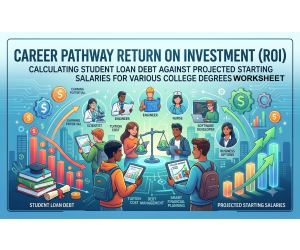
Career Pathway Return on Investment (ROI)
Math, Statistics, Order Of Operations, Money, Measurements, Resources for Teachers, Classroom Management, Community Building, Special Resources, Life Skills, Homeschool Curriculum, Homeschool Templates, Grade 8, 9, 10, 11, 12, Worksheets & Printables, Workbooks, Worksheets, Word Searches, Teacher Tools, Assessments, Lesson Plans, Quizzes and Tests, Quizzes, Tests
Is your student truly prepared for the biggest financial decision of their life? Don't let them fall into the "passion trap" or get mesmerized by prestigious university brochures without understanding the numbers. This comprehensive, no-prep digital curriculum is the most important lesson your high schooler will receive on college and career planning. This 40-page PDF guide and workbook transforms students into the "Chief Financial Officer" of their own future. By applying real-world math and economic principles, students will move from being passive consumers of education to active architects of their financial independence. This resource is a complete mini-unit, broken down into three essential phases: Part 1: The Theoretical Framework: An 11-page "textbook" section that clearly explains complex financial topics in an easy-to-understand format. Topics include: Return on Investment (ROI) for college degrees. The mechanics of student loans (Subsidized vs. Unsubsidized). The "silent killer" of wealth: Interest Capitalization. Gross Income vs. Net (Take-Home) Income. The crucial "Rule of First-Year Salary." Calculating the Debt-to-Income (DTI) ratio. Strategic alternatives like the 2+2 transfer model, trade schools, and scholarships. Part 2: The Student Workbook: Ten detailed worksheets that build on each other to move from theory to practical application. Students will calculate actual costs, analyze debt scenarios, budget monthly payments, and compare the financial outcomes of different career paths (e.g., STEM vs. Arts). Part 3: Visuals & Teacher Resources: Includes three powerful visual aids (bar chart, ROI matrix, and flowchart) for classroom discussion, plus a full Teacher Answer Key for all worksheets, making this a completely no-prep resource for you! Who is this for? This is a must-have resource for teachers of: Personal Finance Economics College and Career Readiness (AVID, etc.) Math (real-world applications) Life Skills High School Counselors and Advisors Homeschooling parents preparing their teens for college. Equip your students with the critical thinking and financial literacy skills they need to make smart, informed decisions that will prevent a lifetime of debt and set them on a path to true financial freedom. Download today and empower your students for a secure future! Keywords: Financial Literacy, Personal Finance, Student Loan Debt, College ROI, Return on Investment, College and Career Readiness, High School Math, Economics, Budgeting, Debt-to-Income Ratio, AVID, Life Skills, Workbook, Project Based Learning, No Prep, Teacher Answer Key, Grades 9, 10, 11, 12. Why Parents/Schools Love It : Empowers Students with Real-World Math: It moves beyond abstract theory and uses concrete calculations that directly apply to a student's immediate future, making learning engaging and relevant. Prevents Catastrophic Financial Mistakes: This single resource can arm a student with the knowledge to avoid tens, or even hundreds, of thousands of dollars in unmanageable debt, providing an immeasurable return on investment for the family. Comprehensive and No-Prep: It’s a complete, self-contained unit. With a textbook, 10 worksheets, visuals, and a full answer key, a teacher or parent can implement it immediately without any additional planning. Builds Critical Thinking & Ownership: It teaches students to think like a "CFO," analyzing data, weighing risks, and making strategic decisions, fostering a sense of responsibility for their own financial well-being. Balances Passion with Practicality: The guide doesn't discourage students from following their dreams; instead, it gives them the tools to finance those dreams intelligently, ensuring their passion doesn't become a "financial prison." Target Audience : Based on the content, vocabulary, and concepts discussed (e.g., FAFSA, college selection, majors), target: Grades: 9th through 12th Grade students. 9th/10th Graders: Excellent for introducing these concepts early, so they can plan their high school courses and activities (like scholarship searching) strategically. 11th/12th Graders: Absolutely critical, as they are actively making these decisions. This resource provides an immediate, practical tool for their real-life choices. Courses: Personal Finance, Economics, College & Career Planning, AVID, Advisory/Homeroom periods, and any Life Skills class. Copyright/Terms of Use: This Book was copyrighted by Syed Hammad Rizvi. This resource is for personal and single classroom use only. You may not alter, redistribute, or sell any part of this resource. In other words, you may not put it on the Internet where it could be publicly found and downloaded. If you want to share this resource with colleagues, please purchase additional licenses from Teachsimple. Thank you for respecting these terms of use. This product is happily brought to you by Syed Hammad Rizvi
Author Creative Book Store
Rating
Tags FinancialLiteracy, PersonalFinance, StudentLoans, StudentDebt, CollegeROI, MoneyManagement, FinancialEducation, Budgeting, DebtFree, DebtFreeJourney
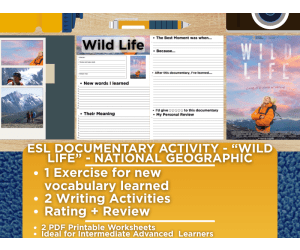
ESL Documentary Activity Worksheets - Wild Life
ELA, Language Development, ESL, Vocabulary, Writing, Creative Writing, Formal Writing, Middle School, High School, Adult Education, Not Grade Specific, Worksheets & Printables, Workbooks, Worksheets
ESLDocumentary ActivityWorksheets -Wild Life - National Geographic This English Second or Foreign Language ( ESL - EFL - TESOL - TEFL ) teaching resource is a 2 page printable PDF Documentary Activity guide for "Wild Life" (2023documentary film that follows the close relationship of conservationist Kris Tompkins, the first CEO of outdoor brandPatagonia, and her husband Douglas Tompkins, an outdoorsman and entrepreneur who foundedThe North Face - National Geographic) is designed to help English as a Second Language (ESL - EFL - TESOL - TEFL) learners. This teaching resource can be ideal for post documentary activities and is ideal for Middle School and High School students , from 7th to 12th grade . This ESL EFL TESOL ( English Second or Foreign Language) Documentary Activity Guide can be great for newcomers and any English language learners, making it an amazing teaching toolbox to use in ESL EFL classrooms, language centers, or by tutors around the World. Within this ESL EFL Documentary Activity Guide on "Wild Life" (2023documentary film that follows the close relationship of conservationist Kris Tompkins, the first CEO of outdoor brandPatagonia, and her husband Douglas Tompkins, an outdoorsman and entrepreneur who foundedThe North Face - National Geographic), ESL EFL TESOL teachers can find the following English Second or Foreign Language ( ESL - EFL - TESOL - TEFL ) documentary guide activity: General Information – Students fill in key details about the documentary, including the director, themes and release year etc. Vocabulary Builder – An activity dedicated to new words and phrases , to improve ESL - EFL students’ English vocabulary 2 Writing Activities (best part + what I have learned) 1 part dedicated to the documentary's rating 1 part dedicated to the documentary's review This "Wild Life" (2023documentary film that follows the close relationship of conservationist Kris Tompkins, the first CEO of outdoor brandPatagonia, and her husband Douglas Tompkins, an outdoorsman and entrepreneur who foundedThe North Face - National Geographic) documentary activity guide is designed to create an enjoyable and stimulating learning experience for intermediate advanced ESL - EFL students. ESL with Alan is an amazing Teaching Resources Store which aims to support English as a Second or foreign Language ( ESL - EFL - TESOL - TEFOL ) Teachers, Educators and Tutors around the globe (be it online or offline) to achieve their students' learning objectives while creating an enjoyable and stimulating learning environment. Never Forget! Learning is fun, So should English! Always If you want to find more ESL - EFL - TESOL - TEFL ( English Second or Foreign Language ) Teaching Resources and Educational Material click here Learning with Alan!
Author Learning with Alan
Rating
Tags ESL, English Second Language, English, Documentary, National Geographic, Patagonia, Writing Activity, Vocabulary, Worksheets, Printable
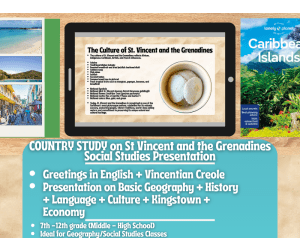
Country Study Presentation - St. Vincent & the Grenadines - Caribbeans
Social Studies, Economics, First Peoples (Native), Geography, History, Grade 7, 8, 9, 10, 11, 12, Presentations, Teacher Tools, Lesson Plans
Country Study Presentation - St. Vincent & the Grenadines - Geography + Social Studies - Caribbeans Bring St. Vincent & the Grenadines to life in your classroom with this Introductory Teaching Resource on St. Vincent & the Grenadines , designed for Geography, American History ( North America - Caribbeans ), and Social Studies . Ideal for students at Middle School and High School ( from 7th Grade to 12th Grade ) , this PDF digital presentation is informative, visually engaging, and requires little to no preparation . Students will explore St. Vincent & the Grenadines’s geography, history, culture, language, and economy , making this resource perfect for country studies and introductory lessons in Geography and Social Studies. 📘 In this Social Studies and Geograhy Introductory Presentation Lesson, the following topics are dealt: ✅ Hello in English + Vincentian Creole ✅ Geography of St. Vincent & the Grenadines ( Caribbeans ) Bordering countries + interactive Google Maps link ✅ Basic Information of St. Vincent & the Grenadines ( Caribbeans ) Population, population density, capital city, currency, government, currency etc ✅ History Overview of St. Vincent & the Grenadines Summary of St. Vincent & the Grenadines ’s most important historical events ( Caribbeans ) ✅ Geography, Climate & Environment of St. Vincent & the Grenadines Land area, regions, environment and climate zones ✅ St. Vincent & the Grenadines’s Economy Major industries, exports, currency and economic strengths ✅ Kingstown St. Vincent & the Grenadines' s capital city, including famous landmarks and cultural highlights ✅ Other Key Urban Centers A map with other important major cities in St. Vincent & the Grenadines ( Caribbeans ) ✅ Culture & Traditions Customs, values, and traditions of St. Vincent & the Grenadines ( Caribbeans ) ✅ Goodbye in English + Vincentian Creole 🎯 Perfect For: Geography classes Social Studies World cultures units Country study projects Substitute teacher lessons Digital learning In-class or online teaching 📂 Resource Details Format: PDF Digital Presentation Grade Levels: 7th–12th Grade (Middle School & High School) Prep Time: Low to no preparation required Learning with Alan is an educational resource store created to help teachers, educators, and tutors reach their teaching goals while building a fun, engaging, and stimulating learning environment . Because learning should always be meaningful—and fun! 🎓✨ If you want to browse more of my Teaching Resources, click here Learning with Alan!!
Author Learning with Alan
Rating
Tags Social Studies, Geography, Country Study, St. Vincent And The Grenadines, Caribbeans, Lesson, Introduction, History, Presentation, Activity
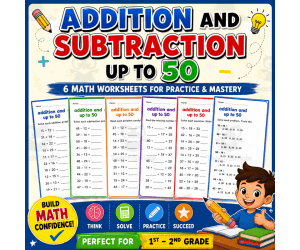
addition and subtraction up to 50 worksheets with answers
Math, Addition and Subtraction, Addition, Subtraction, Not Grade Specific, Worksheets & Printables
Help students build strong math skills with this Addition and Subtraction Up to 50 Worksheets pack! This resource includes 6 engaging, no-prep worksheets designed to give students meaningful practice with addition and subtraction facts up to 50. Activities include addition, subtraction, mixed operations, missing numbers, true or false equations, and multiple-choice questions to keep learning fun and interactive. This printable resource is perfect for 1st Grade and 2nd Grade classrooms, homeschool, math centers, morning work, homework, independent practice, early finishers, review lessons, and assessments. Every worksheet includes a matching answer key , making it quick and easy for teachers and parents to check student work. What's Included: 6 Printable Math Worksheets 6 Answer Key Pages (One for Every Worksheet) Addition Practice Up to 50 Subtraction Practice Up to 50 Mixed Addition & Subtraction Activities Missing Number Equations True or False Practice Multiple-Choice Questions No-Prep PDF Printable Grades: 1st Grade – 2nd Grade File Type: PDF Total Pages: 12 Pages (6 Worksheets + 6 Answer Keys) This resource helps students improve math fluency, number sense, problem-solving skills, and confidence while providing teachers with a simple, ready-to-use printable for daily math practice.
Author Smart Learning Press
Rating
Tags Addition And Subtraction Up To 50 Worksheets, Adding And Subtraction To 50
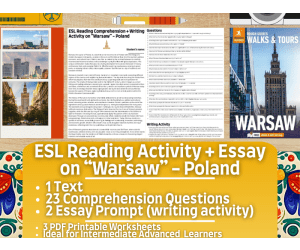
ESL Reading Comprehension + Writing Activity - Warsaw - Poland
ELA, Language Development, ESL, Vocabulary, Reading, Reading Comprehension, Writing, Creative Writing, Formal Writing, Grade 7, 8, 9, 10, 11, 12, Worksheets & Printables, Worksheets, Writing Prompts
ESL Reading Comprehension + Writing Activity Worksheets - Warsaw - Poland This ESL - EFL Teaching Resource on "Warsaw - Poland - Central Europe" (3 PDF Worksheets Slides - Reading Comprehension + Writing Activity) can be ideal to improve Language skills in English. Ideal students for this ESL EFL TESOL Reading + Writing Activity are Foreign Students at middle and High School (7th - 12th Grade; teens) . Newcomers or any ESL Learner is also more than suitable for this ESL - EFL - TESOL - TEFL (English as a Second or Foreign Language) Activity on "Warsaw - Poland - Central Europe" (location + origins and history + famous sights + activities + typical food). This Teaching Educational Resource Product can also be ideal for ESL EFL TESOL Centers worldwide or any English second language tutor. Intermediate Advanced English as a Second or Foreign Language (ESL - EFL - TESOL - TEFL) learners are suitable for this ESL - EFL - TESOL - TEFL Teaching Resource on "Warsaw - Poland - Central Europe" (Worksheet; 3 PDF Printable slides) In this English Second or Foreign Language (ESL - EFL - TESOL - TEFL) Reading Comprehension + Essay Writing Activity Worksheet on "Warsaw - Poland - Central Europe" (location + origins and history + famous sights + activities + typical food), the following ESL - EFL - TESOL - TEFL (English Second or Foreign Language) activities are included: 1 text on "Warsaw - Poland - Central Europe" (location + origins and history + famous sights + activities + typical food) 23 Comprehension Questions related to the previous text on "Warsaw - Poland - Central Europe" (with related space where students can answer to this text's comprehension questions) 2 essay prompts for a writing activity on "Warsaw - Poland - Central Europe" (writing an essay on your own personal opinion on Warsaw, Poland; whether you have ever been in Warsaw or not and whether you would ever like to visit this city + pretending to spend a week in Warsaw, Poland and to write everyday a page of diary on your experiences) This ESL - EFL - TESOL - TEFL ( English Second or Foreign Language ) Teaching Resource Reading + Writing Activity (essay prompts) on " Warsaw - Poland - Central Europe" (location + origins and history + famous sights + activities + typical food) is great for Intermediate Advanced English as a second or foreign language learners (ESL- EFL - TESOL - TEFL). This English Second Language Worksheet on "Warsaw - Poland - Central Europe" (location + origins and history + famous sights + activities + typical food) aims to train and Reading Comprehension + Writing Skills. "Learning with Alan" is a teaching resources store that aims to provide high quality teaching resources and educational materials for ESL EFL TESOL (English Second or Foreign Language) teachers, tutors and educators. It aims to support teachers, educators, and tutors in both online and offline environments, helping them achieve their teaching goals while creating a fun, stimulating atmosphere for learning English. Always remember: learning is fun, and so is English! If you want to find more ESL - EFL - TESOL - TEFL ( English Second or Foreign Language ) Teaching Resources and Educational Material click here Learning with Alan!
Author Learning with Alan
Rating
Tags ESL, English Second Language, English, Reading Comprehension, Writing Activity, Poland, Warsaw, Worksheets, Printable, Europe
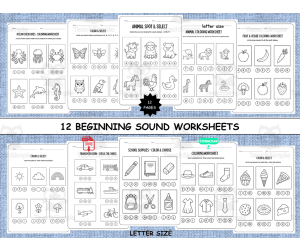
Beginning Sounds Worksheets: 12 Print-and-Go Phonics Activities
Phonics, Language Development, ELA, Kindergarten, Preschool, Worksheets & Printables, Worksheets
Product Title: Beginning Sounds Worksheets: 12 Print-and-Go Phonics Activities Introduction: Are you looking for simple, effective, and "ready-to-use" phonology activities for your students? This complete pack of 12 phonics worksheets is designed to help young learners master the recognition of initial sounds with ease. Objective: The main goal of this pack is to strengthen phonological awareness and beginning sounds recognition, providing a solid foundation for early reading skills. Grades or Ages: Pre-K, Kindergarten, and 1st Grade. Ideal for early childhood education and homeschooling. Number of Pages: 12 varied exercise sheets + 1 cover page. File Types: High-quality PDF (Ready to print). Order, Outline and Steps: Each sheet offers a logical progression to consolidate learning. The exercises are designed to guide the student from simple identification to active application of phonetic tasks. How to use and Variations: Whole Class: Use as a morning starter or daily phonics practice. Small Groups: Perfect for literacy centers and independent workshops. Homeschool: A structured and autonomous resource for parents. Variations: Students can color, trace letters, or cut and paste depending on your pedagogical preference. Implementation Format: "Print and go" format designed to save you precious preparation time. Answer Keys: Not required (the exercises are visual and intuitive). Standards: Aligned with foundational ELA (English Language Arts) and Phonics curriculum standards for early learners. About This Product: This resource features a sober, clean design without visual distractions, allowing students to focus exclusively on the phonetic task. It is the perfect tool for teachers, speech therapists, and parents who want to develop children's autonomy while reinforcing essential literacy skills. Use Tags: #Phonics #BeginningSounds #Kindergarten #PreK #FirstGrade #ELA #Literacy #Alphabet #Printables #Worksheets #Homeschool
Author LuminaPrint
Rating
Tags Phonics, Beginning Sounds, Kindergarten, Pre-K, First Grade, ELA, Literacy, Alphabet, Printables, Worksheets

A Whole New World Twisted Tales Week 1 Freebie | Novel Study Preview
ELA, Reading, Literature, Reading Comprehension, Grade 6, 7, 8, Activities, Worksheets & Printables
Kick off your A Whole New World (Twisted Tales) novel study with this Week 1 FREE sample pack , designed to give students a strong foundation in vocabulary, comprehension, and close reading skills. This freebie is a preview of the full novel study unit and is perfect for testing out the resource before purchasing the complete version. What’s Included: Weekly pacing guide Vocabulary list with definitions Vocabulary quiz with answer key Daily comprehension worksheets Chapter questions with answer key Chapter quiz with answer key Perfect For: 6th–8th grade ELA Novel study units Sub plans Reading comprehension practice Teacher-prep free samples Check out the full version of the Twisted Tales- A Whole New World in my store. Check back for more other reading units on the Twisted Tales Series. You can also check out the other popular reading series: Wings of Fire where books 1-15 are completed along with their Week 1 Freebies in my store.
Author A Day In Elementary
Rating
Tags Reading, Novel Study, Book Unit, Reading Unit, Disney

A Whole New World Novel Study | Twisted Tales Unit
ELA, Reading, Reading Comprehension, Grade 6, 7, 8, Worksheets & Printables
Engage your middle school students with this comprehensive novel study for A Whole New World from the Twisted Tales series by Liz Braswell! This 82-page resource is designed for grades 6–8 and provides everything you need to guide students through this fractured fairy tale retelling while building comprehension, vocabulary, and critical thinking skills. ⭐ What’s Included: • Weekly vocabulary lists and vocabulary quizzes • Daily comprehension worksheets organized by week • Comprehension questions to support understanding • Weekly quizzes to assess student progress • A whole-book assessment for final evaluation • Answer keys for all quizzes and assessments ⭐ Teacher-Friendly Features: • Suggested pacing guide to help you plan instruction • Table of contents for easy navigation Print-and-go format for low-prep lessons This resource is perfect for: ✔ Whole-class novel studies ✔ Small group instruction ✔ Independent reading support ✔ Sub plans or emergency lessons Students will stay engaged while practicing essential reading skills using this unique Disney-inspired fractured fairy tale! This resource is part of a growing Twisted Tales Novel Study series—perfect for building a full unit or year-long curriculum.
Author A Day In Elementary
Rating
Tags Reading, Novel, Book Study, Novel Study, Read, Disney
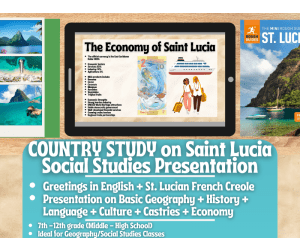
Country Study Presentation - Saint Lucia - Geography - Caribbeans
Social Studies, Economics, Geography, History, Grade 7, 8, 9, 10, 11, 12, Teacher Tools, Presentations, Lesson Plans
Country Study Presentation - Saint Lucia - Geography + Social Studies - Caribbeans Bring Saint Lucia to life in your classroom with this Introductory Teaching Resource on Saint Lucia , designed for Geography, American History ( North America - Caribbeans ), and Social Studies . Ideal for students at Middle School and High School ( from 7th Grade to 12th Grade ) , this PDF digital presentation is informative, visually engaging, and requires little to no preparation . Students will explore Saint Lucia’s geography, history, culture, language, and economy , making this resource perfect for country studies and introductory lessons in Geography and Social Studies. 📘 In this Social Studies and Geograhy Introductory Presentation Lesson, the following topics are dealt: ✅ Hello in English + Saint Lucian French Creole ✅ Geography of Saint Lucia ( Caribbeans ) Bordering countries + interactive Google Maps link ✅ Basic Information of Saint Lucia ( Caribbeans ) Population, population density, capital city, currency, government, currency etc ✅ History Overview of Saint Lucia Summary of Saint Lucia ’s most important historical events ( Caribbeans ) ✅ Geography, Climate & Environment of Saint Lucia Land area, regions, environment and climate zones ✅ Saint Lucia’s Economy Major industries, exports, currency and economic strengths ✅ Castries Saint Lucia' s capital city, including famous landmarks and cultural highlights ✅ Other Key Urban Centers A map with other important major cities in Saint Lucia ( Caribbeans ) ✅ Culture & Traditions Customs, values, and traditions of Saint Lucia ( Caribbeans ) ✅ Goodbye in English + Saint Lucia French Creole 🎯 Perfect For: Geography classes Social Studies World cultures units Country study projects Substitute teacher lessons Digital learning In-class or online teaching 📂 Resource Details Format: PDF Digital Presentation Grade Levels: 7th–12th Grade (Middle School & High School) Prep Time: Low to no preparation required Learning with Alan is an educational resource store created to help teachers, educators, and tutors reach their teaching goals while building a fun, engaging, and stimulating learning environment . Because learning should always be meaningful—and fun! 🎓✨ If you want to browse more of my Teaching Resources, click here Learning with Alan!!
Author Learning with Alan
Rating
Tags Social Studies, Country Study, Lesson, Saint Lucia, Caribbeans, Geography, History, North America, Presentation, Introduction
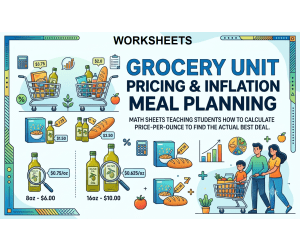
Grocery Unit Pricing & Inflation Meal Planning
Math, Addition and Subtraction, Addition, Subtraction, Early Math, Numbers, Place Value, Measurements, Money, Statistics, Grade 6, 7, 8, 9, 10, 11, 12, Worksheets & Printables, Workbooks, Worksheets, Word Searches, Teacher Tools, Lesson Plans, Quizzes and Tests, Quizzes, Tests, Assessments
Are you bored of hearing "When am I going to use this?" in your math class? Here is a realistic math project that should help! It will change the grocery store into a fun, practical laboratory and give your students the skills needed in their lives. The mini-unit "Grocery Unit Pricing & Inflation Meal Planning" is a complete, no-prep resource to keep students engaged, excited, and working with their math skills. Students won't be sitting in the class just learning theoretical division and percentage problems. They will become smart consumers that will learn to recognize marketing tricks, be aware of inflation, and take quality financial decisions. The 10 worksheets along with clear guides will help students learn how to calculate unit prices and find better prices. WHAT'S INSIDE (47-PAGE FILE): Section One: The Economics of the Aisle (11 pages) An in-depth theoretical resource for educators (or highly skilled undergraduate pupils) on the fundamentals of unit pricing, shelf placement psychology, concepts such as the "Bulk Buying Fallacy" and other inflation-related phenomena, as well as the concept of shrinkflation, which refers to the price increase of a product in real terms. Section Two: Student Workbook (17 pages) 10 Different Worksheets: A carefully designed experience from basic math concepts to intricate and multi-step calculations Worksheet 1: The Fundamentals of Unit Pricing Worksheet 2: Buying Issues in Bulk (Does Bigger Always Mean Better?) Worksheet 3: The "Sale" Falsehood (Finding the True Discount) Worksheet 4: Becoming a Shrinkflation Detective Worksheet 5: Comparing Price Tag Direct and Private Labels Worksheet 6: Measuring Liquid and Estimate the Cost Worksheet 7: Calculation of Fruits and Vegetables Prices Worksheet 8: Including Household Wastage (The True Bulk Cost) Worksheet 9: Meal Planning with an Increased Budget Worksheet 10: Grocery Store Challenge (The Final Workbook Health Check) Content of Part 3: Visual Education Material & Teachers’ Assistance Resources (19 pages) Essential Visuals: Three professionally designed diagrams for printing (Anatomy of a Price Tag, Unit Price Decision Tree, and Shrinkflation Explained) ideal for classroom posters and students’ materials. Thorough Answer Key: In-depth explanation of solutions for all 10 worksheets. Teacher Implementation Guide: A must-read guide comprising: Suggestions on how to motivate students to study. Information on how to deal with the most common mistakes students make. Sample 5-day period of implementation. Information about how to modify the lessons for both students who require more time to master the material and pupils who get the topic. Reasons why Parents/Schools are Attracted to It: The math lesson comes to life, removing doubts about any potential usefulness. Math has been connected to real life – children experience first-hand how maths-related skills are employed in stores. Raising financial literacy is also hard to underestimate. For example, students get to develop certain life skills relevant to future everyday life, such as budgeting and recognizing economic processes. The unit contains all the necessary resources for teachers, leaving no effort to them. The unit includes a teacher's guide, plenty of tips for differentiation, and an answer key. Relevant and exciting content. The idea of “outsmarting the advertisers” and becoming a “shrinkflation detective” is inspiring for kids, awakening their interest in the topic. No mundane tasks; tasks require analytical thinking and drawing conclusions based on the data/figure. Intended Student Groups: Because of its use of math concepts (decimal division, rounding to thousandths, percent of increase/decrease, multiple operations), this PDF can be successfully implemented in the following classes: Primary Audience: Middle school students (grades 6-8). The content will completely meet the curriculum standards regarding decimal systems, ratios, proportions and percentages. Academic Programs for the Secondary Audience: High school classes on Life Skills/Consumer Mathematics; this is a great hands-on unit for older students who are studying budgeting and independent life. High school classes on Financial Literacy; this is an introductory unit on economics. Advanced students in grade 5; this material can serve as an extension or be utilized in talented and gifted programs. Co-ops for Homeschoolers; this is a useful real-life project easily adaptable to multi-ages. Copyright/Conditions of Use: Copyright of this book is owned by Syed Hammad Rizvi. This resource is intended for one person and single use in one classroom. There is no modification, reproduction or selling of this resource. Put simply, it cannot be uploaded on the internet where it can be publicly accessed and downloaded. If you need to share this resource with your colleagues, please acquire more licenses from Teachsimple. Thank you for complying with our terms of use. This product is proudly presented to you by Syed Hammad Rizvi
Author Creative Book Store
Rating
Tags RealWorldMath, FinancialLiteracy, ConsumerMath, MiddleSchoolMath, UnitPrice, ProjectBasedLearning, MathProject, 7thGradeMath, 8thGradeMath, LifeSkills

ESL Brain Break Quiz Slides for Kindergarten & 1st Grade Vocabulary
ELA, ESL, Language Development, Vocabulary, Kindergarten, Grade 1, Quizzes and Tests, Teacher Tools, Quizzes
ESL Brain Break Quiz Slides for Kindergarten & 1st Grade Keeping young learners focused can be tough - especially during vocabulary practice or morning meetings . This interactive Brain Break Quiz is designed to bring energy back into your classroom while still reinforcing important skills. Instead of quiet, passive review time, students stay involved through simple questions, movement, and teamwork. It’s an easy way to refresh attention without adding extra prep to your day. What’s inside? Turn your classroom into a fun game-like experience with 40+ interactive questions that keep students thinking and moving. A mix of multiple choice and true/false questions Covers English, Math, Science, SEL, and Social Studies Kid-friendly prompts like: “Which sense do we use to see?” “If you are happy, do you frown?” Answer slides included after each question Built-in brain break actions (jump, clap, snap, etc.) to keep energy high Why It Works This set encourages active participation instead of passive listening This resource adds movement breaks to help students refocus It also supports teamwork and confidence , especially for quieter learners It keeps lessons light, engaging, and fun This resource is suitable for: Kindergarten & 1st Grade classrooms ESL / ELL learners ( beginner to intermediate ) Homeschool settings Easy to Use No prep needed - just open and present Works with Google Slides or PowerPoint It is completely paperless Ways to use this resource: Morning meeting warm-up End of unit unit review Quick brain breaks between lessons Indoor recess activity Teachers love it because It keeps students engaged without extra planning Built-in movement acts as a natural reward system for students It helps manage energy levels throughout the day Teacher Tip: To make sure everyone gets a turn, try using equity sticks or a random name picker while playing.
Author FlashKart
Rating
Tags Quiz, ESL, EFL, Vocabulary, Kindergarten, 1st Grade, Teamwork, Collaborative Learning, Presentation, Slides
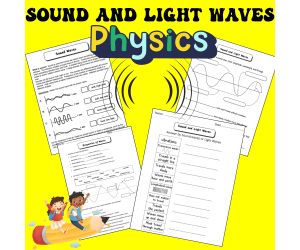
Sound & Light Waves Worksheets | Reading Comprehension and Science
Physics, Science, Grade 3, 4, 5, Quizzes and Tests, Teacher Tools
Introduce students to the fascinating world of sound and light with this engaging Sound & Light Waves worksheet pack. Designed for upper elementary and middle school students, this printable resource combines informational reading passages with interactive science activities to help learners understand how waves transfer energy and how sound and light behave. Students will explore important concepts including sound waves, light waves, pitch, wave properties, transverse waves, longitudinal waves, compression, rarefaction, and energy transfer . Through reading passages, labeling diagrams, comprehension questions, vocabulary activities, and classification exercises, students build a deeper understanding of physical science while strengthening their reading comprehension skills. The activities encourage students to analyze scientific information, identify key vocabulary, compare different types of waves, and apply their knowledge through written responses and diagram-labeling tasks. The worksheets are organized in a clear, student-friendly format, making them suitable for classroom instruction, science centers, homework, independent practice, or assessment review. This no-prep resource is an excellent addition to units on waves, sound energy, light energy, and physical science , providing meaningful practice that supports both science content knowledge and literacy development. What's Included: Informational reading passages about sound and light waves Sound wave and light wave activities Transverse and longitudinal wave comparison Reading comprehension questions Wave properties worksheets Diagram labeling activities Science vocabulary practice Sound and light classification exercises Printable black-and-white worksheets Student-friendly page layouts
Author Bright Education
Rating
Tags Sound Waves, Light Waves, STEM, Physics, 4th Grade Science, Science Worksheets, Physical Science, Sound And Light, No Prep

Grade 1 Multiplication Worksheets – 40-Page Workbook
Math, Multiplication and Division, Multiplication, Grade 1, Worksheets & Printables, Worksheets
A 40-page "Beginning Multiplication" workbook walks first-time learners from repeated addition to the multiplication sign, building specifically toward the 2, 5, and 10 times tables named in its own introduction. Early pages have students add repeated groups of counters, dots, or pictures and only gradually replace the phrase "lots of" with the times sign "X", before moving into skip-counting practice, times-table mazes and matching games, and speed-fill answer grids for each of the three tables. A companion one-page "KS1 multiplication mat," included in the same download, supplies a fully worked reference chart of the 2, 3, 4, 5, and 10 times tables through x12 for students to check their own work against. The zipped download also bundles a separate instructional video that the workbook's introduction references for teaching the times sign.
Author Lilibette's Resources
Rating
Tags Beginning Multiplication, Time Tables, Mulitiplcation, Times Tables, Learn To Multiply, Basic Operations, Division