



3,931 products added recently
Page 477 - Newest Teaching Resources

 Show filters

I WONDER - Is The Universe Flat | Animated Video Lesson
Earth and Environmental Sciences, Science, Space, Grade 6, 7, 8, 9, 10, 11, 12, Lesson Plans, Teacher Tools
Video Introduction An amazing video designed for the students to learn more about space facts. I WONDER - Is The Universe Flat | Animated Video Lesson Do you like reading about space? If yes, what is your favorite topic? What do you know about our solar system? What is the smallest planet in our solar system? What is the biggest planet in our solar system? What is the hottest planet in our solar system? And what is the coldest one? Do you think there are aliens? If yes, what do you think they look like? What do they eat and how they speak to each other? Where do they live? What is a galaxy? And what is a milky way? Have you recently saw a shooting star? If yes, tell us more about it, like when did it happen and where? What is a blackhole? Can a blackhole gets bigger by time? Do you like counting the stars? What do you think a star is made of? I WONDER - Is The Universe Flat | Animated Video Lesson The video is perfect for encouraging the researching skills for the students, while learning more about the fantastic space. I WONDER - Is The Universe Flat | Animated Video Lesson This friendly designed video is suitable for students at school, homeschooling, and as a group activity. Format Available in MP4 format.
Author Educational Voice
Tags Is The Universe Flat, Is The Universe Flat Video, The Universe, The Universe Facts, The Universe Facts For Kids, The Universe Video, The Universe Video For Kids, Space, Space Facts, Space Video
I WONDER - How Are Space Shuttles Powered | Animated Video Lesson
Space, Earth and Environmental Sciences, Science, Grade 6, 7, 8, 9, 10, 11, 12, Lesson Plans, Teacher Tools
Video Introduction An amazing video designed for the students to learn more about space facts. I WONDER - How Are Space Shuttles Powered | Animated Video Lesson Do you like reading about space? If yes, what is your favorite topic? What do you know about our solar system? What is the smallest planet in our solar system? What is the biggest planet in our solar system? What is the hottest planet in our solar system? And what is the coldest one? Do you think there are aliens? If yes, what do you think they look like? What do they eat and how they speak to each other? Where do they live? What is a galaxy? And what is a milky way? Have you recently saw a shooting star? If yes, tell us more about it, like when did it happen and where? What is a blackhole? Can a blackhole gets bigger by time? Do you like counting the stars? What do you think a star is made of? I WONDER - How Are Space Shuttles Powered | Animated Video Lesson The video is perfect for encouraging the researching skills for the students, while learning more about the fantastic space. I WONDER - How Are Space Shuttles Powered | Animated Video Lesson This friendly designed video is suitable for students at school, homeschooling, and as a group activity. Format Available in MP4 format.
Author Educational Voice
Tags How Are Space Shuttles Powered, How Are Space Shuttles Powered Video, Space Shuttles, Space Shuttles Facts, Space Shuttles Facts For Kids, Space Shuttles Video, Space Shuttles Video For Kids, Space Shuttle

I WONDER - What Can You Hear Out In The Universe | Animated Video
Space, Earth and Environmental Sciences, Science, Grade 4, 5, 6, 7, 8, 9, 10, Lesson Plans, Teacher Tools
Video Introduction An amazing video designed for the students to learn more about space facts. I WONDER - What Can You Hear Out In The Universe | Animated Video Lesson Do you like reading about space? If yes, what is your favorite topic? What do you know about our solar system? What is the smallest planet in our solar system? What is the biggest planet in our solar system? What is the hottest planet in our solar system? And what is the coldest one? Do you think there are aliens? If yes, what do you think they look like? What do they eat and how they speak to each other? Where do they live? What is a galaxy? And what is a milky way? Have you recently saw a shooting star? If yes, tell us more about it, like when did it happen and where? What is a blackhole? Can a blackhole gets bigger by time? Do you like counting the stars? What do you think a star is made of? I WONDER - What Can You Hear Out In The Universe | Animated Video Lesson The video is perfect for encouraging the researching skills for the students, while learning more about the fantastic space. I WONDER - What Can You Hear Out In The Universe | Animated Video Lesson This friendly designed video is suitable for students at school, homeschooling, and as a group activity. Format Available in MP4 format.
Author Educational Voice
Tags What Can You Hear Out In The Universe, What Can You Hear Out In The Universe Video, The Universe, The Universe Facts, The Universe Facts For Kids, The Universe Video, The Universe Video For Kids

I WONDER - How Many Stars Are There In The Universe | Animated Video
Space, Earth and Environmental Sciences, Science, Grade 2, 3, 4, 5, 6, 7, 8, Lesson Plans, Teacher Tools
Video Introduction An amazing video designed for the students to learn more about space facts. I WONDER - How Many Stars Are There In The Universe | Animated Video Lesson Do you like reading about space? If yes, what is your favorite topic? What do you know about our solar system? What is the smallest planet in our solar system? What is the biggest planet in our solar system? What is the hottest planet in our solar system? And what is the coldest one? Do you think there are aliens? If yes, what do you think they look like? What do they eat and how they speak to each other? Where do they live? What is a galaxy? And what is a milky way? Have you recently saw a shooting star? If yes, tell us more about it, like when did it happen and where? What is a blackhole? Can a blackhole gets bigger by time? Do you like counting the stars? What do you think a star is made of? I WONDER - How Many Stars Are There In The Universe | Animated Video Lesson The video is perfect for encouraging the researching skills for the students, while learning more about the fantastic space. I WONDER - How Many Stars Are There In The Universe | Animated Video Lesson This friendly designed video is suitable for students at school, homeschooling, and as a group activity. Format Available in MP4 format.
Author Educational Voice
Tags How Many Stars Are There In The Universe, How Many Stars Are There In The Universe Video, Stars, Stars Facts, Stars Facts For Kids, Stars Video, Stars Video For Kids, The Universe, The Universe Facts
I WONDER - How Old Is The Universe | Animated Video Lesson
Space, Earth and Environmental Sciences, Science, Grade 4, 5, 6, 7, 8, 9, 10, Teacher Tools, Lesson Plans
Video Introduction An amazing video designed for the students to learn more about space facts. I WONDER - How Old Is The Universe | Animated Video Lesson Do you like reading about space? If yes, what is your favorite topic? What do you know about our solar system? What is the smallest planet in our solar system? What is the biggest planet in our solar system? What is the hottest planet in our solar system? And what is the coldest one? Do you think there are aliens? If yes, what do you think they look like? What do they eat and how they speak to each other? Where do they live? What is a galaxy? And what is a milky way? Have you recently saw a shooting star? If yes, tell us more about it, like when did it happen and where? What is a blackhole? Can a blackhole gets bigger by time? Do you like counting the stars? What do you think a star is made of? I WONDER - How Old Is The Universe | Animated Video Lesson The video is perfect for encouraging the researching skills for the students, while learning more about the fantastic space. I WONDER - How Old Is The Universe | Animated Video Lesson This friendly designed video is suitable for students at school, homeschooling, and as a group activity. Format Available in MP4 format.
Author Educational Voice
Tags How Old Is The Universe, How Old Is The Universe Video, Universe, Universe Facts, Universe Facts For Kids, Universe Video, The Universe, The Universe Video, The Universe Facts, The Universe Facts For Kids
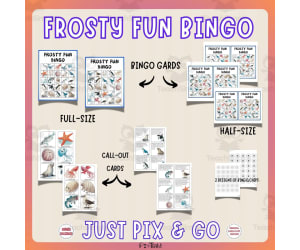
Frosty Antarctic Bingo
Special Resources, Not Grade Specific, Games, Activities
Step into the icy realm of Antarctica with "Frosty Antarctic Bingo". Each card showcases beautifully illustrated features of 26 fascinating and iconic Antarctic animals. Students will discover fascinating details about animals adaptions, diets, habitats, and behaviors, all while enjoying a fun and competitive bingo experience. High-quality PDF (8.5x11 in) with 300 DPI Here's what you'll find inside: Animal Illustration: 26 stunning, full-color illustrations showcasing Antarctica's diverse wildlife. Bingo Cards: - 30 full-size cards, each with a unique mix of animals for endless variety and 15 half-size cards, designed to fit perfectly on paper. Call-Out Cards: - 26 Animal Illustration Cards, perfect for straighforward gameplay or doubling as memory cards for added versatility. And 26 Hint + Answer Cards, packed with educational details to enrich the experience. Bingo Chips/Markers: Two distinct designs, one page each, for personalized gameplay. TIP: Print the Call-Out Cards twice to create a memory matching game for extra excitement! Animal List: Macaroni Penguin, Antarctic Krill, Humpback Whale, Beluga Whale, Vampire Squid, Tardigrade, Antarctic Toothfish, South Polar Skau, Antarctic Starfish, Antarctic Jellyfish, Antarctic Fur Seal, Minke Whale, Southern Elephant Seal, Sei Whale, Albatross, Antarctic Dragonfish, Adélie, Leopard Seal, Colossal Squid, Giant Isopod, Antarctic Icefish, Antarctic Sea Urchin, Orca, Chinstrap Penguin, Antarctic Cuttlefish, Snow Crab. Download instatly and start playing right away!
Author Piix.Team
Tags Games, Activities, Printables
I WONDER - What Is Uranus Made Out Of | Animated Video Lesson
Space, Earth and Environmental Sciences, Science, Grade 5, 6, 7, 8, 9, 10, 11, Lesson Plans, Teacher Tools
Video Introduction An amazing video designed for the students to learn more about space facts. I WONDER - What Is Uranus Made Out Of | Animated Video Lesson Do you like reading about space? If yes, what is your favorite topic? What do you know about our solar system? What is the smallest planet in our solar system? What is the biggest planet in our solar system? What is the hottest planet in our solar system? And what is the coldest one? Do you think there are aliens? If yes, what do you think they look like? What do they eat and how they speak to each other? Where do they live? What is a galaxy? And what is a milky way? Have you recently saw a shooting star? If yes, tell us more about it, like when did it happen and where? What is a blackhole? Can a blackhole gets bigger by time? Do you like counting the stars? What do you think a star is made of? I WONDER - What Is Uranus Made Out Of | Animated Video Lesson The video is perfect for encouraging the researching skills for the students, while learning more about the fantastic space. I WONDER - What Is Uranus Made Out Of | Animated Video Lesson This friendly designed video is suitable for students at school, homeschooling, and as a group activity. Format Available in MP4 format.
Author Educational Voice
Tags What Is Uranus Made Out Of, What Is Uranus Made Out Of Video, Uranus, Uranus Facts, Uranus Facts For Kids, Uranus Video, Uranus Video For Kids, Space, Space Facts, Space Video
I WONDER - What Is A Shooting Star Made of | Animated Video Lesson
Space, Earth and Environmental Sciences, Science, Grade 4, 5, 6, 7, 8, 9, 10, Lesson Plans, Teacher Tools
Video Introduction An amazing video designed for the students to learn more about space facts. I WONDER - What Is A Shooting Star Made of | Animated Video Lesson Do you like reading about space? If yes, what is your favorite topic? What do you know about our solar system? What is the smallest planet in our solar system? What is the biggest planet in our solar system? What is the hottest planet in our solar system? And what is the coldest one? Do you think there are aliens? If yes, what do you think they look like? What do they eat and how they speak to each other? Where do they live? What is a galaxy? And what is a milky way? Have you recently saw a shooting star? If yes, tell us more about it, like when did it happen and where? What is a blackhole? Can a blackhole gets bigger by time? Do you like counting the stars? What do you think a star is made of? I WONDER - What Is A Shooting Star Made of | Animated Video Lesson The video is perfect for encouraging the researching skills for the students, while learning more about the fantastic space. I WONDER - What Is A Shooting Star Made of | Animated Video Lesson This friendly designed video is suitable for students at school, homeschooling, and as a group activity. Format Available in MP4 format.
Author Educational Voice
Tags What Is A Shooting Star Made Of, What Is A Shooting Star Made Of Video, Shooting Star, Shooting Star Facts, Shooting Star Facts For Kids, Shooting Star Video, Shooting Star Video For Kids, Space

I WONDER - How Big Is The International Space Station | Animated Video
Space, Earth and Environmental Sciences, Science, Grade 4, 5, 6, 7, 8, 9, 10, Lesson Plans, Teacher Tools
Video Introduction An amazing video designed for the students to learn more about space facts. I WONDER - How Big Is The International Space Station | Animated Video Lesson Do you like reading about space? If yes, what is your favorite topic? What do you know about our solar system? What is the smallest planet in our solar system? What is the biggest planet in our solar system? What is the hottest planet in our solar system? And what is the coldest one? Do you think there are aliens? If yes, what do you think they look like? What do they eat and how they speak to each other? Where do they live? What is a galaxy? And what is a milky way? Have you recently saw a shooting star? If yes, tell us more about it, like when did it happen and where? What is a blackhole? Can a blackhole gets bigger by time? Do you like counting the stars? What do you think a star is made of? I WONDER - How Big Is The International Space Station | Animated Video Lesson The video is perfect for encouraging the researching skills for the students, while learning more about the fantastic space. I WONDER - How Big Is The International Space Station | Animated Video Lesson This friendly designed video is suitable for students at school, homeschooling, and as a group activity. Format Available in MP4 format.
Author Educational Voice
Tags How Big Is The International Space Station, How Big Is The International Space Station Video, International Space Station, International Space Station Facts, International Space Station Facts For Kids, International Space Station Video
I WONDER - When Was The First Space Station Launched Into Space
Space, Earth and Environmental Sciences, Science, Grade 6, 7, 8, 9, 10, 11, 12, Lesson Plans, Teacher Tools
Video Introduction An amazing video designed for the students to learn more about space facts. I WONDER - When Was The First Space Station Launched Into Space | Animated Video Lesson Do you like reading about space? If yes, what is your favorite topic? What do you know about our solar system? What is the smallest planet in our solar system? What is the biggest planet in our solar system? What is the hottest planet in our solar system? And what is the coldest one? Do you think there are aliens? If yes, what do you think they look like? What do they eat and how they speak to each other? Where do they live? What is a galaxy? And what is a milky way? Have you recently saw a shooting star? If yes, tell us more about it, like when did it happen and where? What is a blackhole? Can a blackhole gets bigger by time? Do you like counting the stars? What do you think a star is made of? I WONDER - When Was The First Space Station Launched Into Space | Animated Video Lesson The video is perfect for encouraging the researching skills for the students, while learning more about the fantastic space. I WONDER - When Was The First Space Station Launched Into Space | Animated Video Lesson This friendly designed video is suitable for students at school, homeschooling, and as a group activity. Format Available in MP4 format.
Author Educational Voice
Tags When Was The First Space Station Launched Into Space, When Was The First Space Station Launched Into Space Video, Space Station, Space Station Facts, Space Station Facts For Kids, Space Station Video
I WONDER - How Fast Can The International Space Station Travel
Space, Earth and Environmental Sciences, Science, Grade 6, 7, 8, 9, 10, 11, 12, Lesson Plans, Teacher Tools
Video Introduction An amazing video designed for the students to learn more about space facts. I WONDER - How Fast Can The International Space Station Travel | Animated Video Lesson Do you like reading about space? If yes, what is your favorite topic? What do you know about our solar system? What is the smallest planet in our solar system? What is the biggest planet in our solar system? What is the hottest planet in our solar system? And what is the coldest one? Do you think there are aliens? If yes, what do you think they look like? What do they eat and how they speak to each other? Where do they live? What is a galaxy? And what is a milky way? Have you recently saw a shooting star? If yes, tell us more about it, like when did it happen and where? What is a blackhole? Can a blackhole gets bigger by time? Do you like counting the stars? What do you think a star is made of? I WONDER - How Fast Can The International Space Station Travel | Animated Video Lesson The video is perfect for encouraging the researching skills for the students, while learning more about the fantastic space. I WONDER - How Fast Can The International Space Station Travel | Animated Video Lesson This friendly designed video is suitable for students at school, homeschooling, and as a group activity. Format Available in MP4 format.
Author Educational Voice
Tags How Fast Can The International Space Station Travel, How Fast Can The International Space Station Travel Video, International Space Station, International Space Station Facts, International Space Station Video, International Space Station Facts For Kids

I WONDER - What Did Neil Armstrong Eat On His Journey To The Moon
Inventors, Basic Science, Science, Space, Earth and Environmental Sciences, Grade 4, 5, 6, 7, 8, 9, 10, Lesson Plans, Teacher Tools
Video Introduction An amazing video designed for the students to learn more about space facts. I WONDER - What Did Neil Armstrong Eat On His Journey To The Moon | Animated Video Lesson Do you like reading about space? If yes, what is your favorite topic? What do you know about our solar system? What is the smallest planet in our solar system? What is the biggest planet in our solar system? What is the hottest planet in our solar system? And what is the coldest one? Do you think there are aliens? If yes, what do you think they look like? What do they eat and how they speak to each other? Where do they live? What is a galaxy? And what is a milky way? Have you recently saw a shooting star? If yes, tell us more about it, like when did it happen and where? What is a blackhole? Can a blackhole gets bigger by time? Do you like counting the stars? What do you think a star is made of? I WONDER - What Did Neil Armstrong Eat On His Journey To The Moon | Animated Video Lesson The video is perfect for encouraging the researching skills for the students, while learning more about the fantastic space. I WONDER - What Did Neil Armstrong Eat On His Journey To The Moon | Animated Video Lesson This friendly designed video is suitable for students at school, homeschooling, and as a group activity. Format Available in MP4 format.
Author Educational Voice
Tags What Did Neil Armstrong Eat On His Journey To The Moon, What Did Neil Armstrong Eat On His Journey To The Moon Video, Neil Armstrong, Neil Armstrong Facts, Neil Armstrong Video, Moon, Moon Video
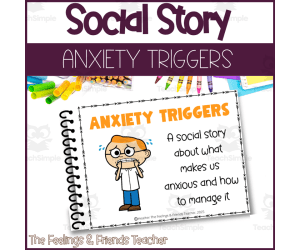
Anxiety Social Story For Identifying Triggers & Coping Skills
Resources for Teachers, Special Resources, Social Emotional Learning (SEL), Special Education Needs (SEN), Life Skills, Kindergarten, Preschool, Grade 1, 2, 3, Worksheets & Printables, Activities
This anxiety social story will help students learn all about identifying triggers, specifically with anxiety, and introduces anxiety specific coping skills that they can use to self-regulate! Anxiety in our students is on the rise, and not just with students on the Autism Spectrum, but any of our students! And what I have found is that our students struggle to understand what makes them anxious or worried. This social story helps to alleviate that problem as it introduces common anxiety triggers that help students pinpoint exactly which situations cause them to feel stressed, scared, or even worried. After identifying triggers of anxiety, the story then discusses practical ways to calm themselves down, to help promote emotional regulation. And the best part is, the social story is just the tip of the iceberg! It includes coping skill cards and a choice board with multiple calming strategies that your students can use in their everyday lives! So not only are you introducing the concepts in the social story, but you are able to reinforce the concepts in the classroom as well! Needing a digital option? I’ve got you covered! This also includes a digital version of the story with the same concepts so that way you can use it for class lessons, in anxiety small groups, or even on a tablet!
Author The Feelings and Friends Teacher
Tags Anxiety Social Story, Anxiety Coping Skills, Anxiety Worksheets, Anxiety Small Group, Identifying Triggers, Triggers, Emotional Regulation, Social Stories Autism, Autism Resources

Grade 2 Measurement – Body Parts Worksheets
Math, Measurements, Grade 2, 3, Worksheets & Printables, Worksheets
This fun and engaging primary math lesson is a perfect addition to your class measurement unit in grade 2 or grade 3. The lesson includes worksheets with two versions: measuring in inches and measuring in centimetres. Teacher Instructions: • Your students will measure different body parts (for example, their foot length, their total height, the length from shoulder to wrist, etc.). • They can work with a partner or small group to complete the task. • Print a class set of worksheets in either centimetres or inches. • Decide if your students should all utilize the exact same non-standard measurement unit (it could be a counter, an eraser, a paper clip, etc.) or if you will let them pick their own. Note: Each student should use the exact same non-standard measurement unit for all five body measurements. • Let your students measure each of the body parts in standard units (inches or cm) AND the consistent non-standard unit. • After collecting all of the data, students will order their body parts from shortest to longest. They do this twice: in each type of unit. • They will think about why both lists are in the same order. They should realize that no matter what measurement units you use, if you measure consistently you will get the same order of results. Your height will always be the longest measurement in this set of five. • Finally, an included bonus question is a good way to introduce some simple ratio ideas. What's Included: 5 Page PDF: Ready to Print and Use! - Teacher Instructions - 2-Page Worksheet in inches - 2-Page Worksheet in cm Grades to Use With: This lesson is designed for students in grade 2 or grade 3 who are learning basic measurement skills using rulers and non-standard units.
Author Grace Under Pressure
Rating
Tags Measurement Worksheet, Measurement, Standard Units, Non-standard Units, Inches, Centimeters, Grade 2 Measurement, Grade 3 Measurement, 2nd Grade Measurement, 3rd Grade Measurement

Culture Lesson: Cultural Norms and Avoiding Stereotypes Worksheets
Social Studies, Psychology, Life Studies, Grade 5, 6, 7, Worksheets & Printables, Worksheets, Activities, Experiments, Lesson Plans, Teacher Tools
Do you want your students in grades 5-7 to learn how to become global citizens who can respect a variety of cultural norms and comprehend cross-cultural differences? Are you looking for a fun way to bring all of these ideas to life? Check out this ready-to-go lesson for your class. This 5-Page PDF is ready to print for your social studies classroom. It includes clear teacher instructions for a fun class simulation where half of your students will act out a new "class norm" (five options are provided such as not raising your hand to ask a question) that the other half of your class won't be expecting. While the simulation is happening, everyone will be working on a three page reading comprehension task. Students will read about cultural norms from around the world (slurping noodles when eating in Japan or nodding one's head to say "no" in Bulgaria). They will imagine how not knowing about the cultural norms in a place where they are travelling could lead to accidental misunderstandings. Students are also taught a simple definition of the concept of stereotypes, and they will think of how they are different from cultural norms. Finally, there is a 1-page reflection with prompts- perfect for after a class discussion. Teacher Instructions: 1. Split your class in two and talk to only one half. 2. Tell them that they will have a new “class cultural norm.” Pick one from the provided ideas. 3. When the whole class is reunited, pass out the reading page & worksheets. Students read about cultural norms and answer the questions. 4. As they work, the selected half will enact their new norm, which will confuse the other half of the class. 5. Once the point has been made, let the other half in on the secret. 6. Have a discussion about cultural norms and give students time to write a reflection about this lesson.
Author Grace Under Pressure
Tags Culture, Stereotypes, Cultural, Culture Worksheets, Cross Culture, Travel, Norms, Cultural Norms, Class Simulation, Simulation
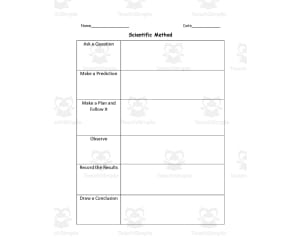
Scientific Method Templates - Perfect for Basic Science Experiments
Research, Science, Basic Science, Elementary, Homeschool Resources, Not Grade Specific, Pre-K, Experiments, Activities, Labs
This super basic Scientific Method Template is perfect for getting kids started with the scientific method and for teaching them about scientific research. There are two versions of the template, one with cute pictures and one without pictures. This template can and has been used for all ages up to high school and even adults for basic in-home and at school experiments. Not only could you use this template in the kitchen for food science and baking experiments, for example, comparing the different weights between baking flours, but you can use it for basic chemistry, physics, life science, and more. Kids can use it to jot their ideas down if they aren't sure what they want to do for their experiment or science research project. It is super easy to use and self-explanatory and would be a perfect brainstorming tool. pdf downloadable file, 2 usable pages with cover sheet. Minimal ink needed. Not age specific but may be especially useful for younger elementary and special education students. Also, for visual learners and kids who aren't reading yet (the template with the pictures tells the story without needing to read).
Author Homeschooling Dietitian Mom
Tags 1st Grade Science Experiments, 2nd Grade Science Experiments, 3rd Grade Science Experiments, Scientific Research Projects, Science Templates, Science Worksheets, Science Writing Prompts
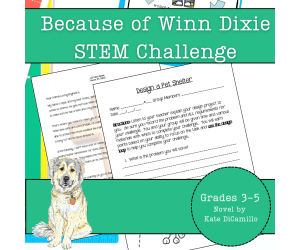
Because of Winn Dixie STEM Experiment + STEM Project for Grades 3-5
Science, Technology, Engineering, STEM, Grade 3, 4, 5, Experiments, Activities, Projects, Diagrams, Teacher Tools, Graphic Organizers, Rubrics
Engage your students in a hands-on STEM challenge inspired by Because of Winn-Dixie! This exciting activity combines engineering, creativity, and problem-solving as students design and build a pet-friendly shelter for Winn-Dixie, the lovable dog who’s afraid of storms. Perfect for blending literature with science, this challenge encourages young minds to apply engineering principles using simple materials, all while developing teamwork, critical thinking, and innovation. What’s Included in This Resource: Student Letter: An engaging letter from Opal invites students to participate in the challenge, drawing a direct connection between the story’s problem and the real-world task. The Design Loop Visual: This visual aid is a great tool for students to glue into their science journals for easy reference. It can easily be enlarged as a classroom poster. Step-by-Step Directions: Detailed instructions that can be printed or written into science journals for a hands-on approach. These directions ensure that students stay on track while working through each part of the challenge. Teacher Notes: Helpful guidance to assist you in creating a clear problem statement, establishing success criteria, and setting time limits and materials. Tailor these instructions to fit your classroom’s needs. Key Skills Developed: ✔ Problem-Solving: Encourage students to identify challenges and develop creative, effective solutions. ✔ Engineering Design: Teach the design process by having students follow the design loop to plan, construct, test, and refine their pet shelters. (Discussing area and perimeter will enhance this design specifically.) ✔ Critical Thinking: Help students evaluate their designs, analyze their prototypes, and identify ways to improve them. ✔ Collaboration: Foster teamwork as students collaborate to achieve a common goal. Flexible Classroom Use: This STEM challenge is perfect for guided instruction or as part of a broader literature and science unit. It provides an opportunity for students to connect their love of reading with real-world applications, improving both their scientific knowledge and creative abilities. Why Teachers Love It: ⭐ “My students were so engaged! It brought their love for reading into STEM learning.” ⭐ “This activity is simple to set up and promotes creativity and teamwork.” ⭐ “The combination of literature and science created an ideal cross-curricular experience for my class.” Inspire your students to help Winn-Dixie solve his stormy dilemma and ignite their passion for engineering with this fun, standards-aligned STEM challenge!
Author Kel's Klass
Tags 4th Grade Science Project, 4th Grade Science Experiment, 5th Grade Science Project, 5th Grade Science Experiment, Engineering Diagram, Science Graphic Organizer, Science Rubric, Because Of Winn Dixie, 3rd Grade Science Project, 3rd Grade Science Experiment
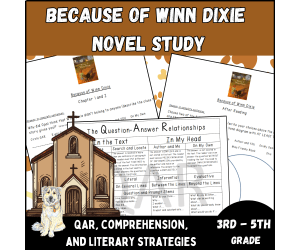
Because of Winn Dixie QAR Skills and Guided Reading Novel Study
ELA, Reading Comprehension, Reading, Grade 3, 4, 5, Lesson Plans, Teacher Tools, Worksheets & Printables, Novel Studies
Bring Because of Winn-Dixie to life in your classroom with this engaging and flexible novel study! Designed for upper elementary and middle school students, this resource helps young readers develop strong comprehension skills while introducing the Question-Answer Relationship (QAR) strategy in a meaningful way. The unit begins with mini-posters and reading journal inserts to teach students the four types of questions: Right There, Think and Search, Author and Me, and On My Own. By mastering this questioning strategy early on, students build the skills they need to dig deeper into the novel as they read. Instead of just answering surface-level questions, they’ll learn how to think critically, analyze text, and discuss ideas with confidence. As students move through the book, they’ll continue to practice and refine their questioning techniques, applying them to character development, themes, and major plot events. This approach encourages independent thinking and richer discussions, giving teachers the opportunity to guide students toward a deeper understanding of the text. How This Unit Works: 📖 QAR Mini-Lessons – Start with clear explanations and visual aids to introduce the questioning strategy. 📖 Active Reading & Skill Building – As students read, they apply QAR techniques to think critically about the story. 📖 Comprehension & Discussion Activities – Thoughtful prompts encourage meaningful conversations about characters, themes, and events. 📖 Final Project & Post-Reading Activities – Wrap up the novel with engaging project work that reinforces key takeaways. Why You’ll Love This Resource: ✔️ Makes questioning strategies easy to teach and apply. ✔️ Encourages higher-level thinking and deep discussions. ✔️ Works well for whole-class instruction, small groups, or independent study. ✔️ Includes ready-to-use mini-posters and journal inserts to support student learning. What’s Included? Mini-posters & reading journal inserts to introduce QAR Comprehension questions that challenge students to think deeply A final project for creative and reflective learning Flexible pacing to fit your teaching style This Because of Winn-Dixie novel study is a simple yet powerful way to help students build comprehension skills, improve questioning techniques, and connect with this heartfelt story. Whether used as a full-class novel study or a small group book unit, it’s a resource that makes reading more meaningful and engaging!
Author Kel's Klass
Tags Because Of Winn Dixie Novel Study, QAR Reading Strategy, Questioning Reading Strategy, Realistic Fiction, Small Group Reading, Whole Class Reading, Because Of Winn Dixie Worksheet, Because Of Winn Dixie Writing Prompts, Because Of Winn Dixie Lesson Plans, Reading Comprehension

Frindle Novel Study: Vocabulary, Comprehension, Literary Devices
ELA, Reading, Reading Comprehension, Strategies, Grade 2, 3, 4, Worksheets & Printables, Novel Studies
Make teaching Frindle by Andrew Clements a breeze with this engaging and adaptable novel study! This 24-page resource is designed for upper elementary and middle school students, offering a structured yet flexible approach to teaching Frindle by Andrew Clements. Whether you're working with a small reading group, a whole class, or an independent study, this resource makes planning easy while keeping students actively engaged. This unit breaks the novel into sections, allowing you to focus on different aspects of literacy each day: 📖 Vocabulary Building – Introduce key terms from the novel to strengthen students’ understanding of language. 📖 Reading & Mini-Lesson – Guide students through an interactive reading session, incorporating a focused lesson on comprehension or literary analysis. 📖 Comprehension Activities – Reinforce understanding with engaging questions that encourage discussion and deeper thinking. 📖 Exploring Literary Devices – Highlight important literary elements found in Frindle, such as point of view, characterization, figurative language, and conflict. In addition to helping students analyze Frindle, this unit also works well as part of an Andrew Clements author study. Students can choose another book by Clements for independent reading while comparing themes, writing style, and storytelling techniques. Why Teachers Love This Resource: ✔️ Works well for small groups, whole-class instruction, or independent reading projects. ✔️ Encourages critical thinking and meaningful discussions. ✔️ Provides a structured yet adaptable format to fit different teaching styles. ✔️ Supports differentiation with activities that can be adjusted to student needs. What’s Included? 24 pages of engaging activities Lessons designed for upper elementary and middle school learners A framework that can be adapted for different pacing and instructional needs Keywords: Frindle novel study, realistic fiction lesson plans, Andrew Clements author study, upper elementary reading unit, middle school ELA resources, teaching literary devices, engaging book activities, small group reading lessons, whole-class novel study, comprehension and vocabulary worksheets.
Author Kel's Klass
Tags Frindle, Novel Study, Realistic Fiction, Andrew Clements, Literary Devices, Vocabulary, Comprehension Strategies, Small Group, Whole Class, Frindle Novel Study

Year 2050 Upper Intermediate Lesson Plan
ELA, Language Development, ESL, Grammar, Not Grade Specific, Adult Education, Homeschool Resources, High School, Middle School, Teacher Tools, Lesson Plans, Worksheets & Printables
This is an upper intermediate lesson plan worksheet set for Year 2050. This informative lesson plan helps upper intermediate ESL students learn about the future. Students first study key vocabulary and concepts related to the year 2050. Next, they read about the year 2050 to reinforce comprehension. Finally, students complete comprehension questions and exercises that assess their understanding. Educators can implement this flexible resource in various ways - as a whole class activity, small group work, or even a homework assignment. This multimedia resource includes an audio file along with Google Apps compatibility for seamless integration. The answer key supports self-guided learning. Overall, this concise lesson plan helps ESL teachers effectively introduce biographies to upper intermediate students. The ESL lesson plan includes flashcards , a warmer, grammar rules, exercises, role-play, conversation, writing drill, activity, answers and an extra study that would be good to set as homework. There are 32+ pages and there are teachers notes to guide the teacher. Answers are included in the zip file.
Author TEAM TEFL
Tags Starter Activity, Climate Change, Science Vocabulary, Synonyms , ESL
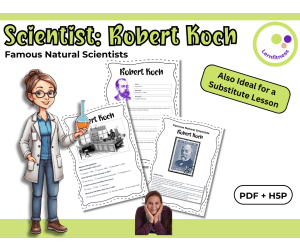
Scientist Robert Koch Fact Sheet, Quiz + Exercises | PDF + H5P
Life Sciences, Science, STEM, History: World, History, Social Studies, Biographies, Inventors, Basic Science, Human Body, Grade 6, 7, 8, 9, Worksheets, Worksheets & Printables, Quizzes, Quizzes and Tests, Teacher Tools, Projects, Activities
Discover Robert Koch – The Scientist Who Unlocked the Secrets of Infectious Diseases Did you know that Robert Koch was one of the first scientists to prove that bacteria cause diseases? His groundbreaking research on tuberculosis, anthrax, and cholera revolutionized medicine and helped develop life-saving treatments. Thanks to Koch’s work, doctors and scientists began to understand how infectious diseases spread—and, more importantly, how to stop them. This teaching resource introduces your grades 7–10 students to Koch’s incredible discoveries in a way that is engaging and easy to grasp. Designed for a 45-minute lesson, it includes clear explanations, interactive exercises, and creative tasks that bring Koch’s contributions to life in the classroom. What’s Included: Concise Informational Text: A clear and engaging overview of Robert Koch’s role in science. Fact Sheet Activity: Encourages students to organize knowledge and work creatively. Quiz with Solutions: Promotes fun, interactive learning and self-assessment. Additional Exercises: Students can create their own questions and collaborate in pairs to deepen their understanding. Flexible Formats: Includes a color and black-and-white printable PDF, as well as interactive H5P tasks for digital learning. Why You’ll Love This Resource: Time-Saving: Perfect for teachers who need a ready-to-go, well-structured lesson. Versatile Use: Ideal for biology, history of science, or cross-curricular lessons in English and science classes. Promotes Independence: Solutions are included, allowing students to check their work and explore the topic at their own pace. Interactive and Engaging: Tasks are designed to keep students actively involved while learning about Robert Koch’s legacy. Whether you use it for a regular lesson, substitute teaching, or as part of a digital learning activity, this resource will make Robert Koch’s contributions come alive for your students. Bring Robert Koch’s fascinating world of science into your classroom and inspire your students to see history and science in a whole new light! Have fun exploring the world of science with your students! Warmly, Lernfitness Did You Know? I teach with a certified therapy dog, and together we focus on creating a positive and inspiring learning environment.
Author Lernfitness
Tags Science, Biology, Famous Scientists Lesson, H5P, Interactive Science Exercises, STEM, History, Scientists, Robert Koch, Tuberculosis

Would - Past Habits | Upper Intermediate Lesson Plan
ELA, Language Development, ESL, Grammar, Not Grade Specific, Adult Education, High School, Middle School, Teacher Tools, Lesson Plans, Worksheets & Printables
Would - Past Habits | Upper Intermediate Lesson Plan This upper intermediate English lesson plan helps students learn about using "would" to describe past habits or repeated actions. Educators can implement this resource in various ways, like whole group grammar instruction, small group practice, or as a homework assignment. The worksheet set focuses on improving students' understanding and use of "would" for past habits. It includes explanatory content, practice exercises, and an answer key. Completing these materials will help assess learners' comprehension of this grammar topic and let them implement their skills. This well-designed resource comes as a PDF document that educators can also access through Google Apps for additional flexibility. It aims to engage upper intermediate students while improving their grammar abilities. The ESL lesson plan includes flashcards , a warmer, grammar rules, exercises, role-play, conversation, writing drill, activity, answers and an extra study that would be good to set as homework. There are 30+ pages and there are teachers notes to guide the teacher. Answers are included in the zip file.
Author TEAM TEFL
Tags Habits, Reading, Comprehension, Past Habits, ESL
I WONDER - Why Are We Able To See Venus | Animated Video Lesson
Earth and Environmental Sciences, Science, Space, Earth Sciences, Grade 4, 5, 6, 7, 8, 9, 10, Lesson Plans, Teacher Tools
Video Introduction An amazing video designed for the students to learn more about space facts. I WONDER - Why Are We Able To See Venus | Animated Video Lesson Do you like reading about space? If yes, what is your favorite topic? What do you know about our solar system? What is the smallest planet in our solar system? What is the biggest planet in our solar system? What is the hottest planet in our solar system? And what is the coldest one? Do you think there are aliens? If yes, what do you think they look like? What do they eat and how they speak to each other? Where do they live? What is a galaxy? And what is a milky way? Have you recently saw a shooting star? If yes, tell us more about it, like when did it happen and where? What is a blackhole? Can a blackhole gets bigger by time? Do you like counting the stars? What do you think a star is made of? I WONDER - Why Are We Able To See Venus | Animated Video Lesson The video is perfect for encouraging the researching skills for the students, while learning more about the fantastic space. I WONDER - Why Are We Able To See Venus | Animated Video Lesson This friendly designed video is suitable for students at school, homeschooling, and as a group activity. Format Available in MP4 format.
Author Educational Voice
Tags Why Are We Able To See Venus, Why Are We Able To See Venus Video, Venus, Venus Facts, Venus Facts For Kids, Venus Video, Venus Video For Kids, Space, Space Video, Space Video For Kids
The Terrible Day Short Story | Upper Intermediate Lesson Plan
ELA, Language Development, ESL, Not Grade Specific, Adult Education, Homeschool Resources, Middle School, Teacher Tools, Lesson Plans, Worksheets & Printables
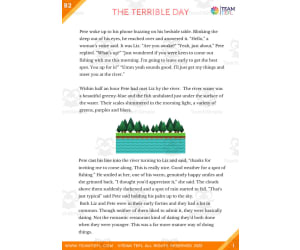
The Terrible Day Short Story | Upper Intermediate Lesson Plan This upper intermediate English lesson plan helps students improve their reading comprehension and grammar skills. Educators can implement this resource in multiple ways - as a whole group activity, small group work, or as an individual assignment. First, students read the short story "The Terrible Day" independently. Next, they complete reading comprehension questions and grammar exercises that align to the story. Questions assess plot elements, vocabulary, and more. This versatile resource works for remote learning too since it is accessible via Google Apps. An answer key is included for educators to check students' responses. Overall, The Terrible Day lesson plan engages intermediate ESL learners with an intriguing story while targeting key English skills. With the Terrible Day ESL ELA ELL Beginner Lesson Plan, educators have at their disposal a profound tool that makes the educational journey into reading comprehension exciting and purposeful whilst their students develop important new skills.
Author TEAM TEFL
Tags Short Story, Reading Passage, Vocabulary, Language Arts, ESL Worksheet