



3,942 products added recently
Page 546 - Newest Teaching Resources

 Show filters
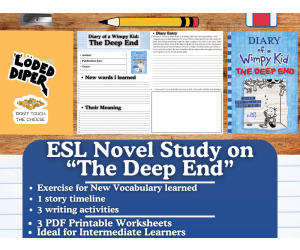
ESL Novel Study on "Diary of a Wimpy Kid: The Deep End" - Jeff Kinney
ELA, Language Development, ESL, Reading, Library, Writing, Creative Writing, Grade 6, 7, 8, 9, Worksheets & Printables, Novel Studies, Writing Prompts, Worksheets
ESL Novel Study Worksheets on "Diary of a Wimpy Kid: The Deep End" - Jeff Kinney In this fantastic ESL teaching resource it is offered a comprehensive novel study worksheet activity (3 printable PDF pages; Worksheets) focused on "Diary of a Wimpy Kid: The Deep End" by American author Jeff Kinney. Ideal for post reading activities, this English Second or Foreign Language (ESL EFL) teaching resource can be more than great to enhance students' overall understanding of this coming of age novel by American author Jeff Kinney. The English Second or Foreign Language Novel Study activity (3 printable PDF pages; Worksheets) can be ideal for ESL EFL TESOL learners in middle and high school (from 6th grade to 9th grade, teen students). In this Novel Study on "Diary of a Wimpy Kid: The Deep End" (3 printable PDF pages; Worksheets), English Second or Foreign Language teachers (ESL EFL) can find the following ESL novel study activities: 1 part on general information (author's name, genre, and publishing date) 1 part related to New Vocabulary Learned (1 space where to write 10 new words they learned and 1 space where students can write their related meaning) 1 part related to the story timeline (story timeline where learners set in a chronological order the most important moments during the narration) First writing activity on students' review on the novel Second writing activity (imagining to write a letter to Greg Heffley, the main character, and to give him some advice) Third writing activity (pretending to be a character, other than Greg Heffley, and describing a scene of the book from his/her point of view + space where students can draw with comic bubbles the scene they described) This ESL EFL (English Second or Foreign Language) Novel Study Activity on "Diary of a Wimpy Kid: The Deep End" by American author Jeff Kinney (3 PDF Printable Slides; worksheets) can be suitable for ESL EFL learners from 6th grade to 9th grade to study this coming of age novel Learning with Alan is a Teaching Resource/Educational Material Store whose aim is to help Teachers, Educators and Tutors to achieve their teaching objectives while creating a fun and stimulating learning and teaching environment. Remember. Learning is Fun. Never Forget! If you want to browse more of my English Second or Foreign Language (ESL EFL) Teaching Resources, click here Learning with Alan!
Author Learning with Alan
Tags ESL, English Second Language, English, Novel Study, Worksheets, Printable, Activity, Writing Activity, Diary Of A Wimpy Kid, Teens

Building Sentences Made Easy
Common Core, Reading, ELA, Literature, Writing, Special Education Needs (SEN), Special Resources, Social Emotional Learning (SEL), Toddler, Kindergarten, Preschool, Grade 1, Centers, Activities, Read Alouds, Workbooks, Worksheets & Printables
Building Sentences Made Easy has been created to help young learner with developing their reading and writing skills. Early learners can do so much more than we know. This booklet is filled with opportunities for parents and their children to practice. When parents sit and work with their young learners, children feel so much more confident in what they are learning. Building sentences by matching picture cards to an action to build the sentence can encourage young learners to build a sentence from simple looking at items. It is never too early to work on building the skills of how sentences can be used to tell a story. This activity is a great way to build early leaners skills in reading and writing. Building Sentences made Easy can be practiced at school and/or at home. Homeschooler can also benefit from working with new materials that have been designed by educators with years of experience working in the classroom with a number of young students. Building Sentences made Easy is especially a great way to motivate children to learn new skills. Children can work on their own or with a friend! What’s included 9 pages Instruction · Print out pages · Laminate for longer use · Cut out pictures · Assemble using Velcro dots · Use with Dry Erase markers Enjoy!
Author KD's Kids School Shop
Tags Sentences, Reading, Skill Building, Writing, Spelling, Preschoolers, Homeschoolers, Kinder, 1st Grade
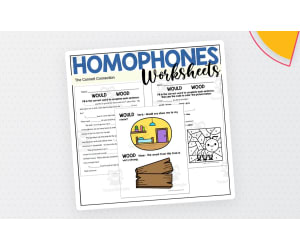
Homophones Worksheet – Wood vs. Would Practice
ELA, Grammar, Reading, Language Development, Vocabulary, Grade 3, 4, 5, Worksheets & Printables, Worksheets
Students can practice using the correct spelling of homophone words with this worksheet packet. This packet focuses on the homophones: wood and would. What are homophones? Homophones are a pair of words that sound the same but are spelled differently. Words that are homophones can often be tricky for students to spell correctly since the spelling varies depending on the meaning of the word. What is Included: There is a poster page (available in color and in black in white) that shows the homophone, its part of speech, a sentence showing how it is used in a sentence, and a picture that illustrates the sentence. One worksheet where students write in the correct homophone to complete each sentence. One worksheet where students write in the correct homophone to complete the story. One worksheet where students choose the correct word to complete each sentence and then they color in the color by code picture according to the answers of each sentence. Answer keys for the 3 worksheets. When to Use: Literacy Activity - These worksheets make great practice for students learning these homophones. Morning Work - These worksheets make great morning work for students who arrive to class early. Homework - These worksheets are perfect to send home for students to practice homophones with their parents. Sub Plans - The teacher can easily leave these worksheets for subs to assign to students. These worksheets provide ample practice for students learning these homophones. With repeated practice distinguishing between words with the same sound and different spellings, students will master which form of the word to use in each sentence and become confident in using the correct word when writing their own sentences and stories. These homophone worksheets are a no prep option for teachers to give to students. Teachers simply just need to print out the desired worksheet and give it to students to complete.
Author The Connett Connection
Rating
Tags Homophone Worksheets, Homophones, Commonly Confused Words, Multi-meaning Words, Homonyms

Homophones Worksheets: Where Wear
ELA, Grammar, Reading, Language Development, Vocabulary, Grade 3, 4, 5, Worksheets & Printables, Worksheets
Students can practice using the correct spelling of homophone words with this worksheet packet. This packet focuses on the homophones: where and wear. What are homophones? Homophones are a pair of words that sound the same but are spelled differently. Words that are homophones can often be tricky for students to spell correctly since the spelling varies depending on the meaning of the word. What is Included: There is a poster page (available in color and in black in white) that shows the homophone, its part of speech, a sentence showing how it is used in a sentence, and a picture that illustrates the sentence. One worksheet where students write in the correct homophone to complete each sentence. One worksheet where students write in the correct homophone to complete the story. One worksheet where students choose the correct word to complete each sentence and then they color in the color by code picture according to the answers of each sentence. Answer keys for the 3 worksheets. When to Use: Literacy Activity - These worksheets make great practice for students learning these homophones. Morning Work - These worksheets make great morning work for students who arrive to class early. Homework - These worksheets are perfect to send home for students to practice homophones with their parents. Sub Plans - The teacher can easily leave these worksheets for subs to assign to students. These worksheets provide ample practice for students learning these homophones. With repeated practice distinguishing between words with the same sound and different spellings, students will master which form of the word to use in each sentence and become confident in using the correct word when writing their own sentences and stories. These homophone worksheets are a no prep option for teachers to give to students. Teachers simply just need to print out the desired worksheet and give it to students to complete.
Author The Connett Connection
Tags Homophone Worksheets, Homophones, Commonly Confused Words, Multi-meaning Words, Homonyms
Learning Basic Math Booklet
Common Core, Math, Addition and Subtraction, Addition, Subtraction, Early Math, Basic Operations, Counting, Numbers, Montessori, Special Resources, Special Education Needs (SEN), Toddler, Kindergarten, Preschool, Grade 1, Activities, Centers, Worksheets & Printables, Workbooks
Learning Basic Math Booklet has been created to help young learner with developing their math skills. Early learners can do so much more than we know. This workbook is filled with opportunities for parents and their children to practice the basic steps of math and problem-solving skills with their child. When parents sit and work with their young learners, children feel so much more confident in what they are learning. Building pre-academic skills are essential for early leaners and it is never too early to work on addition and subtraction as well as writing skills in school and/or at home. Homeschoolers can also benefit from working with new materials that are fun, but are challenging. This workbook has been designed by educators with years of experience working in the classroom with a number of young students. Learning Basic Math Booklet is a fun and engaging way to motivate children to learn. Subjects Included · Numbers · Counting · Adding · Subtracting · Tracing numbers · Problem-solving · Children can work on their own or with a friend! What’s included 14 pages Instruction · Print out pages · Laminate for longer use · Can also be used with Dry Erase markers Enjoy!
Author KD's Kids School Shop
Tags Basic Math, Early Math, Adding , Subtracting, Counting, Addition, Subtraction, Preschoolers, Homeschoolers, Kinder
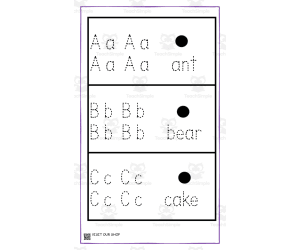
Alphabet Trace & Write Booklet
Common Core, Toddler, Kindergarten, Preschool, Activities, Centers, Worksheets & Printables, Workbooks
Alphabet Trace & Write Booklet has been created to help young learner with developing their learning skills. Early learners can do so much more than we know. This booklet is filled with opportunities for parents and their children to practice. When parents sit and work with their young learners, children feel so much more confident in what they are learning. Building beginning letters sounds, matching pictures to words and writing skills is essential for early leaners and it is never too early to work on beginning letter sounds which are needed before learning to spell and read. These beginning skills can be practiced at school and/or at home. Homeschooler can also benefit from working with new materials that have been designed by educators with years of experience working in the classroom with a number of young students. Fun learning with Alphabet Trace & Write Booklet is especially a great way to motivate children to learn new skills. Children can work on their own or with a friend! What’s included 13 pages Instruction · Print out pages · Laminate for longer use · Cut out pictures · Assemble using Velcro dots · Use with Dry Erase markers Enjoy!
Author KD's Kids School Shop
Tags Letters Skills, Beginning Sounds, Spelling, Tracing, Matching, Preschoolers, Homeschollers, Skilll Builders, Booklet, Workbooks
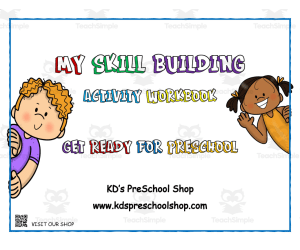
My Skill Building Activity Workbook
Common Core, Math, Kindergarten, Preschool, Toddler, Activities, Centers, Worksheets & Printables, Workbooks
My Skill Building Activity Workbook has been created to help young learner with developing their learning skills. Early learners can do so much more than we know. This workbook is filled with opportunities for parents and their children to practice the letters of the alphabet, numbers, shapes, basic math and problem-solving skills with their child. When parents sit and work with their young learners, children feel so much more confident in what they are learning. Building pre-academic skills are essential for early leaners and it is never too early to work on numbers, letters and writing skills in school or at home. Homeschoolers can also benefit from working with new materials that are fun, but are challenging. This workbook has been designed by educators with years of experience working in the classroom with a number of young students. My Skill Building Activity Workbook is a fun and engaging way to motivate children to learn. Subjects Included · Numbers · Counting · Colors · Alphabets · Shapes · CVC practice · Matching by objects · And more Children can work on their own or with a friend! What’s included 19 pages Instruction · Print out pages · Laminate for longer use · Can also be used with Dry Erase markers Enjoy!
Author KD's Kids School Shop
Tags Math-counting, Alphabets, Letters, Matching, Shapes, Colors, Basic Skills, Preschoolers, Homeschoolers
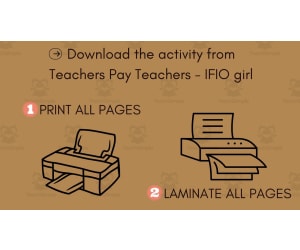
VIDEO-On to create a flip style activity book
Special Resources, Not Grade Specific, Teacher Tools
Discover the ease of assembling a simple, downloadable flip activity book with this step-by-step video tutorial! Perfect for busy teachers, this tutorial walks you through the quick assembly process, helping you create an interactive and engaging tool for your classroom. The hands-on teaching style fosters active learning, making it an ideal way to engage students through tactile experiences. This approach not only enhances student participation but also deepens their understanding, all while saving you valuable prep time. IFIO girl I'll Figure It Out The importance of hands-on activities: Hands-on learning experiences are vital in early education because they actively engage children in the learning process. In this color sorting activity , using photo cards and mats allows children to physically manipulate materials, which reinforces learning through tactile interaction. This kind of kinesthetic learning promotes better retention and understanding as children can explore, experiment, and make connections in a way that traditional methods, such as worksheets, cannot provide. By actively engaging their senses, students are more likely to internalize concepts, making hands-on activities like this one a fun, interactive, and essential part of their development.
Author IFIO girl - I'll Figure It Out
Tags Video On How To Assemble An Activity Book, Video On How To Create An Activity Book, Links To Items Needed To Create An Activity Book, Flip Book Video, Matching Flip Book Vide, How To Make A Flip Book
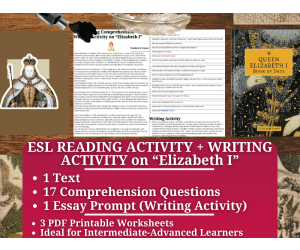
ESL Reading Comprehension + Writing Activity Worksheets on Elizabeth I
ELA, Language Development, ESL, Reading, Reading Comprehension, Writing, Grade 7, 8, 9, 10, 11, 12, Worksheets & Printables, Writing Prompts, Worksheets
ESL Reading Comprehension + Writing Activity Worksheets on Elizabeth I This ESL EFL TESOL Teaching Resource on Elizabeth I (3 PDF Slides; Reading Comprehension + Writing Activity ) can be ideal to train Language skills in English. Suitable participants for this ESL EFL TESOL Reading + Writing Activity are Foreign Students at middle and High School (7th-12th Grade; teens). Newcomers or any ESL Learner is also more than suitable for this ESL EFL TESOL Activity on "Elizabeth I" (Queen of England famous for her victory against the Spanish Armada and the flourishing period her Reign experienced, also known as Elizabethan Era). This Teaching Educational Resource Product can also be ideal for ESL EFL Centers worldwide or any English second language tutor. This ESL EFL TESOL Teaching Resource on Elizabeth I (Worksheet; 3 PDF Printable slides) can be ideal for intermediate advanced English as a Second Language (ESL) Learners. Within this English Second or Foreign Language Reading Comprehension + Essay Writing Activity Worksheet on "Elizabeth I" (Queen of England famous for her victory against the Spanish Armada and the flourishing period her Reign experienced, also known as Elizabethan Era), ESL EFL TESOL teachers can find the following activities: 1 text on "Elizabeth I" (Queen of England famous for her victory against the Spanish Armada and the flourishing period her Reign experienced, also known as Elizabethan Era) 17 Questions (with space for answers) 1 Essay Prompt (writing an essay on a leader, monarch or president in your own home country which similarly to queen Elizabeth I has left an indelible sign in your country's history) This ESL, EFL, TESOL Teaching Resource Reading + Writing Activity on "Elizabeth I" (Queen of England famous for her victory against the Spanish Armada and the flourishing period her Reign experienced, also known as Elizabethan Era) is great for Intermediate advanced English as a second or foreign language learners (ESL- EFL). This English Second Language Worksheet on "Elizabeth I" (Queen of England famous for her victory against the Spanish Armada and the flourishing period her Reign experienced, also known as Elizabethan Era) aims to train and Reading Comprehension + Writing Skills. "Learning with Alan" is dedicated to provide high-quality teaching resources and educational materials for ESL EFL TESOL teachers. It aims to support teachers, educators, and tutors in both online and offline environments, helping them achieve their teaching goals while creating a fun, stimulating atmosphere for learning English. Always remember: learning is fun, and so is English! If you want to browse more PDF ESL, EFL, TESOL Teaching Resources and Educational Material click here Learning with Alan!
Author Learning with Alan
Tags ESL, English Second Language, England, English, Queens, Elizabeth I, Elizabethan Era, Reading Comprehension, Writing Activity, Essay

ESL Novel Study - "Diary of a Wimpy Kid: Wrecking Ball" - Jeff Kinney
ELA, Language Development, ESL, Reading, Library, Writing, Creative Writing, Grade 6, 7, 8, 9, Worksheets & Printables, Novel Studies, Writing Prompts, Worksheets
ESL Novel Study Worksheets - "Diary of a Wimpy Kid: Wrecking Ball" - Jeff Kinney In this fantastic ESL teaching resource it is offered a comprehensive novel study worksheet activity (3 printable PDF pages; Worksheets) focused on "Diary of a Wimpy Kid: Wrecking Ball" by American author Jeff Kinney. Ideal for post reading activities, this English Second or Foreign Language (ESL EFL) teaching resource can be more than great to enhance students' overall understanding of this coming of age novel by American author Jeff Kinney. The English Second or Foreign Language Novel Study activity (3 printable PDF pages; Worksheets) can be ideal for ESL EFL TESOL learners in middle and high school (from 6th grade to 9th grade, teen students). In this Novel Study on "Diary of a Wimpy Kid: Wrecking Ball" (3 printable PDF pages; Worksheets), English Second or Foreign Language teachers (ESL EFL) can find the following ESL novel study activities: 1 part on general information (author's name, genre, and publishing date) 1 part related to New Vocabulary Learned (1 space where to write 10 new words they learned and 1 space where students can write their related meaning) 1 part related to the story timeline (story timeline where learners set in a chronological order the most important moments during the narration) First writing activity on students' review on the novel Second writing activity (imagining to write a letter to Greg Heffley, the main character, and to give him some advice) Third writing activity (pretending to be a character, other than Greg Heffley, and describing a scene of the book from his/her point of view + space where students can draw with comic bubbles the scene they described) This ESL EFL (English Second or Foreign Language) Novel Study Activity on "Diary of a Wimpy Kid: Wrecking Ball" by American author Jeff Kinney (3 PDF Printable Slides; worksheets) can be suitable for ESL EFL learners from 6th grade to 9th grade to study this coming of age novel Learning with Alan is a Teaching Resource/Educational Material Store whose aim is to help Teachers, Educators and Tutors to achieve their teaching objectives while creating a fun and stimulating learning and teaching environment. Remember. Learning is Fun. Never Forget! If you want to browse more of my English Second or Foreign Language (ESL EFL) Teaching Resources, click here Learning with Alan!
Author Learning with Alan
Tags ESL, English Second Language, English, Novel Study, Books, Teens, Diary Of A Wimpy Kid, Writing Activity, Worksheets, Printable

Practice ABC 123 for Beginning
Common Core, Math, Early Math, Counting, Numbers, Kindergarten, Preschool, Activities, Centers, Worksheets & Printables, Workbooks, Writing Prompts
Practice ABC 123 for Beginning has been created to help young learner with developing their learning skills. Early learners can do so much more than we know. This booklet is filled with opportunities for parents and their children to practice the letters of the alphabet and basic numbers 1-50 with their child. When parents sit and work with their young learners, children feel so much more confident in what they are learning. Building letter and number skills are essential for early leaners and it is never too early to work on numbers, letters and writing skills in school or at home. Homeschoolers can also benefit from working with new materials that are fun, but are challenging. This item has been designed by educators with years of experience working in the classroom with a number of young students. Practice ABC 123 for Beginning is a fun and engaging way to motivate children to learn. Children can work on their own or with a friend! What’s included 9 pages Instruction · Print out pages · Laminate for longer use · Use with Dry Erase markers Enjoy!
Author KD's Kids School Shop
Tags Letters, Alphabets, Numbers, Math, Writing, Problem-solving, Preschool, Homeschool
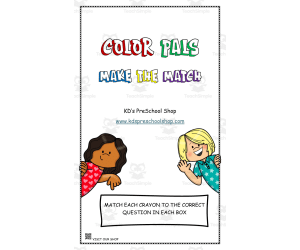
Color Pals Make the Match
Common Core, Kindergarten, Preschool, Toddler, Homeschool Templates, Activities, Centers, Workbooks, Worksheets & Printables
Color Pals Make the Match has been created to help young learner with developing their learning skills. Early learners can do so much more than we know. This booklet is filled with opportunities for parents and their children to practice colors with their child by reading sentences. When parents sit and work with their young learners, children feel so much more confident in what they are learning. Building basic color skills is essential for early leaners and it is never too early to work on reading and writing skills in school or at home. Homeschoolers can also benefit from working with new materials. This item has been designed by educators with years of experience working in the classroom with a number of young students. Color Pals is a fun and engaging way to motivate children to learn. Children can work on their own or with a friend! What’s included 9 pages Instruction · Print out pages · Laminate for longer use · Cut out pictures · Assemble using Velcro dots · Can also be used with Dry Erase markers Enjoy!
Author KD's Kids School Shop
Tags Colors, Reading , Writing, Problem-solving, Spelling, Matching, Skill Builder

KD’s PreSchool Sight Words Booklet
Common Core, Toddler, Kindergarten, Preschool, Grade 1, Worksheets & Printables, Activities
KD’s PreSchool Sight Words Booklet has been created to help young learner with developing their learning skills. Early learners can do so much more than we know. This booklet is filled with opportunities for parents and their children to practice. When parents sit and work with their young learners, children feel so much more confident in what they are learning. Building spelling skills is essential for early leaners and it is never too early to work on CVC (consonant vowel consonant) skills in school or at home. Homeschooler can also benefit from working with new materials that have been designed by educators with years of experience working in the classroom with a number of young students. Fun learning CVC words is especially a great way to motivate children to learn. Children can work on their own or with a friend! What’s included 30 pages Instruction · Print out pages · Laminate for longer use · Can also be used with Dry Erase markers Enjoy!
Author KD's Kids School Shop
Tags CVC Words, Spelling, Writing, Problem-solving, Centers, Activities, Preschool, Kindergarten, Homeschool
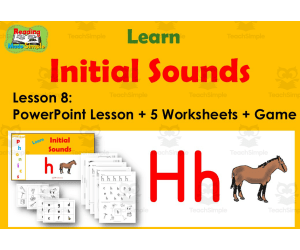
Letter H: PowerPoint and Worksheets: Lesson 8
Special Resources, ELA, Special Education Needs (SEN), Language Development, Phonics, Kindergarten, Preschool, Worksheets, Worksheets & Printables
Learn Initial Sounds H: Lesson 8 teaches the letter Hh and its related phonic sound through a 23-slide PowerPoint lesson, 5 follow-up activity worksheets and a print-and-play game. All you need to teach the phonic letter F! Whether in school or at home, this series of phonic presentations can help you effectively teach initial/beginning sounds to all pupils, including those with special needs/dyslexia. This lesson is part of a synthetic, systematic phonics programme for all abilities including those suspected of being dyslexic. This lesson is in the first stage of the Reading Made Simple programme where we teach the initial, or beginning, sounds. The ability to hear the initial/beginning sound is stressed throughout, while we learn to associate each letter with its sound. Each lesson can stand alone but the activities will presume knowledge of the previous letters in the alphabet as Reading Made Simple teaches the initial sounds in alphabetical order. Special features of the Learn Initial Sounds H: Lesson 8 The PowerPoint is silent so that you can interact with your child in the best way for them: full instructions are provided at the bottom of each slide - be sure to show 'Notes'. Science of Reading Aligned Truly phonetic; no 'i' for 'ice-cream'. We focus heavily on phonemic awareness which is so necessary for a head start in phonics The child is given plenty of opportunities to learn the necessary skills - perfection is not expected in lesson 1. Still, the teacher will look for the development of the necessary skills as the child works through the alphabet. What is included in the Learn Initial Sounds H: Lesson 8? A 23-slide PowerPoint which teaches phonemic awareness, letter/sound correspondence and letter formation along with practice games 5 follow-up worksheets A print-and-play game How can the Learn Initial Sounds H: Lesson 8 be used? It can be used in multiple ways: As the child learns each sound, you can use the PowerPoint lesson to reinforce your own lesson It can be sent home for a child to watch with his/her parents after being taught the letter Hh in class - this will then act as revision as well as training the parent as to what is necessary to help the child. Use in class Use at home by parents or for home education Suggested Method: Introduce each letter in turn to your pupil. Have a flashcard of the letter ready. Say each letter's sound to the child and ask him/her to repeat it thrice. Explain that some words begin with this sound. Give an example. Use the lesson as teacher training for yourself, to see how to teach your child, or use it with the child. Choose suitable activities (matching the ability of your child) from the pak of worksheets. Notes are suggestions only - use language appropriate to your pupil and be sure to interact naturally. However, do make sure that you focus on the hearing of the sounds at the beginning of words as this is much overlooked in the quest to help children learn the initial sounds as quickly as possible. Technical help: Use the PowerPoint in normal mode so that you can see the notes and use the 'Draw' tool when prompted. Some slides are interactive. More: Teachers: Find more Initial Sounds Worksheets here: https://teachsimple.com/product/beginning-sounds-phonics-worksheets Find FREE revision/practice initial sounds slides here: https://teachsimple.com/product/learn-initial-sounds-powerpoint
Author Lilibette's Resources
Tags Phonics, Learn To Read, Initial Sounds, Beginning Sounds, Alphabet, Parents, Home Education, Home School, Special Needs, Letter F
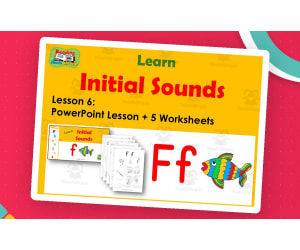
Letter F: PowerPoint and Worksheets: Lesson 6
Special Resources, ELA, Special Education Needs (SEN), Language Development, Phonics, Kindergarten, Preschool, Worksheets, Worksheets & Printables
Learn Initial Sounds F: Lesson 6 teaches the letter Ff and its related phonic sound through a 36-slide PowerPoint lesson and 5 follow-up activity worksheets. All you need to teach the phonic letter F! Whether in school or at home, this series of phonic presentations can help you teach initial/beginning sounds effectively to all pupils, including those with special needs/dyslexia. This lesson is part of a synthetic, systematic phonics programme for all abilities including those suspected of being dyslexic. This lesson is in the first stage of the Reading Made Simple programme where we teach the initial, or beginning, sounds. The ability to hear the initial/beginning sound is stressed throughout, while we learn to associate each letter with its sound. Each lesson can stand alone but the activities will presume knowledge of the previous letters in the alphabet as Reading Made Simple teaches the initial sounds in alphabetical order. Special features of the Learn Initial Sounds F: Lesson 6 The PowerPoint is silent so that you can interact with your child in the best way for them: full instructions are provided at the bottom of each slide - be sure to show 'Notes'. Science of Reading Aligned Truly phonetic; no 'i' for 'ice-cream'. We focus heavily on phonemic awareness which is so necessary for a head start in phonics The child is given plenty of opportunities to learn the necessary skills - perfection is not expected in lesson 1 but the teacher will be looking for the development of the necessary skills as the child works through the alphabet. What is included in the Learn Initial Sounds F: Lesson 6? A 36-slide PowerPoint which teaches phonemic awareness, letter/sound correspondence and letter formation along with practice games 5 follow-up worksheets How can the Learn Initial Sounds F: Lesson 6 be used? It can be used in multiple ways: As the child learns each sound, you can use the PowerPoint lesson to reinforce your own lesson It can be sent home for a child to watch with his/her parents after being taught the letter Ff in class - this will then act as revision as well as training the parent as to what is necessary to help the child. Use in class Use at home by parents or for home education Suggested Method: Introduce each letter in turn to your pupil. Have a flashcard of the letter ready. Say each letter's sound to the child and ask him/her to repeat it thrice. Explain that some words begin with this sound. Give an example. Use the lesson as teacher training for yourself, to see how to teach your child, or use it with the child. Choose suitable activities (matching the ability of your child) from the pak of worksheets. Notes are suggestions only - use language appropriate to your pupil and be sure to interact naturally. However, do make sure that you focus on the hearing of the sounds at the beginning of words as this is much overlooked in the quest to help children learn the initial sounds as quickly as possible. Technical help: Use the PowerPoint in normal mode so that you can see the notes and use the 'Draw' tool when prompted. Some slides are interactive. More: Teachers: Find more Initial Sounds Worksheets here: https://teachsimple.com/product/beginning-sounds-phonics-worksheets Find FREE revision/practice initial sounds slides here: https://teachsimple.com/product/learn-initial-sounds-powerpoint
Author Lilibette's Resources
Tags Phonics, Learn To Read, Initial Sounds, Beginning Sounds, Alphabet, Parents, Home Education, Home School, Special Needs, Letter F

Letter A: PowerPoint and Worksheets: Lesson 1
Special Resources, ELA, Special Education Needs (SEN), Language Development, Phonics, Kindergarten, Preschool, Worksheets, Worksheets & Printables
Learn Initial Sounds A: Lesson 1 teaches the first letter of the alphabet, Aa, and its related phonic sound through a PowerPoint lesson and 5 follow-up activity worksheets. All you need to teach the phonic letter A! Whether in school or at home, this series of phonic presentations can help you teach initial/beginning sounds effectively to all pupils, including those with special needs/dyslexia. This lesson is part of a synthetic, systematic phonics programme for all abilities including those suspected of being dyslexic. This lesson is in the first stage of the Reading Made Simple programme where we teach the initial, or beginning, sounds. The ability to hear the initial/beginning sound is stressed throughout, while we learn to associate each letter with its sound. Each lesson can stand alone but the activities will presume knowledge of the previous letters in the alphabet as Reading Made Simple teaches the initial sounds in alphabetical order. Special features of the Learn Initial Sounds A: Lesson 1 The PowerPoint is silent so that you can interact with your child in the best way for them: full instructions are provided at the bottom of each slide - be sure to show 'Notes'. Science of Reading Aligned Truly phonetic; no 'i' for 'ice-cream'. We focus heavily on phonemic awareness which is so necessary for a head start in phonics The child is given plenty of opportunities to learn the necessary skills - perfection is not expected in lesson 1 but the teacher will be looking for the development of the necessary skills as the child works through the alphabet. What is included in the 'Learn Initial Sounds A: Lesson 1 pack? A 20-slide PowerPoint which teaches phonemic awareness, letter/sound correspondence and letter formation along with practice games 5 follow-up worksheets How can the Learn Initial Sounds A: Lesson 1 be used? It can be used in multiple ways: As the child learns each sound, you can use the PowerPoint lesson to reinforce your own lesson It can be sent home for a child to watch with his/her parents after being taught the letter Aa in class - this will then act as revision as well as training the parent as to what is necessary to help the child. Use in class Use at home by parents or for home education Suggested Method: Introduce each letter in turn to your pupil. Have a flashcard of the letter ready. Say the sound each letter represents to the child and ask him/her to repeat it three times. Explain that some words begin with this sound. Give an example. Either use the lesson as teacher training for yourself to see how to teach your child, or use it with the child. Choose suitable activities (matching the ability of your child) from the pak of worksheets. Notes are suggestions only - use language appropriate to your pupil and be sure to interact naturally. However, do make sure that you focus on the hearing of the sounds at the beginning of words as this is much overlooked in the quest to help children learn the initial sounds as quickly as possible. Technical help: Use the PowerPoint in normal mode so that you can see the notes and use the 'Draw' tool when prompted. Some slides are interactive. More: Find matching Initial Sounds Worksheets here: https://teachsimple.com/product/beginning-sounds-phonics-worksheets Find revision/practice initial sounds slides here: https://teachsimple.com/product/learn-initial-sounds-powerpoint What is included? One PowerPoint with 20 slides 5 Worksheets
Author Lilibette's Resources
Tags Phonics, Learn To Read, Initial Sounds, Beginning Sounds, Alphabet, Parents, Home Education, Home School, The Letter A, Special Needs
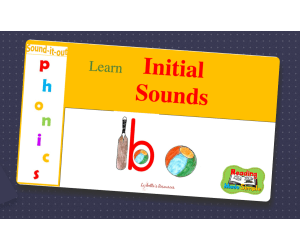
Letter B: PowerPoint and Worksheets: Lesson 2
Special Resources, ELA, Special Education Needs (SEN), Language Development, Phonics, Kindergarten, Preschool, Worksheets, Worksheets & Printables
Learn Initial Sounds B: Lesson 2 teaches the first letter Bb, and its related phonic sound through a PowerPoint lesson and 5 follow-up activity worksheets. All you need to teach the phonic letter B! Whether in school or at home, this series of phonic presentations can help you teach initial/beginning sounds effectively to all pupils, including those with special needs/dyslexia. This lesson is part of a synthetic, systematic phonics programme for all abilities including those suspected of being dyslexic. This lesson is in the first stage of the Reading Made Simple programme where we teach the initial, or beginning, sounds. The ability to hear the initial/beginning sound is stressed throughout, while we learn to associate each letter with its sound. Each lesson can stand alone but the activities will presume knowledge of the previous letters in the alphabet as Reading Made Simple teaches the initial sounds in alphabetical order. Special features of the Learn Initial Sounds B: Lesson 2 The PowerPoint is silent so that you can interact with your child in the best way for them: full instructions are provided at the bottom of each slide - be sure to show 'Notes'. Science of Reading Aligned Truly phonetic; no 'i' for 'ice-cream'. We focus heavily on phonemic awareness which is so necessary for a head start in phonics The child is given plenty of opportunities to learn the necessary skills - perfection is not expected in lesson 1 but the teacher will be looking for the development of the necessary skills as the child works through the alphabet. What is included in the 'Learn Initial Sounds B: Lesson 2 pack? A 23-slide PowerPoint which teaches phonemic awareness, letter/sound correspondence and letter formation along with practice games 5 follow-up worksheets How can the Learn Initial Sounds B: Lesson 2 be used? It can be used in multiple ways: As the child learns each sound, you can use the PowerPoint lesson to reinforce your own lesson It can be sent home for a child to watch with his/her parents after being taught the letter Bb in class - this will then act as revision as well as training the parent as to what is necessary to help the child. Use in class Use at home by parents or for home education Suggested Method: Introduce each letter in turn to your pupil. Have a flashcard of the letter ready. Say the sound each letter represents to the child and ask him/her to repeat it three times. Explain that some words begin with this sound. Give an example. Either use the lesson as teacher training for yourself to see how to teach your child, or use it with the child. Choose suitable activities (matching the ability of your child) from the pak of worksheets. Notes are suggestions only - use language appropriate to your pupil and be sure to interact naturally. However, do make sure that you focus on the hearing of the sounds at the beginning of words as this is much overlooked in the quest to help children learn the initial sounds as quickly as possible. Technical help: Use the PowerPoint in normal mode so that you can see the notes and use the 'Draw' tool when prompted. Some slides are interactive. More: Find matching Initial Sounds Worksheets here: https://teachsimple.com/product/beginning-sounds-phonics-worksheets Find revision/practice initial sounds slides here: https://teachsimple.com/product/learn-initial-sounds-powerpoint What is included? One PowerPoint with 23 slides 5 Worksheets
Author Lilibette's Resources
Tags Phonics, Learn To Read, Initial Sounds, Beginning Sounds, Alphabet, Parents, Home Education, Home School, Special Needs, The Letter B
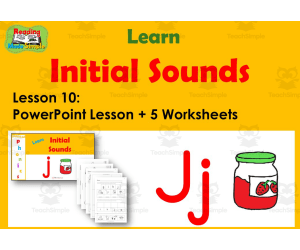
Letter J: PowerPoint and Worksheets: Lesson 10
Special Resources, ELA, Special Education Needs (SEN), Language Development, Phonics, Kindergarten, Preschool, Worksheets, Worksheets & Printables
Learn Initial Sounds J: Lesson 10 teaches the letter Jj and its related phonic sound through a 35-slide PowerPoint lesson, and 5 follow-up activity worksheets. All you need to teach the phonic letter I! Whether in school or at home, this series of phonic presentations can help you effectively teach initial/beginning sounds to all pupils, including those with special needs/dyslexia. This lesson is part of a synthetic, systematic phonics programme for all abilities including those suspected of being dyslexic. This lesson is in the first stage of the Reading Made Simple programme where we teach the initial, or beginning, sounds. The ability to hear the initial/beginning sound is stressed throughout, while we learn to associate each letter with its sound. Each lesson can stand alone but the activities will presume knowledge of the previous letters in the alphabet as Reading Made Simple teaches the initial sounds in alphabetical order. Special features of the Learn Initial Sounds J: Lesson 10 The PowerPoint is silent so that you can interact with your child in the best way for them: full instructions are provided at the bottom of each slide - be sure to show 'Notes'. Science of Reading Aligned Truly phonetic; no 'i' for 'ice-cream'. We focus heavily on phonemic awareness which is so necessary for a head start in phonics The child is given plenty of opportunities to learn the necessary skills - perfection is not expected in lesson 1. Still, the teacher will look for the development of the necessary skills as the child works through the alphabet. What is included in the Learn Initial Sounds J: Lesson 10? A 33-slide PowerPoint which teaches phonemic awareness, letter/sound correspondence and letter formation along with practice games 5 follow-up worksheets How can the Learn Initial Sounds J: Lesson 10 be used? It can be used in multiple ways: As the child learns each sound, you can use the PowerPoint lesson to reinforce your own lesson It can be sent home for a child to watch with his/her parents after being taught the letter Jj in class - this will then act as revision as well as training the parent as to what is necessary to help the child. Use in class Use at home by parents or for home education Suggested Method: Introduce each letter in turn to your pupil. Have a flashcard of the letter ready. Say each letter's sound to the child and ask him/her to repeat it thrice. Explain that some words begin with this sound. Give an example. Use the lesson as teacher training for yourself, to see how to teach your child, or use it with the child. Choose suitable activities (matching the ability of your child) from the pack of worksheets. Notes are suggestions only - use language appropriate to your pupil and be sure to interact naturally. However, could you make sure that you focus on the child's hearing of the sounds at the beginning of words as this is much overlooked in the quest to help children learn the initial sounds as quickly as possible? Technical help: Use the PowerPoint in normal mode so that you can see the notes and use the 'Draw' tool when prompted. Some slides are interactive. More: Teachers: Find more Initial Sounds Worksheets here: https://teachsimple.com/product/beginning-sounds-phonics-worksheets Find FREE revision/practice initial sounds slides here: https://teachsimple.com/product/learn-initial-sounds-powerpoint
Author Lilibette's Resources
Tags Phonics, Learn To Read, Initial Sounds, Beginning Sounds, Alphabet, Parents, Home Education, Home School, Special Needs, Letter J
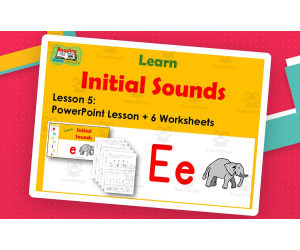
Letter E: PowerPoint and Worksheets: Lesson 5
Special Resources, ELA, Special Education Needs (SEN), Language Development, Phonics, Kindergarten, Preschool, Worksheets, Worksheets & Printables
Learn Initial Sounds E: Lesson 5 teaches the letter Ee and its related phonic sound through a 25-slide PowerPoint lesson and 6 follow-up activity worksheets. All you need to teach the phonic letter E! Whether in school or at home, this series of phonic presentations can help you teach initial/beginning sounds effectively to all pupils, including those with special needs/dyslexia. This lesson is part of a synthetic, systematic phonics programme for all abilities including those suspected of being dyslexic. This lesson is in the first stage of the Reading Made Simple programme where we teach the initial, or beginning, sounds. The ability to hear the initial/beginning sound is stressed throughout, while we learn to associate each letter with its sound. Each lesson can stand alone but the activities will presume knowledge of the previous letters in the alphabet as Reading Made Simple teaches the initial sounds in alphabetical order. Special features of the Learn Initial Sounds E: Lesson 5 The PowerPoint is silent so that you can interact with your child in the best way for them: full instructions are provided at the bottom of each slide - be sure to show 'Notes'. Science of Reading Aligned Truly phonetic; no 'i' for 'ice-cream'. We focus heavily on phonemic awareness which is so necessary for a head start in phonics The child is given plenty of opportunities to learn the necessary skills - perfection is not expected in lesson 1 but the teacher will be looking for the development of the necessary skills as the child works through the alphabet. What is included in the Learn Initial Sounds E: Lesson 5? A 26-slide PowerPoint which teaches phonemic awareness, letter/sound correspondence and letter formation along with practice games 5 follow-up worksheets How can the Learn Initial Sounds E: Lesson 5 be used? It can be used in multiple ways: As the child learns each sound, you can use the PowerPoint lesson to reinforce your own lesson It can be sent home for a child to watch with his/her parents after being taught the letter Ee in class - this will then act as revision as well as training the parent as to what is necessary to help the child. Use in class Use at home by parents or for home education Suggested Method: Introduce each letter in turn to your pupil. Have a flashcard of the letter ready. Say the sound each letter represents to the child and ask him/her to repeat it three times. Explain that some words begin with this sound. Give an example. Either use the lesson as teacher training for yourself to see how to teach your child, or use it with the child. Choose suitable activities (matching the ability of your child) from the pak of worksheets. Notes are suggestions only - use language appropriate to your pupil and be sure to interact naturally. However, do make sure that you focus on the hearing of the sounds at the beginning of words as this is much overlooked in the quest to help children learn the initial sounds as quickly as possible. Technical help: Use the PowerPoint in normal mode so that you can see the notes and use the 'Draw' tool when prompted. Some slides are interactive. More: Teachers: Find more Initial Sounds Worksheets here: https://teachsimple.com/product/beginning-sounds-phonics-worksheets Find FREE revision/practice initial sounds slides here: https://teachsimple.com/product/learn-initial-sounds-powerpoint
Author Lilibette's Resources
Tags Phonics, Learn To Read, Initial Sounds, Beginning Sounds, Alphabet, Parents, Home Education, Home School, Special Needs, Letter E

Letter D: PowerPoint and Worksheets: Lesson 4
Special Resources, ELA, Special Education Needs (SEN), Language Development, Phonics, Kindergarten, Preschool, Worksheets, Worksheets & Printables
Learn Initial Sounds D: Lesson 4 teaches the letter Dd and its related phonic sound through a 26-slide PowerPoint lesson and 5 follow-up activity worksheets. All you need to teach the phonic letter D! Whether in school or at home, this series of phonic presentations can help you teach initial/beginning sounds effectively to all pupils, including those with special needs/dyslexia. This lesson is part of a synthetic, systematic phonics programme for all abilities including those suspected of being dyslexic. This lesson is in the first stage of the Reading Made Simple programme where we teach the initial, or beginning, sounds. The ability to hear the initial/beginning sound is stressed throughout, while we learn to associate each letter with its sound. Each lesson can stand alone but the activities will presume knowledge of the previous letters in the alphabet as Reading Made Simple teaches the initial sounds in alphabetical order. Special features of the Learn Initial Sounds D: Lesson 4 The PowerPoint is silent so that you can interact with your child in the best way for them: full instructions are provided at the bottom of each slide - be sure to show 'Notes'. Science of Reading Aligned Truly phonetic; no 'i' for 'ice-cream'. We focus heavily on phonemic awareness which is so necessary for a head start in phonics The child is given plenty of opportunities to learn the necessary skills - perfection is not expected in lesson 1 but the teacher will be looking for the development of the necessary skills as the child works through the alphabet. What is included in the Learn Initial Sounds D: Lesson 4 pack? A 26-slide PowerPoint which teaches phonemic awareness, letter/sound correspondence and letter formation along with practice games 5 follow-up worksheets How can the Learn Initial Sounds D: Lesson 4 be used? It can be used in multiple ways: As the child learns each sound, you can use the PowerPoint lesson to reinforce your own lesson It can be sent home for a child to watch with his/her parents after being taught the letter Dd in class - this will then act as revision as well as training the parent as to what is necessary to help the child. Use in class Use at home by parents or for home education Suggested Method: Introduce each letter in turn to your pupil. Have a flashcard of the letter ready. Say the sound each letter represents to the child and ask him/her to repeat it three times. Explain that some words begin with this sound. Give an example. Either use the lesson as teacher training for yourself to see how to teach your child, or use it with the child. Choose suitable activities (matching the ability of your child) from the pak of worksheets. Notes are suggestions only - use language appropriate to your pupil and be sure to interact naturally. However, do make sure that you focus on the hearing of the sounds at the beginning of words as this is much overlooked in the quest to help children learn the initial sounds as quickly as possible. Technical help: Use the PowerPoint in normal mode so that you can see the notes and use the 'Draw' tool when prompted. Some slides are interactive. More: Find matching Initial Sounds Worksheets here: https://teachsimple.com/product/beginning-sounds-phonics-worksheets Find FREE revision/practice initial sounds slides here: https://teachsimple.com/product/learn-initial-sounds-powerpoint
Author Lilibette's Resources
Tags Phonics, Learn To Read, Initial Sounds, Beginning Sounds, Alphabet, Parents, Home Education, Home School, Special Needs, Letter D

Letter G: PowerPoint and Worksheets: Lesson 7
Special Resources, ELA, Special Education Needs (SEN), Language Development, Phonics, Kindergarten, Preschool, Worksheets, Worksheets & Printables
Learn Initial Sounds G: Lesson 7 teaches the letter Gg and its related phonic sound through a 32-slide PowerPoint lesson and 5 follow-up activity worksheets. All you need to teach the phonic letter F! Whether in school or at home, this series of phonic presentations can help you effectively teach initial/beginning sounds to all pupils, including those with special needs/dyslexia. This lesson is part of a synthetic, systematic phonics programme for all abilities including those suspected of being dyslexic. This lesson is in the first stage of the Reading Made Simple programme where we teach the initial, or beginning, sounds. The ability to hear the initial/beginning sound is stressed throughout, while we learn to associate each letter with its sound. Each lesson can stand alone but the activities will presume knowledge of the previous letters in the alphabet as Reading Made Simple teaches the initial sounds in alphabetical order. Special features of the Learn Initial Sounds G: Lesson 7 The PowerPoint is silent so that you can interact with your child in the best way for them: full instructions are provided at the bottom of each slide - be sure to show 'Notes'. Science of Reading Aligned Truly phonetic; no 'i' for 'ice-cream'. We focus heavily on phonemic awareness which is so necessary for a head start in phonics The child is given plenty of opportunities to learn the necessary skills - perfection is not expected in lesson 1. Still, the teacher will look for the development of the necessary skills as the child works through the alphabet. What is included in the Learn Initial Sounds G: Lesson 7? A 32-slide PowerPoint which teaches phonemic awareness, letter/sound correspondence and letter formation along with practice games 5 follow-up worksheets How can the Learn Initial Sounds G: Lesson 7 be used? It can be used in multiple ways: As the child learns each sound, you can use the PowerPoint lesson to reinforce your own lesson It can be sent home for a child to watch with his/her parents after being taught the letter Gg in class - this will then act as revision as well as training the parent as to what is necessary to help the child. Use in class Use at home by parents or for home education Suggested Method: Introduce each letter in turn to your pupil. Have a flashcard of the letter ready. Say each letter's sound to the child and ask him/her to repeat it thrice. Explain that some words begin with this sound. Give an example. Use the lesson as teacher training for yourself, to see how to teach your child, or use it with the child. Choose suitable activities (matching the ability of your child) from the pak of worksheets. Notes are suggestions only - use language appropriate to your pupil and be sure to interact naturally. However, do make sure that you focus on the hearing of the sounds at the beginning of words as this is much overlooked in the quest to help children learn the initial sounds as quickly as possible. Technical help: Use the PowerPoint in normal mode so that you can see the notes and use the 'Draw' tool when prompted. Some slides are interactive. More: Teachers: Find more Initial Sounds Worksheets here: https://teachsimple.com/product/beginning-sounds-phonics-worksheets Find FREE revision/practice initial sounds slides here: https://teachsimple.com/product/learn-initial-sounds-powerpoint
Author Lilibette's Resources
Tags Phonics, Learn To Read, Initial Sounds, Beginning Sounds, Alphabet, Parents, Home Education, Home School, Special Needs, Letter F

Letter I: PowerPoint and Worksheets: Lesson 9
Special Resources, ELA, Special Education Needs (SEN), Language Development, Phonics, Kindergarten, Preschool, Worksheets, Worksheets & Printables
Learn Initial Sounds I: Lesson 9 teaches the letter Ii and its related phonic sound through a 33-slide PowerPoint lesson, and 5 follow-up activity worksheets. All you need to teach the phonic letter I! Whether in school or at home, this series of phonic presentations can help you effectively teach initial/beginning sounds to all pupils, including those with special needs/dyslexia. This lesson is part of a synthetic, systematic phonics programme for all abilities including those suspected of being dyslexic. This lesson is in the first stage of the Reading Made Simple programme where we teach the initial, or beginning, sounds. The ability to hear the initial/beginning sound is stressed throughout, while we learn to associate each letter with its sound. Each lesson can stand alone but the activities will presume knowledge of the previous letters in the alphabet as Reading Made Simple teaches the initial sounds in alphabetical order. Special features of the Learn Initial Sounds I: Lesson 9 The PowerPoint is silent so that you can interact with your child in the best way for them: full instructions are provided at the bottom of each slide - be sure to show 'Notes'. Science of Reading Aligned Truly phonetic; no 'i' for 'ice-cream'. We focus heavily on phonemic awareness which is so necessary for a head start in phonics The child is given plenty of opportunities to learn the necessary skills - perfection is not expected in lesson 1. Still, the teacher will look for the development of the necessary skills as the child works through the alphabet. What is included in the Learn Initial Sounds I: Lesson 9? A 33-slide PowerPoint which teaches phonemic awareness, letter/sound correspondence and letter formation along with practice games 5 follow-up worksheets How can the Learn Initial Sounds I: Lesson 9 be used? It can be used in multiple ways: As the child learns each sound, you can use the PowerPoint lesson to reinforce your own lesson It can be sent home for a child to watch with his/her parents after being taught the letter Ii in class - this will then act as revision as well as training the parent as to what is necessary to help the child. Use in class Use at home by parents or for home education Suggested Method: Introduce each letter in turn to your pupil. Have a flashcard of the letter ready. Say each letter's sound to the child and ask him/her to repeat it thrice. Explain that some words begin with this sound. Give an example. Use the lesson as teacher training for yourself, to see how to teach your child, or use it with the child. Choose suitable activities (matching the ability of your child) from the pak of worksheets. Notes are suggestions only - use language appropriate to your pupil and be sure to interact naturally. However, do make sure that you focus on the hearing of the sounds at the beginning of words as this is much overlooked in the quest to help children learn the initial sounds as quickly as possible. Technical help: Use the PowerPoint in normal mode so that you can see the notes and use the 'Draw' tool when prompted. Some slides are interactive. More: Teachers: Find more Initial Sounds Worksheets here: https://teachsimple.com/product/beginning-sounds-phonics-worksheets Find FREE revision/practice initial sounds slides here: https://teachsimple.com/product/learn-initial-sounds-powerpoint
Author Lilibette's Resources
Tags Phonics, Learn To Read, Initial Sounds, Beginning Sounds, Alphabet, Parents, Home Education, Home School, Special Needs, Letter I

Letter C: PowerPoint and Worksheets: Lesson 3
Special Resources, ELA, Special Education Needs (SEN), Language Development, Phonics, Kindergarten, Preschool, Worksheets, Worksheets & Printables
Learn Initial Sounds C: Lesson 3 teaches the letter Cc and its related phonic sound through a 36-slide PowerPoint lesson and 6 follow-up activity worksheets. All you need to teach the phonic letter C! Whether in school or at home, this series of phonic presentations can help you teach initial/beginning sounds effectively to all pupils, including those with special needs/dyslexia. This lesson is part of a synthetic, systematic phonics programme for all abilities including those suspected of being dyslexic. This lesson is in the first stage of the Reading Made Simple programme where we teach the initial, or beginning, sounds. The ability to hear the initial/beginning sound is stressed throughout, while we learn to associate each letter with its sound. Each lesson can stand alone but the activities will presume knowledge of the previous letters in the alphabet as Reading Made Simple teaches the initial sounds in alphabetical order. Special features of the Learn Initial Sounds C: Lesson 3 The PowerPoint is silent so that you can interact with your child in the best way for them: full instructions are provided at the bottom of each slide - be sure to show 'Notes'. Science of Reading Aligned Truly phonetic; no 'i' for 'ice-cream'. We focus heavily on phonemic awareness which is so necessary for a head start in phonics The child is given plenty of opportunities to learn the necessary skills - perfection is not expected in lesson 1 but the teacher will be looking for the development of the necessary skills as the child works through the alphabet. What is included in the Learn Initial Sounds C: Lesson 3 pack? A 36-slide PowerPoint which teaches phonemic awareness, letter/sound correspondence and letter formation along with practice games 6 follow-up worksheets How can the Learn Initial Sounds C: Lesson 3 be used? It can be used in multiple ways: As the child learns each sound, you can use the PowerPoint lesson to reinforce your own lesson It can be sent home for a child to watch with his/her parents after being taught the letter Cc in class - this will then act as revision as well as training the parent as to what is necessary to help the child. Use in class Use at home by parents or for home education Suggested Method: Introduce each letter in turn to your pupil. Have a flashcard of the letter ready. Say the sound each letter represents to the child and ask him/her to repeat it three times. Explain that some words begin with this sound. Give an example. Either use the lesson as teacher training for yourself to see how to teach your child, or use it with the child. Choose suitable activities (matching the ability of your child) from the pak of worksheets. Notes are suggestions only - use language appropriate to your pupil and be sure to interact naturally. However, do make sure that you focus on the hearing of the sounds at the beginning of words as this is much overlooked in the quest to help children learn the initial sounds as quickly as possible. Technical help: Use the PowerPoint in normal mode so that you can see the notes and use the 'Draw' tool when prompted. Some slides are interactive. More: Find matching Initial Sounds Worksheets here: https://teachsimple.com/product/beginning-sounds-phonics-worksheets Find revision/practice initial sounds slides here: https://teachsimple.com/product/learn-initial-sounds-powerpoint
Author Lilibette's Resources
Tags Phonics, Learn To Read, Initial Sounds, Beginning Sounds, Alphabet, Parents, Home Education, Home School, Special Needs, Letter C

Recycling Symbols Activity
Environmental Science, Earth and Environmental Sciences, Science, Grade 3, 4, 5, 6, 7, 8, 9, 10, 11, 12, Activities
Activity Introduction An amazing activity designed for the students to learn more about STEM. Recycling Symbols Do you like STEM subjects? what is your favorite one? Have you ever tried to plant a seed? If yes, tell us more about it. Or have you ever tried to invent something? If yes, tell us more about it. And how do you think it will help us? Have you ever seen a microorganism under a microscope? What was it? And how it looked like? Mathematics is a marvelous subject. Let' sharpen our brains and solve some equations. Do you like timetable tricks? What is your favorite one? Do you know how to code? Have you ever created an app or a game before? If yes, how was it like? Recycling Symbols Activity The activity is perfect for encouraging the researching skills for the students, while learning more about this fantastic topic. Recycling Symbols This friendly designed worksheet is suitable for students at school, homeschooling, and as a group activity. Instructions Can you match each card with its definition on the right bin? Format Available in a PDF format.
Author Educational Voice
Tags Recycling Symbols Activity, Recycling Symbols, Recycling Activity, Recycling, Recycling Facts, Recycling Facts For Kids, Environment, Environment Facts, Environment Facts For Kids