



3,983 products added recently
Page 628 - Newest Teaching Resources

 Show filters

Consonant Blends Decodable Reading Books CCVC/CVCC
Special Resources, ELA, Special Education Needs (SEN), Language Development, Phonics, Reading, Kindergarten, Preschool, Worksheets & Printables, Worksheets
A pack of 12 CVC Words Decodable Phonic reading books Plus 2 matching phonic workbooks to support learning. Created by an Early Years Specialist Teacher (B. Ed) who is currently tutoring children with profound special needs in reading and writing following over 30 years of teaching phonics. I created these phonic readers as I saw the huge need for highly structured, fun-to-read, early-reading books. They are very popular. These books are preceded by our CVC readers , which begin to introduce vocabulary which is then revised in these books. They are followed by: Level 1 Set 1: Common digraphs Level 1 Set 2: Silent E Main features: •The Consonant Blends readers only use the sight words: I go to no the is of •All the other words are 4 letter, decodable words with a short vowel sound and an initial or final consonant blend. •Pictures make up for the lack of words, while not encouraging guessing. •Each book tries to tell a simple story. •Each book has been tested on children with severe special needs and those with none – all have loved them as they can read them! •The books should be read in order as words gradually introduced and repeated, so building confidence and helping children gain reading fluency. 2 matching workbooks to consolidate learning and to help children to integrate their new reading and spelling skills into everyday literacy. Who can use these reading books? All beginner readers of any age and ability Struggling readers of all ages and abilities, including those with severe dyslexia/other processing difficulties Teachers, parents, classroom assistants, private tutors - anyone who needs them! Are these phonic reading books and workbooks aligned with the UK Gov requirements or LETRS? Yes - totally. They are based on synthetic, systematic phonics. They are highly structured. Can children guess the text from the pictures? NO! Why are these books FREE when other people books cost so much? Are they of lesser quality? They are free as I regard the ability to read as being a fundamental right of every living person. Why should some miss out on top-quality resources because they cannot pay for them? In terms of content, they are top quality, carefully planned and sequenced with the aim of helping as many children as possible get started on the phonic road to reading. What is included? 1 Zip file with 12 reading book PDF files and 2 Workbook PDF files. More! Find a pack of 70 CVC/CCVC/CVCC worksheets here. Find consonant Blends Games - Easy to make/Easy to play - no extra equipment needed - games here .
Author Lilibette's Resources
Tags Consonanant Blends Reading Books, Phonic Readign Books, Phonic Reading Books, Consonant Blends Phonic Readers, Consonant Blends Phonic Reading Books, Consonant Blends, Special Needs
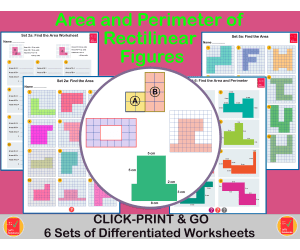
Area and Perimeter of Rectilinear Shapes
Math, Measurements, Grade 3, Worksheets & Printables, Worksheets
Having built a foundation of understanding with "Finding the Area and Perimeter of Rectangles " the next step is to look at how to calculate the total area or perimeter of a shape made up of two or three non overlapping rectangles. This set of differentiated worksheets provides a comprehensive way for students to work on this and apply the knowledge they have learnt previously. The worksheets are organized into various sets, each with a specific focus and level of difficulty. Set 1 focuses on the area of two non-overlapping colored rectangles laid out on a grid. Set 2: Two non-overlapping rectangles Set 2a: Area of two non-overlapping rectangles on a grid, where students must divide the shapes into individual rectangles. Set 2b: Perimeter of two non-overlapping rectangles on a grid. Set 2c: A combination of Sets 2a and 2b, covering both area and perimeter. Set 3 challenges students with rectangles that have rectangular holes, requiring them to calculate the area. Sets 4 Each shape has one or more unknown lengths that students must find first before calculating the area and perimeter. There is no background grid, so where the area calculation is concerned the area formula must be used. Sets 5 and 6 introduce more complex shapes, now with three non-overlapping rectangles, firstly on a grid with set 5, and then with measurements and no grid for set 6 where again students must find the missing lengths first. Units of measurement On the Sets of worksheets without grids you can choose to work with metric units (millimetres, centimeters and metres) or the U.S. customary measurement system inches, feet or yards. A standout feature is the worksheet randomization. With a single click, educators can generate an entirely new set of questions, making it a renewable resource for the entire school year. Be it for classwork, revision, or homework, the adaptability ensures students achieve proficiency in the topic. Each worksheet concludes with an automatically generated answer key on its second page, offering a quick reference point for educators. And if there's ever a need for a last-minute lesson or work for a substitute teacher, these sheets are a reliable fallback. Lastly, it's essential to note that these resources are compatible PDF documents. They operate seamlessly with the official Adobe Acrobat Reader on both Windows and Mac.
Author Jeff's Notebooks
Tags Math, Area, Perimeter, Rectilinear Figures, Measurement, Rectilinear Shapes, Irregular Polygons, Worksheets, Differentiated, Jeff's Notebooks

Écriture de différents types de texte (#726)
ELA, Writing, Grade 4, Worksheets & Printables, Worksheets
Table des matières: #1 Écrire une entrée de journal au sujet d’aujourd’hui 6 #2-1 Exemple: écrire un courriel 7 #2-2 Écrire un courriel 8 #2-3 Écrire un courriel 9 #3-1 Exemple: écrire une lettre d’opinion à un journal 10 #3-2 Écrire une lettre d’opinion à un journal 11 #3-3 Écrire une lettre d’opinion à un journal 12 #4-1 Exemple: Écrire une note de remerciement 13 #4-2 Écrire une note de remerciement 14 #4-3 Écrire une note de remerciement 15 #5-1 Exemple: Écrire une biographie 16 #5-2 Écrire la biographie d’un sportif 17 #5-3 Écrire la biographie d’une actrice ou d’un acteur 18 # 6-1 Exemple: écrire un article 19 #6-2 Écrire un article au sujet d’un dessinateur 20 #6-3 Écrire un article au sujet d’une chanteuse 21 #7-1 Exemple: Écrire une critique de restaurant 22 #7-2 Écrire une critique de restaurant français 23 #7-3 Écrire une critique d’un restaurant italien 24 #8-1 Exemple: Écrire une critique d’un objet 25 #8-2 Écrire une critique d’un jeu vidéo 26 #8-3 Écrire une critique d’un livre 27 #9-1 Exemple: Écrire une annonce publicitaire 28 #9-2 Écrire une annonce publicitaire au sujet d’un jouet 29 #9-3 Écrire une annonce publicitaire au sujet d’un jeu vidéo 30 #10-1 Exemple: Écrire un avis de recherche 31 #10-2 : Écrire un avis de recherche au sujet de ton chat 32 #10-3 : Écrire un avis de recherche au sujet de ton hamster 33 #11-1 Exemple: Écrire une lettre de demande d’aide 34 #11-2 Écrire une lettre de demande d’aide avec les sciences 35 #11-3 Écrire une lettre de demande d’aide pour l’écriture d’une histoire 36 #12-1 Exemple: Écrire une lettre pour faire du bénévolat 37 #12-2 Écrire une lettre pour faire du bénévolat au foyer des personnes âgées 38 #12-3 Écrire une lettre pour faire du bénévolat à la banque alimentaire 39 #13-1 Exemple: Écrire une liste pour et contre 40 #13-2 Écrire une liste pour et contre au sujet d’une peluche 41 #13-3 Écrire une liste pour et contre au sujet une bande dessinée 42 #14-1 Exemple: Écrire une lettre de félicitations 43 #14-2 Écrire une lettre de félicitations pour gagner une compétition de karaté 44 #14-3 Écrire une lettre de félicitations pour avoir gagné un concours de dessin 45 #15-1 Exemple: Écrire une description d’un lieu 46 #15-2 Écrire une description de ta classe 47 #15-3 Écrire une description de ta maison 48 #16-1 Écrire une histoire drôle qui se déroule dans ton école 49 #16-2 Écrire une histoire drôle qui se déroule dans ta maison 50 #17-1 Écrire une histoire dans une école magique avec le format suivant: 51 début, problème, solution, fin 51 #17-2 Écrire une histoire dans une forêt magique avec le format suivant: 52 début, problème, solution, fin 52 #18-1 Écrire une histoire effrayante qui se déroule dans ton école 53 #18-2 Écrire une histoire effrayante qui se déroule dans une forêt 54 #19-1 Écrire une histoire du Père Noël et le Pôle Nord 55 #19-2 Écrire une histoire des lutins au Pôle Nord 56 # 20-1 Exemple: Écrire une lettre d’excuse 57 #20-2 Écrire une lettre d’excuse pour avoir perdu le livre de ton ami 58 #20-3 Écrire une lettre d’excuse pour avoir oublier d’acheter un cadeau pour la fête de ton ami 59 # 21-1 Écrire une histoire d’Halloween pendant la traite ou truc avec le format 60 début, problème, solution, fin 60 #22-1 Écrire une lettre au Père Noël 61 #23-1 Écrire un texte de format problème et solution au sujet de la pollution plastique dans les océans 62 #23-2 Écrire un texte de format problème et solution au sujet de la pollution de l’air 63 #24-1 Écrire un texte de format cause et effet au sujet d’une journée très chaude 64 #24-2 Écrire un texte de format cause et effet au sujet d’une journée très froide 65 #25-1 Écrire une histoire triste à l’école 66 #25-2 Écrire une histoire triste au sujet de ta famille 67 #26-1 Écrire une histoire étrange au sujet de l’école 68 #26-2 Écrire une histoire étrange au sujet de ta famille 69 #27-1 Écrire une histoire embarrassante au sujet de l’école 70 #27-2 Écrire une histoire embarrassante au sujet de tes amis 71 #28-1 Écrire une histoire mystérieuse au sujet d’une porte secrète dans la classe 72 #28-2 Écrire une histoire mystérieuse au sujet d’une porte secrète dans ta maison 73 #29-1 Écrire au sujet de tes vacances de printemps 74 #30-1 Écrire au sujet de ta fin de semaine 75 #31-1 Écrire au sujet de tes vacances de Noël 76 #32-1 Écrire au sujet de tes vacances d’été 77 #33-1 Écrire au sujet d’un enfant qui peut voler et être invisible 78 #34-1 Écrire au sujet d’un enfant qui contrôler l’eau et le feu 79 #35-1 Écrire une histoire au sujet d’un méchant dragon 80 #36-1 Écrire un texte avec une séquence au sujet des cadeaux de Noël que tu as reçu 81 #36-2 Écrire un texte avec une séquence au sujet d’un voyage réel ou fictif 82 #37-1 Écrire un texte persuasif au sujet de l’importance de l’école 83 #37-2 Écrire un texte persuasif au sujet de l’importance de lire 84 #38-1 Créer une bande dessinée 85
Author Learn it ANY way
Tags écriture, Type De Texte, Séquence, Problème Solution, Cause Et Effet
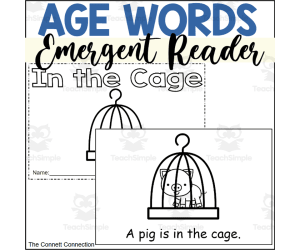
AGE Words Emergent Reader: In the Cage
ELA, Reading, Preschool, Grade 1, Activities
With this decodable book, you will practice reading a short story that contains CVCe words and simple sight words. Kindergartners and first graders can gain practice reading words that contain the silent e phonics rule with other words they have already learned. What is Included: There is one emergent reader titled "In the Cage," which includes one cover page and five pages for students to color and read. How to Use: Students will color each page of the book, cut the pages apart, and then assemble the book, making sure the cover page is on top. The subsequent pages can be placed in any order and still be read with meaning. Use a stapler to attach the pages together. The repetitive nature of each page allows students to have success with reading and gives them extra practice with target words! The story and sentences in the book contain simple sight words and words from the word family targeted. This makes them easy for beginning readers to have success with creating and reading each book. Other Uses for this Book: The teacher may create the book by coloring, laminating, and assembling. The book can be placed in a classroom library or reading center for students to read during an independent reading time or during their center time. Students can create their own book to take home and share their reading skills with their parents. Skills Assessed with this Emergent Reader: Following directions to make their book Reading AGE words in context Reading simple sight words Reading a simple short story The emergent reader books are a no prep activity for students to complete. The pages just need to be given to students to color, cut, and assemble. It becomes a low prep activity if the teacher wishes to make a reusable copy for classroom use.
Author The Connett Connection
Tags Emergent Reader, Silent E, Sight Words, AGE Words, CVCe Words
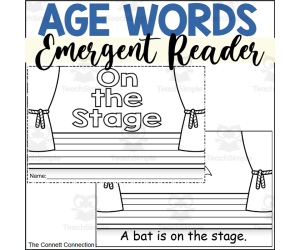
AGE Words Emergent Reader: On the Stage
ELA, Reading, Preschool, Grade 1, Activities
With this decodable book, you will practice reading a short story that contains CVCe words and simple sight words. Kindergartners and first graders can gain practice reading words that contain the silent e phonics rule with other words they have already learned. What is Included: There is one emergent reader titled "On the Stage," which includes one cover page and five pages for students to color and read. How to Use: Students will color each page of the book, cut the pages apart, and then assemble the book, making sure the cover page is on top. The subsequent pages can be placed in any order and still be read with meaning. Use a stapler to attach the pages together. The repetitive nature of each page allows students to have success with reading and gives them extra practice with target words! The story and sentences in the book contain simple sight words and words from the word family targeted. This makes them easy for beginning readers to have success with creating and reading each book. Other Uses for this Book: The teacher may create the book by coloring, laminating, and assembling. The book can be placed in a classroom library or reading center for students to read during an independent reading time or during their center time. Students can create their own book to take home and share their reading skills with their parents. Skills Assessed with this Emergent Reader: Following directions to make their book Reading AGE words in context Reading simple sight words Reading a simple short story The emergent reader books are a no prep activity for students to complete. The pages just need to be given to students to color, cut, and assemble. It becomes a low prep activity if the teacher wishes to make a reusable copy for classroom use.
Author The Connett Connection
Tags Emergent Reader, Silent E, Sight Words, AGE Words, CVCe Words

AGE Words Fluency Practice
ELA, Language Development, Phonics, Reading, Preschool, Grade 1, Activities
Kindergartners and first graders will get a ton of practice reading AGE words with these fluency activities. All target words follow the magic e or silent e phonics rule. Students wil practice reading these CVCe words in isolation as well as in context of a simple sentence or passage. What is Included: Word Fluency Strips - These three strips only contain AGE words in isolation. Students will practice reading the words on the strips until words are mastered. Sentence Strips - The sentence strips contain AGE words in the context of simple sentences. Sentence Fluency Worksheet - Students will read the simple sentences then pick one sentence to illustrate in the box at the bottom of the worksheet. Reading Comprehension Passage - Students will read the story containing AGE words three times then answer two comprehension questions and draw a picture to illustrate the story. Sentence Pyramids - There are eight sentence pyramids where students will read each sentence, adding a new word on each line. How to Use: These activities word very well in a reading or phonics center for students to work on independently or with a partner. They make great small group activities. Teachers can pull aside small groups of students who need extra practice reading AGE words with fluency. The sentence fluency worksheets and reading comprehension page can be utilized as homework to send home for students to complete. Skills Assessed: These fluency worksheets and activities assess students' ability to read AGE words in isolation or in the context of sentences. Students will practice reading comprehension skills with the reading passage page. The worksheets are print and go, no prep activity for teachers to prepare for students. They just need to be printed out and given to students to complete. The sentence strips and pyramid cards need to be printed and cut apart. These low prep cards can also be laminated for durability if desired.
Author The Connett Connection
Tags Reading Fluency, CVCe Words, Phonics Practice, Comprehension Skills, Literacy Centers, AGE Words

AGE Word Dice Games - A CVCe Phonics Center
ELA, Reading, Preschool, Grade 1, Activities, Games
Practice reading and writing long vowel AGE words with these fun dice games for CVCe words. Students will practice recognizing, reading, writing and spelling words with the AGE rime with the magic e phonics rule. What is Included: Dice templates to go with each of the game mats Seven recording mats that go with one of the dice sets. To play, students will roll the dice. Depending on the mat they are using, students will color, trace, cover, graph, or write the word or image that was rolled. By having many activity mats, these games can be easily differentiated for that students that need more support. These dice games make great literacy or phonics stations or centers. More Ways to Use these Dice Games: For a single player game, students can use the tracing worksheets to trace the word or picture they rolled. For a single player game, students can use the grid worksheets to color or cover the word or picture they rolled. For a single player game, students can create a graph by rolling the dice a set number of times, then filling in the blank grid squares by coloring or covering the spaces. For a partner game, students can play Three in a Row. To play, students use the grid paper with the words in a random order. Students take turns rolling the dice and coloring or covering the words in the grid. The first player to get three words in a row wins. For a partner game, use the tracing pages to roll and take turns tracing the words or picture rolled. The player who traces the most words at the end of time wins! Skills Assessed Blending of Onset and Rime in CVCe Words Reading, Tracing, Writing and Spelling CVCe Words The dice game mats require no prep. They just need to be printed out and put in the center or station you wish to use them in. The dice will need to be assembled. You will need to print them out on card stock or other heavy weight paper, cut, fold and tape together. The mats can be laminated to make them reusable, especially of you need to save paper. Dry erase markers can be used on the writing and tracing mats.
Author The Connett Connection
Tags Dice Games, CVCe Words, Magic E Words, Literacy Game, Phonics Games, Literacy Center, Small Group Activity, AGE Words

Story Elements Main Idea Character Analysis Graphic Organizers
ELA, Reading, Reading Comprehension, Strategies, Grade 4, 5, 6, Graphic Organizers, Teacher Tools
If you’re looking for relevant and exciting activities to support your students’ reading comprehension skills, this Differentiated Story Elements Graphic Organizers is for you! Made for fourth to sixth grade primary level students, homeschoolers and EFL/ESL learners, this set contains 30 pages of ready-to-use worksheets that support any reading curriculum. With different designs that support learners’ learning levels, this resource is perfect inclusion to your reading class! What’s included are: •17 Story Map / Story Elements Graphic Organizers •8 Character Analysis Graphic Organizers •5 Main Idea and Supporting Details / Key Idea and Key Details Organizers This Differentiated Story Elements Graphic Organizers set can be used as an additional resource for story map, story elements, character analysis, main idea and supporting details activities and even projects that can be a perfect inclusion for students’ file folders and portfolios. With the variety of activities, this is a helpful and necessary tool that the teachers can rely on for many school years to come!
Author It's Teacher L
Tags Graphic Organizer, Reading Comprehension, Story Elements, Story Maps, Character Analysis, Main Idea

Phonic Reading Scheme for Older Students: AR: Book 18
Special Resources, ELA, Special Education Needs (SEN), Language Development, Phonics, Reading, Kindergarten, Preschool, Grade 1, Literacy Readers, Teacher Tools
This AR Digraph decodable reading book + matching PowerPoint for guided reading is the 18th book in a series that can help children with special needs pupils develop reading fluency. Each book has a matching PowerPoint, making it suitable for various settings. The Jack Stories, of which this book is one, introduces one phonic sound at a time, and subsequent books build on the vocabulary of the books before, constantly revising and reviewing learned sounds. Irregular sight words are only slowly and gradually introduced. Science of reading aligned. Based on the most up-to-date phonic research. These books should be read sequentially as they tell one long story, each telling a part. This book contains words with the following sounds: CK: OO, EE and SH and CH, ND & NT Endings, TH and AR. The series of books can also be purchased as a growing bundle with a scope and sequence - one file, less clutter! This series has been written with the aid of one of my pupils, aged 8. He has drawn some of the pictures. What makes this phonic reading programme for special needs different? · It has its own, easy-to-download and print phonic reading books, making it accessible to many children worldwide. · Each book carefully builds on the vocabulary of those that have gone before, providing much repetition, without relying on predictable text. · Pictures aid the storyline without encouraging reading from the pictures – i.e. guessing. · The vocabulary is based on phonic families, which are introduced in a carefully planned way. · True sight words – those that cannot be sounded out - are kept to a minimum. Most words are introduced in their phonic family wherever possible. · It is truly multisensory, using the power of the hand. We not only look at the words, but we write them too. This is powerful and has the bonus of turning the child not only into a reader but into a writer as well. Typical signs that this programme can help: Those with dyslexia, or suspected of having dyslexia Difficulty recalling words when seen on flashcards or when reading texts, which results in no or little reading fluency b/d letter reversal of a chronic nature – i.e. the child has not grown out of it Difficulty ordering letters in words: E.g. top becomes pot. Difficulty differentiating between like words: spoon/soon; back/black; sheep/sleep etc… Difficulty tracking words across a page How long is the book? The reading book is 16 pages long. What is included? 1 PDF 16 pp X A5 Print as a booklet Flip on the short edge One 16-slide PowerPoint
Author Lilibette's Resources
Tags Decodable Reading Books, Phonic Reading Scheme, Download And Print Decodable Readers, Reading Fluency, Guided Reading, Special Needs, Phonics Intervention, AR Digraph

Phonic Reading Scheme for Older Students: AR Words Book 17
Special Resources, ELA, Special Education Needs (SEN), Language Development, Phonics, Reading, Kindergarten, Preschool, Grade 1, Literacy Readers, Teacher Tools
This Ar Digraph decodable reading book is the 17th book in a series that can help children with special needs pupils develop reading fluency. Each book comes with a matching PowerPoint making it suitable for use in a range of settings. The Jack Stories, of which this book is one, introduces one phonic sound at a time, and subsequent books build on the vocabulary of the books before, constantly revising and reviewing learned sounds. Irregular sight words are only slowly and gradually introduced. Science of reading aligned. Based on the most up-to-date phonic research. These books should be read sequentially as they tell one long story, each telling a part. This book contains words with the following sounds: CK: OO, EE and SH and CH and ND Endings, TH and AR. The whole series to date can also be purchased as a growing bundle here, with a scope and sequence. This series has been written with the aid of one of my pupils, aged 8. He has drawn some of the pictures. What makes this phonic reading programme for special needs different? · It has its own, easy-to-download and print phonic reading books, making it accessible to many children worldwide. · Each book carefully builds on the vocabulary of those that have gone before, providing much repetition, without relying on predictable text. · Pictures aid the storyline without encouraging reading from the pictures – i.e. guessing. · The vocabulary is based on phonic families, which are introduced in a carefully planned way. · True sight words – those that cannot be sounded out - are kept to the very minimum. Most words are introduced in their phonic family wherever possible. · It is truly multisensory, using the power of the hand. We not only look at the words, but we write them too. This is powerful and has the bonus of turning the child not only into a reader but into a writer as well. Typical signs that this programme can help: Those with dyslexia, or suspected of having dyslexia Difficulty recalling words when seen on flashcards or when reading texts, which results in no or little reading fluency b/d letter reversal of a chronic nature – i.e. the child has not grown out of it Difficulty ordering letters in words: E.g. top becomes pot. Difficulty differentiating between like words: spoon/soon; back/black; sheep/sleep etc… Difficulty tracking words across a page How long is the book? The reading book is 16 pages long. What is included? 1 PDF 16 pp X A5 Print as a booklet Flip on the short edge One 16-slide PowerPoint
Author Lilibette's Resources
Tags Decodable Reading Books, Phonic Reading Scheme, Download And Print Decodable Readers, Reading Fluency, Guided Reading, Special Needs, Phonics Intervention, NG Words
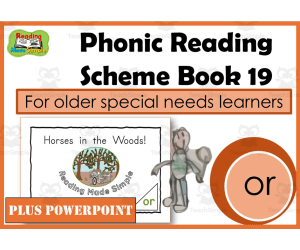
Phonic Reading Scheme for Older Students: OR: Book 19
Special Resources, ELA, Special Education Needs (SEN), Language Development, Phonics, Reading, Kindergarten, Preschool, Grade 1, Literacy Readers, Teacher Tools
This OR Digraph decodable reading book + matching PowerPoint for guided reading is the 19th book in a series that can help children with special needs pupils develop reading fluency. Each book has a matching PowerPoint, making it suitable for various settings. The Jack Stories, of which this book is one, introduces one phonic sound at a time, and subsequent books build on the vocabulary of the books before, constantly revising and reviewing learned sounds. Irregular sight words are only slowly and gradually introduced. Science of reading aligned. Based on the most up-to-date phonic research. These books should be read sequentially as they tell one long story, each telling a part. This book contains words with the following sounds: CK: OO, EE and SH and CH, ND & NT Endings, TH, AR and OR. The series of books can also be purchased as a growing bundle with a scope and sequence - one file, less clutter! This series has been written with the aid of one of my pupils, aged 8. He has drawn some of the pictures. What makes this phonic reading programme for special needs different? · It has its own, easy-to-download and print phonic reading books, making it accessible to many children worldwide. · Each book carefully builds on the vocabulary of those that have gone before, providing much repetition, without relying on predictable text. · Pictures aid the storyline without encouraging reading from the pictures – i.e. guessing. · The vocabulary is based on phonic families, which are introduced in a carefully planned way. · True sight words – those that cannot be sounded out - are kept to a minimum. Most words are introduced in their phonic family wherever possible. · It is truly multisensory, using the power of the hand. We not only look at the words, but we write them too. This is powerful and has the bonus of turning the child not only into a reader but into a writer as well. Typical signs that this programme can help: Those with dyslexia, or suspected of having dyslexia Difficulty recalling words when seen on flashcards or when reading texts, which results in no or little reading fluency b/d letter reversal of a chronic nature – i.e. the child has not grown out of it Difficulty ordering letters in words: E.g. top becomes pot. Difficulty differentiating between like words: spoon/soon; back/black; sheep/sleep etc… Difficulty tracking words across a page How long is the book? The reading book is 16 pages long. What is included? 1 PDF 16 pp X A5 Print as a booklet Flip on the short edge One 16-slide PowerPoint
Author Lilibette's Resources
Tags Decodable Reading Books, Phonic Reading Scheme, Download And Print Decodable Readers, Reading Fluency, Guided Reading, Special Needs, Phonics Intervention, AR Digraph

Phonic Reading Scheme for Older Students: NG: Book 16
Special Resources, ELA, Special Education Needs (SEN), Language Development, Phonics, Reading, Kindergarten, Preschool, Grade 1, Literacy Readers, Teacher Tools
This NG words decodable reading book + matching PowerPoint for guided reading is the 16th book in a series that can help children with special needs pupils develop reading fluency. Each book comes with a matching PowerPoint making it suitable for use in a range of settings. The Jack Stories, of which this book is one, introduces one phonic sound at a time, and subsequent books build on the vocabulary of the books before, constantly revising and reviewing learned sounds. Irregular sight words are only slowly and gradually introduced. Science of reading aligned. Based on the most up-to-date phonic research. These books should be read sequentially as they tell one long story, each telling a part. This book contains words with the following sounds: CK: OO, EE and SH and CH, ND & NT Endings and TH. The series of books can also be purchased as a growing bundle with a scope and sequence - one file, less clutter! This series has been written with the aid of one of my pupils, aged 8. He has drawn some of the pictures. What makes this phonic reading programme for special needs different? · It has its own, easy-to-download and print phonic reading books, making it accessible to many children worldwide. · Each book carefully builds on the vocabulary of those that have gone before, providing much repetition, without relying on predictable text. · Pictures aid the storyline without encouraging reading from the pictures – i.e. guessing. · The vocabulary is based on phonic families, which are introduced in a carefully planned way. · True sight words – those that cannot be sounded out - are kept to the very minimum. Most words are introduced in their phonic family wherever possible. · It is truly multisensory, using the power of the hand. We not only look at the words, but we write them too. This is powerful and has the bonus of turning the child not only into a reader but into a writer as well. Typical signs that this programme can help: Those with dyslexia, or suspected of having dyslexia Difficulty recalling words when seen on flashcards or when reading texts, which results in no or little reading fluency b/d letter reversal of a chronic nature – i.e. the child has not grown out of it Difficulty ordering letters in words: E.g. top becomes pot. Difficulty differentiating between like words: spoon/soon; back/black; sheep/sleep etc… Difficulty tracking words across a page How long is the book? The reading book is 16 pages long. What is included? 1 PDF 16 pp X A5 Print as a booklet Flip on the short edge One 16-slide PowerPoint
Author Lilibette's Resources
Tags Decodable Reading Books, Phonic Reading Scheme, Download And Print Decodable Readers, Reading Fluency, Guided Reading, Special Needs, Phonics Intervention, NG Words

Phonic Reading Scheme for Older Students: _NT Endings Book 12
Special Resources, ELA, Special Education Needs (SEN), Language Development, Phonics, Reading, Kindergarten, Preschool, Grade 1, Literacy Readers, Teacher Tools
This _NT Endings decodable reading book is the 12th book in a series that can help children with special needs pupils develop reading fluency. Each book comes with a matching PowerPoint making it suitable for use in a range of settings. The Jack Stories, of which this book is one, introduces one phonic sound at a time, and subsequent books build on the vocabulary of the books before, constantly revising and reviewing learned sounds. Irregular sight words are only slowly and gradually introduced. Science of reading aligned. Based on the most up-to-date phonic research. These books should be read sequentially as they tell one long story, each telling a part. This book contains words with the following sounds: CK: OO, EE and SH and CH and ND Endings. The whole series to date can also be purchased as a growing bundle here, with a scope and sequence. This series has been written with the aid of one of my pupils, aged 8. He has drawn some of the pictures. What makes this phonic reading programme for special needs different? · It has its own, easy-to-download and print phonic reading books, making it accessible to many children worldwide. · Each book carefully builds on the vocabulary of those that have gone before, providing much repetition, without relying on predictable text. · Pictures aid the storyline without encouraging reading from the pictures – i.e. guessing. · The vocabulary is based on phonic families, which are introduced in a carefully planned way. · True sight words – those that cannot be sounded out - are kept to the very minimum. Most words are introduced in their phonic family wherever possible. · It is truly multisensory, using the power of the hand. We not only look at the words, but we write them too. This is powerful and has the bonus of turning the child not only into a reader but into a writer as well. Typical signs that this programme can help: Those with dyslexia, or suspected of having dyslexia Difficulty recalling words when seen on flashcards or when reading texts, which results in no or little reading fluency b/d letter reversal of a chronic nature – i.e. the child has not grown out of it Difficulty ordering letters in words: E.g. top becomes pot. Difficulty differentiating between like words: spoon/soon; back/black; sheep/sleep etc… Difficulty tracking words across a page How long is the book? The reading book is 16 pages long. What is included? 1 PDF 16 pp X A5 Print as a booklet Flip on the short edge One 16-slide PowerPoint
Author Lilibette's Resources
Tags Decodable Reading Books, Phonic Reading Scheme, Download And Print Decodable Readers, Reading Fluency, Guided Reading, Special Needs, Phonics Intervention, NT Endings

Phonic Reading Scheme for Older Students: _NG Endings Book 15
Special Resources, ELA, Special Education Needs (SEN), Language Development, Phonics, Reading, Kindergarten, Preschool, Grade 1, Literacy Readers, Teacher Tools
This NG Endings decodable reading book is the 15th book in a series that can help children with special needs pupils develop reading fluency. Each book comes with a matching PowerPoint making it suitable for use in a range of settings. The Jack Stories, of which this book is one, introduces one phonic sound at a time, and subsequent books build on the vocabulary of the books before, constantly revising and reviewing learned sounds. Irregular sight words are only slowly and gradually introduced. Science of reading aligned. Based on the most up-to-date phonic research. These books should be read sequentially as they tell one long story, each telling a part. This book contains words with the following sounds: CK: OO, EE and SH and CH and ND Endings. The whole series to date can also be purchased as a growing bundle here, with a scope and sequence. This series has been written with the aid of one of my pupils, aged 8. He has drawn some of the pictures. What makes this phonic reading programme for special needs different? · It has its own, easy-to-download and print phonic reading books, making it accessible to many children worldwide. · Each book carefully builds on the vocabulary of those that have gone before, providing much repetition, without relying on predictable text. · Pictures aid the storyline without encouraging reading from the pictures – i.e. guessing. · The vocabulary is based on phonic families, which are introduced in a carefully planned way. · True sight words – those that cannot be sounded out - are kept to the very minimum. Most words are introduced in their phonic family wherever possible. · It is truly multisensory, using the power of the hand. We not only look at the words, but we write them too. This is powerful and has the bonus of turning the child not only into a reader but into a writer as well. Typical signs that this programme can help: Those with dyslexia, or suspected of having dyslexia Difficulty recalling words when seen on flashcards or when reading texts, which results in no or little reading fluency b/d letter reversal of a chronic nature – i.e. the child has not grown out of it Difficulty ordering letters in words: E.g. top becomes pot. Difficulty differentiating between like words: spoon/soon; back/black; sheep/sleep etc… Difficulty tracking words across a page How long is the book? The reading book is 16 pages long. What is included? 1 PDF 16 pp X A5 Print as a booklet Flip on the short edge One 16-slide PowerPoint
Author Lilibette's Resources
Tags Decodable Reading Books, Phonic Reading Scheme, Download And Print Decodable Readers, Reading Fluency, Guided Reading, Special Needs, Phonics Intervention, NG Words

Creativity in Nature! Brownie Outdoor Art Creator Activity Booklet
Creative Arts, Art, Grade 2, 3, Workbooks, Worksheets & Printables
This activity booklet will get kids outside exploring nature and having fun doing some crafts. It will also fulfill the Brownie Outdoor Art Creator badge for Girl Scouts. You can use this in your classroom or with your younger kids at home. Outdoor Explore:Go on a scavenger hunt looking for shapes in nature and collect those natural objects to use in a craft. Outdoor Art:Make a cute garden caterpillar out of a few supplies found outside and a few craft supplies found inside. Outdoor Sounds:Art can also be found in movement in sounds, such as movement like an animal and yoga stretches. Outdoor Photography:Explore nature up close and personal. Using a camera or phone, share the nature found with the group. Outdoor nature artist:Go on a scavenger hunt and find all the objects on a list. Then, they use those items to create an imaginary fairy elf house, like birds and other animals that use nature to make their homes. This activity booklet turns learning about the outdoors into an art-filled adventure! It is time to empower your students or kids to discover the artist within themselves, find their love for the outdoors, and foster creativity through engaging in hands-on activities.
Author Leader Connecting Leaders
Tags Outdoor Artist, Outdoor, Crafting, Art Outdoors
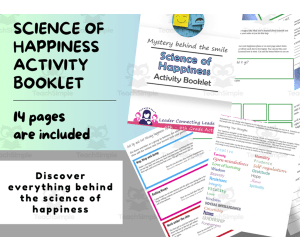
Learn about the Science behind being Happy
Science, Basic Science, Grade 6, 7, 8, Activities
If you get this booklet, you can learn everything about what happiness means. Did you know there is science behind it? Discover everything behind the science of happiness with games, activities, and a chance to be creative, putting together their own happiness journal. Activities Include: What in the world makes you happy– Use these pages to discover your current happiness levels, what happiness means, and what you can do to make yourself even more happy. Think about happiness– Worksheets to explore strengths and explore the science behind why optimistic people are happier. Can other people make you happy– Use these pages to uncover who you are most grateful for and create a craft showcasing gratefulness to give to someone special. Do a Happiness experiment– Use these pages to experiment to discover what makes people happier. Make a Plan to be Happy– Use these pages to create a 30-day happiness plan.
Author Leader Connecting Leaders
Tags Science , Happiness, Research, Scinec

Courage by Bernard Waber Interactive Read-Aloud Activities and Book Co
ELA, Reading, Grade 2, 3, 4, Read Alouds, Activities
This picture book companion is a comprehensive supplemental resource for Courage by Bernard Waber. Featuring 21 ready-to-use reading activities, this resource allows for tailored learning to meet students' diverse needs and academic abilities. Students will engage in identifying story elements, determining themes, analyzing metaphors, comparing and contrasting, making predictions, inferences, and connections, and answering questions that encourage both literal and critical thinking. These activities are designed to foster higher-level thinking skills, support evidence-based reasoning, and inspire students to express their thoughts and perspectives. This Resource Includes: Making Predictions: Students predict the story's events before reading. Making Connections: Students connect events from the story to their own experiences. Making Inferences: Students infer details and meanings while reading. Making Sense of Metaphors: Students identify and explain the metaphors used in the story. Thinking About the Text: Students answer text-based questions with examples. Thinking Beyond the Text: Students answer questions that extend beyond the text with examples. Theme: Students determine the story's theme and provide supporting text evidence. Everyday Courage vs. Amazing Courage: Students categorize examples of courage as everyday or extraordinary and create their own examples. Courage Is: Students explain why the author likens courage to various experiences. Notice & Note: Students highlight and take notes on key details in the text and illustrations. Discovering Courage through the Five Senses: Students describe courage using the five senses. 3-2-1: Students list three examples of courage, describe two personal examples, and choose one word to define courage, explaining their choice. Author's Message: Students outline four significant events, their chronological order, and the author's message. Courageous ABCs: Students write examples of courage for each letter of the alphabet. Courage Caught on Social Media: Students create a social media post showcasing an example of courage. Crossword Puzzle: Students solve a crossword puzzle using provided clues (answer key included). Word Search Puzzle: Students find hidden words in a word search puzzle using provided clues (answer key included). Book Review: Students rate and review the book. New Book Pages: Students think of different scenarios showing everyday and extraordinary courage, write sentences, and illustrate their ideas. Having Courage: Students write about a personal experience where they demonstrated courage. This resource provides a variety of engaging and educational activities that will captivate students while allowing educators to teach essential reading concepts effectively. It encourages students to use higher-level thinking skills, support their answers with text evidence, and articulate their unique perspectives. 4o
Author Creatively Gifted
Tags Reading Activities, Interactive Read-aloud, Read-aloud Activities, Reading Comprehension, IRA, Fountas And Pinnell, Reading, Elementary Reading, Book Companion, Picture Book Activities
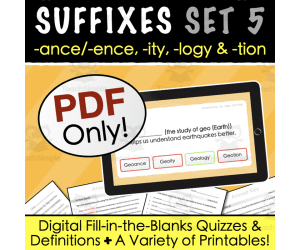
SUFFIXES | -ance/-ence -ity -logy & -tive | Digital + Printable Quiz
ELA, Language Development, ESL, Grammar, Vocabulary, Common Core, Grade 1, 2, 3, Worksheets, Worksheets & Printables
Suffixes Made FUN: Boost Your Word Power! This jam-packed resource pack is your secret weapon to conquering suffixes! It's perfect for everyone – beginners, adults, and ESL learners alike. No tech hassles here! Everything you need comes in easy-to-use PDFs. Master these 4 suffixes: -ance/-ence -ity -logy & -tive (Want more? Check out the full series for 20+ suffixes!) Across this entire series, the following suffixes are included: al, er, ing, ly, ful, ish, ist, ness, hood, less, ous, ward, able, ment, ship, tive, ance / ence, ity, logy, and tion. 4 Fun-tastic Activities: Interactive Quizzes: Test your suffix smarts with 2 exciting digital quizzes! Choose from filling the blanks or tackling a mixed bag of suffixes. Definition Detectives: Sharpen your skills by transforming definitions into suffix-powered words. You can easily flick through all the different definitions by using the arrow keys on your keyboard. Printable Powerhouse: Solidify your learning with awesome paper-based activities! Complete fill-in-the-blanks and more. Vocabulary Champs: Become a suffix superstar with vocabulary charts packed with words, meanings, and examples. Plus, a bonus list of 100 suffix-rich words to explore! Benefits for Everyone: Learn Your Way: Choose digital or printable activities to fit your style – perfect for online or classroom learning. Comprehensive Coverage: Tackle 20 of the most common suffixes! Independent Practice: Answer keys included for easy checking. Learn with a Smile: This resource makes learning suffixes fun and engaging. Get Started Today! This resource is all about empowering you to master suffixes in a fun and interactive way. While some activities may share a few sentences, the focus is on giving you a variety of ways to learn. This resource was created based on Common Core Standards (CCSS) The following standards are incorporated: L.1.4b, L.2.4b, L.3.4b, and L.3.4b Unsure about anything? Just shoot me an email at toms.talk.resources@gmail.com .
Author Tom's Talk
Tags Suffix, Suffixes, Grammar, PDF, Presentation, Digital, Worksheet, Fill-in-the-blanks, Fill In The Blanks, Handout

SUFFIXES | -able -ment -ship & -tive | Digital + Printable Quizzes
ELA, Language Development, ESL, Grammar, Vocabulary, Common Core, Grade 1, 2, 3, Worksheets, Worksheets & Printables
Suffixes Made FUN: Boost Your Word Power! This jam-packed resource pack is your secret weapon to conquering suffixes! It's perfect for everyone – beginners, adults, and ESL learners alike. No tech hassles here! Everything you need comes in easy-to-use PDFs. Master these 4 suffixes: -al -er -ing & -ly (Want more? Check out the full series for 20+ suffixes!) Across this entire series, the following suffixes are included: al, er, ing, ly, ful, ish, ist, ness, hood, less, ous, ward, able, ment, ship, tive, ance / ence, ity, logy, and tion. 4 Fun-tastic Activities: Interactive Quizzes: Test your suffix smarts with 2 exciting digital quizzes! Choose from filling the blanks or tackling a mixed bag of suffixes. Definition Detectives: Sharpen your skills by transforming definitions into suffix-powered words. You can easily flick through all the different definitions by using the arrow keys on your keyboard. Printable Powerhouse: Solidify your learning with awesome paper-based activities! Complete fill-in-the-blanks and more. Vocabulary Champs: Become a suffix superstar with vocabulary charts packed with words, meanings, and examples. Plus, a bonus list of 100 suffix-rich words to explore! Benefits for Everyone: Learn Your Way: Choose digital or printable activities to fit your style – perfect for online or classroom learning. Comprehensive Coverage: Tackle 20 of the most common suffixes! Independent Practice: Answer keys included for easy checking. Learn with a Smile: This resource makes learning suffixes fun and engaging. Get Started Today! This resource is all about empowering you to master suffixes in a fun and interactive way. While some activities may share a few sentences, the focus is on giving you a variety of ways to learn. This resource was created based on Common Core Standards (CCSS) The following standards are incorporated: L.1.4b, L.2.4b, L.3.4b, and L.3.4b Unsure about anything? Just shoot me an email at toms.talk.resources@gmail.com .
Author Tom's Talk
Tags Suffix, Suffixes, Grammar, PDF, Presentation, Digital, Worksheet, Fill-in-the-blanks, Fill In The Blanks, Handout

SUFFIXES | -ful -ish -ist & -ness | Digital + Printable Quizzes & List
ELA, Language Development, ESL, Grammar, Vocabulary, Common Core, Grade 1, 2, 3, Worksheets, Worksheets & Printables
Suffixes Made FUN: Boost Your Word Power! This jam-packed resource pack is your secret weapon to conquering suffixes! It's perfect for everyone – beginners, adults, and ESL learners alike. No tech hassles here! Everything you need comes in easy-to-use PDFs. Master these 4 suffixes: -ful -ish -ist & -ness (Want more? Check out the full series for 20+ suffixes!) Across this entire series, the following suffixes are included: al, er, ing, ly, ful, ish, ist, ness, hood, less, ous, ward, able, ment, ship, tive, ance / ence, ity, logy, and tion. 4 Fun-tastic Activities: Interactive Quizzes: Test your suffix smarts with 2 exciting digital quizzes! Choose from filling the blanks or tackling a mixed bag of suffixes. Definition Detectives: Sharpen your skills by transforming definitions into suffix-powered words. You can easily flick through all the different definitions by using the arrow keys on your keyboard. Printable Powerhouse: Solidify your learning with awesome paper-based activities! Complete fill-in-the-blanks and more. Vocabulary Champs: Become a suffix superstar with vocabulary charts packed with words, meanings, and examples. Plus, a bonus list of 100 suffix-rich words to explore! Benefits for Everyone: Learn Your Way: Choose digital or printable activities to fit your style – perfect for online or classroom learning. Comprehensive Coverage: Tackle 20 of the most common suffixes! Independent Practice: Answer keys included for easy checking. Learn with a Smile: This resource makes learning suffixes fun and engaging. Get Started Today! This resource is all about empowering you to master suffixes in a fun and interactive way. While some activities may share a few sentences, the focus is on giving you a variety of ways to learn. This resource was created based on Common Core Standards (CCSS) The following standards are incorporated: L.1.4b, L.2.4b, L.3.4b, and L.3.4b Unsure about anything? Just shoot me an email at toms.talk.resources@gmail.com .
Author Tom's Talk
Tags Suffix, Suffixes, Grammar, PDF, Presentation, Digital, Worksheet, Fill-in-the-blanks, Fill In The Blanks, Handout

SUFFIXES | -hood -less -ous & -ward | Digital + Printable Quiz & List
ELA, Language Development, ESL, Grammar, Vocabulary, Common Core, Grade 1, 2, 3, Worksheets, Worksheets & Printables
Suffixes Made FUN: Boost Your Word Power! This jam-packed resource pack is your secret weapon to conquering suffixes! It's perfect for everyone – beginners, adults, and ESL learners alike. No tech hassles here! Everything you need comes in easy-to-use PDFs. Master these 4 suffixes: -hood -less -ous & -ward (Want more? Check out the full series for 20+ suffixes!) Across this entire series, the following suffixes are included: al, er, ing, ly, ful, ish, ist, ness, hood, less, ous, ward, able, ment, ship, tive, ance / ence, ity, logy, and tion. 4 Fun-tastic Activities: Interactive Quizzes: Test your suffix smarts with 2 exciting digital quizzes! Choose from filling the blanks or tackling a mixed bag of suffixes. Definition Detectives: Sharpen your skills by transforming definitions into suffix-powered words. You can easily flick through all the different definitions by using the arrow keys on your keyboard. Printable Powerhouse: Solidify your learning with awesome paper-based activities! Complete fill-in-the-blanks and more. Vocabulary Champs: Become a suffix superstar with vocabulary charts packed with words, meanings, and examples. Plus, a bonus list of 100 suffix-rich words to explore! Benefits for Everyone: Learn Your Way: Choose digital or printable activities to fit your style – perfect for online or classroom learning. Comprehensive Coverage: Tackle 20 of the most common suffixes! Independent Practice: Answer keys included for easy checking. Learn with a Smile: This resource makes learning suffixes fun and engaging. Get Started Today! This resource is all about empowering you to master suffixes in a fun and interactive way. While some activities may share a few sentences, the focus is on giving you a variety of ways to learn. This resource was created based on Common Core Standards (CCSS) The following standards are incorporated: L.1.4b, L.2.4b, L.3.4b, and L.3.4b Unsure about anything? Just shoot me an email at toms.talk.resources@gmail.com .
Author Tom's Talk
Tags Suffix, Suffixes, Grammar, PDF, Presentation, Digital, Worksheet, Fill-in-the-blanks, Fill In The Blanks, Handout
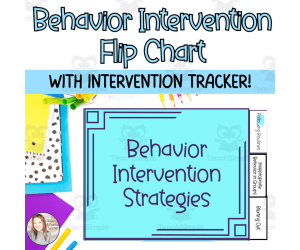
Behavior Intervention Strategy Flip Chart With Intervention Checklist
Special Resources, Social Emotional Learning (SEL), Special Education Needs (SEN), Resources for Teachers, Classroom Management, Preschool, Kindergarten, Grade 1, 2, 3, 4, 5, Charts, Teacher Tools
As a social worker, it may feel like behavior management is the only thing you do. But with this Behavior Intervention Flip Chart, teachers can easily implement strategies without needing to call you every time! These behavior cards help to identify behavior management strategies that teachers can implement as part of their classroom management plan with specific behaviors. There are a total of 46 different behaviors that are common within the elementary school setting. Intervention tracker sheets are also provided that allow the teachers to track when they began the intervention, how many attempts they have tried, and if a referral is necessary. This not only helps create fidelity in the behavior intervention plan, but provides crucial data when a referral is made to decipher what is working, and what isn’t. What's included? ❤️ 46 Behavior Intervention Cards ❤️ 230+ Interventions ❤️ 46 Intervention Trackers that correspond with interventions labeled in the chart, and allow teachers to add additional interventions attempted ❤️ Behavior tabs to make searching for specific behaviors a breeze This resource is 70 PDF pages total. Each behavior strategy page is approximately 5.9” x 4.7” (not including the tab) Behaviors Included: ⭐Struggles to Follow Routine ⭐Inappropriate Behavior In Groups ⭐ Blurts Out ⭐ Frequently Off-Task ⭐Refuses To Complete Assignments ⭐Difficulty Concentrating ⭐Runs Away ⭐Difficulty With Transitions ⭐Upset By Changes In Routine ⭐Blames Others And Avoids Responsibility And more! This resource is not editable though the intervention tracker does include blank lines under each behavior for teachers to add additional interventions they may have tried.
Author The Feelings and Friends Teacher
Tags Behavior Strategy Cards, Behavior Intervention Plan, Behavior Cards, Behavior Log, Behavior Chart, Classroom Management Plan, Intervention Tracker, Behavior Management

The Graveyard Book Novel Study Chapter Quizzes & Writing Activities
ELA, Reading, Reading Comprehension, Literature, Writing, Grade 4, 5, 6, 7, Novel Studies, Worksheets & Printables
Enhance your students' critical thinking and writing skills with this comprehensive study companion for Neil Gaiman's The Graveyard Book. This resource includes chapter quizzes, essay questions, and writing prompts to deepen students' understanding of the novel. Available in both printable PDF and digital formats (Google Slides & Google Forms), this product offers flexible teaching options. Resource Features: Chapter Quizzes: Each quiz includes a mix of multiple-choice and short-answer questions, along with two essay questions per set. Literary Essays & Quick-Writes: Prompts designed to encourage students to provide evidence-based responses, fostering deeper literary analysis and critical thinking. What's Included: Printable PDF and Digital Formats: Google Slides and Forms are available for all activities. Chapters 1-4: Comprehension Quiz Essay Questions Answer Key Chapters 5-8: Comprehension Quiz Essay Questions Answer Key Literary Essay Prompts: Four essay prompts to explore key themes and characters. Quick Writing Prompts: Eight prompts to engage students in connecting quotes to the novel, answering thematic questions, and exploring different perspectives with textual evidence. Assessment Rubric: A comprehensive rubric for evaluating essays and writing responses.
Author Creatively Gifted
Tags Neil Gaiman, The Graveyard Book, Comprehension, Essay Questions, Writing Prompts, Chapter Quizzes, Writing, Literary Analysis

The Graveyard Book Theme, Symbolism, & Quote Extension Activities
ELA, Reading, Reading Comprehension, Literature, Grade 4, 5, 6, 7, Activities
This product provides engaging extension activities to deepen students' understanding of Neil Gaiman's The Graveyard Book. These activities are crafted to enhance critical thinking skills and support enriched class discussions and writing exercises. Both printable PDF and digital Google Slides formats are included! The activities are designed to develop and strengthen higher-order thinking skills, focusing on abstract concepts such as theme, symbolism, perspective, and character analysis. ⭐️This Resource Includes:⭐️ Printable PDFs and Digital Versions: Both formats are provided for all activities. Digital Student Activities: A Google Slides version with all listed activities is available, along with instructions for accessing and sharing it with students. Overcoming Obstacles: Students use a T- Chart to list and describe physical, emotional, or mental obstacles faced by characters and their responses to these challenges. Character Summary (Bod): Students summarize Bod's character, detailing challenges, responses, flaws, positive traits, and creating a timeline of five key events. Character Summary (Silas): Students summarize Silas's character with a focus on challenges, responses, flaws, positive traits, and a timeline of five key events. The Perfect Playlist: Students create a soundtrack for the story with a playlist of four songs representing major themes and design an album cover symbolizing the story's theme. Graveyard on the 'Gram: Students create an Instagram post to depict an event from the story. Theme Analysis: Students analyze various themes in the novel and answer related questions. Themes include: "It takes a village to raise a child," "Our identity is shaped by those who guide and care for us," "Life's adventures and experiences give it meaning," and "Appearances can be deceiving." Story Element Quote Connections: Students select quotes related to story elements and explain their significance, providing textual evidence. Quote Pair Up: Students compare and contrast chosen quote cards. Quote Inspired Hoodie Design: Students design a hoodie based on a significant quote from the novel, reflecting its themes, characters, or emotions. Personality Quote Pairs: Students select quotes that they believe match the personalities of four characters from the novel and explain their choices. Important Quotes: Students choose three significant quotes from the story and explain their importance to the plot. 8-Quote Connections: Students read provided quotes and respond thoughtfully using the story, personal experiences, background knowledge, and opinions. Quote Cards (60 Miscellaneous Quotes & Proverbs): These quotes are used for various analysis activities, writing prompts, or discussion starters. Both digital and printable versions are included. Quote Cards (37 Quotes from the Book): Quotes from the book are used for analysis, writing prompts, or discussions. Both digital and printable versions are included. Symbolism: Students identify and analyze symbols in the story, including Sleer's brooch, the graveyard, Jack's knife, Liza's headstone, the lady on the grey, and the Macabray dance (Includes ANSWER KEY).
Author Creatively Gifted
Tags Theme Study, Small Group, Partner Work, The Graveyard Book, Novel Study Guide, Book Companion, Middle School, Writing Prompts, Symbolism