


9,413 products added recently
Page 953 - Newest Teaching Resources

 Show filters


Compromise Worksheet
Special Resources, Social Emotional Learning (SEL), Life Skills, Grade 1, 2, 3, 4, Worksheets & Printables, Worksheets
Compromise Worksheet: A Unique Approach to Character Education Compromise Worksheet is a simple yet powerful educational resource that resonates with teachers aiming to instill essential life skills in their students. Primarily targeted towards Grade 1 to Grade 4 students, this easy-to-use tool supports not just social emotional learning but also contributes significantly to character education. The Utility of Compromise Worksheet in Special Resources In the realm of Special Resources, this worksheet holds a unique position because of its creative and interactive approach in facilitating learning. The worksheet consists of illustrations where donkeys are depicted in various situations. Students are encouraged to explore each graphic intensely, interpret what's happening and understand how the characters reach a mutual understanding or compromise. This exercise contributes significantly by: Fostering critical thinking Enhancing perceptive abilities Fostering resolution-finding abilities under diverse circumstances. This skill-set proves beneficial as they progress through life, subtly preparing them for practical challenges. Versatile Applications of Compromise Worksheet The Compromise Worksheet extends great flexibility regarding its applications: In standard classroom teaching context In small group activities In individual assessments at home. An Editable, Accessible & Engaging Resource The resource allows modifications ensuring it suits each child's individual needs. Its single-page design aids focusing on core themes without diluting engagement value through attractive graphics. Rendered as a PDF file type ensures compatibility, allowing seamless access across platforms and digital devices. Summing it Up As an educator in a school or homeschool - Compromise Worksheet could be your solution to keep teaching methods modern, effective and enjoyable while imparting practical life skills.
Author Elementary Resources 4 U
Tags Compromise Learning, Social-emotional Skills, Character Education, Critical Thinking, Interactive Teaching

Compromise: Activity
Special Resources, Social Emotional Learning (SEL), Life Skills, Grade 2, 3, 4, 5, Activities
The Compromise: Activity The Compromise: Activity is intended for educators with the aim of developing their students' critical life skills, chiefly in resolving conflicts in a peaceful and sustainable manner. It focuses on the practical facets of social emotional learning by assisting learners to grasp the idea of compromises and concessions thoroughly. This instructional resource extends across two pages, fully editable thus permitting alterations based on class requirements. It's suitable for learners from second grade up to fifth grade and can be utilized in diverse contexts such as large group discussions, teamwork among small groups or even delegated as enlightening homework. Interactive Activities The booklet includes one activity that prompts students to recall times when they had disagreements with a parent at home or a friend at school. They are then instructed to ponder over those instances and pinpoint the rational give-and-takes by both sides resulting in a compromise. The booklet also contains an exercise where learners have to pair each conflict scenario with an appropriate compromise resolution. This cultivates problem-solving abilities while strengthening comprehension about resolving clashes through discussion. The Compromise: Activity comes supplied in PDF format which ensures easy accessibility for all teachers irrespective of hardware constraints. As part of special resources addressing social emotional learning and life skills subject areas, this resource acts effectively as an instrument sparking character development amongst young learners. Conclusion Packed within these simple yet potent pages, The Compromise Activity engrosses your students into meaningful conversation surrounding conflict resolution while highlighting down-to-earth methods toward preserving peace in personal relations – truly underlining that differences can indeed form constructive milestones toward maturity when managed responsibly.
Author Elementary Resources 4 U
Tags Compromise, Conflict Resolution, Negotiation, Dispute Resolution, Social-emotional Learning

Counseling: Well-Being Chart
Special Resources, Social Emotional Learning (SEL), Life Skills, Not Grade Specific, Charts, Teacher Tools
Counseling: Well-Being Chart The Counseling: Well-Being Chart is a valuable tool for educators who recognize the importance of understanding their students' emotional health. This resource is not bound to a specific grade level and can be used across different educational settings from public schools to the homeschool environment. Interactive Resource This well-being chart provides an interactive, visual method for students to communicate their emotions on a daily basis. It offers learners an engaging way to express how they are feeling through use of ten distinct emotion pictograms. This self-reporting system assists children in naming and identifying their feelings, contributing vastly towards improving their social-emotional learning and life skills. Tactical Interaction A key aspect of this product includes the ability for students to physically place a marker - possibly laminated card with their name – next to the emotion that resonates most with them each day. The tactical interaction makes it more personal and real, bolstering expressive confidence among young learners while creating opportunities for empathetic dialogue in class. Track Student Progress A unique component of this package is an attached ‘Teacher’s Chart’. This function allows teachers or homeschool parents to document, monitor changes or patterns, and assess each student's emotional wellbeing over time on a weekly basis. Documenting such insights provides critical data that can aid teachers in tailoring instructions or interventions based on individual student needs. Packaged as 14 pages designed for ease of printing, Doubles as both an activity guide and tracking sheet, Suitable for classroom entrance rituals or small group settings, Makes shared monitoring feasible between parents and teachers by bringing it also into use for home assignments. Creating Emotionally Empowered Classrooms In conclusion, integrating this resource into everyday classroom routines will assist educators striving toward building emotionally informed classrooms filled with students who can confidently express how they feel helping to create nurturing learning environments that aid cognitive, social, and emotional growth.
Author Elementary Resources 4 U
Tags Well-being Chart, Emotional Health, Social-emotional Learning, Self-reporting System, Student Well-being

Health: Graphing Favorite Food Groups
P.E. & Health, Health, Science, Basic Science, Grade 1, 2, 3, 4, Activities
Health: Graphing Favorite Food Groups This teaching resource, designed for Grade 1 to Grade 4 educators, helps instill an early understanding of healthy eating habits and the importance of different food groups. Along with teaching key concepts in Mathematics and Basic Science, this resource provides a fun, tactile learning experience. Suited for both public school teachers and homeschoolers, this unique learning tool enables them to conduct a real-life survey among the students. The task requires students to ascertain their classmates' favorite food groups. Once collected data is then represented through a block graph included in this printable PDF material. Fully editable: This single-page activity allows customization according to class needs or individual student abilities - perfect for differentiated instruction. Versatile application: Although primarily designed for whole-group instruction during PE & Health or Science subjects lessons, it can be easily modified for smaller group sessions or homework assignments as per teacher requirements. The Health: Graphing Favorite Food Groups, is an interactive teaching aid that blends essential knowledge about food groups into lessons while also reinforcing basic graphing skills in young learners – truly embodying experiential learning. Educators will find that using this valuable tool motivates student participation leading toward practical application of theoretical understanding in both health consciousness and foundational numeracy skills – crucial essentials required for future STEM study. Note: This digital product is provided in PDF format. Consequently, educators will require access to electronic devices supporting PDF viewer capabilities (like Adobe) along with printing facilities if distributing handouts are desired.
Author Elementary Resources 4 U
Tags Healthy Eating Habits, Food Groups, Graphing, Mathematics, Science

Health: Types of Bread
P.E. & Health, Health, Grade 1, 2, 3, 4, Activities
Health: Types of Bread Practical Teaching Resource This is a versatile teaching tool that provides educational insight into different types of bread, designed especially for Grades 1 through 4. Unique Approach and Application The resource boasts a unique hands-on approach. Students get the opportunity to actively engage in the lesson instead of passively consuming information. The activity involves: Cutting out each type of bread. Labeling each type. Fostering Health Awareness in Education This content is aligned towards health awareness, making it suitable for Physical Education and Health educators wanting to enrich their syllabus with interactive lessons on food types. The activity can be implemented efficiently in various settings: A whole group setting - encouraging critical thinking and collaborative discussions among students. A small group or homework assignment - promoting individual research on uses across different cultures and cuisines globally. Benefits: The practical teaching resource also provides added value to homeschoolers by blending fresh elements into personalized curriculums centered around health or multicultural education. Primary grade educators modifying the PDF format based on class sizes or pupils abilities can find this product very convenient. In essence, "Health: Types Of Bread" offers unmatched hands-on learning potential while upholding instructional integrity desired by modern day educators worldwide.
Author Elementary Resources 4 U
Tags Bread Types, Health Education, Interactive Learning, Hands-on Activity, Multicultural Cuisine

Science Research: Forces and Movement
Science, Basic Science, Physics, Grade 2, 3, 4, 5, 6, Activities
Science Research: Forces and Movement Teaching Resource Overview: This is a thoughtfully crafted teaching resource that targets educators instructing students aged seven and above. It centers on a surface friction investigation, probing an intriguing question: On which surfaces do objects slide more easily? Main Features: A well-structured method that walks students through the stages of scientific experimentation. Fair testing, prediction-making, meticulous recording of results in designated tables and concluding. The resource spans over three comprehensive pages. Versatility: Caters to a diverse range of grade levels from Grade 2 to Grade 6 making it suitable for various classroom settings as well as homeschool environments. It covers integral subtopics within science including physical science, physics, and basic science. Editability & Usage: This PDF file is fully editable allowing educators to tailor it to their specific needs. The activities can be utilized during whole group instruction or collaborative groups for a more personalized approach. Other potential uses could be in independent study sessions or homework tasks furtherance in understanding outside traditional learning hours. Encourages practical application alongside theory thereby fostering critical thinking skills while instigating curiosity about the natural world among students through hands-on experiments. This Science Research: Forces and Movement Teaching Resource is a ready to use resource!
Author Elementary Resources 4 U
Tags Science Research, Forces, Movement, Surface Friction, Experimental Investigation

Science Research: Surface Friction
Science, Physics, Grade 3, 4, 5, 6, Activities
Product Description: Surface Friction Science Research A unique teaching resource, Surface Friction Science Research is designed to keep students engaged while they explore the fundamental concept of friction. This comprehensive 4-page booklet presents a great opportunity for students aged between 7 and 11 years old to easily understand forces and friction. Educators Use: Educators can use this valuable material as part of their physical science module in third, fourth, fifth or sixth-grade classrooms. It includes various components such as: Aim Method Surfaces to Test Prediction Equipment (for fair testing) Results Conclusion sections station on each page This resource can facilitate interactive discussions during whole group instruction. In Small Learning Clusters & Homeschooling: Tutors who prefer smaller learning clusters may divide their class into multiple groups assigning them different surface types from the Surfaces to Test section. Similarly, homeschooling parents seeking ways to introduce practical at-home experiments into their curriculum; this resource serves well beyond its average use in school settings providing hands-on learning experiences right at home! Fully Editable Feature: This product is also commendably fully editable allowing facilitators to modify content per specific instructional needs within diverse classroom environments. The analysis-driven 'Conclusion' section allows time for reflection on experiment outcomes—this constant review method not only strengthens topic comprehension but also encourages progressive scientific thought processes among young learners. All files are conveniently provided in PDF format making printing or sharing digital versions easy. Ensure that with Surface Friction Science Research, your teaching sessions will be dynamic yet organized while your students thoroughly enjoy their venture into the world of physical science. Summary: Overall, Surface Friction Science Research provides educators a valuable tool to make the subject of friction less theoretical and more practical; allowing learners to visualize, experiment and understand this concept in a much better way.
Author Elementary Resources 4 U
Tags Surface Friction, Science Research, Teaching Resource, Interactive Experiments, Hands-on Learning

Science: Plant Research
Science, Basic Science, Earth and Environmental Sciences, Earth Sciences, Preschool, Grade 1, 2, 3, Activities
Science: Plant Research This teaching resource is targeted towards young learners in Kindergarten through Grade 3 and aims to introduce them to the fascinating universe of plants. It focuses on explaining how seeds transform into growing plants, thereby engaging students actively in discovery and learning. Flexibility for Educators The design of the booklet doesn't limit an educator's creativity. It functions as a useful tool for whole group discussion on growth processes, small-group study sessions or even as an enjoyable homework assignment. Options for Students Science: Plant Research offers students the choice between planting a pea seed or sunflower seed. Students can also display their keenness for their chosen plant by illustrating it on the front cover of their booklet. Key Features: The 4-page booklet includes detailed instructions enabling children to understand what exactly plants need to thrive and allows them to keep a record of their seed’s journey from germination until becoming full-grown plants. A special feature is that teachers can customize it according to each class's unique requirements, making differentiation super easy! This feature enables smooth lesson planning while ensuring efficient knowledge transfer. Fostering Scientific Minds Science: Plant Research, packed with essential information aids budding scientific minds in broadening their understanding per school curriculum demands remarkably well; thanks mainly due its interactive and student-focused approach which evangelizes education as an enjoyable process rather than a burdensome task. Note: The resource is available in an easy-to-navigate PDF file format which simplifies its usage further.
Author Elementary Resources 4 U
Tags Plant Research, Hands-on Learning, Growth Processes, Interactive Education, Science Investigation

Science Assessment: Plants
Science, Life Sciences, Nature & Plants, Basic Science, Grade 1, 2, 3, 4, Teacher Tools, Assessments
Science Assessment: Plants This helpful teaching resource is aimed to support educators in assessing their students' grasp on fundamental botany. This tool has been meticulously developed suiting grades 1 through 4 and functions as an intensive assessment tool discussing major themes in basic science and botany. The product includes a comprehensive, seven-page booklet, that streamlines the end-of-unit assessments for teachers. Ideally used after significant instruction on plant-based science has been done, it plays a crucial part in evaluating how effectively students have understood lessons regarding plant structure, lifecycle, functions etc. Flexibility of Use Educators within public schools can efficiently utilize this resource as part of whole-group or small-group learning measures. Homeschooling parents can incorporate this valuable tool into their structured curriculum or impromptu teaching periods. Customization Advantage This user-friendly assessment is fully editable with its PDF file format offering customization according to specific teaching requirements and needs - providing convenience without compromising the effectiveness of learning. The language used ensures question phrasing remains unbiased while keeping content relatable for grade-school levels making it suitable for multiple classroom situations yet personable enough not just to test but stimulate critical thinking skills amongst learners too. From insightful homework assignment need to group-class discussion topics covering plants - this testing instrument tailored with purpose serves various roles within educational teachings.
Author Elementary Resources 4 U
Tags Plants, Botany, Assessment, Science Education, Teaching Resource

Science Assessment: Sound and Vibration
Creative Arts, Art, Music, Science, Basic Science, Grade 2, 3, 4, 5, Teacher Tools, Assessments
Science Assessment: Sound and Vibration This is a fully editable, comprehensive 2-page PDF booklet designed primarily for Grade 2 through Grade 5. This versatile resource can be used with various teaching methodologies for both large group instruction and small group collaborative exercises. Content Focus Fundamental scientific concepts related to sound and vibration. The interrelation of these concepts with elements of music. Evaluation Structure & Scoring The assessment includes well-curated questions that utilize a given word bank. The total achievable score is 15 points. Pedagogical Use Cases: In-class Evaluation: Can be employed as an end-of-unit test providing immediate feedback based on student performance. Tutorial Refresher Helps solidify understanding by revisiting key learned concepts. Cross-curricular Application:- Its flexible structure allows integration into homework assignments, thus encouraging the learning connection between science and arts & music. Incorporating this assessment tool into your current curriculum will not only bolster your students' understandings but also make grading easier due to simple scoring standard! Note: An answer key is provided in the booklet ensuring easy self-assessment while maintaining effective evaluation of knowledge. This Science Assessment: Sound and Vibration resource is ready to use. Just print and go! For similar or other resources, visit my store!
Author Elementary Resources 4 U
Tags Sound, Vibration, Assessment, Science Education, Music

Science: Light Sources Booklet
Science, Basic Science, Preschool, Grade 1, 2, Worksheets & Printables, Worksheets
The Science: Light Sources Booklet The Science: Light Sources Booklet is an invaluable teaching resource designed to introduce young learners to the concept of sources of light. Aimed at kindergarten, first and second-grade learners, this booklet beautifully simplifies complex science fundamentals into accessible units. This PDF worksheet comprises two pages filled with engaging tasks. On the first page, students are encouraged to list words associated with light and darkness. This exercise not only contributes to building their vocabulary but also helps consolidate their understanding of opposites. The excitement continues on page 2 where learners get an opportunity to utilize both their creativity and gained knowledge. Here, they are asked to write about different sources of light and correspondingly produce drawings for each. An example given in this task is the sun, providing a helpful starting point for pupils as they navigate through this enlightening exercise. About The Science: Light Sources Booklet Designed especially for students aged 5-7 years old studying Basic Science topics which typically include basics physics principles and elementary exploration of natural phenomenon. This booklet breaks down the abstract concepts making it accessible by using relatable examples from everyday life that younger learners can easily identify with. A flexible teaching tool like no other; educators have flexibility implementing its use in varieties of classroom settings including whole group discussions or small working groups without losing its efficacy or engagement value. Note: It allows teachers flexibility accommodating individual pupils' needs without compromising on curriculum objectives. Each educator can readily make modifications suitable for their own unique classroom setting – making every learning experience personal yet standardized across all users. In summary: The Science: Light Sources Booklet isn't just another addition your resource library. It's a trustworthy partner in sparking awe-inspiring scientific curiosity that lasts a lifetime among young minds stepping into the intriguing world of science; full of colors beyond the mere black and white spectrum.
Author Elementary Resources 4 U
Tags Light Sources, Science Education, Vocabulary Building, Creativity, Primary Science

Science Research: Streamlining
Science, Physics, Grade 3, 4, 5, 6, Worksheets & Printables, Worksheets
Science Research: Streamlining Presenting a unique educational tool - 'Science Research: Streamlining'. Designed specifically for educators catering to students aged 7-11 years old focusing in subjects such as Physical Science, this resource offers an explorative means for young learners to study further about the notion of forces, particularly streamlining. Science Research: Streamlining delivers a thorough exploration on which shapes are most streamlined, showing the lowest resistance, and inversely, which forms are least streamlined or demonstrate the highest resistance. This hands-on approach towards understanding complexities of forces aids pupils in grasping concepts better while firing up their fascination with scientific inquiries. A four-page booklet accompanies this resource featuring well-defined sections that provide guidance to learners throughout their investigation journey. These sections comprise: Methodology (Method) Equipment Needed (Apparatus) Findings (Results) Significance of Findings (Conclusion). All exercises proposed within this resource can be flexibly implemented according to peculiar classroom circumstances. Techniques for using these resources range from encouraging team collaboration through smaller work groups or whole-group projects involving everyone, to one-on-one tutorial sessions or homework assignments promoting independent learning at home. The charm of 'Science Research: Streamlining' lies not only in its educational value but also in its versatility and ease-of-use especially favorable for teachers aspiring to motivate budding scientists. A convenient bonus feature – answers are provided instantly aiding accuracy during review while saving time! The PDF file type compatibility of 'Science Research: Streamlining', deletes any struggles over software capability issues – becoming particularly handy when digital sharing among learners who might lack specific software systems on their devices. Purposely tailored towards Grade 3 till Grade 6 curriculum expectations, 'Science Research: Streamlining' simplifies making real-world connections, by translating textbook concepts into scenarios young minds can relate to effortlessly. This hands-on approach cultivates learners' scientific reasoning skills, prepping them for progressions beyond theoretical applications. In a nutshell, the Science Research: Streamlining tool evolves traditional science lessons into an exhilarating investigation adventure. It remains to be a valuable asset in stimulating curiosity and developing passion in learning about forces while appreciating the wonders of Physical Science.
Author Elementary Resources 4 U
Tags Streamlining, Forces, Investigation, Physical Science, Teaching Resource

Plants & Animals Sorting with Venn Diagrams
Science, Basic Science, Grade 1, 2, 3, 4, Diagrams, Teacher Tools
Product Title: Plants & Animals Sorting with Venn Diagrams This instructive resource, Plants & Animals Sorting with Venn Diagrams, enables students in grades 1 through 4 to delve into the fundamental building blocks of science. The resource emphasizes a clear distinction between the animal and plant kingdom which is relatable to students' everyday life as they explore their natural surroundings. Specially designed for use in a multitude of scenarios - from large classroom collaborations, small group projects to individual homework assignments. This comprehensive teaching tool offers remarkable adaptability. Thus, it's perfect whether you're facilitating an interactive lesson plan within mainstream school or providing enriching activities for homeschooling learners. This tool diversifies opportunities for both independent and collective learning. The single worksheet employs user-friendly Venn diagrams to bolster comprehension skills. Students classify words pertaining to animals and plants into distinct sections on the diagram – strengthening not only their grasp on classifying organisms but also enhancing their vocabulary relating to nature. The product's digital PDF format provides ease-of-use ensuring high-quality printouts every time, suitable for a range of needs - from a home assignment copy or multiple prints ideal for classroom applications. To streamline teachers' assessment procedures, this key resource comes complete with an answer key provided upfront simplifying grading processes. Encourages accurate evaluation regarding student's understanding level based on set objectives. This changeable teaching instrument includes editable properties fostering customization that perfectly tailors each educator’s unique teaching style whilst covering complex topics like Basic Science efficiently. A true blend of effectiveness and personal touch when dealing with such intricate areas! Download today and simplify science education by exploiting various advantages offered by Plants & Animals Sorting with Venn Diagrams directly into your educational architecture!
Author Elementary Resources 4 U
Tags Plants, Animals, Sorting, Venn Diagrams, Science Education

Botany: What Plants Need to Grow
Science, Life Sciences, Nature & Plants, Preschool, Grade 1, 2, Teacher Tools, Presentations, Worksheets & Printables, Worksheets
Botany: What Plants Need to Grow An essential teaching resource constructed for educators in the field of Science and specifically Botany. This tool is geared towards instructing learners from Kindergarten through Grade 2 about the fundamental necessities for plant growth. PowerPoint Presentation This interactive educational material is an engaging PowerPoint presentation with 11 slides, each illustrating and explaining the four main elements that plants require to thrive: warmth, light, water, and nutrients. The visualization enhances understanding among young learners making complex botanical concepts easier to comprehend. Detailed Handout The package also provides a handout outlining why it's crucial for plants to grow healthily; serves as an excellent reference point students can refer back time after time when deepening their knowledge of botany or doing related tasks. Worksheet A dynamic two-page worksheet accompanies this bundle aiming at reinforcing learned concepts practically. The first section instructs students to match words with corresponding images correctly—a proven method known for strengthening memory recall while enhancing vocabulary relating to botany. The second activity prompts students with crafting visuals reflecting how plants attain warmth, light, water and nutrients— thus solidifying recently acquired botanical information. Note: No answer key is provided as activities are pictorial representations encouraging individual interpretation rather than strict right-or-wrong responses. We believe learning should flexible allowing room for individual thinking creativity. Suitable for those aged five up (based on ability), "Botany: What Plants Need to Grow", adapts seamlessly across varying learning environments whether it be whole-group classroom sessions during science lessons or smaller focus groups participating in targeted drills; even used as homework assignments offering additional practice opportunities beyond school walls. A 45-minute teaching duration is estimated per complete run through the provided resources, making it a swift yet substantial addition to any educational agenda set for the day. The material comes in a zip file readily available for download and use. Botany: What Plants Need to Grow, paves a solid foundation branching out from traditional science syllabus norms-- developing our potential future botanists one leaf at time.
Author Elementary Resources 4 U
Tags Plants, Growth Essentials, Botany Education, Interactive Teaching, Hands-on Learning

Botany: Pollination
Science, Life Sciences, Nature & Plants, Grade 1, 2, 3, 4, Teacher Tools, Presentations
Botany: Pollination Teaching Resource Botany: Pollination is a highly effective teaching aid designed to simplify the complex process of pollination for students aged between 6 and 11 years old. This tool includes two concise PowerPoint presentations coupled with an engaging storyboard. The challenges associated with explaining intricate scientific procedures like pollination are fully understood by educators. We created Botany: Pollination to transform these complexities into understandable lessons. This makes the learning process easier for students from grade 1 through grade 4. List of features: Educators have the flexibility to adapt this resource according to their teaching needs - be it as a visual support during group instruction or for interactive discussions in smaller student groups. An included storyboard encourages active learning and participation among students, allowing them to draw and illustrate their understandings of pollen transportation from one plant part to another leading, eventually, to fertilization. The content comes packaged in a convenient zip file format that keeps everything together but easily accessible when needed. Its fully editable nature allows teachers to tailor it according their unique lesson plan objectives or specific classroom preferences. In Conclusion Botany: Pollination serves as an invaluable tool in introducing young learners first steps into botany by unveiling the mysteries behind plant reproduction while ensuring comprehension adheres comfortably among early grades making science enjoyable instead intimidating field of study.
Author Elementary Resources 4 U
Tags Pollination, Botany, Plant Reproduction, Science Education, Visual Aid

Caring for a Pet
Special Resources, Life Skills, Science, Basic Science, Grade 1, 2, 3, 4, 5, Worksheets & Printables, Worksheets
Caring for a Pet: A Comprehensive Teaching Resource Aimed at enhancing the learning spectrum of students aged 5 to 11 years, this resource encompasses an invaluable life skill - responsible pet ownership. This aspect teaches empathy, compassion, and duty in an enjoyable and educating manner. Science-Centric Resources Comprising Dozens of Topics Based primarily on science with augmenting resources. The product includes three pages in total; two form an instructive booklet ideal for reading activities. The guide provides elementary science education about caring for pets along with actionable intel about maintaining a pet at home. It covers various topics like feeding schedules and cleanliness routines that can be discussed collectively as a class setup. Diverse Educational Benefits Through Assigned Writing Task Accompanied by the informative booklet is a writing task designed to offer various educational benefits such as: Reinforcing newly acquired concepts, Honing composition skills, Nurturing creativity, Promoting independent thinking among students displayed through written expression understanding. The task could either be given as homework or dissected into smaller group discussions within classrooms. Editability Supports Differentiated Learning Techniques The resource offers full control over its content to teachers due it being fully editable; it can be tailored in order to fit onto your lesson plans or individual needs of learners thereby smoothly incorporating differentiated learning techniques. In Summary: Caring for a Pet plays multiple beneficial roles; from fostering love towards animals comprehended via pivotal life skills, to finesse in writing proficiency elegantly wrapped around Science concepts, it proves itself as a priceless addition to Grade 1 through Grade 5 curriculum planning.
Author Elementary Resources 4 U
Tags Pet Care, Responsible Ownership, Empathy, Compassion, Science

Botany: Parts of Plants
Science, Life Sciences, Nature & Plants, Grade 1, 2, 3, 4, Parts of and Anatomy of, Worksheets & Printables
Botany: Parts of Plants A comprehensive teacher's resource offering an in-depth exploration into the world of plant anatomy and biology. This unique set is thoughtfully crafted for students from grade 1 to grade 4. The contents consist of: Three interrelated worksheets: Each centered around identification and labeling parts of plants. Versatile applications: The distinct nature of these worksheets allows teachers to adapt instructions according to class size or individual student needs. Diversity in options: This flexibility offers opportunities for assessment, reinforcement, or extension activities. In addition to the comprehensive design, each worksheet comes complete with corresponding answers. This eases grading sessions while ensuring quicker feedback for students. This resource is 'ready-for-use', downloadable in zip format - making it a seamless addition into existing lesson plans without requiring additional prep time. Versatility at its best! No matter the teaching method – whole group class activities; small group discussions; homework assignments – Botany: Parts of Plants aids educators whilst promoting curiosity-driven learning among their students. Not only will they grasp basic scientific concepts but also build appreciation towards their local flora! Who knows? You might just be paving way for future scientists! Note: This teaching resource has already been tried and tested within varied classroom settings! Action: Trial Botany: Parts Of Plants today! Experience first-hand how your students' scientific knowledge can bloom!
Author Elementary Resources 4 U
Tags Botany, Plant Anatomy, Biology, Worksheets, Labeling

Science: Hamsters
Science, Life Sciences, Animals, Grade 1, 2, 3, 4, Worksheets & Printables, Worksheets
Science: Hamsters Teaching Resource This is a unique educational package created to engage young learners aged 6-9 years old. It covers the fascinating topic of hamsters and can be integrated within both English and Science lessons. Included in this Science: Hamsters Teaching Resource: A detailed Fact Sheet about hamsters. Two differentiated worksheets to cater for various comprehension skills. Using these resources, teachers can introduce zoology in an engrossing way while simultaneously improving students' reading abilities with non-fiction English material. Versatility of Use: The materials here are incredibly flexible and can be used in a variety of situations, like: In-class group discussions. Small group work. Differentiated homework assignments based on individual capacity. These facilitate effective learning both at school and home. Digital Access: The entire set is shared in PDF format making it readily accessible for teachers. It's compact but instructive! Science: Hamsters has been carefully curated by an experienced teacher who knows what works best for students between 6-9 years. Each component promotes not just learning but also curiosity towards science among children. Combining English reading practice with scientific knowledge, your students will gain valuable insights into wildlife habitats right from the classroom – all thanks to the wonderful world of Science: Hamster!
Author Elementary Resources 4 U
Tags Hamsters, Teaching Resource, Zoology, Non-fiction Content, Interactive
Science: Describing Leaves
Science, Basic Science, Grade 1, 2, 3, 4, Worksheets & Printables, Worksheets
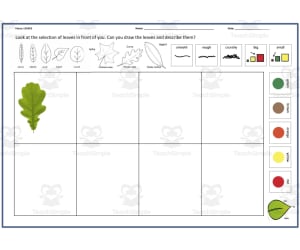
Science: Describing Leaves Science: Describing Leaves is a comprehensive educational resource designed to enhance students' understanding of basic science. Suitable for Grade 1 to Grade 4 classrooms, this product hones focus on the diverse nature of leaf structures and forms. Included Templates The product offers an engaging variety of leaf templates, each exhibiting a unique feature. The collection comprises: Curvy leaves, Jagged leaves, Spiky leaves, and 'Regular' leaf template. Each type has its own page which can easily be modified as required – all pages are fully-editable. Suggested Activities and Exercise: To promote hands-on learning experiences that also hone scientific observation skills; educators are encouraged to gather local leave samples prior to worksheet activities. Students can then sketch out these samples onto the provided sketch areas in each sheet. In addition, they participate in descriptive tasks expertly designed with academic growth in mind. They utilise the key provided on each sheet to capture detailed traits of each drawn leaf sample - color variance, size particulars amongst many other features. Digital format: The worksheets come contained within a Zip file format for easy download and storage across varying digital platforms or devices. Educational Strategies: With Science: Describing Leaves, navigating through diverse teaching strategies is simplified; possible implementation methods include: Larger group activities facilitating teamwork among learners; Focused small group sessions based on group members capabilities; Independent assignments empowering individual problem-solving abilities. Incorporating Science: Describing Leaves into your teaching portfolio ensures not only learning, but truly experiencing basic science in ways most engaging for young learners.
Author Elementary Resources 4 U
Tags Leaves, Science Education, Leaf Structures, Hands-on Learning, Descriptive Tasks
Science: Crickets
Science, Life Sciences, Animals, Grade 1, 2, 3, 4, Worksheets & Printables, Worksheets
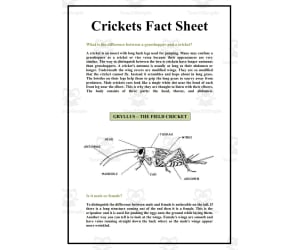
Science: Crickets This is an exciting and informative teaching resource which aims to enrich educators' toolkit by offering ample knowledge about crickets, a fascinating part of Zoology. This easy-to-use, fully editable product is designed to engage and educate children aged from 6 - 11 years. Included Components: Labelling the cricket Worksheet: An engaging worksheet that helps familiarize students with different parts of a cricket. Crickets Facts Sheet: A comprehensive facts sheet brimming with interesting details about crickets. Life Cycle of a Cricket Guide: An easy-to-understand information module explaining the life cycle journey of crickets concisely. Fostering curiosity among young minds, these resources promote active class participation while paving the way for future scientific study. The visually-engaging graphics and diagram included embolden learners to interact beyond mere textual comprehension also! Pedagogical Flexibility: Educators can utilize these resources in a variety of educational settings and modify them as per teaching needs – perfect for whole group instruction or during individual student lessons; they are equally beneficial when presented as homework tasks to reinforce classroom teachings. Great fit into Grades 1-4 Science curriculum especially under zoology sub-theme 'Crickets', this proves beneficial regardless if you're instructing in public schools or leading homeschooling settings. Note: This product download comes as a Zip file for easy access and convenience.
Author Elementary Resources 4 U
Tags Crickets, Zoology, Insect Species, Life Cycle, Teaching Resource
Science: Chameleons
Science, Life Sciences, Animals, Grade 1, 2, 3, 4, Worksheets & Printables, Worksheets
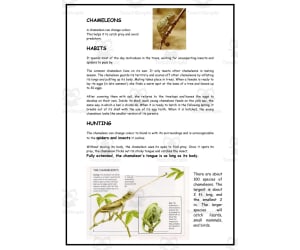
Science: Chameleons A teaching resource crafted to captivate the minds of young learners, ages 5 to 9 years old. This caters appropriately for grade levels from Grade 1 up to Grade 4, creating a learning platform compatible with diverse age groups. Resource Content A Fact Sheet Fill in the missing words activity Creatively engaging word search This three-page resource allows educators the leisure and flexibility of introducing students to chameleons at their convenience while fueling learner interaction. The Fact Sheet: Packed with crucial details about chameleons—perfect for initiating discussions or provoking further exploratory research projects in zoology. Fill in the Missing Words Activity: This component encourages students in understanding application and comprehension level testing assisting significantly in measuring student's progression effectively, yet sans any formal or intensive tone. Interactive Word Search Puzzle: An educative vocab reinforcement tool designed cleverly to make learning fun. It could either be implemented as an engrossing classroom challenge or an enriching homework assignment. Inclusive Learning Model Promotion: Crafted optimally for whole group sessions fostering cooperative teaching-learning models - thus transforming classrooms into dynamic educational ecosystems bustling with curious minds delving enthusiastically into exploration together. Alternatively, these resources are also beneficial during small group interactions allowing educators individual focus on each learner’s specific queries progressing at variable rates catering best suited for them.<\P In Summary, Science: Chameleons, is an ultimate resource depositary for educators seeking interactive yet informative materials emphasizing primarily on the zoology branch of science—a definite addition in every educator’s toolset advocating engaged learning dipped in captivating reptile themes formatted in easy-to-understand manner.
Author Elementary Resources 4 U
Tags Chameleons, Zoology, Interactive Learning, Educational Resource, Reptiles
Science: Investigation Booklet
Science, Basic Science, Not Grade Specific, Activities, Projects
The Science: Investigation Booklet The Science: Investigation Booklet is an invaluable resource suitable for all grade levels, promoting active participation in scientific processes. This wide-ranging tool can assist educators in enhancing their students' comprehension and engagement with scientific investigations, applicable in both public school or homeschooling contexts. Design & Usability This resource encompasses an editable 5-page booklet that can be adjusted to any science experiment. It includes straightforward headings for clean organization, enabling teachers and students to seamlessly comprehend its intentional design. It fits perfectly into whole-class laboratory experiments, small-group investigations, individual projects at home or even extended research tasks. Key Features: Editable 5-page booklet customizable to any science experiment Clean organization with straightforward headings Versatile usage including lab experiments, group investigations & homework projects Reusability & Customization A notable strength of the Science: Investigation Booklet lies within its reusability across unimaginable possibilities—ideal for promoting continuity across different topics within the expansive subject of science. The blank format permits flexibility letting teachers tailor-fit the content appropriate to their lesson plans covering diverse competencies or interests. For instance, biology lessons may vary from chemistry or physics classes—all these achievable via one informative tool! Note: Fully editable feature grants complete autonomy over instruction manual bespoke aligned with personalized strategies. Additional Convenience Feature: Packaging: This package comes as a Zip file - ensuring ease of downloading and storage whilst maintaining high-quality displays during class hours. The Science: Investigation Booklet offers a practical solution that promotes involved learning experiences enhancing critical thinking skills enabling students to delve deep into basic sciences with guided procedures. It simplifies cooperative analysis across settings, turning every lab period into interesting explorations. Avail this versatile educational material today!
Author Elementary Resources 4 U
Tags Science Investigation, Active Participation, Scientific Processes, Teaching Strategies, Critical Thinking

Alphabet Interactive Notebook
ELA, Language Development, Pre-Reading, Kindergarten, Preschool, Activities
These interactive notebook pages for the alphabet work great inside a composition notebook or a spiral notebook. Students will be able to work with letter sounds and identification as well as handwriting practice. What is included for each letter? Each letter has a 1 page template for creating two notebooking pages. I know the letter [letter name] header for page 1. Capital and lowercase letter identification cards. I can find things that start with the letter [letter name] header for page 2 where students will look through magazines or other printed material to find pictures of things that begin with the letter. I can find the letter tab where students look through magazines or other printed material to find examples of the letter. Letter stickers or stamps can also be used in this section. I can write tab where students will practice writing the letter. At the end of the product are writing lines included if you want to write on primary lines. How to Use: To use these notebook pages, students will cut along the dotted lines to separate the different features. The students will glue the "I know the letter" section to the top of the left hand page and will glue the "I can fine things that start with" the letter on the right hand page. The capital letter and lowercase letter cards should go directly under the "I know the letter" header. The "I can find" and "I can write" flaps should go under the capital and lowercase letter cards, making sure to only put glue on the backside where the solid line is located. Students will look through magazines or other printed material to find examples of the letter in print as well as pictures that begin with the letter to glue in the appropriate locations. Skills Assessed: These alphabet interactive notebooks will allow students to practice letter recognition, letter formation and beginning sounds.
Author The Connett Connection
Tags Alphabet Activities, Alphabet Interactive Notebook

Alphabet Beading Center
ELA, Language Development, Pre-Reading, Kindergarten, Preschool, Centers, Activities
This alphabet fine motor beading center will assist students in practicing letter recognition and in building their fine motor skills. This task box alphabet activity will allow students to stay engaged and have fun while learning to recognize letters. What is Inside: This fine motor activity provides letter recognition cards with five capital or lowercase letters on each card. Some letter cards feature letters in alphabetical order while the others have the letters all mixed up. There is also a worksheet where the students, or the teacher, can write their own letter sequences to create with the alphabet beads. How to use: Students will choose one alphabet card. They will then hunt for the beads that are a match to the letters on their card. Afterwards, they will string the beads in the correct order onto their pipe cleaner. Types of Activities Literacy or Fine Motor Center - Place the cards, beads and pipe cleaners inside a center for students to complete. Small Group Activity - These work well for small group activity for students who need extra practice in identifying letters. Morning Tub or Basket - These cards work well as a morning activity as students wait for classmates to arrive to class. This beading center can be used in a variety of different locations inside the classroom. These alphabet cards can be stored in a pencil box to create an easy to set up literacy center. Students will have all they need to complete this activity all in one spot. By using pencil boxes, the students can easily clean up the center and put it away. Skills Assessed: This beading activity helps students practice identifying letters and letter recognition, for both capital letters and lowercase letters. In addition to letter knowledge, students will also practice their fine motor skills by stringing beads on the pipe cleaners.
Author The Connett Connection
Tags Alphabet Beading, Fine Motor Center, Fine Motor Skills, Alphabet Activities, Alphabet Center