



3,984 products added recently
Page 259 - Teacher Tools
Equip yourself with tools that streamline your teaching process and enrich your classroom experience. This collection includes organizational planners, assessment templates, and classroom management strategies. By integrating these resources, you can focus on delivering impactful instruction and fostering student success.

 Show filters


Prepositions of Place | Beginner Lesson Plan
ELA, Grammar, Grade 9, 10, 11, 12, Teacher Tools, Lesson Plans
Prepositions of Place ESL and EFL lesson plan for A1 beginner English students. This TEFL resource is ready to go and comprises a range of teaching materials, such as flashcards, activities, conversation topics, and writing drills. Created to raise language proficiency for early English students, the lesson dives into the use of prepositions of place in a variety of situations. Describing the location of someone or something in relation to something else, it empowers ESL students with the knowledge and confidence to use the prepositions of place accurately in every day conversation. With the inclusion of activities, exercises, and real-life examples, this lesson plan strengthens language concepts and establishes a solid foundation in the basics of English grammar. This lesson plan includes: Cover page Flash cards A warm-up activity Main use Construction details Rules, along with any exceptions Illustrative examples Two closed exercises One open exercise Revision exercise Writing exercises Chatterbox, a recurring feature in our course books encouraging conversation Activity , such as a game, quiz, puzzle, etc., to conclude the class The lesson plan is available in PDF with 27 ready to print pages and one digital access file. Answer key included. A part of it is on Google Apps. The answer key is also included for reference.
Author TEAM TEFL
Tags Prepositions, Grammar Exercise, Language Arts, ESL Lesson, Group Work

Monarch Butterflies | Interactive Science Lesson | Micro-Learning Deck
Science, Life Sciences, Insects, Grade 5, 6, 7, 8, Teacher Tools, Lesson Plans
This micro-learning deck is the perfect accessory to your Science instruction! This digital slideshow presents Monarch Butterflies. Within this slideshow, you will receive: -Video Lesson -Reading Passage w/ Audio -Close Reading -Quick Write The informational texts included in this resource alongside the informal assessments will keep your students engaged from beginning to end.
Author Teach Me This
Tags Monarch Butterflies, Interactive Science, Science Lesson, Mini Lesson, Informational Text
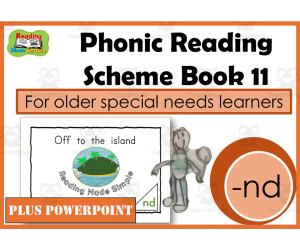
Phonic Reading Scheme for Older Students: _ND Endings: Book 11
Special Resources, ELA, Special Education Needs (SEN), Language Development, Phonics, Reading, Kindergarten, Preschool, Grade 1, Literacy Readers, Teacher Tools
This _ND Endigns decodable reading book is the 11th book in a series that can help children with special needs pupils develop reading fluency. Each book comes with a matching PowerPoint making it suitable for use in a range of settings. The Jack Stories, of which this book is one, introduces one phonic sound at a time, and subsequent books build on the vocabulary of the books before, constantly revising and reviewing learned sounds. Irregular sight words are only slowly and gradually introduced. Science of reading aligned. Based on the most up-to-date phonic research. Follow the adventures of Jack in sequence! These books should be read sequentially as they tell one long story, each telling a part. This book contains words with the following sounds: CK: OO, EE and SH and CH and _ND. The whole series to date can also be purchased as a growing bundle here, with a scope and sequence. This series has been written with the aid of one of my pupils, aged 8. He has drawn some of the pictures. What makes this phonic reading programme for special needs different? · It has its own, easy-to-download and print phonic reading books, making it accessible to many children worldwide. · Each book carefully builds on the vocabulary of those that have gone before, providing much repetition, without relying on predictable text. · Pictures aid the storyline without encouraging reading from the pictures – i.e. guessing. · The vocabulary is based on phonic families, which are introduced in a carefully planned way. · True sight words – those that cannot be sounded out - are kept to the very minimum. Most words are introduced in their phonic family wherever possible. · It is truly multisensory, using the power of the hand. We not only look at the words, but we write them too. This is powerful and has the bonus of turning the child not only into a reader but into a writer as well. Typical signs that this programme can help: Those with dyslexia, or suspected of having dyslexia Difficulty recalling words when seen on flashcards or when reading texts, which results in no or little reading fluency b/d letter reversal of a chronic nature – i.e. the child has not grown out of it Difficulty ordering letters in words: E.g. top becomes pot. Difficulty differentiating between like words: spoon/soon; back/black; sheep/sleep etc… Difficulty tracking words across a page How long is the book? The reading book is 16 pages long. What is included? 1 PDF 16 pp X A5 Print as a booklet Flip on the short edge One 16-slide PowerPoint
Author Lilibette's Resources
Tags Decodable Reading Books, Download And Print Decodable Readers, Reading Fluency, Guided Reading, Special Needs, PowerPoint, Phonics Intervention, ND Endings

All About The Eye | Human Body Video Lesson
Science, Life Sciences, Human Body, Not Grade Specific, Lesson Plans, Teacher Tools
Product Description: The 'All About The Eye | Human Body Video Lesson' is a comprehensive educational resource that simplifies the complexities of the human eye for learners across grade levels. Key Features Made for all grades - Falling within human biology, this versatile aid can be effectively used by educators across grade levels due to its nongrade specific format. Optimal Duration - In just 10 minutes, it succinctly covers pertinent details about the eye's structure and function. Educational Format - This lesson is presented in an engaging video (MP4 format), stimulating visual learning and ensuring better comprehension among different types of learners. Its versatility allows integration with varied teaching strategies – facilitating small group discussions or even as additional reference for homework assignments. Suitability for Different Teaching Modes Homeschooling educators can seamlessly incorporate this multimedia presentation into their course routine. They enjoy flexibility while planning a customized syllabus, while effortlessly maintaining learner engagement. In traditional classroom settings, teachers might use this tutorial as a supportive supplement alongside textbooks during regular lectures. The practical benefits offered by it make this product stand out as genuinely teacher-friendly tool which simplifies complex concepts. To Conclude: 'All About The Eye | Human Body Video Lesson' serves as an indispensable tool packed with captivating facts about the human eye within just 10 minutes! Regardless of whether you are teaching beginners experimenting with biology basics or older students revising crucial concepts – here’s an invaluable addition to your educational toolkit!
Author Educational Voice
Tags Eye Structure, Eye Function, Visual Learning, Biology Education, Multimedia Resource

Writing Well Grade 3: A Guide for Proper Writing Technique
ELA, Writing, Grade 3, Teacher Tools, Lesson Plans
Writing Well Grade 3: A Guide for Proper Writing Technique Writing Well Grade 3: A Guide for Proper Writing Technique is a well-crafted, comprehensive language arts toolkit explicitly developed for third-grade educators. Its focus on writing skills such as punctuation, sentence structuring, paragraph building and story crafting helps increase students' proficiency in articulating their thoughts in an eloquent manner. The guide simplifies complex writing concepts into easy-to-understand lessons that are easily digestible by young learners. The thoughtful organization of the book allows new concepts to be introduced at a manageable pace. Displayed on top of every page are clear definitions or rules associated with the concept being taught- promoting memory retention and facilitating clearer learning experiences. Sparkling Features An in-depth exploration into parts of speech such as nouns, verbs etc. Comprehending these linguistic building blocks grants children insightful views into the workings of sentence formation- aka grammar! Mastering these key components not only instills confidence among young writers but also substantially improves their language usage skill. An included answer key providing an efficient means for educators to determine student comprehension levels and promptly address areas requiring improvement. Distributed as a PDF file type making it accessible across various platforms without any specific software requirements. The versatility provided by Writing Well Grade 3: A Guide for Proper Writing Technique, extends beyond individual pupil studies or homeschooling applications; it seamlessly integrates with small group activities where peer discussions magnify understanding levels; including whole group instruction permitting lesson navigation point by point fostering an inclusive learning environment. The final objective being whether you aim at bolstering language arts literacy within your classroom domain or seek to amplify homeschooling efficiencies- this resource meets assorted lesson planning requisites robustly while aligning comprehensively with grade 3 English Language Arts recommendations.
Author Classroom Complete Press
Tags PDF

U.S. Senator Michael Bennet (CO) Biography PowerPoint
Social Studies, History, History: USA, Government, Not Grade Specific, Teacher Tools, Presentations
Introducing an informative 56-page PDF biography PowerPoint about former 2020 Democratic Presidential candidate and current Colorado Senator Michael Bennet. This concise presentation details key biographical details, including Bennet's birthdate and birth city, education background at St. Albans high school and Wesleyan University, as well as an overview of his accomplished career and political experience. Educators will find timelines of Bennet's previous elected offices, such as Denver Public Schools Superintendent and his election to the U.S. Senate in 2009. The biography also covers Senator Bennet's legislative accomplishments, advocacy work, and personal life details including his marriage and three children. This fact-based PowerPoint can supplement government, history, and social studies lessons for students studying prominent American politicians or Colorado state history.
Author Mr. Matthews Teacher Store
Tags Biography, Government, Politics, History, Colorado

I WONDER - How Do Animals Adapt Throughout Their Life Cycle
Animals, Life Sciences, Science, Biology, Grade 6, 7, 8, 9, 10, 11, 12, Lesson Plans, Teacher Tools
Video Introduction An amazing video designed for the students to learn more about STEM. I WONDER - How Do Animals Adapt Throughout Their Life Cycle | Animated Video Lesson Do you like STEM subjects? what is your favorite one? Have you ever tried to plant a seed? If yes, tell us more about it. Or have you ever tried to invent something? If yes, tell us more about it. And how do you think it will help us? Have you ever seen a microorganism under a microscope? What was it? And how it looked like? Mathematics is a marvelous subject. Let' sharpen our brains and solve some equations. Do you like timetable tricks? What is your favorite one? Do you know how to code? Have you ever created an app or a game before? If yes, how was it like? I WONDER - How Do Animals Adapt Throughout Their Life Cycle | Animated Video Lesson The video is perfect for encouraging the researching skills for the students, while learning more about this fantastic topic. I WONDER - How Do Animals Adapt Throughout Their Life Cycle | Animated Video Lesson This friendly designed video is suitable for students at school, homeschooling, and as a group activity. Format Available in MP4 format.
Author Educational Voice
Tags How Do Animals Adapt Throughout Their Life Cycle, How Do Animals Adapt Throughout Their Life Cycle Video, Animals Adaptation, Animals Adaptation Facts, Animals Adaptation Facts For Kids, Animals Adaptation Video

Substance Use and Abuse Health: 4th and 5th Grade Unit 4
P.E. & Health, Life Studies, Physical Education, Health, Special Resources, Life Skills, Social Emotional Learning (SEL), Social Skills, Grade 4, 5, Teacher Tools, Lesson Plans, Worksheets & Printables, Worksheets
Substance Use and Abuse Health: 4th and 5th Grade Unit 4 For 4th and 5th Grade Health, there are seven standards that students will practice and learn. Through using this Substance Use and Abuse: Health: 4th and 5th Grade Unit 4 students will explore and learn to identify daily healthy habits. With this 4th and 5th Grade Unit 4: Substance Use and Abuse lesson plan, your students will learn how to avoid these harmful substances. It has 16 pages of engaging activities with the opportunity for your students to identify and practice healthy habits as they learn to understand the long-term and short-term effects of drugs and other harmful substances. Along with that, they will learn and develop refusal skills to avoid drugs in unhealthy situations. Part of the activities include writing a letter to a friend that will warn them about the effects of drugs. Students will also learn how the media often influences the use of helpful and harmful drugs. Through these lessons, your students will gain a comprehension of the importance of making good healthy choices. Along with all this, there's a worksheet on coping skills that is helpful for students who are dealing with family or friends who are using drugs. In the end, there is an assessment to check for understanding. An answer key is also included. All these activities meet the Common Core Standards for health. Included in this Substance Use and Abuse: Health: 4th and 5th Grade Unit 4 are the following: A worksheet where students will be able to understand the long term and short-term effects of drugs along with other harmful substances. Students will write a note to a friend in order to warn them about the harmful effects of drugs. Students will be able to learn about the harmful and helpful effects media has on our health. They will practice 10 different refusal skills to avoid drugs with classmates or as a class when in unhealthy situations with harmful substances. Coping skills on how to deal with family or friends who are using drugs is included. Lastly, there is an assessment to check for understanding. Answer keys are also included. There are 16 pages included! There are seven units that cover all the health requirements for 4th and 5th grade. Here are the links to other health units: Health | 4th and 5th Grade Unit 1: Personal Health Health | 4th and 5th Grade Unit 2: Growth and Development Health | 4th and 5th Grade Unit 3: Nutrition and Physical Activity Health | 4th and 5th Grade Unit 4: Substance Use and Abuse Health |4th and 5th Grade Unit 5: Injury and Violence Prevention Health | 4th and 5th Grade Unit 6: Prevention and Control of Disease Health |4th and 5th Grade Unit 7: Environmental Consumer Health
Author K-5 Treasures
Tags Health Unit, Personal Health, Healthy Goals, Health Activities, Physical Goals, Health Goals, Health And Wellness, 4th Grade Health, 5th Grade Heath, Heath Units

Science Reading Passage: The Dinosaur Tyrannosaurus rex (Fillable PDF)
Science, ELA, Reading, Reading Comprehension, Strategies, Resources for Teachers, Life Sciences, Animals, Biology, Grade 6, 7, 8, 9, Writing Prompts, Worksheets & Printables, Centers, Activities, Teacher Tools, Assessments, Quizzes and Tests, Quizzes, Tests
Life Science Reading Comprehension Passage and Questions: The Dinosaur Tyrannosaurus rex (Fillable PDF) This very engaging science reading passage about Tyrannosaurus rex and how scientists use fossils to understand how it lived. It explains what fossils are, where and when T. rex lived, and what fossil evidence reveals about its size, teeth, skull, movement, speed, diet, hunting, and scavenging. It also shows how modern tools, such as CT scans, imaging, computer simulations, and coprolites , help paleontologists build a clearer picture of T. rex as a powerful predator from the late Cretaceous period. This passage is designed to bridge the gap between science and literacy through strengthening reading comprehension and sparking scientific curiosity in middle school students. The passage blends English Language Arts skills with accurate science content that supports NGSS classroom practice. Ideal for interdisciplinary learning in ELA and Science. Suitable for Grade 9 review, too! This passage is designed as a fillable PDF , which means students can type their answers directly into the document on any computer or tablet . Each page includes highlighted text fields that show them exactly where to type! Student Tasks for The Passage: 5 multiple-choice questions targeting main idea, key details, inference, vocabulary in context, and use of evidence 5 vocabulary matching items with clear, student-friendly definitions 5 text-based questions that require citing specific lines or facts 1 summary prompt that asks students to condense central ideas accurately Full answer key for every section Available Formats for this Resource PDF Word Docs Google Docs FULL CATALOG OF DOWNLOADING LINKS HERE Product Details Length: 5 pages total Grades: 6–8, also suitable for Grade 9 review Use cases: close reading, stations, homework, intervention, test prep, and sub plans Standards support: reinforces informational-text skills and supports NGSS-style sense making through observation, modeling, and clear use of claim, evidence, and reasoning Why Teachers Choose This Set Authentic science content paired with rigorous literacy practice Consistent task structure across all passages for easier planning and smoother student routines Clear, age-appropriate writing that builds confidence without oversimplifying Other Science Reading Collections you May find in the store: 1. Astronomy & Space Science 2. Volcanoes, Rocks, & Mountains 3. Rock Cycle, Soil, & Sinkholes 4. Mars, Glaciers, & Antarctica 5. Water Cycle, Acid Rain, & Wastewater 6. Insects, Animals, & Ecosystems 7. Bioluminescence & Insects 8. Animal Skin, Cats, & T. Rex 9. Human Body and Senses 10. Health & Applied Bioscience 11. Waves, Light, & Imaging 12. Electricity & Energy 13. Motion & Materials 14. Chemistry and Materials Science Use this set to reinforce ELA skills in science, to add literacy to your lessons, and to support independent work. The passages strengthen main idea, evidence use, vocabulary in context, inference, cause and effect, and summary writing. With ready-to-use assessments and complete answer keys, you can provide focused practice that is simple to run and fast to review.
Author Middle & High School - CORED Education
Rating
Tags Middle School, Reading Comprehension, Reading Strategies, ELA, Centers, Reading Passage, Assessments, Vocabulary, Life Science, The Dinosaur Tyrannosaurus Rex
I WONDER - What Is A Chemical Bond | Animated Video Lesson
Chemistry, Science, STEM, Grade 6, 7, 8, 9, 10, 11, 12, Lesson Plans, Teacher Tools
Video Introduction An amazing video designed for the students to learn more about STEM. I WONDER - What Is A Chemical Bond | Animated Video Lesson Do you like STEM subjects? what is your favorite one? Have you ever tried to plant a seed? If yes, tell us more about it. Or have you ever tried to invent something? If yes, tell us more about it. And how do you think it will help us? Have you ever seen a microorganism under a microscope? What was it? And how it looked like? Mathematics is a marvelous subject. Let' sharpen our brains and solve some equations. Do you like timetable tricks? What is your favorite one? Do you know how to code? Have you ever created an app or a game before? If yes, how was it like? I WONDER - What Is A Chemical Bond | Animated Video Lesson The video is perfect for encouraging the researching skills for the students, while learning more about this fantastic topic. I WONDER - What Is A Chemical Bond | Animated Video Lesson This friendly designed video is suitable for students at school, homeschooling, and as a group activity. Format Available in MP4 format.
Author Educational Voice
Tags What Is A Chemical Bond, What Is A Chemical Bond Video, Chemical Bond, Chemical Bonds, Chemical Bond Facts, Chemical Bond Facts For Kids, Chemical Bond Video, Chemical Bond Video For Kids
I WONDER - What Are Gas Giants | Animated Video Lesson
Space, Earth and Environmental Sciences, Science, Grade 6, 7, 8, 9, 10, 11, 12, Lesson Plans, Teacher Tools
Video Introduction An amazing video designed for the students to learn more about space facts. I WONDER - What Are Gas Giants | Animated Video Lesson Do you like reading about space? If yes, what is your favorite topic? What do you know about our solar system? What is the smallest planet in our solar system? What is the biggest planet in our solar system? What is the hottest planet in our solar system? And what is the coldest one? Do you think there are aliens? If yes, what do you think they look like? What do they eat and how they speak to each other? Where do they live? What is a galaxy? And what is a milky way? Have you recently saw a shooting star? If yes, tell us more about it, like when did it happen and where? What is a blackhole? Can a blackhole gets bigger by time? Do you like counting the stars? What do you think a star is made of? I WONDER - What Are Gas Giants | Animated Video Lesson The video is perfect for encouraging the researching skills for the students, while learning more about the fantastic space. I WONDER - What Are Gas Giants | Animated Video Lesson This friendly designed video is suitable for students at school, homeschooling, and as a group activity. Format Available in MP4 format.
Author Educational Voice
Tags What Are Gas Giants, What Are Gas Giants Video, Gas Giants, Gas Giant, Gas Giants Facts, Gas Giants Facts For Kids, Gas Giants Video, Gas Giants Video For Kids, Gas Giant Facts, Gas Giant Video
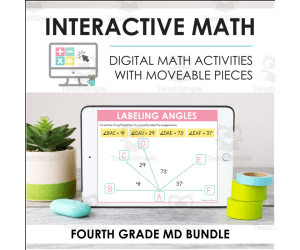
Digital Math for 4th Grade MD Standards - (BUNDLE of Slides + Self-Grading Quiz)
Math, Measurements, Grade 4, Quizzes, Quizzes and Tests, Teacher Tools
Digital Math for 4th Grade MD Standards - (BUNDLE of Slides + Self-Grading Quiz) This comprehensive teaching resource aligns with4.MD.1 - 4.MD.7 standards. It's designed to facilitate interactive math experiences focused on measurements. Interactive Learning Experiences This bundle comprises digital elements such as interactive slides that enable review, practice, and enrichment of mathematical concepts via activities like dragging and dropping images or visually sorting them. Digital Efficiency The entirely digital nature eliminates physical paperwork, providing you with ready-to-use materials for your virtual classroom. Interactive Slides:The bundle includes slides available in both PowerPoint and Google Slids formats tailored to each specific standard being taught. Self-grading Quizzes:Incorporates a handy self-grading Google Forms quiz per standard, allowing quick understanding gauge without having to manually score each response individually. Versatility in Usage This product offers flexibility regarding its use; it can be utilized as a standalone distance learning assignment—as well as incorporated into small group instruction or utilized as an activity within a center during normal classroom activities. Ease of Use: Google Workspace Compatible b The product's compatibility with Google Workspace allows straightforward assignment through Google Classroom. Included instructions guide educators about how they can assign either whole files or select individual slides at any particular time along with corresponding quizzes through their preferred platform. In Conclusion: The Digital Math for 4th Grade MD Standards serves many purposes simultaneously – reinforcing measurements education in mathematics while promoting student engagement through hands-on digital tasks – a staple in today's technologically advanced classrooms. It is, without a doubt, an indispensable teaching resource for educators and homeschoolers.
Author Markers and Minions
Tags Interactive Slides, Self-grading Quiz, Measurements Education, Digital Math, Distance Learning

Current U.S. Representatives from New Mexico (Biography PowerPoint Bundle)
Social Studies, History, History: USA, Government, Not Grade Specific, Teacher Tools, Presentations
Introducing a biography bundle featuring current U.S. Representatives from New Mexico. This informative 80-page PowerPoint series profiles Congress members Melanie Stansbury, Gabe Vasquez, and Teresa Leger Fernandez. Learn key details like birthdate, education background, career experience, political service, elected offices held, and major accomplishments. Created for educators to use as a supplemental social studies resource on modern government leaders. The engaging slides can facilitate whole-class instruction and independent student research. Applicable for civics, history, and government courses in middle grades through high school. Provides up-to-date details to help students understand the real-life pathways and impact of present-day Congressional representatives.
Author Mr. Matthews Teacher Store
Tags Biography, Government, Representatives, Congress, Civics
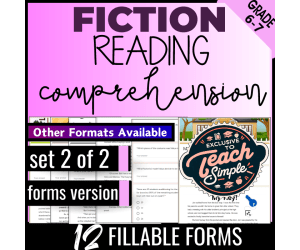
Reading Comprehension Passages Fiction Set 2 (Google Forms)
ELA, Reading, Language Development, Vocabulary, Common Core, ESL, Spelling, Reading Comprehension, Resources for Teachers, Grade 6, 7, Activities, Assessments, Teacher Tools, Tests, Quizzes and Tests
Reading Comprehension Passages Fiction Set 2 Overview Reading comprehension lessons, especially written for Grade 6-7, providing the chance to read interesting and engaging passages. Each lesson has a mix of questions to check understanding, a vocabulary or spelling activity to help remember key language introduced, and a writing exercise. Full answer keys are provided. Passages Include 1.Cooking Camp: Jason tries to make enough money to go to cookery camp. 2.Graduation: Matt helps prepare for his brother's graduation party. 3.No Internet- Sam and Klara discuss life in the past with their gran. 4.School Musical: Maiya and her concerns about the school musical. 5.My Key: Jon has the house to himself for once. Does he enjoy it though? 6.Creepy Well: Jo and some kids from school at a creepy well. 7.Bug Trip: The twins are driving Dad crazy with their science project. 8.Solo Flight: Sid gets his first solo flight in bizarre circumstances. 9.Summer at Gran's: Andrea trying to make the best of her time at Gran's. 10.Wild Wild West: Alec on the ranch with his dad. 11.Danger Mountain: Nath tries a dangerous ride down the mountain. 12.Math Queen: Rhonda doing her best at the Math competition. Google Forms Version This is the Google Forms editable and fillable/self grading version. This download is available in GOOGLE Docs, GOOGLE Forms, GOOGLE Slides. PDF, PPT, WORD. FULL CATALOG OF DOWNLOAD LINKS HERE Grade 6/7 Links Fiction Set 1 Google Docs Google Forms Google Slides PDF PPT Word Guided Reading Materials Fiction Set 2 Google Docs Google Forms Google Slides PDF PPT Word Guided Reading Materials Nonfiction Set 1 Google Docs Google Forms Google Slides PDF PPT Word Guided Reading Materials Nonfiction Set 2 Google Docs Google Forms Google Slides PDF PPT Word Guided Reading Materials Reading Passages Overview Each passage is especially written for Grade 6/7 students, including key vocabulary required for this age group. Topics are varied and are accompanied by colorful graphics. Topics are meant to educate, yet entertain the modern student. The majority of these short stories contain an important message - a way of developing these young learners further. Mixed Questions The mixed questions section of each lesson includes a variation of five to six comprehension, vocabulary and Math questions. In addition, key reading strategies are frequently covered including cause & effect, summarizing, compare & contrast and making conclusions. Mixed questions require a written response (no MCQ's), full answers and example responses appear at the end of the lesson. Spelling & Vocab Each reading passage contains a variety of words and phrases designed for Grade 6/7 students. Spelling and vocab activities provide the opportunity to build fluency with these words. Activities provide clues to help assist students. Vocabulary activities include extra questions where students must write a synonym, an antonym or a sentence using a certain word. Writing Prompts Writing prompts are designed to continue the theme or lessons learned in the story. Students are persuaded to write in a variety of ways and each prompt includes several cues to help. The main focus in this product, is the student. Prompts will require the student to relate to past experiences and encourage them to discuss feelings and ways to improve. Full Answer Keys Full answer keys and sample responses are provided so no matter how busy you are, you know you're covered! Mixed question answers provide evidence from the text, Math questions contain the relevant workings. Answers are designed for use by the teacher, but also suitable as a handout to the student. For similar downloads and other frees, do check out Cored Group on TeachSimple.
Author Cored Education
Rating
Tags Elementary, Reading, Comprehension, Vocabulary, Answers, Common Core, Spelling, Writing, Passages, Self Assessment

Literature Circle Role Sheets
ELA, Literature, Grade 1, 2, 3, Teacher Tools, Lesson Plans
Literature Circle Role Sheets Literature Circle Role Sheets is a robust educational tool designed specifically for students in grades 1 through 3. It promises to engage learners in Literature and Language Arts by encouraging active student participation. Unique Features The product houses a broad set of reproducible role sheets. Each sheet, offering roles such as Character Sketcher and Plot Person, aims to drive lively and informative literature circle discussions. Holistic Learning Development Promotes writing skills via consistent content generation Fosters listening abilities by encouraging absorption of peer perspectives Aids cooperative learning through team discussions Allows individual assessment based on distinct role assignments This resource comes complete with 68 ready-to-print PDF format pages,, which are great not just for classrooms but also small groups or homework assignments. Effortless Implementation Getting started with Literature Circle Role Sheets is easy - the package includes preselected lists of student books alongside implementation guidelines. Inclusion of Observation Charts m The toolkit also features observation charts for measuring reading success among learners - tracking progress has never been simpler! Literature Circle Role Sheets,, therefore, can cater to diverse learning styles effectively. In conclusion, this multifaceted teaching resource not only builds language proficiency but also nurtures an understanding and appreciation for literature—it's truly a recipe for classroom success!
Author Classroom Complete Press
Tags Literature Circle, Listening Skills, Observation, Charts, Checklist, Literature Circle Role Worksheets, Literature Circles High School Handouts

Cells,Skeletal & Muscular Systems: Cell Structures and Functions - FLASH-PC
Science, Life Sciences, Human Body, Common Core, Grade 5, 6, 7, 8, Teacher Tools, Lesson Plans
Cells, Skeletal & Muscular Systems: Cell Structures and Functions - FLASH-PC Teaching Resource This teaching resource is specifically crafted for Grades 5 to 8. It simplifies complex science topics related to the human body and includes interactive learning activities. Key features include: Covers essential aspects of cells, skeletal and muscular systems aligned with science curriculum . Interactive learning activities integrated together with theoretical content. 'Before You Read' and 'After You Read' questions fostering learner engagement and promoting critical thinking. Vital supports: In addition to main content, this product offers supplementary materials: Printable materials that act as study aids or ready references, Vocabulary flash cards for mastering terminology, Graphic organizers that aid in concept visualization. Flexibility in Usage & Standards Aligned This tool provides multiple usages based on educator's individual requirements or classroom sizes. From small group discussions for more focused learning, larger group instructions or even assigning homework - everything is possible with this resource’s versatility. It aligns perfectly with Common Core State Standards (CCSS) and Bloom's Taxonomy protocols providing educators the confidence that they're delivering quality educational content which meets regulatory standards while promoting academic growth needs.
Author Classroom Complete Press
Tags Software (PC)

Country Study on Croatia - Presentation - Geography - Europe
Social Studies, History, History: Europe, Geography, Grade 7, 8, 9, 10, Teacher Tools, Presentations
Country Study on Croatia - Presentation - Geography + Social Studies - Southeastern Europe - Balkans Bring Croatia to life in your classroom with this Introductory Teaching Resource on Croatia , designed for Geography, European History (Southeastern Europe - Balkans), and Social Studies . Ideal for Grades 7–12 (Middle School and High School) , this PDF digital presentation is informative, visually engaging, and requires little to no preparation . Students will explore Croatia’s geography, history, culture, language, and economy , making this resource perfect for country studies and introductory lessons in Geography and Social Studies. 📘 Within this Social Studies and Geograhy Presentation Lesson, teachers and educators can find the following topics included: ✅ Greetings in Croatian Language ✅ Geography of Croatia (Southeastern Europe - Balkans) Key facts, bordering countries, and an interactive Google Maps link ✅ Quick Facts Population, population density, capital city, currency, government, and more ✅ History Overview A clear and concise summary of Croatia ’s most important historical events (Southeastern Europe - Balkans) ✅ Geography, Climate & Environment Land area, regions, and climate zones ✅ Croatia’s Economy Major industries, exports, and economic strengths ✅ Zagreb Croatia ’s capital city, including famous landmarks and cultural highlights ✅ Other Major Cities A map highlighting key urban centers across Croatia (Southeastern Europe - Balkans) ✅ Culture & Traditions Customs, values, and traditions that shape Croatia 's society (Southeastern Europe - Balkans) ✅ Goodbye in Croatian Language This Social Studies + Geography Country Study Presentation on Croatia (Southeastern Europe - Balkans) PDF Digital Teaching Resource (14 slides) can be more than great for Middle School and High School Students from 7th grade to 12th grade to introduce Croatia (Southeastern Europe - Balkans) and its culture, language, society, history and economy. Learning with Alan is a Teaching Resource - Educational Material Store whose aim is to help Teachers, Educators and Tutors to achieve their teaching objectives while creating a fun and stimulating environment. Learning should always be fun. Never Forget! If you want to browse more of my Teaching Resources, click here Learning with Alan!!
Author Learning with Alan
Rating
Tags Europe, Country Study, Geography, Social Studies, Presentation, Culture, Timeline, Teaching Resource, European

Current Hispanic American Governors and Lt. Governor (BIO PPT Bundle)
Social Studies, History, History: USA, Government, Not Grade Specific, Teacher Tools, Presentations
Introducing an informative bundle of biography PowerPoint presentations highlighting the current Hispanic American governors and lieutenant governors in the United States. This resource features 180 pages of content on Wes Moore (Maryland), Michelle Lujan Grisham (New Mexico), Jeanette Nuñez (Florida), Howie Morales (New Mexico), Antonio Delgado (New York), and Sabina Matos (Rhode Island). Written at a 7th-8th grade reading level, these presentations explore the backgrounds and journeys of these leaders in an engaging way. Teachers can utilize these materials in social studies and history courses for whole group instruction to build understanding of government roles. The concise content also lends itself to small group discussions or independent research assignments on the impacts and responsibilities of state-level leadership positions in the U.S. political system.
Author Mr. Matthews Teacher Store
Tags Hispanic Leaders, State Government, Political Biography, Social Studies Resources, Biography Presentations

Hercules: The Strongest Man in the World: Emergency Lesson Plan
ELA, Reading, Grade 3, 4, Teacher Tools, Lesson Plans
Hercules: The Strongest Man in the World: Emergency Lesson Plan is a comprehensive and informative teaching resource that prioritizes flexibility for educators under various circumstances. This package notably serves as an ideal tool during unexpected school activities, sudden emergencies, and days when unanticipated interruptions to normal teaching schedules occur. The Ideal Audience: This emergency lesson plan explores the captivating Greek myth of Hercules, making it suitable mainly for Grade 3 and Grade 4 students. Its focus on Language Arts subjects ensures that pupils enhance literacy skills while uncovering the exciting adventures of one of history’s strongest men. Educators would appreciate how its components seamlessly integrate into Reading subsubjets - making it diverse in application and broadens its utilization spectrum. Product composition: The product consists of cross-curricular units embedded in an easily accessible PDF file format. Included are eight ready-to-print pages that bring convenience straight into hands-on classroom experience without compromising quality education standards. The highlight consists of a two-page narrative text about Hercules’ adventures stimulating learners' curiosity while building their comprehension competencies. Diverse Learning Materials: But there's more to this resource than just reading material; it comes with practical worksheets designed to help students digest information more effectively – think participatory learnings yards away from passivity! These materials can foster both individual-level engagements or benefit small group discussions aimed at fostering collaborative thinking among children. Beyond Classroom Extensions: For those instances when some educational vigor needs an extension beyond regular class hours, this valuable compilation also provides "extension activities". These are perfect for homework assignments or extended learning opportunities at home – striking a balance between educator-guided instruction and self-paced learner exploration. In essence, Hercules: The Strongest Man in the World: Emergency Lesson Plan is not just another off-the-shelf teaching tool; it embodies a solution-oriented approach towards unforeseen academic disruptions without sacrificing learning objectives – efficiently serving real-life educational scenarios with admirable scalability.
Author Classroom Complete Press
Tags Hercules, Emergency Lesson Plan, Reading Passage, Fill In The Blank, Extension Activities, Emergency Lesson Plans

I WONDER - What Shape Is A Molecule | Animated Video Lesson
Chemistry, Science, Grade 6, 7, 8, 9, 10, 11, 12, Lesson Plans, Teacher Tools
Video Introduction An amazing video designed for the students to learn more about STEM. I WONDER - What Shape Is A Molecule | Animated Video Lesson Do you like STEM subjects? what is your favorite one? Have you ever tried to plant a seed? If yes, tell us more about it. Or have you ever tried to invent something? If yes, tell us more about it. And how do you think it will help us? Have you ever seen a microorganism under a microscope? What was it? And how it looked like? Mathematics is a marvelous subject. Let' sharpen our brains and solve some equations. Do you like timetable tricks? What is your favorite one? Do you know how to code? Have you ever created an app or a game before? If yes, how was it like? I WONDER - What Shape Is A Molecule | Animated Video Lesson The video is perfect for encouraging the researching skills for the students, while learning more about this fantastic topic. I WONDER - What Shape Is A Molecule | Animated Video Lesson This friendly designed video is suitable for students at school, homeschooling, and as a group activity. Format Available in MP4 format.
Author Educational Voice
Tags What Shape Is A Molecule, What Shape Is A Molecule Video, Molecule, Molecules, Molecules Facts, Molecules Facts For Kids, Molecules Video, Molecule Video For Kids, Science, Science Video For Kids
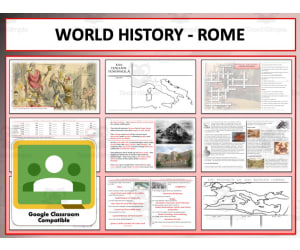
Roman Empire World History Unit
Social Studies, History, History: World, Grade 6, 7, 8, 9, Teacher Tools, Lesson Plans
Roman Empire World History Unit This is aRoman Empire World History Unit that will provide students with resources from the beginning to end of a unit. This unit will leave students feeling more knowledgeable about this point in history and equipped to tackle any and all comprehensive activities related toRoman Empire. This unit is great for middle school students. What You Get: You will receive a zip file that includes: 1. Info Sheet 2. Homework 3. Lesson Plans 4. Crosswords 5. Flashcards 6. Presentation 7. Tests How to Use Roman Empire World History Unit: This is a comprehensive unit of study that will have many components to make learning come to life: Worksheets cover thirteen topics on the history of ancient Rome and the Byzantine Empire: • Italian Geography • Roman Government • The Emperors • Art & Philosophy • Entertainment • Engineering • Religion • Internal & External Problems • The Crisis of the 3rd Century • The Goth Sack of Rome • The Fall of the Western Empire • The Byzantine Empire • Byzantine Engineering The basic set includes text readings, analysis questions, and a variety of different project and image sheets. Modified worksheets are included in the file which have more concise readings as well as a variety of different tasks and activities for ELL students and those who require a modified curriculum. Each worksheet has a corresponding answer sheet to help check students work. A test is included which features multiple choice, short written response, and picture questions. Students can use a set of flashcards to help revise of their tests. A PowerPoint presentation is included which features enlarged readings, animations, and images to help guide students through the materials and illustrate key points. Also included are replacement note-taking slides and sheets which can be used in place of the readings/worksheets for each topic if you wish to save time or practice note taking. Crossword sheets have been made for each topic as potential review/challenge activities for students. I hope you enjoy!! Take A Look At My Best Sellers: Biscayne Bay National Park Geography Unit Medieval Castles Mini Unit The Underground Railroad Mini Unit Japan Complete Elementary Unit Navajo Code Talkers Mini Unit Black Canyon National Park Geography Unit You Can Find More Resources at My Store Front Here: Mr. Gray History
Author Mr Gray History
Tags Roman Empire, World History Unit, Roman Government, Engineering, Religion, Byzantine Empire, Art, Philosophy, Reading Worksheets
California CAASPP 3 Math Practice Tests for Grade 7
Math, Grade 7, Assessments, Teacher Tools, Tests, Quizzes and Tests, Worksheets & Printables
California CAASPP 3 Math Practice Tests for Grade 7 Make test prep stress-free with these CAASPP Grade 7 Math Practice Tests ! This comprehensive, standards-aligned resource includes three full-length tests designed to build math mastery, boost confidence, and help students succeed on the CAASPP. What’s Included ✅ 3 full-length CAASPP math practice tests (30 questions each, 90 total) ✅ Printable student test booklets ✅ Detailed answer key with step-by-step explanations ✅ Complete teacher guide with pacing, scoring, and differentiation strategies ✅ Standards alignment for every question ✅ Coverage of all Grade 7 math domains How It Works in the Classroom These Grade 7 CAASPP math practice tests are designed for flexible, real classroom use: Use each test as a full-length simulation (45–60 minutes) Follow the included 8-week pacing guide for structured test prep Assign specific sections for targeted skill practice by domain Perfect for small group intervention and reteaching Track student growth with built-in scoring and class tracking tools Standards & Learning Goals Students will review and master key Grade 7 math skills, including: Ratios, proportional relationships, percent change, and simple interest Operations with rational numbers (integers, fractions, decimals) Expressions, equations, and inequalities Geometry: scale drawings, circles, angle relationships, surface area, and volume Statistics and probability: sampling, distributions, and compound events Aligned to California Common Core State Standards and designed to mirror real CAASPP expectations. Why Teachers Love It ⭐ No-prep, print-and-go test prep solution ⭐ Mirrors real CAASPP format, rigor, and question types ⭐ Includes clear explanations for reteaching and student support ⭐ Covers all major Grade 7 math domains in one resource ⭐ Helps teachers identify learning gaps and track student progress Teachers love using this as both a diagnostic assessment and a final review tool before testing season! Download these CAASPP Grade 7 Math Practice Tests today and give your students the targeted practice they need to build confidence and achieve high scores on test day!
Author Bright Classroom Ideas Marketplace
Rating
Tags California, Caaspp, State Test, Math
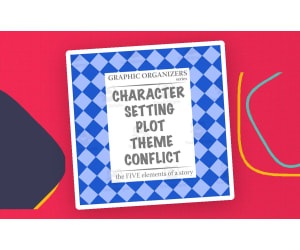
COMBINED: The FIVE Elements of a Story Graphic Organizers
ELA, Reading, Reading Comprehension, Language Development, Pre-Reading, Writing, Not Grade Specific, Teacher Tools, Graphic Organizers
This BUNDLED resource includes ALL Graphic Organizers from our The Five Elements of a Story series. This set includes custom graphic organizers for Character, Setting, Plot, Theme and Conflict. An additional 5 BONUS graphic organizers are included. These graphic organizers can be used in any classroom, for any grade, and with any student. Use these graphic organizers to help students gain an understanding of the five elements of a story. Each graphic organizer comes with instructions on how to use them. Character Graphic Organizers: Character Map - Write the name of the character in the middle circle. Then, describe the character’s actions in the top left square; what the character says and how they speak in the top right square; the character’s feelings in the bottom left square; and what the character looks like in the bottom right square. Character Trait Chart - Choose a character from the story. In the first column, write down any traits that your character has. Include physical features, personality, feelings, and anything else that describes your character. In the second column, provide evidence from the story to support your chosen trait. Character Feelings - In the top box, describe the character’s feelings at the beginning of the story. In the next series of boxes, describe an event that has an effect on the character, then how this character feels as a result of this event. In the last box, describe the character’s feelings at the end of the story. Relationship Web - Write the name of the main character in the story in the middle circle. In the circles branching out from the middle one, write down the relationships the character has. Include whether you think this is a good relationship or a bad one. Do the same for any other character in the story. Character Comparison - Use the Venn Diagram to compare two characters from the story. Write the names of each character in the overlapping circles. Write any differences the characters have with one another in the outside circles. Write any similarities the characters have in the middle of both circles. Character Scrapbook - Create a scrapbook for one of the characters in the story. Choose a character from the story. Choose some important events that happen in the story that shapes the character. Draw pictures of these events and explain what happened and how it affected the character. Character Analysis - Keep track of every character in the story and their traits. Write the name of each character in the story in the first column. Write a trait that the character has in the second column. In the third column, write down the page and paragraph number of a quote that proves this trait. Character Development - Choose a character from the story. Write down their initial thought on a topic or situation in the first column. In the second column, write down the event that has an effect on that character’s thoughts. Then, write down the character’s new thoughts on the topic or situation in the third column. Character Cluster - ‑is Cluster Map can be completed in many different ways. Start with a character in the middle triangle. Then, branch out from the character with related topics in the circles. Expand on those topics in the rectangles. Suggestions include: relationship web, traits web, feelings web. Character Sketch - Complete this Character Sketch of any character in the story by writing what the character says, thinks, hates, loves, owns, does or uses. Also include the characters strengths and weaknesses, and where the character has come from in the story, and where the character is going. Setting Graphic Organizers: Setting Elements - Place + Time + Environment = Setting in this Graphic Organizer. Describe the Place that the story takes place in the house graphic. Then, describe the Time in the clock graphic. Finally, describe the Environment in the landscape graphic. Setting Stage - Draw the setting that the story takes place in on the stage in this graphic organizer. Be sure to illustrate the time and place that the story takes place in. Also include the environment of the story, and try to show the tone or mood that the setting creates for the story. Changes in Setting - Identify how the Setting changes throughout the story. In the first column, write down when and where the story takes place at the beginning. In the second column, write down when and where the story takes place at the end. Compare the two to show how the setting changed. Setting Comparison - Compare your Setting with the Setting of the story. In the first column, describe your own Place, Time, Environment, and Mood. Then, do the same for the story’s setting in the second column. Finally, compare each element of the setting. What is the same? What is different? Tone and Mood - Where + When = Tone/Mood in this Graphic Organizer. Describe Where the story takes place in the house graphic. Then, describe When the story takes place in the clock graphic. Finally, describe how both of these elements affect the Tone and Mood of the story. Setting Map - Draw a map to show where the story takes place. Include all the important places from the story as the setting changes. As an extra activity, include routes to each place as it happens in the story. Additionally, include the time for each place on your map. Be creative with your drawing. Past, Present, Future - Describe the Setting as it changes throughout the story. In the Past section, write the setting that took place before the story (flashback). In the Present section, write the current setting of the story. In the Future section, write the setting that will take place after the story (flashback). Elements of Setting - Place + Time + Environment + Mood = Setting in this Graphic Organizer. Describe the Place that the story takes place in the top left box. Then, describe the Time in the top right box. Then, describe the Environment in the bottom left box. Finally, describe the Mood in the bottom right box. Character and Setting Comparison - Compare the Characters in the story with the Setting. Write traits that the character and setting share where the circles overlap. Write traits that the character and setting don’t share in the outside circles. Do this for each character and setting in the story. Setting Analysis - Describe each element of the Setting in detail. Describe the setting, how it relates to the characters, and how the characters are in conflict with the setting. Then, identify the tone and mood of the story, how the setting affects it, and how the story would change if the setting was different. Plot Graphic Organizers: Plot Pyramid – Complete this classic Plot Pyramid graphic organizer by writing the Introduction of the story in the bottom left box. Then, describe the Rising Action, followed by the Climax of the story. Finish up with the Falling Action and the Resolution or Conclusion of the story. Sequence – Describe events from the story in sequence. Start off by writing the Initiating Event, or the event that starts off a chain reaction, in the top box. Follow this with the Steps that directly result from this event in order that they occur. Finish up by writing the Final Outcome of this event. Prediction Chart – In the first column, write down what you predicted, or thought would happen in the story. In the second column, write down what actually happened in the story. Continue this format for each event you predict will happen in the story. Storyboard – Illustrate the plot or an event from the story. Draw or describe in detail each stage in the plot or in an event that takes place in the story. Remember, the order of plot development is: Introduction, Rising Action, Climax, Falling Action, and Resolution/Conclusion. Story Structure – Complete the Story Structure by identifying the Introduction, events of the Rising Action, Climax, events of the Falling Action, and the Conflict and Resolution of the story. Then, identify the theme of the story, as well as the setting of the story (where and when the story takes place). Sequence Chain – Describe up to 9 events from the story in the order that they occur. Write the first event in the first box, followed by the second event in the following box, and so on following the chain. It is not necessary to fill in every box with an event. For an extra activity, draw each event in detail. Prediction Tree – In this Prediction Tree graphic organizer, write your question at the base of your tree. On the trunk, write down your prediction to the answer of the question posed. On the branches, write down evidence from the story to support your prediction. Story Cycle – Describe the Introduction of the story in the top right box. Following the cycle, describe the Rising Action next. Then, include the Climax of the story. Follow this with the Falling Action, and finally with the Resolution of the story. Then, describe how the Resolution relates back to the Introduction. Changes in Plot – Identify how the Plot changes throughout the story. In the first column, write down what happened in the beginning of the story. In the second column, write down what happened at the end of the story. Compare the two to show how the plot changed. Do this for every event in the story. Plot Analysis – Describe the Introduction and identify the Point of View. Describe the Rising Action and what’s being Forshadowed if relevant. Identify the Inciting Force and the Climax. Describe the Falling Action and any Suspense that is experienced. Describe the Conclusion and any Symbolism that is present. Theme Graphic Organizers: Inference Clues – Infer the theme and its meaning from the story by using clues the author gives you. Write down clues to the theme in the circles. Then, find the theme based on these clues and write it in the Inference box. Discuss how you were able to come to that conclusion based on the clues from the story. Theme Prediction – Predict what you think the theme of the story will be based only on the cover art, title, and back cover description. Then, support your prediction. Follow this by writing down evidence from the story as you read along. Finally, write down the actual theme and compare this to your prediction. Theme Chart – First identify the main characters, main conflict, and theme of the story. Then, breakdown the theme of the story by first writing down the beginning of the theme. Follow this by writing the development of the theme, then the climax of the theme. Finish off with the resolution of the theme. Theme Comparison – First, write down a list of themes from the story in the first box. Then, compare these themes by writing their differences in the outside circles, and their similarities in the area where the circles overlap. Finally, write down your conclusions based on this information. Theme Tree – Complete the Theme Tree by first writing the theme on the trunk of the tree. Then, include evidence from the story to support the theme on the branches of the tree. Evidence can be in the form of quotes, paraphrasing, descriptions, and drawings. Theme Contrast – This graphic organizer helps with identifying the Theme and not getting it confused with the Plot or Main Idea of the story. Contrast the theme with the plot or main idea by comparing them and listing ONLY their differences in the two columns. Theme Connection – Connect the Theme of the story with Real Life. First, identify the theme of the story and write it in the center triangle. Then, write down examples of the theme from the story in the circles. Finally, write down examples of the theme as they appear in real life in the rectangles. Changes in Theme – Identify how the Theme changes throughout the story. In the first column, write down the theme in the beginning of the story. In the second column, write down the theme at the end of the story. Compare the two to show how the theme changes. Do this for every theme in the story. Theme Identifier – Get help identifying the Theme of a story by answering the questions. Start off by describing what happens in the story. Then, identify the most important event in the story. Explore the characters by identifying how they change and what they learn. Finally, determine what the author is trying to tell you. Theme Analysis – Identify the Theme, analyze its development, and summarize key supporting details. First, write down what you think the author wants you to understand in the triangle. Then, include supporting evidence in the circles. Finally, tell how the author communicates the theme in the rectangles. Conflict Graphic Organizers: Conflict Dissection – Complete this graphic organizer by filling in each quadrant. In the first box, identify the characters of the story. In the next box, identify the time and place of the story. In the third box, identify the problem that takes place in the story. In the last box, identify the solution to the problem. Problems and Solutions Chart – Identify the Problems and possible Solutions with this graphic organizer. First, identify the problem in the first box. Then, identify possible causes of the problem, followed by possible effects of the problem. Finally, identify any possible solutions to the problem based on this information. Conflict Commentary – Summarize the Conflict by first identifying how the conflict starts. Then, identify possible causes of the conflict. At the top, identify the climax of the conflict, or how it comes to a head. Then, identify possible effects of the conflict. Finally, identify the outcome of the conflict. Internal or External Conflict – Determine whether the conflict in the story is internal or external. Internal conflict: a character experiences two opposite emotions or desires. External conflict: a character struggles with an outside force. Find examples of the conflict in the story and add them to the column that most fits. Conflict Type Chart – In the first column, find examples from the story that shows Character against Character. In the second column, find examples of Character against Nature. In the third column, find examples of Character against Self. And finally, in the fourth column, find examples of Character against Society. Conflict Timeline – Complete the Conflict Timeline graphic organizer by breaking down the events for the conflict. Write down the stages of events for the conflict in the boxes on the timeline. Each stage should follow the order in which it took place in the story. Opposing Forces Comparison – Compare two opposing forces in the story with this graphic organizer. First, identify the two forces you will be comparing. Then, identify the struggle between these two forces. List the differences between the two forces in the outside circles. List the similarities where the circles overlap. Conflict Map – Outline the Conflict in the story with this Conflict Map graphic organizer. First identify the conflict of the story in the top box. Then, identify the two forces that are in conflict with each other, and what happens when these two forces collide. Finally, identify the resolution of the conflict. Cause-Effect-Consequences – Identify the cause, effect, and consequences of the Conflict as it appears in the story. First, identify the conflict in the story in the top box. Then, in the chart, identify the causes of the conflict, the effects of the conflict, and the consequences of the conflict. Conflict Analysis – Determine what type of conflict the author created: Character vs. Character, vs. Nature, vs. Self, vs. Society, vs. Supernatural, or vs. Technology. Answer the questions to lead to the Conflict Statement. Here, identify the type of conflict, what the character wants, and why they can’t have it. Bonus Graphic Organizers: Story Map – Map out the story with this graphic organizer. First list the Characters and describe the Setting of the story in the top boxes. Then, identify the Problem that takes place. Move on to outlining the Major Events of the story. Finally, explain the Resolution and Theme in the bottom boxes. Story Elements – Identify the Story Elements in this graphic organizer. Identify the Theme, Setting, and the Relevance of the Setting. Then, identify the Characters in the story with their names, traits, and function in the story. Move on to identify the Conflict that takes place, the Plot, Climax, and Resolution. Plot and Conflict Analysis – Analyze the Plot and Conflict that takes place in the story. First, identify the Protagonist (hero) of the story, and the Antogonist (villain). Then, identify the Conflict, and what type it is. Complete the Plot Pyramid next. Finally, explain how the Conflict is resolved in the end. Event Map – Breakdown an Event from the story with this graphic organizer. Write down an event from the story in the middle circle. Then, record What happened, When it happened, Where it happened, Who was involved, How it happened, and Why it happened or Why it is important in the circles. Figurative Language – Complete this graphic organizer by finding examples of the selected Figurative Language from the story. Write down examples of Metaphor, Simile, Hyperbole, Imagery, Personification, and Symbolism used in the story. Then, write the page number where you found each example.
Author Ibby Resources
Rating
Tags Study, Skills, Character, Setting, Plot, Theme, Conflict, Literary, Device

Measurement: Measuring Weight - Pre-Assessment & Teach the Skill - FLASH-MAC
Math, Measurements, Common Core, Grade 1, 2, Assessments, Teacher Tools
Measurement: Measuring Weight - Pre-Assessment & Teach the Skill - FLASH-MAC FLASH-MAC is a superior digital asset for educators, tailored to cultivate learners' foundational abilities in measuring weight. This interactive tool serves as an upgrade to orthodox pedagogy focused on curating a deep-rooted understanding of measurement concepts compatible with Mainstream Educational Standards such as Common Core State Standards, STEM initiatives, and NCTM guidelines. Specially curated for Grade 1 and Grade 2 students, this valuable resource emphasizes on the subject of Math connoting Measurements. With its adaptable design, it can be utilized equally effectively in group sessions or small study clubs ensuring a fulfilling learning journey. The vital feature includes pre-assessment exercises that evaluate student comprehension before delving into intricate topics. These assessments play a crucial role in planning successive lessons and reinforcing confidence through affirmation of understanding. A structured lesson plan within the software ensures smooth transition from evaluation to instruction while emphasizing comprehensive grasp amongst students. To maintain active engagement of young learners additional math tools have been integrated into this product which can be used both inside and outside classroom environment alike. To cater widespread language diversity, dual language options are offered . Both English and Spanish voiceovers along with text translations are provided ensuring inclusivity. The product file contains every robust feature above mentioned post purchase enabling hassle free integration without any need for extensive installations! Inclusion of Measurement: Measuring Weight - Pre-Assessment & Teach the Skill - FLASH-MAC This potent tool will notably enhance your teaching process related to weight measurements boosting productivity for educators as well as learners!
Author Classroom Complete Press
Tags Software (Mac)