3,947 products added recently
Page 2 - Popular Worksheets
Discover a collection of popular worksheets that have been well-received by educators. Covering a variety of subjects and grade levels, these resources offer proven effectiveness in reinforcing concepts. Incorporate them into your lesson plans to save time and provide engaging activities for your students.
Chemistry Binder Covers – Templates for Classroom Use
Life Sciences, Science, STEM, Inventors, Basic Science, Chemistry, Special Resources, Montessori, Classroom Management, Resources for Teachers, Homeschool Templates, Grade 7, 8, 9, 10, 11, 12, Worksheets, Worksheets & Printables, Teacher Tools, Projects, Activities, Workbooks, Drawing Templates & Outlines, Templates, Graphic Organizers, Experiments
Chemistry Binder Covers – Templates for Classroom Use Organize your chemistry handouts, notes, and units with visual clarity Simple and flexible templates to help organize your chemistry materials In my chemistry classes, it can be a challenge to keep things organized - especially when it comes to multiple units, lab notes, worksheets and review materials. To make it easier for my students and myself, I designed these simple binder sleeves. There are 12 different pages. The covers have a clean, colorful blob layout that is friendly but not distracting. I usually print them out and use them as cover sheets or as dividers in folders for students or teachers. They also work well for digital learning environments, e.g. as section covers in PDF files or on classroom platforms. I like that the color scheme allows students to quickly find what they are looking for, and it brings a little more structure to a subject that is often riddled with formulas and technical terms. When used as cover sheets, students can choose their favorite color for their cover sheet. This resource is handy - and has saved me a lot of time in lesson preparation and follow-up. What’s included: 12 chemistry-themed cover pages different colors zu choose as a cover sheet as a divider between the individual chemistry topics I've printed these on colored paper for my own binder and also used them digitally in student notebooks. Works well for both teacher organization and student-facing materials. 📍 Best wishes, Heike from Lernfitness Chemistry teacher (Biology teacher, Math teacher) in Germany Did You Know? I teach with a certified therapy dog, and together we create a positive and inspiring learning environment. 🐶✨
Author Lernfitness
Rating
Tags Science, STEM, Chemistry, Binder, Template, Cover Sheet, Organizer, Organize, GoodNotes, PDF
Reading Passages on Plate Tectonics and Rock Cycle (Google Drive)
Science, Earth and Environmental Sciences, Earth Sciences, Common Core, ESL, Language Development, ELA, Vocabulary, Reading Comprehension, Reading, Grade 5, 6, 7, Diagrams, Teacher Tools, Assessments, Presentations, Tests, Quizzes and Tests, Worksheets, Worksheets & Printables, Centers, Activities
Reading Passages on Plate Tectonics and Rock Cycle for Earth Science Plate Tectonics and Rock Cycle: Reading Passages Earth Science - Enhance your assessment process with this ready-to-use science reading passage pack. Featuring enjoyable topics and themes, it's tailored to ensure students not only practice but also deepen their scientific understanding in preparation for tests. With questions meticulously aligned to the Common Core State Standards (CCSS), the pack dives into intriguing subjects such as circuits, electricity, and energy sources. It's a must-have resource for educators aiming to make learning both fun and fruitful. What's inside? Part 1 - Plate Tectonics & Rock Cycle Reading Passage1: Plate Tectonics Reading Passage2: Rock Cycle Erosion and Deposition Reading Passage3: Properties of Rocks and Minerals Reading Passage4: Geological Time Product Info: 26 PAGES (Docs Version: US English with Answers) 4 FORMS (Self-Grading) 150 Slides Teaching Duration: 2 Weeks Science Reading Comprehension Outline: Introducing a comprehensive resource tailored for 5th and 6th graders, this product offers enriching reading passages supplemented with illustrative pictures and graphs to clarify key concepts. Aligned with the Common Core State Standards (CCSS), it offers a hassle-free approach to teaching, given that the bulk of the preparation is already done for you. The passages present a diverse set of questions – from multiple choice to data analysis and fill-in-the-blanks. This ensures a rich blend of high-interest content and fundamental curriculum-based science themes. With its versatility, you can seamlessly integrate these lessons into various classroom settings, whether it's whole class discussions, morning exercises, independent desk tasks, small group engagements, contingency plans for substitute teachers, regular homework assignments, or even themed activities for holidays. FULL CATALOG OF DOWNLOAD LINKS HERE Grade 5/6 Links: Physical Science Part 1 - Physical and Chemical Properties Google Docs/Slides/Forms PDF PPT Word Free Supplementary Pack Accompanying Videos Physical Science Part 2 - Motion and Energy Google Docs/Slides/Forms PDF PPT Word Free Supplementary Pack Accompanying Videos Physical Science Part 3 - Electricity and Magnets Google Docs/Slides/Forms PDF PPT Word Free Supplementary Pack Accompanying Videos Life Science Part 1 - Cells, Reproduction and Genetics Google Docs/Slides/Forms PDF PPT Word Free Supplementary Pack Accompanying Videos Life Science Part 2 - Human Body Systems Google Docs/Slides/Forms PDF PPT Word Free Supplementary Pack Accompanying Videos Life Science Part 3 - Plant Parts and Ecosystems Google Docs/Slides/Forms PDF PPT Word Free Supplementary Pack Accompanying Videos Earth Science Part 1 - Plate Tectonics and Rock Cycle Google Docs/Slides/Forms PDF PPT Word Free Supplementary Pack Accompanying Videos Earth Science Part 2 - Ocean Exploration and Natural Resources Google Docs/Slides/Forms PDF PPT Word Free Supplementary Pack Accompanying Videos Earth Science Part 3 - Weather and Solar System Google Docs/Slides/Forms PDF PPT Word Free Supplementary Pack Accompanying Videos For similar products and other frees, do check out Cored Group on TeachSimple .
Author Cored Education
Rating
Tags Science, Elementary, Reading, Comprehension, Vocabulary, Answers, Ccss, Digital Centers, Earth Science
Health & Nutrition – Balanced Meal Planning Pack
Science, Life Sciences, Human Body, Nature & Plants, Basic Science, Inventors, Theories, Resources for Teachers, Classroom Management, Community Building, Homeschool Curriculum, Homeschool Templates, Grade 6, 7, 8, 9, 10, Worksheets & Printables, Workbooks, Worksheets, Word Searches, Teacher Tools, Assessments, Lesson Plans, Quizzes and Tests, Quizzes, Tests
Revolutionize the way your students think about nutrition from simple concepts to hard-core biochemistry using my: Complete Health & Nutrition – Balanced Meal Planning Pack. This isn't just a lesson on the food pyramid. This customized, no prep curriculum will provide middle & high school (Grades 7-10) with the scientific knowledge and practical application of this knowledge to create solid lifelong healthy eating habits. This resource is suitable for health classes, biology classes, life skills classes, or physical education classes, consists of 48 pages and is divided into three phases: Phase 1: Core Content & Theory (12 Pages) *) Go beyond simply understanding calories in and calories out and have an in-depth understanding of the biochemical make-up of macronutrients (carbohydrates, proteins, lipids) and the role of essential micronutrients (vitamins and minerals). *) Understanding energy expenditure was never made so simple! Understand your BMR, TDEE, Digestive Physiology, Hidden Hunger, the modern-day balanced plate scienced *) Utilize Real Life Case Studies like "The Marathon Runner's Collapse" and "Examination Week Protocol" to make science come to life for students. Phase 2: Student Workbook (21 pages) * 10 detailed worksheets that link theory to practice. No simple fill in the blanks! * Activities include Macronutrient Mastery, Decoding Food Labels, Caloric vs Nutrient Density, Dietary Diagnostics, Meal Planning Logistics, Grocery Pricing, and Modifying Recipes. * Critical thinking scenarios challenge students' ability to solve real-world problems like planning meals for a budgeted vegan, an athlete, or a family with various dietary restrictions. Phase 3: Visual/Aids/Teacher's Resources (15 pages) * Answer keys that make it easier for you to help your students, giving you save time in preparing. * Each of the three high contrast professional visual aids include: Macronutrient Synergy Map, Balanced Plate Paradigm, Glycemic Volatility Graph. Perfect for use as a presentation or handout or for poster size in the classroom. This digital and printed resource is the only unit you will need to teach students how to fuel both their bodies and brains, ultimately setting them up to have success. They will learn how to function in the modern food world while creating a foundation that allows them to discern marketing myths; and to empower themselves to take control of their metabolic health. Keywords: Nutrition lesson plans, health science, meal planning, high school health class, middle school health class, biology, macronutrients, food labels, becoming a healthy eater (lifestyle), digital workbook, printable workbook, life skills, physical education, nutrition unit, project-based learning. What Parents/Schools Appreciate Most About It: More Than Just Study Materials: This is not your standard guide of food pyramid style based information that provides answers to "why" food is important rather than just teaching them about "what" food is by incorporating real biochemically based research that gives students leadership skills through critical thinking about applying appropriate nutrients in their daily diets. No Need To Create New Lessons: It is a comprehensive, ready-to-teach resource that contains all the lessons needed for instructing students, including student learning materials (worksheets), student-directed interactive media, and an answer key for each lesson; which allows teachers to reduce their lesson planning and preparation time by several hours. Teaching Students Skills For Today And Tomorrow: Students will acquire real-world skills that they can apply throughout their lives, including, reading confusing food labels and budgeting for groceries, as well as creating meal plans based upon their own individual physical demands and/or mental needs (i.e., studying for exams, participating in sports). Based On Research And Up-to-date Information: The curriculum provides students with current scientifically valid information by disproving current myths and focusing on scientifically verified, up-to-date information (e.g., nutrient density, the body's hormonal response to food, and the importance of the body's microbiome). Audience For This Poster: From examining the content, language, and references in the text (i.e. two references to "grade 8 students," two references to "9th grade students," and teacher reference to "middle years (grades 7-9)"), I am using the following criteria to define my audience? Primary Target: Advanced Middle School Students (Grades 7-8) and regular High School Students (Grades 9-10) Justification: The vocabulary is appropriate for students of this age and demonstrates a high level of abstract thinking (i.e. biochemistry, paradigm shifts, phospholipid bilayers, anaphylaxis). This will serve as an excellent core unit for a Health or Biology class in high school or as a challenging, extensive science unit for an advanced middle school science class. This Book © by Syed Hammad Rizvi This item is intended for private use and classroom use by one owner. No part may be altered, shared, or sold. You may not post this resource on the web where it may be found and downloaded by others. If you wish to share this resource, you need to purchase additional licenses through Teachsimple. Thank you for following these guidelines. Created by: Syed Hammad Rizvi
Author Creative Book Store
Rating
Tags Nutrition, Health, HealthyEating, Wellness, MealPlanning, MealPrep, HealthScience, Biology, Science, PhysicalEducation
Social Skills Role-Play Scenarios & Empathy Building Sheets
Classroom Management, Resources for Teachers, Community Building, Life Skills, Special Resources, Social Emotional Learning (SEL), Social Skills, Special Education Needs (SEN), Speech Therapy, STEM, Homeschool Curriculum, Homeschool Templates, Grade 3, 4, 5, 6, 7, Worksheets, Worksheets & Printables, Workbooks, Word Searches, Teacher Tools, Assessments, Lesson Plans, Quizzes and Tests, Quizzes, Tests
This comprehensive 33-page digital Social Skills Role-Play Scenarios and Empathy Building Sheets Curriculum for students in Grades 3-6 provides educators with easy-to-implement lessons about powerful and important topics - social-emotional learning (SEL) and developing empathy. Each of the components in this package features relevant supportive research along with fun, engaging, and easy-to-use role-play simulations and seven engaging student worksheets that address the most important life skills our students need, including developing empathy; resolving conflict; practicing active listening; decoding non-verbal cues; navigating peer pressure; providing genuine apologies; and displaying sportsmanship. This curriculum is perfect for teachers in elementary schools, counselors, homeschoolers, and out-of-school-program providers. Included in this 33-page Curriculum are the following components and resources: Phase 1: The Core Theory behind Affective, Cognitive, and Compassionate Empathy/ Supporting Material for Role Playing Phase 2: Seven Printable Student Worksheets with Real-Life Role-Playing Scenarios (Decoding Non-Verbal Cues, The Empathy Bridge, I Statement Architect, Active Listening, Peer Pressure Navigator, Apology Blueprint, Sportsmanship & Fair Play) Phase 3: Curriculum Guides, Teachers Visuals, Implementation Guide, and Answer Key This no-prep resource is designed to provide students with a real-world opportunity to transform abstract concepts into experiential learning through safe role-play and mapping experiential empathy. Therefore, all upper elementary-aged children (8-12) will develop emotional intelligence by reducing the tendency to exhibit hostile attribution bias, and practice prosocial behaviors in a low-stakes learning environment. Immediate digital download is available, and the Curriculum may be easily printed and used immediately or utilized through Google Classroom. Why Schools & Parents are Successful: Both research and classrooms prove this method produces results. The basis for these materials is experiential learning theory, mirror neuron studies, and restorative practice; there is measurable growth in empathy and resolving conflicts. You will find many ready-to-use worksheets, role-play scripts, and teacher guides to help you provide instant lessons that save you hours of planning for your classroom. This is an effective method to help your son or daughter become more emotionally intelligent, eliminate hostile attribution bias, and help them develop real-life scripts for dealing with peer pressure, making apologies, and engaging in fair play. Use this method for the whole classroom or in small groups or during counseling, and it will include different learners, multi-age groups and students with neuro-diversity. Many parents report that their children demonstrate newfound positivebehaviour at home, and schools have successfully adopted this curriculum to reduce relational aggression and meet CASEL standards. Intended target audience: Grades 3 - 6 (approximately 8 to 12 years old) are referenced in every chapter and case study/worksheet in this curriculum as being appropriate for that age range and developmental level. The other target ages of K - 2 will not be appropriate due to more advanced cognitive requirements (the second-order Theory of Mind, perspective-taking, and restorative language frameworks) and to Grades 7+ (middle school) students for their focus on upper elementary social dynamics (recess exclusion, group projects, rumor spreading, sportsmanship). Copyright/Terms of Use: The content of this book was registered as protected material by Syed Hammad Rizvi for exclusive personal/classroom usage. Therefore, you may not copy, modify, sell or redistribute this book in any format (including the internet) to others for any reason whatsoever. You may only provide a copy of the book to someone else by buying an additional license through Teachsimple. Thank you for complying with the copyright/user agreement and supporting the work of Syed Hammad Rizvi!
Author Creative Book Store
Rating
Tags SEL, SocialEmotionalLearning, EmotionalIntelligence, EmpathyBuilding, SocialSkills, MentalHealthForKids, SocialEmotional, SocialEmotionalDevelopment, RolePlayScenarios, SocialSkillsRolePlay
Coding Logic & Algorithm Design (No-Code) Practice Sheets
Science, Technology, Computer Science, Engineering, STEM, Special Resources, Life Skills, Research, Resources for Teachers, Classroom Management, Grade 3, 4, 5, 6, 7, 8, 9, Worksheets & Printables, Workbooks, Worksheets, Word Searches, Teacher Tools, Assessments, Lesson Plans, Quizzes and Tests, Quizzes, Tests
By teaching the logic of code, you'll be able to unlock the true power of programming!!! This comprehensive curriculum has been created specifically for students in grades four through seven and will provide them with a strong foundation in Computational Thinking using a completely screen-free method—all without writing a single line of code. Are you interested in teaching Computer Science fundamentals but unable to cross the barrier of Syntax and software? Introducing Computer Science’s Fundamentals with an „Unplugged Coding” unit is the perfect solution. Students will learn to think about problems and create solutions like Engineers, Problem Solvers, and Innovators through real-world examples and well-designed worksheets. Instead of just providing another set of puzzles, this four-week, ready to go, complete unit will teach your students to convert abstract concepts into concrete skills. Once students have mastered this Architecture of Thought, they will be ready for any programming languages they may encounter in the future. THIS RESOURCE CONTAINS 40 PAGES OF MATERIAL, INCLUDING: 1) A comprehensive guide & theoretical framework that will help teachers (or older students) get a basic understanding of each of the four pillars of computer science: 1) Sequencing and Precision (anatomy of an algorithm) 2) Conditionals and Branching (logic at the crossroads) 3) Loops and Iteration (how to use repetition effectively) 4) Debugging and Optimization (the art of fixing things) 2) A fun, hands-on workbook that contains 10 different worksheets, each based on using the theoretical concepts in real-world situations. | Worksheet #1 = The Architecture of Sequence (Deep-Sea Drone Mission) Worksheet #2 = Conditional Pathways (Mars Rover Logic) Worksheet #3 = The Power of Iteration (Automated Greenhouse) Worksheet #4 = Variables and State (Retro Arcade Game) Worksheet #5 = Boolean Logic Gates (High-Tech Security Vault) Worksheet #6 = Function Design (Drone Light Show) Worksheet #7 = Debugging and Logical Errors (Theme Parks Ride) Worksheet #8 = Pattern Recognition and Abstraction (Alien Puzzle Box) Worksheet #9 = Algorithm Optimization (Robotic Postal Service) Worksheet #10 = System Design (Intelligent Vending Machine) Teacher Resources and Visuals: Everything You Need to Implement This Unit With Confidence - 3 High-Resolution Visual Anchor Charts to Display in the Classroom (Algorithm Design Process, Control Structures, Debugging Protocol). - Detailed Teacher Implementation Guide: pedagogical philosophy, 4-week pacing/deployment strategy, and differentiation tips. - "Logic E.D.G.E." Evaluation Rubric: One-of-a-Kind Methodology Assessment Tool As An Assessment Tool For Methodologies Not Only Right or Wrong Answers. - Comprehensive Answer Key: Easily Check Student Work. This resource is ideal for middle school computer science, STEM or STEAM electives, coding clubs, homeschool co-ops and/or gifted & talented upper elementary programs. Student empowerment = Master Problem Solvers! Download today to build the foundation for a lifetime of logical thinkers! Keywords: Unplugged Coding, Coding Without a Computer, Computational Thinking, Algorithm Design, Logic Puzzles, STEM, STEAM, Middle School Computer Science, Hour of Code, Screen-Free Activities, 4th Grade, Fifth Grade, Sixth Grade, Seventh Grade, Homeschool, Digital Resource Reasons Why Educators/Parents Appreciate The Program: Develops Real Skills at the Fundamental Level: It does not only have educational value as a game, but allows learners to see the logic of computer programming - students begin to see how computers function in the digital world. Completely Hand-Emphasis On Learning: In this modern world where we have become over-reliant on technology, the unplugged curriculum offers an hands-on means to integrate computer science into the lives of children while promoting critical thinking skills as well as reducing screen times. Everything Needed for Teachers to Implement Unit: All of the components required for teacher/educator to successfully implement the 28-day unit are included - Teacher’s Guide - Worksheets - Visuals - Answer Key with all included One-Time Prep for Teacher, however is Minimal. Fun, Imagination Driven Learning Through Unplugging: This unit assists educators in the "math" of coding and programming by allowing them to eliminate the frustration of syntax errors and develop understanding without the use of device and apparatus. Interesting but simple scenarios (Example - Program a Mars rover) keep students engaged and excited about learning. Development of Resilience and Problem Solving: The incredible focus and emphasis on NEAT Debugging Concepts, allow students to experience and understand that errors are both normal and will continue to happen during the learning journey while building analytic skills and resiliency. Intended Audience for Student: According to the PDF's recommendations and its degree of complexity, the target audiences are: Primary Target: Grades 4 through 7 (Aged 9 through 13) Secondary Target: 3rd grade: Gifted and Talented Program 8th grade: Introduction or remedial courses Families that are home-schooled with a structured STEM curriculum After-school coding clubs that would like an introduction to the fundamentals. Copyright/Terms of Use This book has been published by Syed Hammad Rizvi and is intended for personal use only. Any alteration, redistribution or sale of this resource is strictly prohibited. For example, you cannot place this resource on the internet in any way that someone might find it and download it. If you would like to share this resource with others you work with, please go to Teachsimple and purchase the appropriate number of licenses. Thank you for your consideration of these terms of use. This product is proudly produced by Syed Hammad Rizvi
Author Creative Book Store
Rating
Tags STEM, Coding, ComputerScience, EdTech, Education, CriticalThinking, ProblemSolving, TeachersOfInstagram, TechForKids, Coding Worksheets
Coloring Pages - Bookmarks to Color
Graphic Arts, Creative Arts, Language Development, ELA, Strategies, Reading, Community Building, Resources for Teachers, Special Education Needs (SEN), Special Resources, Elementary, Pre-K, Coloring Pages, Worksheets, Worksheets & Printables, Templates, Teacher Tools, Crafts, Activities, Centers, Projects, Read Alouds
These black and white stamp type bookmarks make perfect coloring projects. These bookmarks are small, 2" x 6", coloring pages that simply need to be printed, cut out, and colored. DESIGNS INCLUDE Flowers Flamingos Kids who Love Reading Stack of Books Robot in a Dress holding a heart Adult Robot Kid Robot Gear Picture Remote Control Picture Encouraging sayings and Bible Verses include: 1 Bookmark includes: You are Loved 1 Bookmark includes: You are Unique 1 Bookmark includes: Reading is Fun 3 of Bookmarks include: Jeremiah 29:17 "For I know the plans I have for you," says the Lord, "plans to prosper you." 1 Bookmark includes: Genesis 1:1 "In the beginning God created the heavens and the earth." 1 Bookmark includes: Luke 2:52 "And Jesus grew in wisdom and stature, and in favor with God and man." 4 of bookmarks have no writing. Total 12 different bookmark designs. SKILLS PRACTICED Students who print, cut out, fold, color and decorate these bookmarks practice: Fine motor skills Color recognition Reading IDEAS FOR USE These bookmarks can be created as part of a center, with students working as a team. These bookmarks can be given as gifts to favorite friends and family members or other acquaintances who love to read. These bookmarks can be printed on plain white paper and laminated or on cardstock. 4 bookmarks per page 12 bookmarks total pdf downloadable, printable file 3 usable pages #coloringworksheets #colorfulclassroomdecor #craftactivities #art #crafts #cutecoloringpages #coolcoloringpages #coloringworksheets #bookmarks #printables
Author Homeschooling Dietitian Mom
Tags Coloring Worksheets, Coloring Pages, Colorful Classroom Decor, Cool Coloring Pages, Cute Coloring Page, Easy Coloring Pages, Spring Projects, Crafts, Art
Reindeer Reading Comprehension Passage - Cored Ed Encyclopedia
ELA, Language Development, Reading Comprehension, Reading, Pre-Reading, Science, Writing, Strategies, Animals, Life Sciences, Grade 2, 3, 4, 5, Worksheets & Printables, Worksheets, Teacher Tools, Centers, Activities, Writing Prompts, Assessments, Quizzes and Tests, Quizzes, Lesson Plans
This reindeer reading comprehension includes: Visualization (on the front cover) Start your lesson by taking a minute to think and share something about the topic. Read the script aloud (slowly), perhaps prepare some music or sound effects. Student close their eyes and let their imaginations wander. Students open their eyes, read the question aloud and give them a few minutes to complete. Ask a few students to share or keep answers until the end to compare with what they learn in the passage. Quick pause—thousands of Cored Education products are included with your TeachSimple membership. Download links and encyclopedia index available here. COMPANION VIDEO NOW AVAILABLE (EMBEDDED AFTER PREVIEW PICTURES IN PRODUCT DESCRIPTION) Pre-Reading Trivia Students will write down one thing they already know about the subject and then read five more facts and discuss. These facts are fun, and the students will enjoy learning about the subject before reading more. Give 1 minute for students to write what they already know (no pressure—best guess is fine). Read the five facts together. After each fact, do ask a student for their opinion, was it surprising? Set a purpose by asking students to highlight/underline one fact they want to learn more about during the reading. Reading Passage The text is a high-interest reading passage with set paragraphs, roughly three to four paragraphs long. It contains a variety of themes about the topic, anywhere from history to technology. The passage is between 250 and 350 words in length. First, ask students to look at the headings and see what they’ll learn about today. What do they know about the topic/heading? First read options: Teacher read-aloud (best for support). Partner reading (paragraph by paragraph). While reading, students underline important details, and vocabulary words they think may come up in the questions section. Mixed Questions The first question page contains four multiple-choice questions, each with a choice of four answers, and three written response questions that require a sentence or two from the student. Students complete the mcqs first independently, then review quickly as a class. For the 3 written responses, try to get students giving the answer with some form of evidence: “I think ___ because the text says ___.” If students get stuck, send them back to check the passage. Vocabulary Questions Practice seven key words from the text in this section across two activities. First section is scrambled words where students will unscramble three words given a clue for each. The second section is a word to meaning matching activity. Before starting, have some students read out words they underlined in the passage. Ask students to say the word and read aloud the sentence(s) around each word. Ask students to do scrambled words and the matching exercise in pairs then go through answers as a class. For the scrambled spelling task, get four pairs to come up to the board and write the words for extra practice with the other student reading out the clue. For the matching task, prompt students to give full sentences: “I matched ___ with ___ because ___.” Creative Writing In this question, the student will be required to write a five to eight sentence paragraph on a question related to the topic. Before starting, ask students write down 3 key ideas they are going to include in their piece. Ask students for ideas to share around the class to help those struggling. Pro writing expectations: 5–8 sentences At least 2 facts or details from the passage At least 2 vocabulary words from the previous page Students read their paragraphs while classmates listen for facts and vocabulary words. Extension Activities This page is optional for fast finishers or to take home. There are several activities, each one requiring a different skill. Do some, do none, do all, completely optional - but you will feel reassured knowing every possibility is planned for. Includes summary writting question. Answer Key There are answers for the multiple-choice questions, written response questions have sample answers, vocabulary answers and if there is a summary question then a sample summary will be provided as well. Lesson Plan Included Customized lesson plan for this lesson is included. Lesson Snapshot Title: Reindeer Genre: Nonfiction (informational text) Subject: Life Science (Animals & Habitats) Primary Topic: Reindeer adaptations, migration, and human connections Estimated Guided Reading Level (A–Z): R What This Lesson Teaches Best How reindeer are adapted for cold places (thick coat; wide hooves for soft snow and soggy tundra). How reindeer find food when conditions are harsh (digging through snow to reach lichen). Migration and seasonal movement (some herds travel long journeys; more than 600 miles north in summer, then south again). How people and reindeer have influenced each other (communities watching hoofprints, herding partnerships, reindeer helping with travel and providing resources). A conservation-style question about changing winters (warming turning soft snow into hard ice that seals food away). Learning Goals Students will describe where reindeer live using details from the text (Arctic and subarctic lands). Students will explain two body features that help reindeer in winter conditions. Students will describe how reindeer get food when it is scarce, using the text’s example. Students will explain how long journeys relate to seasons and survival in the passage. Students will describe one way people have interacted with or depended on reindeer in the text. Key Vocabulary From the Text subarctic — very cold region just below the Arctic. tundra — open, cold land with few trees. hoofprints — marks left by hooves in the ground or snow. lichen — crusty plantlike growth on rocks and ground. Vulnerable — at risk of harm or shrinking in number. FULL CATALOG OF DOWNLOAD LINKS AND ENCYCLOPEDIA INDEX HERE
Author Cored Education
Rating
Tags Vocabulary, Reading Comprehension, Reading Passages, Reading, Creative Writing, Reading Strategies, Writing Prompts, Lesson Plans, Reindeer, Life Science
Ancient Egypt Reading Comprehension Passage - Cored Ed Encyclopedia
ELA, Language Development, Reading Comprehension, Reading, Social Studies, History, History: Ancient, Writing, Pre-Reading, Vocabulary, Grade 2, 3, 4, 5, Worksheets & Printables, Worksheets, Teacher Tools, Centers, Activities, Writing Prompts, Assessments, Quizzes and Tests, Quizzes, Lesson Plans
This ancient Egypt reading comprehension with lesson plan includes: Visualization (on the front cover) Start your lesson by taking a minute to think and share something about the topic. Read the script aloud (slowly), perhaps prepare some music or sound effects. Student close their eyes and let their imaginations wander. Students open their eyes, read the question aloud and give them a few minutes to complete. Ask a few students to share or keep answers until the end to compare with what they learn in the passage. Quick pause—thousands of Cored Education products are included with your TeachSimple membership. Download links and encyclopedia index available here. Pre-Reading Trivia Students will write down one thing they already know about the subject and then read five more facts and discuss. These facts are fun, and the students will enjoy learning about the subject before reading more. Give 1 minute for students to write what they already know (no pressure—best guess is fine). Read the five facts together. After each fact, do ask a student for their opinion, was it surprising? Set a purpose by asking students to highlight/underline one fact they want to learn more about during the reading. Reading Passage The text is a high-interest reading passage with set paragraphs, roughly three to four paragraphs long. It contains a variety of themes about the topic, anywhere from history to technology. The passage is between 250 and 350 words in length. First, ask students to look at the headings and see what they’ll learn about today. What do they know about the topic/heading? First read options: Teacher read-aloud (best for support). Partner reading (paragraph by paragraph). While reading, students underline important details, and vocabulary words they think may come up in the questions section. Mixed Questions The first question page contains four multiple-choice questions, each with a choice of four answers, and three written response questions that require a sentence or two from the student. Students complete the mcqs first independently, then review quickly as a class. For the 3 written responses, try to get students giving the answer with some form of evidence: “I think ___ because the text says ___.” If students get stuck, send them back to check the passage. Vocabulary Questions Practice seven key words from the text in this section across two activities. First section is scrambled words where students will unscramble three words given a clue for each. The second section is a word to meaning matching activity. Before starting, have some students read out words they underlined in the passage. Ask students to say the word and read aloud the sentence(s) around each word. Ask students to do scrambled words and the matching exercise in pairs then go through answers as a class. For the scrambled spelling task, get four pairs to come up to the board and write the words for extra practice with the other student reading out the clue. For the matching task, prompt students to give full sentences: “I matched ___ with ___ because ___.” Creative Writing In this question, the student will be required to write a five to eight sentence paragraph on a question related to the topic. Before starting, ask students write down 3 key ideas they are going to include in their piece. Ask students for ideas to share around the class to help those struggling. Pro writing expectations: 5–8 sentences At least 2 facts or details from the passage At least 2 vocabulary words from the previous page Students read their paragraphs while classmates listen for facts and vocabulary words. Extension Activities This page is optional for fast finishers or to take home. There are several activities, each one requiring a different skill. Do some, do none, do all, completely optional - but you will feel reassured knowing every possibility is planned for. Includes summary writting question and additional facts. Answer Key There are answers for the multiple-choice questions, written response questions have sample answers, vocabulary answers and if there is a summary question then a sample summary will be provided as well. Lesson Plan Included Customized lesson plan for this lesson is included. Lesson Snapshot Title: Ancient Egypt Genre: Nonfiction (informational passage) Subject: Social Studies Primary Topic: Nile flooding, kingdoms, pyramids, and writing Estimated Guided Reading Level (A–Z): T What This Lesson Teaches Best How the Nile River flooding left dark mud that helped farming and food growth. The meaning of Kemet (“black land”) and why it described the fertile farming strip. How leaders joined Upper Egypt and Lower Egypt into one kingdom, with the pharaoh as a symbol of unity. Key achievements in building and record-keeping (pyramids, scribes, hieroglyphs, papyrus, grain and taxes). How the Rosetta Stone helped scholars decode hieroglyphs by showing the same text in three kinds of writing. Learning Goals Explain how the Nile River’s yearly flooding helped people grow food. Describe why people called the fertile farm area Kemet, or “black land.” Identify ways ancient Egyptians organized and strengthened their kingdom (sharing water, one ruler, a capital). Describe how pyramids changed over time (step pyramid for Djoser and later pyramids at Giza). Explain how scribes used hieroglyphs and papyrus to keep records of grain and taxes. Describe how the Rosetta Stone led to reading hieroglyphs again. Key Vocabulary From the Text fertile — able to grow lots of plants. pharaoh — ruler of ancient Egypt. hieroglyphs — picture symbols used for writing. papyrus — plant paper used for writing. decree — an official order from leaders. FULL CATALOG OF DOWNLOAD LINKS AND ENCYCLOPEDIA INDEX HERE
Author Cored Education
Rating
Tags Vocabulary, Reading Comprehension, Reading Passages, Lesson Plans, Ela Lesson Plans, Reading Comprehension Lesson Plans, Pre-reading, History, Ancient History Lesson Plans, History Lesson Plans
Vocabulary Building Through Environmental Themes
Science, Basic Science, Inventors, Theories, Earth and Environmental Sciences, Earth Sciences, Environmental Science, Geology, Space, STEM, Homeschool Curriculum, Homeschool Templates, Grade 3, 4, 5, 6, 7, Teacher Tools, Assessments, Lesson Plans, Quizzes and Tests, Quizzes, Tests, Worksheets & Printables, Workbooks, Worksheets, Word Searches
Are you tired of boring vocabulary lists? Do students forget the words by Monday? Try transforming how you teach Science and ELA with this comprehensive, research-based resource to help your students develop and retain a rich vocabulary through the study of environmental science! This is not just another short, single-use worksheet. The Eco-Lexicon Framework has been designed to help you and your student move beyond rote memorization, to create a deep conceptual understanding of vocabulary. The complete 45-page resource provides educators with a theoretical framework and 10 modules that will provide engaging, no-prep student worksheets, seamlessly integrating Science, Reading and Critical Thinking. What can I find in this much-needed resource? A Professional Teacher's Guide (11 Pages): This is a comprehensive guide to the "Eco-Lexicon Framework" which thoroughly goes through the science of cognitive processes and their connection to Vygotsky (schema theory, dual-coding theory, and ZPD). A great professional development experience that will increase your teaching skills! 10 Thematic Student Workbooks (20 pages): Each workbook consists of a small set of worksheets focusing on a theme within the environment. Worksheets include a variety of activities that promote multiple forms of engagement (e.g., filling in an answer at the top of the water, completing the word, etc.) Visually Appealing Teacher Resource Materials (6 pages): The visual scaffolding teacher resource materials are projectable representations of morphological maps (eco/biological root words), semantic gradations, and conceptual matrices that support dual-coding theory and provide anchor points for student learning. Step-By-Step Implementation Guide: A straightforward, easy, step-by-step method for teaching the vocabulary in each module, along with an answer key. The themes of the worksheets are: Forests as eco-systems (Earth's lungs) The ocean as a space for conservation (Under the Surface) Waste and recycling (Cycle of Renewal) Renewable energy (Powering the Future) Biodiversity and symbiotic relationships (The Web of Life) Fresh water systems (Rivers, Lakes, and Aquifers) Climate and Weather (Blanket Above) Sustainable Agriculture (Growing with Care) Urban Ecology (Nature in our Cities) Conservation Actions (Guardians of our Planet) The ideal resource for science classes, ELA instruction, integrated curriculum, substitute teacher plans, and homeschooling will allow students to develop their understanding of scientific terms in meaningful ways that can be used to help them A) learn about their world, B) discuss it with others, and C) advocate on behalf of their planet. Some key terms related to the worksheets are: Science vocabulary words; Environmental science; Ecoliteracy; STEM education; Integrated ELA; Cross curricular education; Grades 3-6 (upper elementary and middle school); Vocabulary worksheet activities; No prep; Printable; Digital resource; Google Classroom compatible; Teacher's Guide; Earth Day; Conservation; Ecosystems; Climate Change; Recycling. Reasons why Parents/School's Love It: Builds Deep, Sustainable Knowledge: Goes beyond memorization. The unique research-based design helps students learn to use vocabulary in a real-world context so that they can build and utilize the complex language of science. Cross-curricular Compatibility: Combines the essential skills in ELA (vocabulary, reading comprehension, writing) with the essential concepts from STEM (environmental sciences) saving teachers the time of planning and reinforcing student learning across the curriculum. Completely Developmentally-Appropriate for Grades 3-6: This resource has been carefully constructed to support students as they grow by providing enough information for teachers to modify their instructional approach depending on the age (3rd/4th vs. 5th/6th graders) of students using the resource for learning, and thus justify its purchase as a long-term resource. Builds Real-World Ecoliteracy: Provides the precise language needed for students to understand and discuss current global environmental issues, allowing exposure to the limited vocabulary needed to become aware, articulate, and social advocates for their planet. Comprehensive & Teacher-Friendly: It's a complete package – a professional textbook, no-prep students' worksheets, and visual aids – giving teachers a new way to teach and support immediate implementation of improved methodology. Target Audience : Informed by an extensive investigation into content, difficulty, and express text found in the PDF: Target Upper Elementary and early Middle School educators, specifically for Grades 3 through 6 again. Highlighted here is this express statement in the PDF: The introduction (Page 1) names "upper elementary years (Grades 3 through 6)". The content is scaffolded professionally. Developmental Scaffolding provides a clear rationale for this age range. It articulates the approach for Grades 3 and 4 (concrete, observable concepts like habitats and recycling) and grades 5 and 6 (abstract systems like climate change and biodiversity). Copyright/Terms of Use: Copyright by Syed Hammad Rizvi. This resource is for personal and single classroom use only. There is to be no altering, redistributing, or, in any other manner, selling part of this resource. In other words, do not put it up on the Internet for public access and download. If you want to share this resource with colleagues, you need to purchase additional licenses from Teachsimple. Thank you for your respect for these terms of use. This product is brought to you with joy by Syed Hammad Rizvi.
Author Creative Book Store
Rating
Tags Sciencevocabulary, Environmentalscience, Ecoliteracy, Crosscurricular, Stemeducation, Elaintegration, Scienceworksheets, Vocabularybuilding, Upperelementaryscience, Middleschoolscience
Phonics: R-Controlled Words for 1st and 2nd Grade and Early Readers
ELA, Reading, Reading Comprehension, Grammar, Language Development, Phonics, Strategies, Pre-Reading, Grade 1, 2, Literacy Readers, Teacher Tools, Lesson Plans, Worksheets, Worksheets & Printables
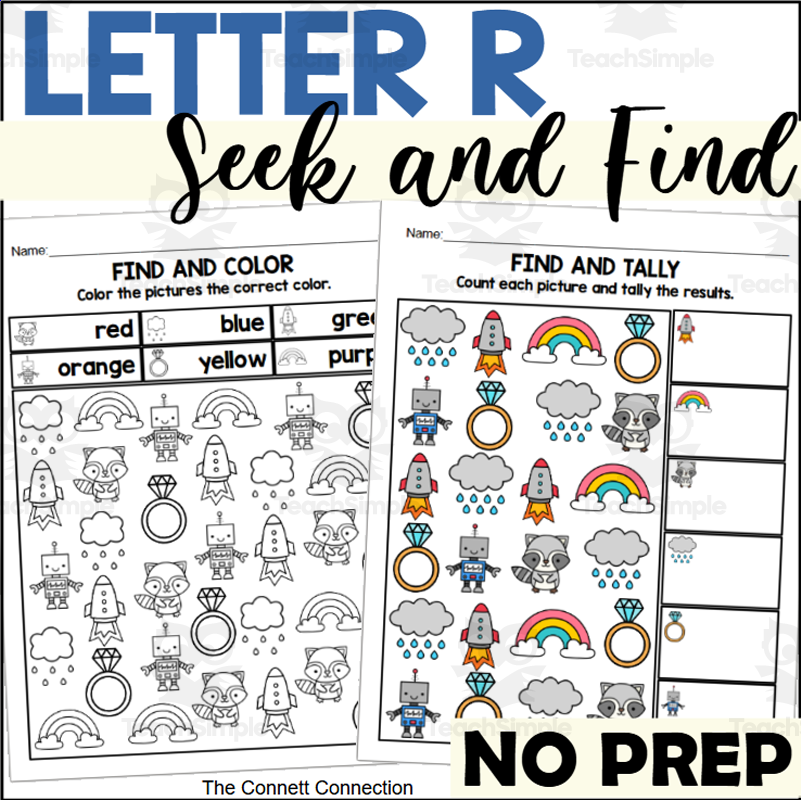
This Phonics: R-Controlled Words for 1st and 2nd Grade and Early Readers is so HELPFUL! Help your student's phonics skills grow to a new level with this Phonics: R-Controlled Words for 1st and 2nd Grade and Early Readers. These engaging worksheets require very little prep work, making it a breeze for your student to conquer the ER, IR, UR, AR, and OR R-Controlled words. These easy and engaging activities can be used in a whole group setting, for individual work, used in centers, and will help your students master these difficult sounds as they effortlessly match, read, write, and identify the r-controlled sounds in words. In this unit, students will read easy passages that require comprehension as they will answer several questions about what they read and highlight or color the r-controlled words in the passage. They will identify at least 5 words that have these sounds from the passage. Furthermore, they will expand their knowledge even more by filling in the blank of words from a word bank in sentences that are missing the r-controlled word sounds. On another worksheet, students will spin a paperclip and fill in the missing words. They will also complete a word search of r-controlled words, and lastly, students will cut, sort, and paste pictures of r-controlled words to the correct written word. There are also worksheets that are differentiated to help all young learners with these sounds. What a great way to help young readers conquer their reading skills with these fun and engaging activities! Get your copy of this Phonics: R-Controlled Words: 1st & 2nd Grade Phonics Worksheets for Early Readers and get ready to be amazed with the skills as they master these words that are so difficult to master! For a list of other phonics and grammar activities, click on the following links:
Author K-5 Treasures
Rating
Tags Phonics, Reading, R-controlled Words, Er Words, Or Words, Ar Words, Early Reading Worksheets, R-controlled Worksheets, Phonics Practice, Phonics Worksheets
Scientist Matthias Schleiden Fact Sheet, Quiz + Exercises PDF + H5P
Life Sciences, Science, Biology, STEM, History, Social Studies, Biographies, Inventors, Basic Science, Nature & Plants, Grade 6, 7, 8, 9, Worksheets, Worksheets & Printables, Quizzes, Quizzes and Tests, Teacher Tools, Projects, Activities
Discover Matthias Schleiden – The Scientist Who Laid the Foundation of Cell Theory 🔬 Make Cell Theory Come Alive in Your Classroom! Your students may already know that all living things are made of cells—but do they know who first proposed this revolutionary idea? Introduce them to Matthias Schleiden, the co-founder of cell theory, who, alongside Theodor Schwann, transformed our understanding of biology. His discoveries laid the foundation for modern cell biology, and this ready-to-use teaching resource helps you explore his contributions in an engaging and interactive way—all in just 45 minutes! 🧪 Why This Resource is a Must-Have for Biology Teachers ✅ No-Prep, Ready-to-Use Lesson – Save valuable planning time! ✅ Engaging & Interactive – Includes fact sheets, quizzes, and creative exercises to enhance understanding. ✅ Perfect for Grades 7–10 – Designed to be flexible and adaptable for different student levels. ✅ Blended Learning Ready – Available in printable PDF and interactive H5P exercises for digital use. ✅ Encourages Critical Thinking – Students not only learn who Schleiden was, but also why his work matters today. 📚 What’s Included? 📄 Informational Text on Matthias Schleiden – A clear and engaging reading passage explaining his role in cell theory. 📝 Fact Sheet Activity – Helps students organize key facts and summarize Schleiden’s contributions. ❓ Quiz with Solutions – A fun way to reinforce learning through self-assessment and review. 🎭 Creative & Interactive Tasks – Students create their own questions, exchange them, and engage in peer discussions. 🎨 Customizable Templates – Choose between color and black-and-white versions for easy printing or digital use. 🖥 H5P Digital Exercises – Perfect for blended learning and interactive lessons. 📌 How to Use This Resource in Your Classroom 1️⃣ Students read the informational text about Matthias Schleiden. 2️⃣ They complete a fact sheet summarizing his scientific discoveries. 3️⃣ Quiz questions reinforce their knowledge of Schleiden’s contributions. 4️⃣ Students create their own questions and challenge their classmates in pairs. 💡 Great for Biology Lessons, Substitute Teaching, and Digital Classrooms! 🌟 Why Biology Teachers Love It ✔ Brings Science History to Life – Connects students to real scientific discoveries. ✔ Simplifies a Key Concept – Helps students grasp the origins of cell theory in an easy-to-understand way. ✔ Flexible for Different Teaching Styles – Use for direct instruction, independent learning, or group activities. ✔ Encourages Active Participation – Turns a scientific breakthrough into an interactive experience. 🔬 Help Your Students Understand the Origins of Modern Biology! Give your students a deeper appreciation for how scientific discoveries shape our understanding of life with this engaging fact sheet, quiz, and interactive activities. 🚀 Download now and bring the legacy of Matthias Schleiden into your biology lessons today! 📍 Best wishes, Heike from Lernfitness Did You Know? I teach with a certified therapy dog, and together we create a positive and inspiring learning environment. 🐶✨
Author Lernfitness
Tags Science, Biology, Famous Scientists Lesson, H5P, Interactive Science Exercises, STEM, History, Scientists, Matthias Schleiden, Cytology
Envelopes Reading Comprehension Passage - Cored Ed Encyclopedia
ELA, Language Development, Resources for Teachers, Reading Comprehension, Reading, Pre-Reading, Writing, Strategies, History, Social Studies, Grade 2, 3, 4, 5, Worksheets & Printables, Worksheets, Teacher Tools, Centers, Activities, Writing Prompts, Assessments, Tests, Quizzes and Tests, Quizzes
This envelopes reading comprehension contains the following: Pre-Reading Trivia Students will write down one thing they already know about the subject and then read five more facts and discuss. These facts are fun, and the students will enjoy learning about the subject before reading more. Reading Passage The text is a high-interest reading passage with set paragraphs, roughly three to four paragraphs long. It contains a variety of themes about the topic, anywhere from history to technology. The passage is between 250 and 350 words in length. Mixed Questions The first question page contains four multiple-choice questions, each with a choice of four answers, and three written response questions that require a sentence or two from the student. Creative Writing In this question, the student will be required to write a five to eight sentence paragraph on a question related to the topic. Extension Activities This page is optional for fast finishers. If there are five to ten minutes left at the end of the lesson, the student can choose one of three activities, each one requiring a different skill. Answer Key There are answers for the multiple-choice questions and three written response questions have sample answers. FULL CATALOG OF DOWNLOAD LINKS AND ENCYCLOPEDIA INDEX HERE Cored Ed Encyclopedia Overview The Cored Ed Encyclopedia is a weekly series of lessons that you can pick up and use right away. These short readings fit into whatever time you have available. Each one includes a warm-up, a reading, and a set of questions, but it’s flexible — you can do just the reading, the full lesson, or skip the writing section if you need to. Each lesson focuses on a single topic so students don’t get lost. The writing is clear but never childish, making it perfect for grades two through five. Topics range from animals and science to history, inventions, and everyday things. No matter the level of the student, everyone should take away at least one new idea or fact from each lesson. The materials are easy to print, easy to explain, and require no setup. They work well for whole-class teaching, partner work, or independent study.
Author Cored Education
Rating
Tags Vocabulary, Spelling, Reading Comprehension, Reading Passages, Cored Encyclopedia, Facts, Reading, Creative Writing, Envelopes, History
Guided Reading Activities and Lesson Plan Fiction Set 4 - School
ELA, Reading, Reading Comprehension, Common Core, ESL, Language Development, Pre-Reading, Vocabulary, Resources for Teachers, Grade 4, 5, Worksheets & Printables, Worksheets, Lesson Plans, Teacher Tools
Guided Reading Activities with Lesson Plans Fiction Set 4 Note: This download DOES NOT include the passages themselves. If you have not already done so, download in a format of your choice in the "reading links" section below. Overview The perfect companion materials for Cored Education reading comprehension downloads. This collection provides structured lessons designed to enhance students' reading, comprehension, vocabulary, and creative thinking. Each lesson follows a consistent format that includes pre-reading activities to engage students, vocabulary-building exercises, comprehension checks, creative writing prompts, and discussion topics that promote critical thinking. The lessons are designed to foster active participation, encourage reflection, and develop key literacy skills through interactive and immersive learning experiences. The series is ideal for guided reading sessions, providing teachers with a comprehensive toolkit to engage students in both individual and group activities, enhancing their understanding of text and expanding their language skills. Includes Guided Reading Materials For: 1.The Principal 2.Fear 3.Warm Welcome 4.Funny Photos 5.Gold Star 6.Sub Teacher 7.President Lina 8.Devon's Science Project 9.On the Stage 10.Eve's Amazing Day Reading Links: This is the guided reading materials version and DOES NOT include the passages themselves. The passages related to this download are available here in GOOGLE Docs, GOOGLE Forms, GOOGLE Slides. PDF, PPT, WORD. Google Docs Google Forms Google Slides PDF PPT Word Key Features: Engaging Lesson Structure: Each lesson follows a clear and predictable format, which includes pre-reading discussions, vocabulary exercises, reading activities, and creative tasks to maintain student engagement. Vocabulary Development: Focus on introducing and applying new vocabulary in context, helping students internalize new words and use them effectively. Comprehension and Reflection: The lessons include comprehension questions and reflective prompts that encourage students to think critically about the text and its themes. Creative Writing and Discussion: Opportunities for students to express themselves through writing and group discussions, reinforcing their understanding while fostering creativity. Interactive and Student-Centered: The activities are designed to be interactive, allowing students to engage directly with the content and each other, promoting active learning. Browse the Complete Cored Catalog — 2,000+ Resources Included Reading Passages Each reading passage has been written specifically for students in Grades 4–5, using vocabulary and language that match their age and ability level. The collection covers a wide range of engaging topics, supported by colorful visuals that help bring the content to life. Every lesson is designed to build knowledge while keeping students interested and motivated to read. These resources are also designed with flexibility in mind. Unlike traditional textbooks that can quickly become outdated, lessons can be updated over time to reflect changes in technology, discoveries, and the world around us. Mixed Questions Every lesson includes a variety of questions that help students think more deeply about what they have read. The question section combines reading comprehension, vocabulary, and math skills, while also regularly reinforcing important reading strategies such as cause and effect, summarizing, compare and contrast, and drawing conclusions. Most lessons include a mix of multiple-choice and written-response questions, giving students opportunities to explain their thinking as well as select answers. Complete answer keys and sample responses are provided at the end of each lesson for quick and easy reference. Spelling & Vocabulary Each passage introduces students to useful words and phrases appropriate for Grades 4–5. To help build confidence and word knowledge, every lesson includes a spelling or vocabulary activity. Rather than repeating the same task throughout the collection, activities vary from lesson to lesson to keep practice fresh and engaging. Activities may include spelling challenges, sentence matching, decoding activities, mixed-up text exercises, and other vocabulary-building tasks connected directly to the reading. Writing Prompts Each lesson includes a writing activity that extends the ideas, themes, or topics explored in the passage. Students are encouraged to write in a variety of formats, with prompts providing helpful guidance and ideas to get them started. Writing tasks vary throughout the collection and may include creative writing, research activities, personal responses, poetry, opinion writing, and other engaging assignments. Full Answer Keys Complete answer keys and sample responses are included with every lesson, making planning and marking quicker and easier. Reading comprehension answers include evidence and support from the text, while math-based questions show the relevant working where appropriate. The answer keys are designed primarily for teachers but can also be shared with students when needed. Just for Fun Each lesson finishes with an optional extension activity called Just for Fun . These bonus activities provide an enjoyable way to extend learning beyond the main lesson and often encourage creativity, discussion, or independent thinking. They are completely optional, giving you the flexibility to use the activities that best suit your students and classroom needs. For similar downloads and other frees, do check out Cored Group on TeachSimple.
Author Cored Education
Rating
Tags Elementary, Reading, Comprehension, Vocabulary, Answers, Ccss, Guided Reading, Guided Reading Activity, Guided Reading Lesson Plans, Guided Reading Lesson Plan
Camping Budget Project – Grades 5–8 Math + Finance
Life Studies, Home Economics, Money, Math, Multiplication and Division, Addition and Subtraction, Grade 5, 6, 7, 8, Worksheets & Printables, Worksheets, Projects
Here’s an engaging, summer-themed, real-world math budget project for your middle grades students (in grades 5-8). The math project incorporates useful personal finance and financial literacy skills along with realistic budgeting. Each student in your class is going to plan their purchases for a summer camping trip with friends! How to Use: You will assign each student in your class a budget (I recommend between $400-$1,750). A $400 budget will be challenging, and the student might only be able to bring one friend and buy mainly low-cost items. On the other hand, a $1,750 budget will be much more luxurious, and that student will be able to more friends and choose many fancy items. Students work within their budgets, picking a low, middle, or high-cost choice for each category (tent, sleeping bag, cooler chairs, food and more). Certain items must be multiplied by the total number of campers while others (like a stove) do not. Students will add up their eleven choices and make sure they stay within their budget. They might need to make a few trade-offs and skip desired items to ensure they have the things they can't camp without. Finally, your students will calculate how much money they have left, and they will answer reflection questions shopping within a budget, earning more money, or buying things used. What's Included: 5 Page PDF It's Ready to Print and Go! - Title page/teacher instructions - 2 page budgeting worksheet: This includes all of the item choices and their prices. - 1 page reflection: This is a great way to start a class discussion about budgeting- an important life skill. - COMPLETE ANSWER KEY that includes a completed sample budget so you know exactly how to assess this project Math skills required: - adding, subtracting, and multiplying with whole numbers (up to the thousands): no decimals! This project could also be a great addition to a high school life skills classroom!
Author Grace Under Pressure
Rating
Tags Math Project, Financial Literacy, Personal Finance, Budget, Life Skills, Multiplication
Cowboy and Western Movie Quotes: Wild West Cryptogram Puzzles
Strategies, Reading, ELA, Graphic Arts, Creative Arts, History: USA, History, Social Studies, STEM, Middle School, Not Grade Specific, High School, Adult Education, Worksheets & Printables, Word Problems, Workbooks, Coloring Pages, Worksheets, Word Searches, Writing Prompts, Quizzes, Quizzes and Tests, Teacher Tools
Crack the Code: Western Cryptograms! A Unique Puzzle Collection Bring a piece of the Old West into your classroom with this one-of-a-kind puzzle resource! This PDF features cryptograms based on legendary quotes from classic Western films, blending code-breaking fun with American history. Here's what you'll find inside: 21 Iconic Quotes: Puzzles built around famous lines from movies like Tombstone and The Treasure of the Sierra Madre . Two-in-One Puzzles: The document contains both text-based cryptograms and a more challenging version with abstract, Celtic knot-inspired glyphs. Ready-to-Print Format: The high-quality, non-interactive PDF is designed to be printed with clear, crisp images. Teacher-Friendly Design: Includes dedicated space on the pages for students to do rough work and a full answer key. Historical Context: Provides background on the Western genre and the historical significance of each quote. This resource is an engaging way to reinforce critical thinking, problem-solving, and reading comprehension skills while exploring a classic part of American culture.
Author Celtic Puzzle
Rating
Tags Cryptogram Puzzles, Bell Ringers, Critical Thinking, Western Genre, Cowboy Quotes, Historical Figures, Printable Worksheets, Social Studies, ELA, High School Activities
Synonyms Supplementary Materials Grades 3-4 (PDF)
ELA, Language Development, ESL, Common Core, Resources for Teachers, Vocabulary, Grade 3, 4, Worksheets & Printables, Worksheets, Quizzes and Tests, Teacher Tools, Tests, Assessments, Activities, Lesson Plans
Synonyms Supplementary Materials Note: This download DOES NOT include the tests themselves. You can still make use of these materials without them but they are recommended. Download in a format of your choice in the "Links" section below. Outline Ice Breaker (5-10 minutes) Engaging, interactive activity to introduce the lesson’s theme. Examples: Matching games, sentence races, charades, or storytelling challenges. Guided Practice (10-15 minutes) Teacher-led exercises to reinforce the concept. Examples: Sorting sentences by tense, sentence transformations, or fill-in-the-gap exercises. Group or Partner Task (15 minutes) Collaborative activity to practice the lesson’s focus in a fun and engaging way. Examples: Role-play, storytelling, sentence-building games, or small-group discussions. Independent Worksheet (15 minutes) Individual written activity to solidify understanding. Examples: Sentence corrections, verb conjugation drills, or tense identification exercises. Exit Task (5 minutes) Quick reflective activity to assess understanding before students leave. Examples: Writing a sentence using the target concept, identifying a tense, or explaining a rule. Links: Includes: Nouns Synonyms Verbs Synonyms Adjectives Synonyms Synonyms in a Sentence Google Docs Google Forms Google Slides PDF PPT Word FULL CATALOG OF DOWNLOAD LINKS HERE Grade 3/4 Links: Adjectives Google Docs Google Forms Google Slides PDF PPT Word Free Supplementary Materials Pack Adverbs Google Docs Google Forms Google Slides PDF PPT Word Free Supplementary Materials Pack Conjunctions Google Docs Google Forms Google Slides PDF PPT Word Free Supplementary Materials Pack Nouns Google Docs Google Forms Google Slides PDF PPT Word Free Supplementary Materials Pack Pronouns Google Docs Google Forms Google Slides PDF PPT Word Free Supplementary Materials Pack Verbs Google Docs Google Forms Google Slides PDF PPT Word Free Supplementary Materials Pack Sentence Structure Google Docs Google Forms Google Slides PDF PPT Word Free Supplementary Materials Pack Present Tense Google Docs Google Forms Google Slides PDF PPT Word Free Supplementary Materials Pack Past Tense Google Docs Google Forms Google Slides PDF PPT Word Free Supplementary Materials Pack Future Tense Google Docs Google Forms Google Slides PDF PPT Word Free Supplementary Materials Pack Context Clues Google Docs Google Forms Google Slides PDF PPT Word Free Supplementary Materials Pack Defining Words Google Docs Google Forms Google Slides PDF PPT Word Free Supplementary Materials Pack Fill the Blanks Google Docs Google Forms Google Slides PDF PPT Word Free Supplementary Materials Pack Homophones Google Docs Google Forms Google Slides PDF PPT Word Free Supplementary Materials Pack Synonyms Google Docs Google Forms Google Slides PDF PPT Word Free Supplementary Materials Pack ELA Review Questions Overview Questions have three answer choices. There are a handful of pictures on each test for aesthetic purposes, as well as a review sheet covering most of the topics covered in the product. Introduction or Example Sheet Each topic will include an introduction or example sheet to go through first with your students. Full Answer Keys Full answer keys and sample responses are provided so no matter how busy you are, you know you're covered! In the Supplementary Pack Interactive Ice Breakers: Fun, hands-on activities that get students thinking about adjectives right from the start. Guided Practice: Teacher-led exercises that reinforce the day’s lesson, ensuring students can confidently identify and use adjectives. Group and Partner Tasks: Collaborative activities that allow students to work together to solve problems, categorize adjectives, and create descriptive sentences. Independent Worksheets: Structured worksheets that provide individual practice and help solidify understanding of key concepts. Exit Tasks: Quick, reflective activities at the end of each lesson that assess understanding and encourage students to apply what they’ve learned. For similar downloads and other frees, do check out Cored Group on TeachSimple.
Author Cored Education
Tags Elementary, Answers, Ccss, Common Core, Tests, Test Prep, Grade 3, Grade 4, Vocabulary, Lesson Plan
Multiplying Fractions Pixel Art
Math, Fractions, Grade 5, 6, 7, Activities, Games, Worksheets & Printables, Worksheets
Looking for a fun, interactive, and no-prep activity to practice multiplying fractions? This independent online pixel art task is exactly what your upper elementary or middle school math students need to stay engaged, on-task, and confident while they practice their math! Students complete 10 well-chosen fraction multiplication problems. For each correct answer, a piece of a multi-colored mystery image is revealed, pixel by pixel. This engaging format encourages students to continue working on each problem, combining required math practice with the excitement of a game-like reward. Perfect for in-class, online classrooms, or blended learning, this activity is completely flexible, student-paced, and completely no-prep. And with the self-check feature, your students get instant feedback, allowing you to have them learn independently while you gain extra time! What's Included: ✅ Pixel Art Activity Assign and have your students begin—no setup or prep required! ✅ 10 Multiplying Fractions Problems Targeted, focused practice without overwhelming your students with too much. ✅ Instant Feedback Self-Checking Format Students can instantly determine whether their answers are correct, and they can self-check and stay on task. ✅ Printable Student Worksheets with Recording Sheet Optional paper copy for centers, homework, or offline practice. ✅ Answer Key for Quick Grading or Student Self-Check Enables you—or your students—to quickly and effectively check work with ease. ✅ Colorful Mystery Image Reveal Slow, cumulative build-up of a hidden picture keeps students attentive and motivated to complete the task. Flexible Classroom Application Perfect for warm-ups, exit slips, independent work, early finishers, or flash review math. Why This Resource Is Effective: No Prep: Just assign or distribute the worksheets—no additional planning or prep work needed! Self-Checking: Instant feedback allows students to build autonomy and frees up teachers' grading time. Very Engaging Format: Pixel art turns regular math practice into a fun and rewarding challenge. ✅ Focused and Manageable: Only 10 problems to give meaningful practice without overwhelming your students. ✅ Synced for Success: Student independent practice, only requiring assistance as needed. ✅ Digital and Printable Options: Gives flexibility whether teaching in traditional, online, or blended learning settings. Want to turn multiplying fractions practice into a puzzle? Download this Multiplying Fractions Pixel Art Activity today and watch your students shine with confidence as they learn critical math skills in a fun, engaging way!
Author Matemaths
Rating
Tags Pixel Art, Interactive Activity, Digital Learning, Matemaths, Task Cards, Printable, Digital, Multiplying Fractions
Atlantis Reading Comprehension Passage - Cored Ed Encyclopedia
ELA, Language Development, Reading Comprehension, Reading, Social Studies, Writing, Vocabulary, Geography, History, History: Ancient, Grade 2, 3, 4, 5, Worksheets & Printables, Worksheets, Teacher Tools, Centers, Activities, Writing Prompts, Assessments, Quizzes and Tests, Quizzes, Lesson Plans
This Atlantis reading comprehension with lesson plan includes: Visualization (on the front cover) Start your lesson by taking a minute to think and share something about the topic. Read the script aloud (slowly), perhaps prepare some music or sound effects. Student close their eyes and let their imaginations wander. Students open their eyes, read the question aloud and give them a few minutes to complete. Ask a few students to share or keep answers until the end to compare with what they learn in the passage. Quick pause—thousands of Cored Education products are included with your TeachSimple membership. Download links and encyclopedia index available here. Pre-Reading Trivia Students will write down one thing they already know about the subject and then read five more facts and discuss. These facts are fun, and the students will enjoy learning about the subject before reading more. Give 1 minute for students to write what they already know (no pressure—best guess is fine). Read the five facts together. After each fact, do ask a student for their opinion, was it surprising? Set a purpose by asking students to highlight/underline one fact they want to learn more about during the reading. Reading Passage The text is a high-interest reading passage with set paragraphs, roughly three to four paragraphs long. It contains a variety of themes about the topic, anywhere from history to technology. The passage is between 250 and 350 words in length. First, ask students to look at the headings and see what they’ll learn about today. What do they know about the topic/heading? First read options: Teacher read-aloud (best for support). Partner reading (paragraph by paragraph). While reading, students underline important details, and vocabulary words they think may come up in the questions section. Mixed Questions The first question page contains four multiple-choice questions, each with a choice of four answers, and three written response questions that require a sentence or two from the student. Students complete the mcqs first independently, then review quickly as a class. For the 3 written responses, try to get students giving the answer with some form of evidence: “I think ___ because the text says ___.” If students get stuck, send them back to check the passage. Vocabulary Questions Practice seven key words from the text in this section across two activities. First section is scrambled words where students will unscramble three words given a clue for each. The second section is a word to meaning matching activity. Before starting, have some students read out words they underlined in the passage. Ask students to say the word and read aloud the sentence(s) around each word. Ask students to do scrambled words and the matching exercise in pairs then go through answers as a class. For the scrambled spelling task, get four pairs to come up to the board and write the words for extra practice with the other student reading out the clue. For the matching task, prompt students to give full sentences: “I matched ___ with ___ because ___.” Creative Writing In this question, the student will be required to write a five to eight sentence paragraph on a question related to the topic. Before starting, ask students write down 3 key ideas they are going to include in their piece. Ask students for ideas to share around the class to help those struggling. Pro writing expectations: 5–8 sentences At least 2 facts or details from the passage At least 2 vocabulary words from the previous page Students read their paragraphs while classmates listen for facts and vocabulary words. Extension Activities This page is optional for fast finishers or to take home. There are several activities, each one requiring a different skill. Do some, do none, do all, completely optional - but you will feel reassured knowing every possibility is planned for. Includes summary writting question and additional facts. Answer Key There are answers for the multiple-choice questions, written response questions have sample answers, vocabulary answers and if there is a summary question then a sample summary will be provided as well. Lesson Plan Included Customized lesson plan for this lesson is included. Lesson Snapshot Title: Atlantis Genre: Nonfiction (informational passage about a myth/story’s origins and meaning) Subject: Reading (Informational Text) / Social Studies (Myths & ancient world references) Primary Topic: Atlantis in writing, details, and “lesson” meaning Estimated Guided Reading Level (A–Z): T What This Lesson Teaches Best Identifying where an idea “first appears in writings” and tracking its source (the passage names Plato and two dialogues). Visualizing and describing setting details from informational text (rings of water, bridges, gates, canals, temples, palace). Cause/effect in a legend: how pride and disrespect lead to destruction (earthquakes, floods, island vanishes; travel becomes hard). Distinguishing story-meaning vs scientific proof: stories can warn; science looks for “rocks, ruins, and dates.” Understanding how a name becomes a symbol for “anything lost and longed for” and why mysteries keep people thinking. Learning Goals Students will identify where the Atlantis story first appears and name the two dialogues the passage lists. Students will describe Atlantis’s “circles of water” using details from the passage (moats, bridges, gates, canals). Students will explain what events cause the island to vanish and how the water changes afterward. Students will summarize why people keep hunting for a real location and what “most scholars” think instead. Students will compare what the passage says stories do versus what science asks for. Students will explain how the passage describes Atlantis as a “shortcut” for things that are lost. Key Vocabulary From the Text dialogues — written conversations between speakers. moats — water ditches around a place. canals — water paths that boats can travel on. clogged — blocked so movement becomes difficult. scholars — people who study a topic deeply. FULL CATALOG OF DOWNLOAD LINKS AND ENCYCLOPEDIA INDEX HERE
Author Cored Education
Rating
Tags Vocabulary, Reading Comprehension, Reading Passages, Lesson Plans, Ela Lesson Plans, Reading Comprehension Lesson Plans, Pre-reading, History, History Lesson Plans, Geography
Jails Reading Comprehension Passage - Cored Ed Encyclopedia
ELA, Reading Comprehension, Reading, Pre-Reading, Language Development, Vocabulary, History, Social Studies, Law, Spelling, Grade 2, 3, 4, 5, Worksheets & Printables, Worksheets, Teacher Tools, Centers, Activities, Writing Prompts, Assessments, Quizzes and Tests, Quizzes, Lesson Plans
This Jails reading comprehension with lesson plan includes: Visualization (on the front cover) Start your lesson by taking a minute to think and share something about the topic. Read the script aloud (slowly), perhaps prepare some music or sound effects. Student close their eyes and let their imaginations wander. Students open their eyes, read the question aloud and give them a few minutes to complete. Ask a few students to share or keep answers until the end to compare with what they learn in the passage. Quick pause—thousands of Cored Education products are included with your TeachSimple membership. Download links and encyclopedia index available here. Pre-Reading Trivia Students will write down one thing they already know about the subject and then read five more facts and discuss. These facts are fun, and the students will enjoy learning about the subject before reading more. Give 1 minute for students to write what they already know (no pressure—best guess is fine). Read the five facts together. After each fact, do ask a student for their opinion, was it surprising? Set a purpose by asking students to highlight/underline one fact they want to learn more about during the reading. Reading Passage The text is a high-interest reading passage with set paragraphs, roughly three to four paragraphs long. It contains a variety of themes about the topic, anywhere from history to technology. The passage is between 250 and 350 words in length. First, ask students to look at the headings and see what they’ll learn about today. What do they know about the topic/heading? First read options: Teacher read-aloud (best for support). Partner reading (paragraph by paragraph). While reading, students underline important details, and vocabulary words they think may come up in the questions section. Mixed Questions The first question page contains four multiple-choice questions, each with a choice of four answers, and three written response questions that require a sentence or two from the student. Students complete the mcqs first independently, then review quickly as a class. For the 3 written responses, try to get students giving the answer with some form of evidence: “I think ___ because the text says ___.” If students get stuck, send them back to check the passage. Vocabulary Questions Practice seven key words from the text in this section across two activities. First section is scrambled words where students will unscramble three words given a clue for each. The second section is a word to meaning matching activity. Before starting, have some students read out words they underlined in the passage. Ask students to say the word and read aloud the sentence(s) around each word. Ask students to do scrambled words and the matching exercise in pairs then go through answers as a class. For the scrambled spelling task, get four pairs to come up to the board and write the words for extra practice with the other student reading out the clue. For the matching task, prompt students to give full sentences: “I matched ___ with ___ because ___.” Creative Writing In this question, the student will be required to write a five to eight sentence paragraph on a question related to the topic. Before starting, ask students write down 3 key ideas they are going to include in their piece. Ask students for ideas to share around the class to help those struggling. Pro writing expectations: 5–8 sentences At least 2 facts or details from the passage At least 2 vocabulary words from the previous page Students read their paragraphs while classmates listen for facts and vocabulary words. Extension Activities This page is optional for fast finishers or to take home. There are several activities, each one requiring a different skill. Do some, do none, do all, completely optional - but you will feel reassured knowing every possibility is planned for. Includes summary writting question and additional facts. Answer Key There are answers for the multiple-choice questions, written response questions have sample answers, vocabulary answers and if there is a summary question then a sample summary will be provided as well. Lesson Plan Included Customized lesson plan for this lesson is included. Lesson Snapshot Title: Jails Genre: Nonfiction (informational text) Subject: Social Studies (Civics) / Reading (Informational Text) Primary Topic: What jails are and how they differ from prisons Estimated Guided Reading Level (A–Z): S What This Lesson Teaches Best Explains what a jail is and why people may be there for a short time (waiting for a court date or serving short sentences). Uses history to show how jails were used long ago (England, 1166) and why the spelling “gaol” appeared. Clarifies the difference between “jail” and “prison” in formal American and Canadian English (pretrial custody/shorter sentences vs. longer sentences). Connects jails to community routines and civic values (rules, safety checks, fairness, harm prevention, justice). Builds understanding of how word choice and definitions matter when discussing systems and government roles (counties vs. state/federal). Learning Goals Describe what a jail is and give two reasons people may be held there. Explain how early jails in England were used and what “gaol” means in the passage. Explain what changed in the 1790s in the United States, according to the text. Compare a jail and a prison using details from the passage. Identify examples of routines and rules in jails and explain why they matter. Key Vocabulary From the Text booking — recording a new person in jail. cells — small rooms where people are held. trial — a court process to decide a case. convicted — found guilty of a crime. reform — help someone change for the better. FULL CATALOG OF DOWNLOAD LINKS AND ENCYCLOPEDIA INDEX HERE
Author Cored Education
Rating
Tags Vocabulary, Reading Comprehension, Reading Passages, Lesson Plans, Ela Lesson Plans, Reading Comprehension Lesson Plans, Pre-reading, Social Studies Lesson Plans, History, Jails
CVC Words | Short Vowel Phonics | Word Families for K- 2nd Grade
ELA, Language Development, Pre-Reading, Grammar, Phonics, Reading, Spelling, Kindergarten, Grade 1, 2, Teacher Tools, Lesson Plans, Worksheets & Printables, Worksheets
This CVC Words | Short Vowel Phonics | Word Families Activity is for Kindergarten, First Grade, and Second Grade These worksheets are fun and engaging with a fun ocean / beach setting! Students will read, cut, sort, and paste each fish with the CVC words onto the ocean / beach background that is identified in each word family. The fish with the CVC word that is NOT included for that sound is placed on the hook. This helps students read all the words as they sort out which sound that belongs in that family. There are 23 pages included in all for many CVC words. Fun activity for each sound. Perfect for whole group, individual work, and homework. 23 Pages included. Students will read, sort, cut and paste onto an Ocean / Beach background for the Word Family: AN Students will read, sort, cut and paste onto an Ocean / Beach background for the Word Family: AD Students will read, sort, cut and paste onto an Ocean / Beach background for the Word Family: AP Students will read, sort, cut and paste onto an Ocean / Beach background for the Word Family: ET Students will read, sort, cut and paste onto an Ocean / Beach background for the Word Family: ED Students will read, sort, cut and paste onto an Ocean / Beach background for the Word Family: EN Students will read, sort, cut and paste onto an Ocean / Beach background for the Word Family: IN Students will read, sort, cut and paste onto an Ocean / Beach background for the Word Family: IP Students will read, sort, cut and paste onto an Ocean / Beach background for the Word Family: IT Students will read, sort, cut and paste onto an Ocean / Beach background for the Word Family: OG Students will read, sort, cut and paste onto an Ocean / Beach background for the Word Family: OT Students will read, sort, cut and paste onto an Ocean / Beach background for the Word Family: OP Students will read, sort, cut and paste onto an Ocean / Beach background for the Word Family: UN Students will read, sort, cut and paste onto an Ocean / Beach background for the Word Family: UM Students will read, sort, cut and paste onto an Ocean / Beach background for the Word Family: UG For a list of other phonics and grammar activities, click on the following links: CVC Word Families for Beginning Readers: Stamp it, Make it, Trace it, and Write it CVC Words | Short Vowel Phonics | Word Families for K- 2nd Grade Phonics for 1st and 2nd Grade: Help Students Learn Long A Words: AY, AI, A_E, EIGH, EY, and EA Phonics for 1st and 2nd Grade: Help Students Learn Long E Words: EE, EA, E_E, and Y Phonics for 1st and 2nd Grade: Help Students Learn Long I Words: I_E, IE, IGH, and Y Phonics for 1st and 2nd Grade: Help Students Learn Long O Words: O_E, OA, OW, OE, and OUGH Phonics for 1st and 2nd Grade: Help Students Learn Long U Words: U_E, EW, OO, UE, UI and OU Phonics / Digraphs for 1st and 2nd Grade: Beginning, Middle, and Ending Sounds Phonics / Digraphs for 1st -2nd: Ending Sounds: CK, NG, SH, TH, and NK Phonics / Digraphs for 1st and 2nd Grade: Beginning Sounds: SH, TH, WH and PH Phonics: R-Controlled Words for 1st and 2nd Grade and Early Readers
Author K-5 Treasures
Tags CVC Words, CVC, Phonics, Reading, Learning To Read, Short Vowels, Kindergarten Worksheets, 1st Grade Worksheets, Short Vowel Words, Word Families
6th Grade Multiply and Divide Rational Numbers Guided Notes & Practice
Math, Decimals, Grade 5, 6, 7, Worksheets, Worksheets & Printables, Teacher Tools, Presentations
This set of guided notes covers how to multiply and divide rational numbers (integers, decimals, and fractions) and is aligned to Common Core standard 6.NS.3. Students will be able to multiply and divide positive and negative decimals and fractions. Each section includes guided notes (including models, sample problems, and explanations), tips and tricks, and practice problems. This resource will help you keep your instruction focused on multiply and divide rational numbers. multiply and divide Rational Numbers is no prep – just print and teach! No fluff – just clear, direct instruction! What’s Included 2 Pages of Guided Notes Clear explanations with worked examples that show students how to: multiply and divide integers with the same and different signs Interpret results in real-world contexts (temperature, money, elevation) Perfect for whole-class instruction, small groups, or interactive notebooks. Guided Practice (10 Problems) Students practice each concept in a structured way before moving on. Problems are intentionally sequenced so students build confidence as they go. Independent Practice (20 Problems) Students apply their understanding to: multiply and divide integers Operations with fractions and decimals Multi-step rational number expressions Real-world word problems Absolute value within operations Problems gradually increase in complexity, helping students strengthen both skill and confidence. Complete Answer Key Makes grading quick and simple, or allows students to self-check and reflect on mistakes. Pro Tips Included Helpful reminders and teacher notes address common misconceptions. Skills Covered Students will practice: multiply and divide integers multiply and divide fractions and decimals (positive and negative) Understanding absolute value in the context of operations CCSS Aligned: 6.NS.C.5, 6.NS.C.6, 6.NS.C.7 Why Teachers Love This Resource No Prep | Print & Go Clear, student-friendly layout. Step-by-step instructions that supports struggling learners Ideal for classwork, homework, intervention, or review Works beautifully for guided instruction and interactive notebooks This resource is perfect for introducing operations with rational numbers, reinforcing the concept after initial instruction, or reviewing before assessments. If you want your students to stop guessing with signs and start understanding what they’re doing, this lesson will make a real difference.
Author Matemaths
Rating
Tags Matemaths, Guided Notes, Worksheet, Decimals, Rational Numbers
Emergency Sub Plans for ELA! 5 full days of no prep lessons
ELA, Language Development, Literature, Reading, Writing, Grade 3, 4, 5, Worksheets, Worksheets & Printables, Workbooks, Lesson Plans, Teacher Tools, Writing Prompts
Ready to make substitute days smoother? Grab this ELA sub plan set, print it out, save it for those surprise moments, and know you’ve got excellent ELA work ready to go. Get 1 full week of engaging ELA content ready to use! Having no-prep emergency sub plans on hand is honestly one of the best things you can have ready as a teacher! You never know when you’ll wake up sick, have a family situation pop up, or just need a mental health day, and the last thing you want to do is throw together a pile of random worksheets. This resource takes that stress completely off your plate. Everything in this set is already organized, purposeful, and aligned with real ELA standards, so students stay engaged and on track even when you’re out. If you’re feeling like you might get hit with a substitute day and want to be ready without scrambling, this is your go-to. Inside you’ll find five days of animal-themed reading passages paired with four different ELA activity sheets each day. So one day is a full set: a short nonfiction text, comprehension questions, vocab practice, research, and a creative writing extension. You just print (or upload digitally) and you’re set. I kept everything simple so a substitute teacher can walk in and confidently lead the class — no stress, no piles of notes, no frantic prepping the night before. There’s a teaching guide included, directions are clear, and both printable PDF and digital Easel versions are included. The passages are about unique animals (like axolotls, pangolins, and narwhals) which means students are more likely to stay engaged. My students love anything animal-related! They’ll practice highlighting key details, answering meaningful questions, and writing with purpose. If you’re newer to teaching (or even if you’re a veteran who just wants less prep on an unpredictable days), this pack gives you peace of mind. You’ll walk into the classroom knowing the students will stay on track with reading and writing. Wishing you calm, prepared, and totally in-control sub days ahead! Enjoy Stephanie
Author The Language of Learning
Rating
Tags Sub Plans, Writing Prompts, Vocab, Reading, Close Reading, Substitute Plans, ELA Lessons, Emergency Sub Plans
ENDING SOUNDS Fall/Autumn Worksheets and Learning Activities
ELA, Language Development, Phonics, Pre-Reading, Vocabulary, Kindergarten, Preschool, Worksheets, Worksheets & Printables
Are you looking to add to your Fall/Autumn ELA curriculum? If so, this is the product for you. Your Pre-K and Kindergarten learners will enjoy this set of worksheets and learning games as they strengthen their ELA skills. Beginning with a set of flash cards, they’ll build vocabulary with Fall/Autum words such as pumpkin, squirrel, acorn, leaf, and sweater. Next, they’ll move on to complete 7 worksheets that focus on ending sounds. Within the worksheets they will identify uppercase and lowercase letters, match pictures to the letter with the corresponding ending sound, color Fall/Autumn icons, write uppercase and lowercase letters that match the ending sounds of pictures, and practice cutting and gluing skills. Along with the worksheets, there are 3 learning activities. In the first activity , your learners will use a letter tile or clothespin to complete the Fall/Autumn vocabulary word with its appropriate ending sound. There is a second activity where learners will match vocabulary picture cards with their “ending sound” partner letter. Lastly, learners will have a great time with Tom Turkey as they play a fun “thumbs up” or “thumbs down” game with Power Point slides. The object of the activity is for learners to identify the ending sounds of the vocabulary pictures and determine if they match the lowercase letter paired with the picture. All 7 worksheets are Print and Go. They are also available in a color version, as well as a black and white version. Two of the learning activities are also available in both versions. The Power Point learning activity is available in color only. Additionally, an answer key for the worksheets is included. Take a moment to look at the details of each worksheet and learning activity below. PAGES 1-3: Learners will use these flashcards (picture and word) to build thematic vocabulary skills. PAGE 4: Learners will look at 6 Fall-themed pictures and circle the lowercase letter that matches the ending sound of the picture. PAGE 5: Learners will draw a line to match 6 Fall-themed vocabulary pictures with the corresponding lowercase letter that matches the ending sound of the picture. PAGE 6: Learners will look at 6 Fall-themed pictures, as well as a lowercase letter. They will determine if the letter matches the beginning sound of the picture and color either the “thumbs-up” or “thumbs-down” icon. PAGE 7: Learners will cut and glue 8 lowercase letters under the matching Fall-themed vocabulary picture to show the ending sound of each picture. PAGE 8: Learners will identify a lowercase letter and color one of two Fall-themed pictures that have the matching ending sound. PAGE 9: Learners will look at 6 Fall-themed pictures and write the uppercase and lower case letters that match the ending sound of each picture. PAGE 10: Learners will write the ending letter of 8 Fall-themed vocabulary pictures. PAGES 11-14: Learners will clip a labeled clothes pin on the corresponding Fall-themed word/picture card to show the ending sound of the picture. (teacher prep required) You can also use letter tiles for a no-prep version of this activity . PAGES 15-20: Learners will match the lowercase letter cards with the corresponding vocabulary picture cards that have the same ending sound. ANSWER KEY POWER POINT SLIDES 1-25: Learners will follow Tom Turkey through a set of slides as they identify the ending sounds of Fall/Autumn vocabulary pictures. Your learners can also practice their ELA skills with “Beginning Sounds Fall/Autumn Worksheets and Learning Activities”. Check out my store, Quail Trail Products, to find it and other Fall/Autumn products.
Author Quail Trail Products
Tags Ending Sounds, Phonics, Vocabulary, Fall, Autumn, Learning Games, Early Reading, Power Point Slides, Alphabet
Jugglers Reading Comprehension Passage - Cored Ed Encyclopedia
ELA, Reading Comprehension, Reading, Language Development, History, Social Studies, Geography, Pre-Reading, Vocabulary, Spelling, Grade 2, 3, 4, 5, Worksheets & Printables, Worksheets, Teacher Tools, Centers, Activities, Writing Prompts, Assessments, Quizzes and Tests, Quizzes, Lesson Plans
This Jugglers reading comprehension with lesson plan includes: Visualization (on the front cover) Start your lesson by taking a minute to think and share something about the topic. Read the script aloud (slowly), perhaps prepare some music or sound effects. Student close their eyes and let their imaginations wander. Students open their eyes, read the question aloud and give them a few minutes to complete. Ask a few students to share or keep answers until the end to compare with what they learn in the passage. Quick pause—thousands of Cored Education products are included with your TeachSimple membership. Download links and encyclopedia index available here. Pre-Reading Trivia Students will write down one thing they already know about the subject and then read five more facts and discuss. These facts are fun, and the students will enjoy learning about the subject before reading more. Give 1 minute for students to write what they already know (no pressure—best guess is fine). Read the five facts together. After each fact, do ask a student for their opinion, was it surprising? Set a purpose by asking students to highlight/underline one fact they want to learn more about during the reading. Reading Passage The text is a high-interest reading passage with set paragraphs, roughly three to four paragraphs long. It contains a variety of themes about the topic, anywhere from history to technology. The passage is between 250 and 350 words in length. First, ask students to look at the headings and see what they’ll learn about today. What do they know about the topic/heading? First read options: Teacher read-aloud (best for support). Partner reading (paragraph by paragraph). While reading, students underline important details, and vocabulary words they think may come up in the questions section. Mixed Questions The first question page contains four multiple-choice questions, each with a choice of four answers, and three written response questions that require a sentence or two from the student. Students complete the mcqs first independently, then review quickly as a class. For the 3 written responses, try to get students giving the answer with some form of evidence: “I think ___ because the text says ___.” If students get stuck, send them back to check the passage. Vocabulary Questions Practice seven key words from the text in this section across two activities. First section is scrambled words where students will unscramble three words given a clue for each. The second section is a word to meaning matching activity. Before starting, have some students read out words they underlined in the passage. Ask students to say the word and read aloud the sentence(s) around each word. Ask students to do scrambled words and the matching exercise in pairs then go through answers as a class. For the scrambled spelling task, get four pairs to come up to the board and write the words for extra practice with the other student reading out the clue. For the matching task, prompt students to give full sentences: “I matched ___ with ___ because ___.” Creative Writing In this question, the student will be required to write a five to eight sentence paragraph on a question related to the topic. Before starting, ask students write down 3 key ideas they are going to include in their piece. Ask students for ideas to share around the class to help those struggling. Pro writing expectations: 5–8 sentences At least 2 facts or details from the passage At least 2 vocabulary words from the previous page Students read their paragraphs while classmates listen for facts and vocabulary words. Extension Activities This page is optional for fast finishers or to take home. There are several activities, each one requiring a different skill. Do some, do none, do all, completely optional - but you will feel reassured knowing every possibility is planned for. Includes summary writting question and additional facts. Answer Key There are answers for the multiple-choice questions, written response questions have sample answers, vocabulary answers and if there is a summary question then a sample summary will be provided as well. Lesson Plan Included Customized lesson plan for this lesson is included. Lesson Snapshot Title: Jugglers Genre: Nonfiction (informational text) Subject: Reading (Informational Text) / Social Studies / Arts Primary Topic: Juggling across history and repeating patterns Estimated Guided Reading Level (A–Z): S What This Lesson Teaches Best Traces juggling through time and places (ancient Egypt, China, Greece/Rome, Europe, and today). Uses a historical example (an Egyptian tomb painting) to explain evidence of early juggling and what it suggests about audiences. Highlights performance skills jugglers show—control, timing, courage—and how crowds can understand the act “without any words.” Explains change over time: juggling’s reputation in Europe after the Roman Empire weakened, and how modern circuses brought it into the spotlight. Emphasizes the repeating pattern at the heart of juggling (throw, wait, catch, repeat) and connects it to learning rhythm with patience. Learning Goals Describe what the Egyptian tomb painting shows and why the passage calls it an early picture of toss juggling. Explain how juggling was used to impress or amaze people in different cultures mentioned in the text. Describe how some people in Europe viewed jugglers later and explain what the skill did instead of disappearing. Identify the basic juggling pattern named in the passage and explain why it matters. Compare where a juggler might perform today (stage, circus ring, sidewalk) and explain what stays the same. Key Vocabulary From the Text tomb — a place where someone is buried. audiences — groups of people watching a performance. festivals — celebrations with events and crowds. rhythm — a steady beat or timing pattern. wrongdoing — doing something people believe is wrong. FULL CATALOG OF DOWNLOAD LINKS AND ENCYCLOPEDIA INDEX HERE
Author Cored Education
Rating
Tags Vocabulary, Reading Comprehension, Reading Passages, Lesson Plans, Ela Lesson Plans, Reading Comprehension Lesson Plans, Pre-reading, Social Studies Lesson Plans, History, Geography