Addition and Subtraction Facts 1-18 Printable Workbook


- Grades
- Grades 1–2, Elementary
- Pages
- 24
- File type
- Preparation
- Print ready


- Subject
- Math, Addition and Subtraction
- Topic
- Math Facts, Addition
- Resource types
- Worksheets & Printables, Workbooks
- Preparation
- Print ready
- Standards
- 1.OA.C.6
Product description
From the author
This workbook provides practice for these essential skills:
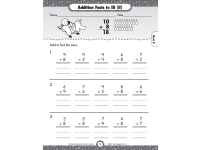
—Addition and Subtraction Facts to 18
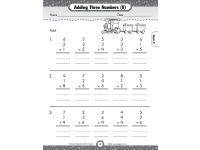
—Adding Three Numbers
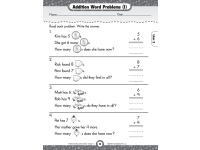
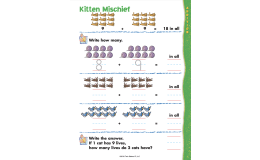
—Addition and Subtraction Word Problems
Related resources
More resources teachers may find useful
24 related resources were found using this product's title, contributor, categories and tags.
In the classroom
Teaching tips & learning objectives

Learning objectives
Students recall addition and subtraction facts within 18 with increasing fluency across sequential practice pages.
Students understand subtraction as an unknown-addend problem by using addition to check a subtraction answer.
Students determine whether a given addition or subtraction equation is true or false, correcting any error.

Teaching tips
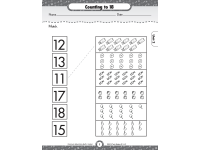
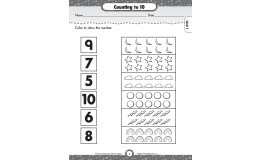
Work through the workbook in its printed order — counting, addition sets, addition facts, subtraction sets, subtraction facts, then mixed review — since each section builds on the last (pages 2-19).
Use the color-by-code quilt page as a low-stakes fluency check partway through the subtraction unit (page 15).
The 'Checking Subtraction' page (page 17) is a good moment to introduce the idea that addition and subtraction are inverse operations.

Skills covered
Addition and subtraction fact fluency within 18 — students solve missing-number and standard equations across multiple practice sets (pages 5-8, 13-16).
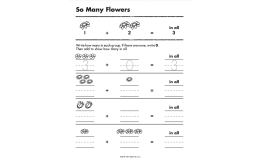
Three-addend addition — students add three single-digit numbers in one equation (pages 9-10).
Inverse-operation checking — students subtract, then add to verify their answer (page 17).

No reviews yet
Downloaded this resource? Tell other teachers how it went.
Curriculum
Standards, concepts & topics
Standards
 Standards
- 1.OA.C.6
Core concepts
 Core concepts
Addition facts
Subtraction facts
Fact families
Word problems
 Topics
Explore more
Categories this resource belongs to
Explore related searches
More to explore
You may also like