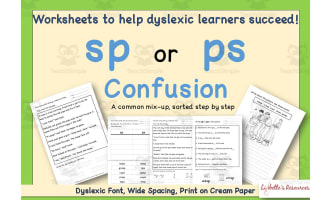
B and D Reversal — A Structured Daily Intervention Programme





Common Core, Phonics, Language Development, ELA, Spelling, Special Education Needs (SEN), Special Resources
Kindergarten, Grade 1, 2, 3, 4


About This Product
B and D Reversal — A Structured Daily Intervention programme to tackle a real problem: Dyslexic Logic Font used with permission.
B and D reversal is one of the most persistent problems in early literacy.
This resource is still being trialled. I created it for a proudly dyslexic 11-year-old whose ongoing b/d/ confusion is causing him much discouragement. In theory, it should work, but it does need the teacher to hold the line for the pupil for as long as it takes - a long-rooted plant is not pulled out easily, and likewise an ingrained habit is not changed easily.
If you too have a desperate pupil - please join the trial! I am happy to receive feedback.
The Problem
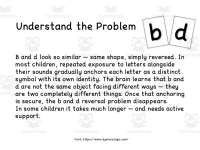
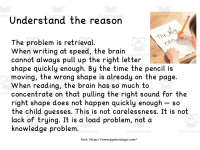
Children who confuse these two letters are not being careless, nor are they failing to try, as some suppose. They know that Bee says 'b' and Dee says 'd' — they have moved beyond learning beginning sounds. The problem is not knowledge — it is retrieval. When a child is writing at speed, the brain cannot always pull up the right letter shape quickly enough. The child starts to write, and the wrong shape is already on the page. They do not have time to sit there working out which way round a b or a d goes. They guess. And nine times out of ten, they get it wrong. The teacher points out the errors. The child feels dumb.
Parents and teachers scour the web for a solution. They try one thing after another with the same fruitless results. The usual approaches — the bed trick, the b hand, repeated correction — all share the same flaw. They ask the child to retrieve the correct answer from memory under pressure. The b hand fails because the child cannot remember which hand is which. That is precisely what they cannot do reliably. A strategy that depends on the thing that is broken will not fix the thing that is broken.
The Solution
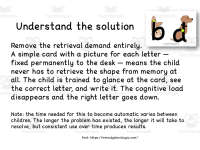
Remove the need to retrieve the correct shape and formation from memory entirely.
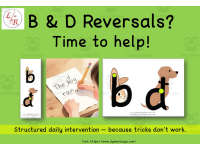
This pack gives the child a simple visual reference — a card with a picture embedded in each letter shape, fixed permanently to the desk, with a clear starting point for letter formation marked on each letter. One glance before writing, and the right letter is there. No memory required. No cognitive load. Just the correct letter, every time.
The Dyslexic Logic Font — used with permission — is used throughout. This helps pupils establish the correct letter shape more easily.
What is included
Table cards for the desk, bookmarks for reading books and folders, and smaller cards for use wherever your child writes. Every format ensures the cue is always within reach — because a cue that is not there cannot help.
Five lists of pre-written daily word sets — carefully sequenced from single b words through to mixed b and d in longer words. Nothing to prepare. Just open and use.
Record sheets — a simple daily checklist tracking whether your child chose the correct letter, checked the card independently, and formed the letter correctly. Includes a progress chart the child completes themselves and a readiness check so you know exactly when to move to the next stage.
A full step-by-step guide for parents and teachers. This is the part most similar resources leave out. A visual cue only works if the child has been properly trained to use it — consistently, every time, before they write rather than after. The guide explains exactly how to do that, how to handle resistance, and what to expect over time.
A video guide showing the full programme in action — because seeing it is easier than reading about it.
There are no quick fixes here. The habit of checking takes weeks to establish and months to become fully automatic. But with consistent use, it works — and this pack gives you everything you need to make that happen.
Suitable for use at home or in the classroom with any child who has a persistent b and d reversal problem, regardless of which reading programme they are following.
0 Reviews
Check out these other great products