Back to School ELA Review for 4th Grade | 20 Daily Lessons



About This Product
Start the year with a focused 4th grade back to school ELA review that helps students revisit essential Grade 3 reading, grammar, vocabulary, word study, and writing skills. With 20 daily lessons plus 16 print-and-play literacy games, this resource gives fourth graders structured practice while helping you establish a predictable beginning-of-year routine.
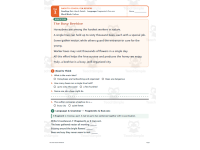
Each lesson follows the same four-part rhythm—Read & Think, Language & Grammar, Word Work, and Write About It—with a full lesson designed for about 15–25 minutes. Skills spiral across the 20 days, moving from focused review into mixed reading, grammar, vocabulary, editing, and reflection.
What’s Included
This 4th grade ELA review includes:
✅ 20 daily ELA review lessons
✅ Short fiction, nonfiction, and persuasive reading passages
✅ Reading comprehension questions
✅ Inference and text evidence practice
✅ Grammar and language review
✅ Vocabulary and word study
✅ Greek and Latin roots practice
✅ Daily writing prompts
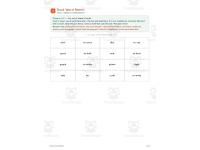
✅ 16 print-and-play literacy games and activities
✅ Partner and small-group activities
✅ Literacy center options
✅ Complete answer key for all 20 days
✅ Teacher guide
✅ 20-day pacing overview
✅ Four-week planning guide
✅ Differentiation suggestions
✅ Game preparation directions
✅ Game-to-skill quick-reference map
✅ Class progress record sheet
✅ Family letter
✅ Student reflection
✅ Reading Star Award
The 68-page Student Workbook contains 20 daily lessons plus 16 print-and-play games, with daily practice in reading, grammar, word work, and writing.
The separate Answer Key provides responses for all 20 lessons, organized by day and section for faster checking, while allowing reasonable student wording for open-ended writing and reflection tasks.
How It Works in the Classroom
Use this 4th grade back to school ELA review for morning work, whole-group warm-ups, independent practice, literacy stations, small groups, intervention, homework, early finishers, or beginning-of-year formative assessment.
Each daily lesson includes:
📖 Read & Think — Students read a short fiction, nonfiction, or persuasive passage and answer four comprehension questions
✏️ Language & Grammar — Students revisit a focused Grade 3 grammar or language skill
🔤 Word Work — Students practice vocabulary, affixes, roots, figurative language, word relationships, and academic language
📝 Write About It — Students respond to a short writing task connected to the day’s reading or skill focus
The predictable structure supports independence while giving students repeated practice across multiple ELA strands. The Teacher Guide suggests reading passages together when needed, modeling the first grammar item, and then releasing students to independent or partner work.
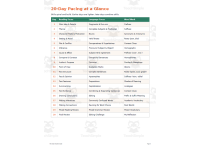
The 20-Day Pacing at a Glance chart on page 6 of the Teacher Guide shows how skills spiral across the month. Reading moves from main idea and details, theme, character traits and motivation, setting and mood, and plot and conflict into inference, cause and effect, compare and contrast, author’s purpose, point of view, text structure, fact and opinion, text features, summarizing, text evidence, drawing conclusions, making inferences, making connections, and mixed review.
For a four-week routine, the Teacher Guide suggests assigning daily workbook practice Monday through Thursday and using Friday for a literacy game, center rotation, or catch-up.
Standards & Learning Goals
This fourth grade literacy review revisits key Grade 3 learning across five major ELA strands:
📚 Reading Comprehension — main idea and details, theme, character traits and motivation, setting and mood, plot and conflict, inference, cause and effect, compare and contrast, author’s purpose, point of view, text structure, fact and opinion, text features, summarizing, text evidence, drawing conclusions, and making connections
✏️ Grammar & Language — fragments and run-ons, complete subjects and predicates, nouns, verb tenses, comparatives and superlatives, subject and object pronouns, subject-verb agreement, compound sentences, commas, quotation marks, complex sentences, apostrophes, prepositions, capitalization, combining and expanding sentences, editing, commonly confused words, and revising for word choice
🔤 Word Study — prefixes, suffixes, root words, and Greek and Latin roots
💬 Vocabulary — synonyms, antonyms, context clues, homophones, homographs, similes, metaphors, idioms, shades of meaning, analogies, and academic vocabulary
📝 Writing — paragraph writing, opinion writing with reasons, descriptive writing, cause-and-effect explanation, comparison writing, persuasive writing, sequencing, summarizing, text-based responses, mystery writing, revising for word choice, narrative continuation, and reflection
The daily workbook intentionally pairs skills across strands. For example, Day 1 combines main idea and details with fragments and run-ons plus prefixes; Day 8 combines compare and contrast with compound sentences and homophones; Day 11 combines text structure with complex sentences and Greek and Latin roots; and Day 17 combines inference with commonly confused words and academic vocabulary.
Why Teachers Love It
✨ Build a consistent first-month routine. Students see the same four-part lesson structure each day, helping classroom expectations become more predictable.
✨ Review multiple ELA strands in one resource. Reading comprehension, grammar, vocabulary, word study, and writing are integrated across 20 days of practice.
✨ Strengthen higher-level reading comprehension. Students practice theme, motivation, mood, conflict, inference, author’s purpose, point of view, text structure, text evidence, drawing conclusions, summarizing, and more.
✨ Revisit essential grammar skills. Practice includes run-ons and fragments, subjects and predicates, verb tenses, pronouns, subject-verb agreement, compound and complex sentences, commas, quotation marks, apostrophes, prepositions, capitalization, editing, and commonly confused words.
✨ Build stronger vocabulary and morphology skills. Students work with prefixes, suffixes, Greek and Latin roots, context clues, synonyms, antonyms, homophones, homographs, figurative language, analogies, and academic vocabulary.
✨ Include meaningful writing every day. Writing prompts ask students to explain, persuade, compare, summarize, describe, reflect, use text evidence, continue a narrative, and apply stronger word choice.
✨ Add 16 hands-on literacy games and activities. The workbook includes Parts of Speech Sort, Root Word Match, Synonym Match, Roll-a-Root Word, Academic Vocabulary BINGO, Multisyllable Roll & Read, Prefix Sort, Antonym Match, Reading Road Race, Main Idea Baskets, Fact or Opinion Sort, Sentence Building Tiles, Fix-It Cards, Sequence Cards, Homophone Match, and Syllable Sort.
✨ Quickly match games to skills. The Game → Skill Quick Map on page 9 of the Teacher Guide visually pairs each activity with its target, including Greek and Latin roots, academic vocabulary, reading fluency, main idea and details, complex and compound sentences, editing, text structure, homophones, and syllables.
✨ Prep games once and reuse them. The Teacher Guide recommends printing game pages on cardstock, laminating boards and cards, cutting pieces apart, and storing each game in a labeled bag for repeated use.
✨ Differentiate without creating separate lessons. Suggested supports are included for below-level readers, on-level learners, above-level students, and multilingual learners.
✨ Use daily work as low-stakes formative assessment. The Teacher Guide recommends spot-checking comprehension and grammar while watching student writing for growth. The Class Record Sheet shown on page 10 includes Week 1 through Week 4 tracking columns plus space for notes and skills to revisit.
✨ Save time checking student work. The included answer key covers all 20 days and provides clear section-by-section responses.
✨ Support home-school communication. The Teacher Guide includes a family letter that explains the review routine and gives caregivers simple ideas for supporting reading and language practice at home.
Give students a confident start to fourth grade with this 4th grade back to school ELA review. Download it for 20 days of structured Grade 3 skills review, daily reading and writing practice, focused grammar and vocabulary work, plus 16 print-and-play games that can extend learning into centers, partner work, and small groups.
Perfect for teachers searching for 4th grade morning work, third grade skills review, beginning-of-year ELA activities, fourth grade literacy centers, reading comprehension practice, grammar review, vocabulary activities, Greek and Latin roots practice, first month of school activities, formative assessment, or a complete back-to-school literacy review.
Check one grammar skill with this identifying verbs worksheet.
Resource Tags
0 Reviews
Check out these other great products