Chemistry Molarity Practice – Solve for Variables
- Grades
- Grades 9–12
- File type
- Microsoft Word
- Answer key
- Included


- Subject
- Science, Chemistry
- Topic
- Molarity, Moles
- Resource types
- Worksheets
- Answer key
- Included
Product description
From the author
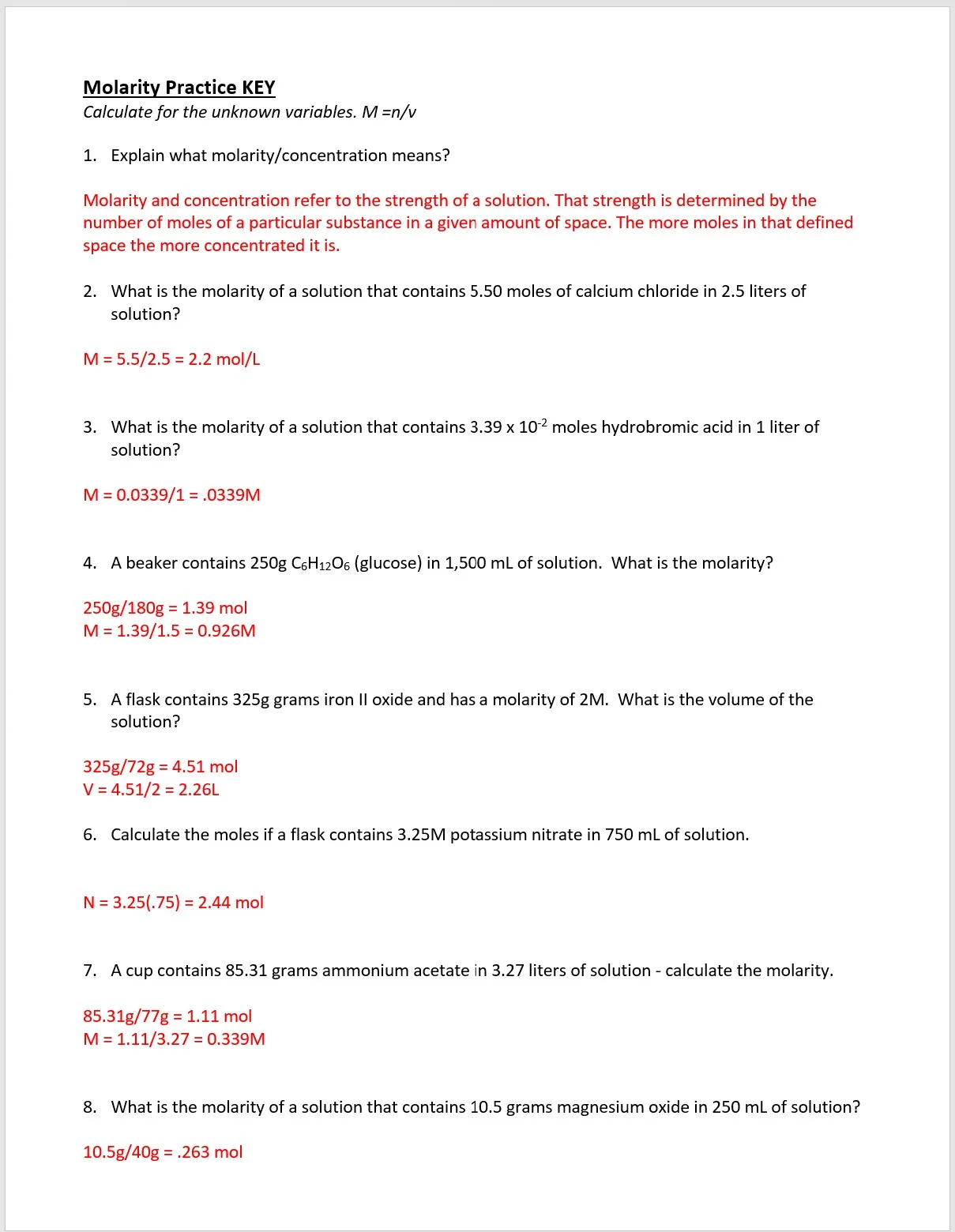
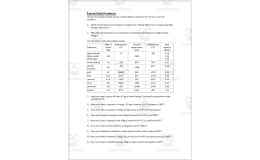
Molarity Practice
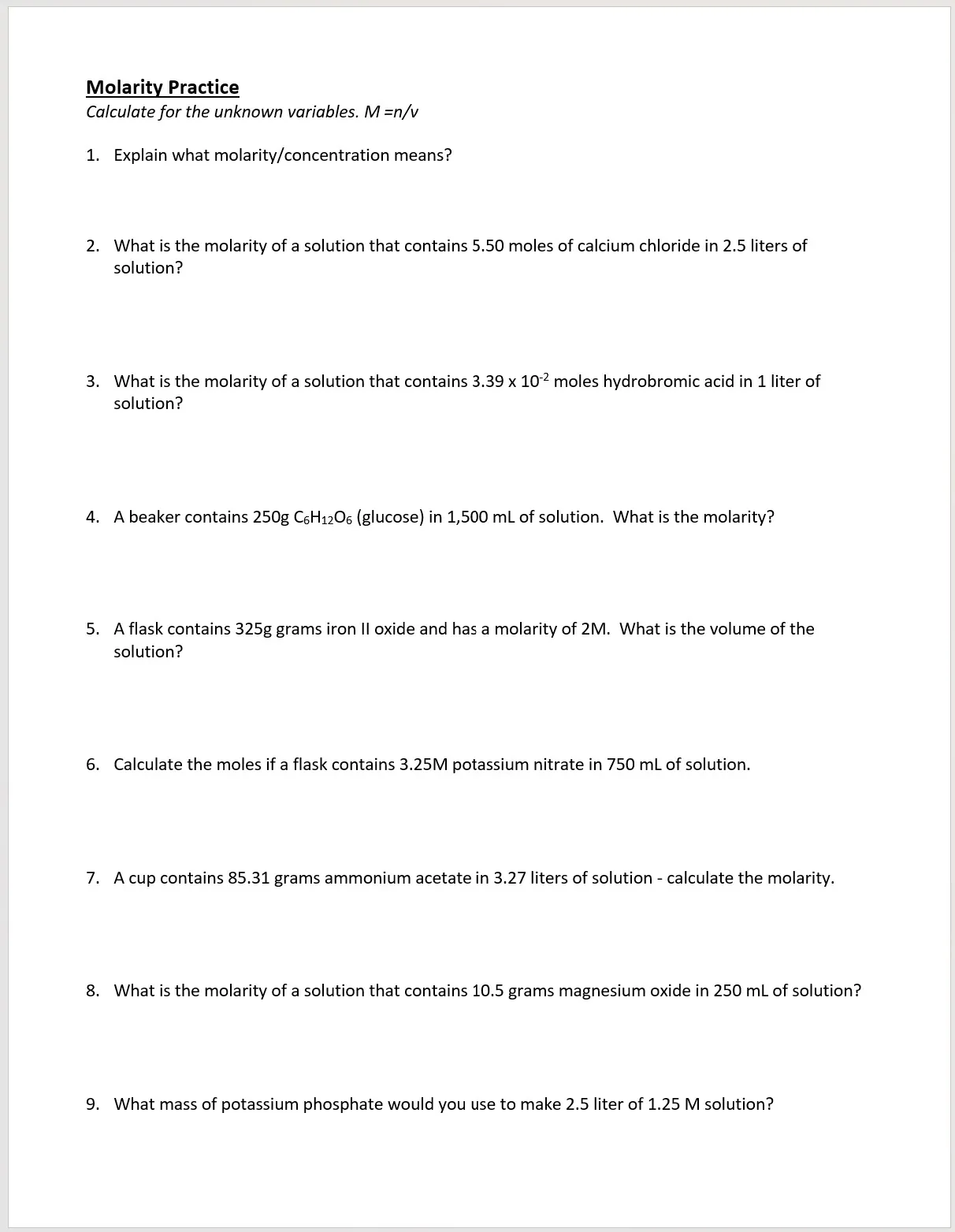
With this resource students will practice calculating unknown variables. M =n/v
Answers included
Related resources
More resources teachers may find useful
24 related resources were found using this product's title, contributor, categories and tags.
In the classroom
Teaching tips & learning objectives

Learning objectives
Solve for molarity (M) given moles or mass and volume of solution, using M=n/v.
Rearrange M=n/v to solve for mass, volume, or moles when molarity is the known variable.
Compare the concentration of two different solutions and determine which has the stronger molarity.

Teaching tips
Group problems by which variable is unknown (molarity vs. mass vs. volume vs. moles) before assigning, since the worksheet does not sort problems by type and several require rearranging M=n/v differently.
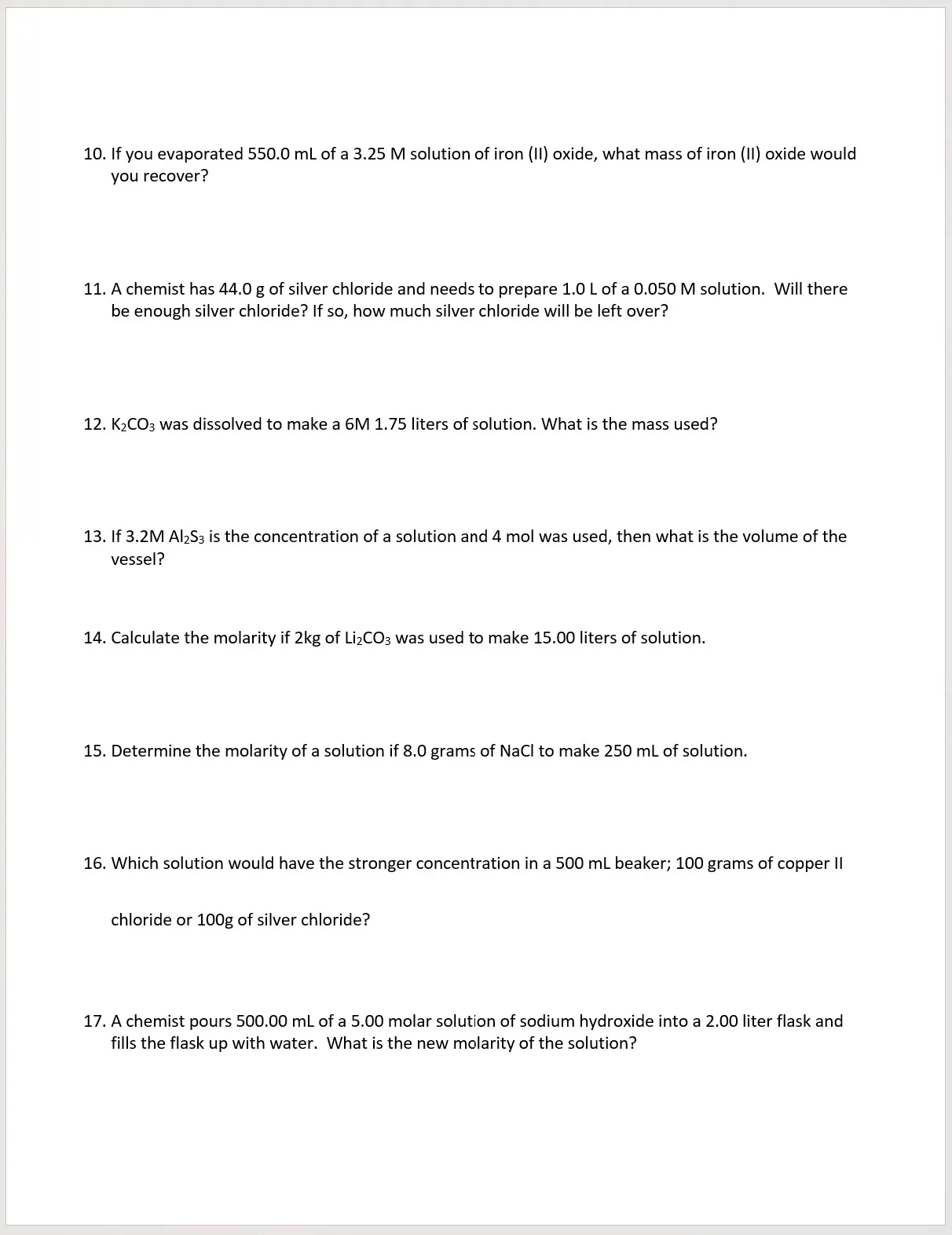
Use problem 11 (comparing available vs. needed silver chloride) and problem 16 (comparing two solutions' concentrations) as extension problems, since both require an extra reasoning step beyond a direct M=n/v calculation.
Walk through the dilution problem (17) separately, since it requires first finding moles from the original solution before recalculating molarity in the new volume.

Skills covered
Molarity calculation — students solve for molarity given moles or mass and volume using M=n/v.
Formula rearrangement — students solve M=n/v for mass, volume, or moles depending on which variable is unknown.
Dilution calculation — students find a solution's new molarity after it is transferred into a larger volume.
Good to know
Questions teachers ask about this resource
Do all 17 problems ask students to solve for molarity directly?
No — most solve for molarity given moles or mass and volume, but several rearrange the formula to solve for mass, volume, or moles instead, and two problems (comparing two solutions, and finding a new molarity after dilution) require an additional reasoning step.

No reviews yet
Downloaded this resource? Tell other teachers how it went.
Resource details
Concepts & topics
Core concepts
 Core concepts
Molarity
Moles
Solution concentration
Dilution
 Topics
Explore more
Categories this resource belongs to
Explore related searches
More to explore
You may also like