Dimensional Analysis Worksheet - 20 Conversion Problems
- Grades
- Grades 8–12, Middle School, High School
- File type
- Microsoft Word


- Subject
- Science, Chemistry
- Topic
- dimensional anaylsis, conversions
- Resource types
- Worksheets & Printables, Worksheets
About this resource
What's inside this resource
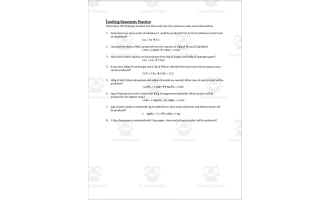
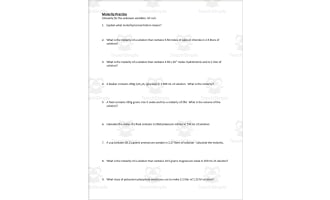
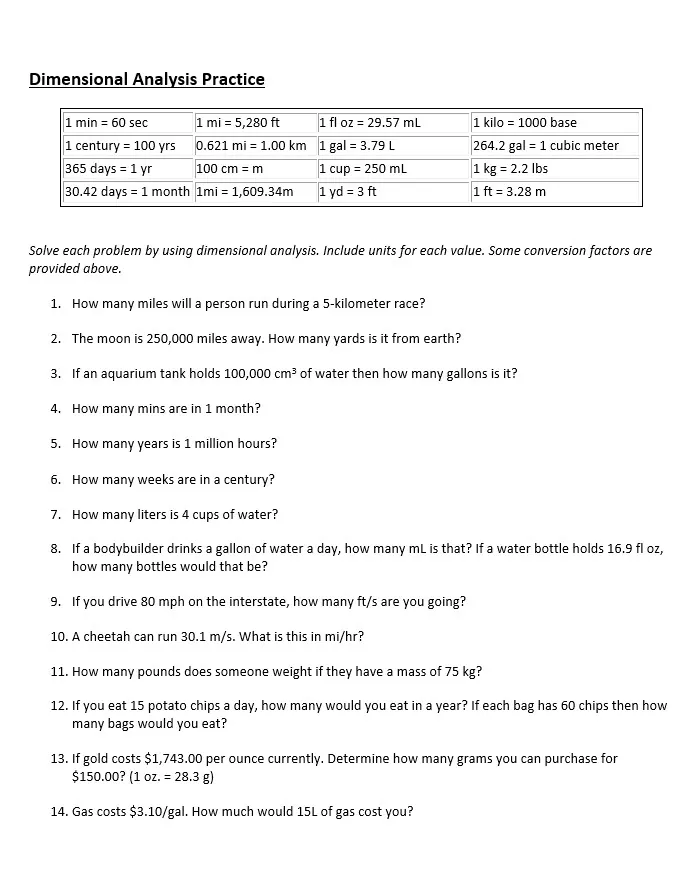
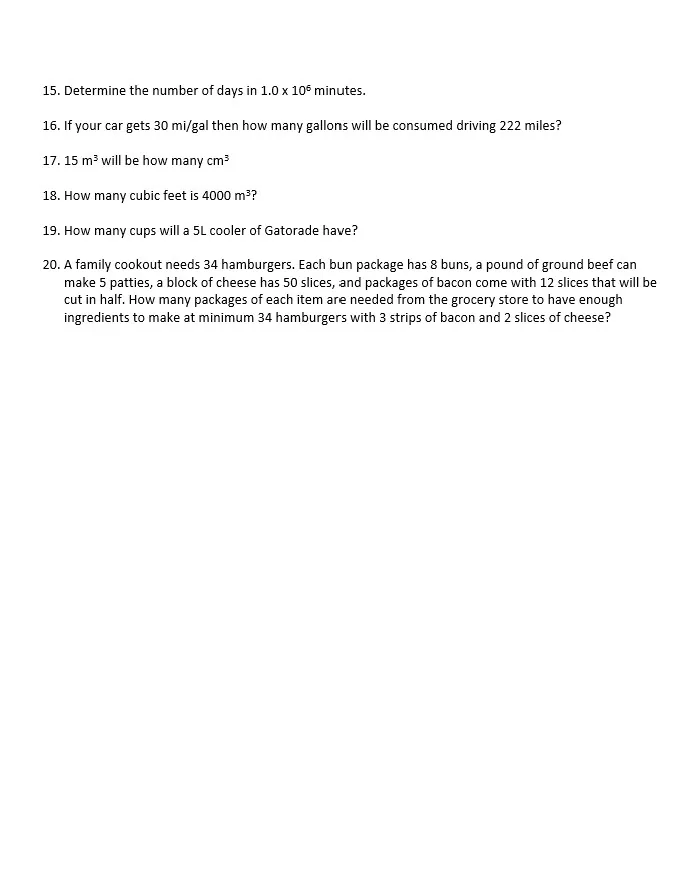
This set allows students to practice unit conversion by dimensional analysis.
Includes 20 practice problems where students need to convert practical units of mass, time, volume, and speed.
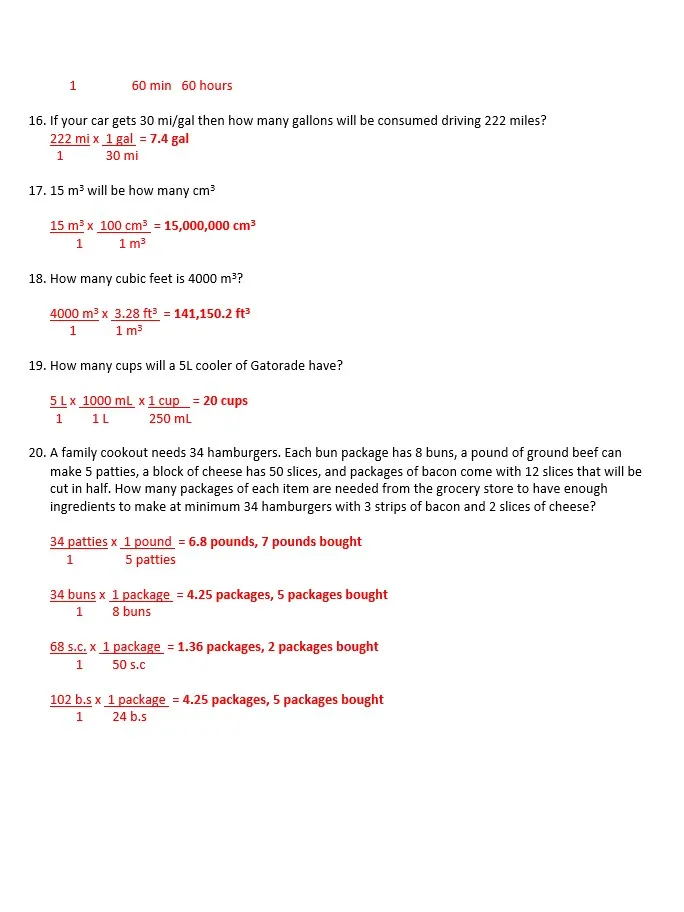
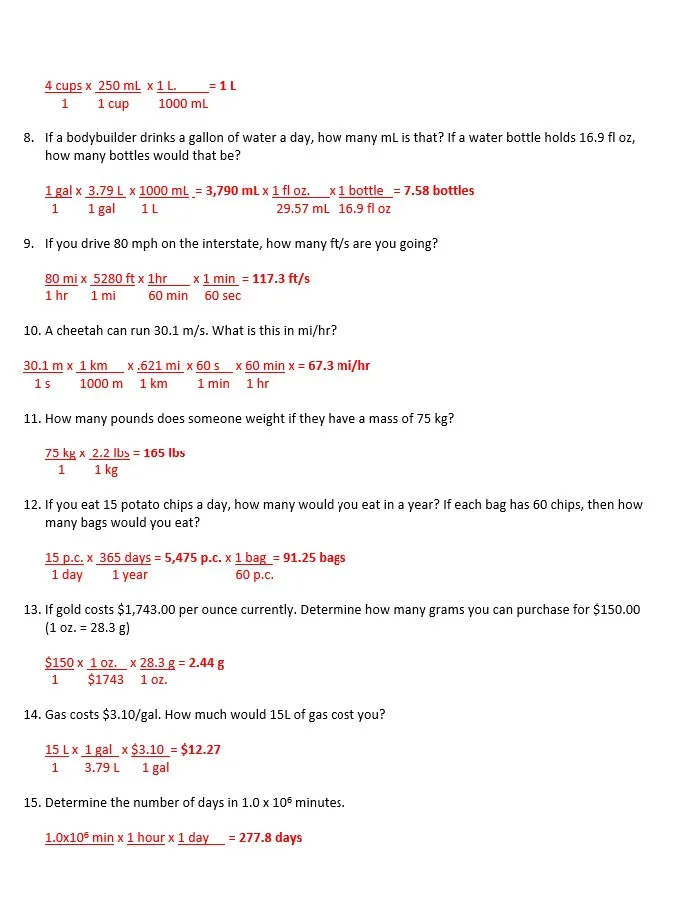
The answer to each question is included.
Related resources
More resources teachers may find useful
24 related resources were found using this product's title, contributor, categories and tags.


In the classroom
Teaching tips & learning objectives

Learning objectives
Convert between units of time, distance, volume, and mass using the dimensional analysis (factor-label) method.
Chain multiple conversion factors together to solve multi-step unit conversion problems.
Apply dimensional analysis to real-world scenarios, including cost calculations and quantity-to-package conversions.

Teaching tips
Model problem 1 (converting a 5K race to miles) as a single-step conversion before assigning the later multi-step problems, since the set increases in complexity.
Use problem 20, the multi-part hamburger cookout scenario, as a culminating or group problem, since it requires converting four separate ingredient quantities into whole packages purchased.
Have students show every conversion factor and canceled unit in their work, matching the fully worked format shown in the answer key, rather than jumping to a final numeric answer.

Skills covered
Unit conversion via dimensional analysis — students chain conversion factors together, canceling units, to solve distance, time, volume, and mass conversions.
Real-world quantity conversion — students apply dimensional analysis to practical scenarios like cost-per-ounce pricing and packages-needed calculations.
Scientific notation application — students convert a quantity given in scientific notation (1.0 x 10^6 minutes) into days.
Good to know
Questions teachers ask about this resource
How does the final problem differ in structure from the rest of the set?
Unlike the single-quantity conversions in problems 1 through 19, problem 20 requires converting four separate ingredient quantities (buns, ground beef, cheese, and bacon) into whole packages needed for a cookout, making it a multi-part application of the same dimensional-analysis method.

No reviews yet
Downloaded this resource? Tell other teachers how it went.
Resource details
Concepts & topics
Core concepts
 Core concepts
Dimensional analysis
Unit conversion
Factor-label method
 Topics
Explore related searches
More to explore
You may also like