Civic Literacy Essay for Week 10, Regents US History

- Grades
- Grades 9–12, High School
- Pages
- 10
- File type
- Preparation
- Print ready


- Subject
- Social Studies, History, History: USA
- Topic
- ny state, regents
- Resource types
- Teacher Tools, Assessments
- Preparation
- Print ready
About this resource
What's inside this resource
The Challenge of Creating a Stable Representative Government.
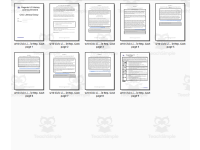
This Civic Literacy essay is based on a set of primary source documents. The question is designed to test a student's ability to work with historical documents. In analyzing the documents, students consider the source of each document and any point of view that may be presented. The language and images used in a document may reflect the historical context of the time in which it was created.
A recommended teaching practice for New York State Regents US History and Government is to train students to write one of these each ten weeks or so through the year. Teachers preparing students for the New York State Regents will find it difficult to train students to write these well if they wait until the end of the year! Each of the civic literacy essays authored by Innovation Assessments LLC are designed for different points in the year such that documents come from historical context usually under study.
Here is a blog article about teaching document-based essays that will be helpful.
Historical Context of this essay prompt: The Challenge of Creating a Stable Representative Government. Throughout United States history, many constitutional and civic issues have been debated by Americans. These debates have resulted in efforts by individuals, groups, and governments to address these issues. These efforts have achieved varying degrees of success. One of these constitutional and civic issues is the challenge of creating a stable representative Government.
The product also includes passcodes to my own virtual classroom at Innovation. Give students the passcodes for access to review videos with embedded, auto-corrected questions.
Related resources
More resources teachers may find useful
24 related resources were found using this product's title, contributor, categories and tags.


In the classroom
Teaching tips & learning objectives

Learning objectives
Describe the historical circumstances surrounding the challenge of creating a stable representative government in America
Explain what individuals, groups and governments did about it, from a shipboard compact to a federal constitution
Discuss how far each of those efforts succeeded, rather than only listing them

Teaching tips
Documents 1 to 3 are in original spelling — 'Common Weath', 'shalbe', 'voiage' — so students who have not read seventeenth-century English before need a first pass just to decode them
The three command terms are defined on the task page in the Regents' own wording; marking against those definitions rather than a general essay standard is what makes the practice transfer
The rubric's 100 band requires substantial outside information as well as four documents, so a student who only works from the packet cannot reach it — worth saying before they start

Skills covered
Document-based essay writing — students build one argument from six supplied sources plus their own knowledge, following the Regents three-part task.
Primary source analysis — the packet supplies the Mayflower Compact, a colonial religious statute, an early assembly record, a parliamentary speech and two founding-era American texts, each with its provenance stated.
Reading period English — Documents 1, 2 and 3 retain original spelling and sentence structure from 1619 to 1650.
Good to know
Questions teachers ask about this resource
Which documents are supplied with the question?
Six, running chronologically from 1619 to 1787: Bradford's account of the Mayflower Compact, the Maryland Toleration Act of 1649, John Pory's proceedings of the first Virginia General Assembly, Edmund Burke's 1775 conciliation speech, Federalist No. 10, and Madison's Convention notes on the Virginia Plan.
What separates the top rubric band from the one below it?
Depth and reach. The highest band asks for an essay that is both descriptive and analytical, draws on at least four documents, incorporates substantial outside information and richly supports the theme with facts, examples and details, with an introduction and conclusion beyond a restatement of the theme. The band below allows one aspect of the task to be developed more thoroughly than the other and asks for relevant rather than substantial outside information.
Are the documents modernised or left in period spelling?
Left as they were, in the main. The Maryland Toleration Act keeps forms like "Common Weath", "consideracion" and "shalbe"; the Virginia proceedings keep "voiage" and "commaunde". The task page notes only that some documents have been edited for the purpose of the question, which mostly means cut rather than rewritten.

No reviews yet
Downloaded this resource? Tell other teachers how it went.
Resource details
Concepts & topics
Core concepts
 Core concepts
Representative government
Primary source analysis
Document-based essay
Regents preparation
US constitutional history
 Topics
Explore more
Categories this resource belongs to
Explore related searches
More to explore
You may also like