Crash Course Government Episode Worksheet | 50 - Foreign Policy
- Grades
- Grades 7–10, Middle School, High School
- File type
- Microsoft Word
- Editable
- Yes


- Subject
- Social Studies, Government
- Topic
- Foreign Policy, Government Policies
- Resource types
- Worksheets & Printables, Worksheets
- Editable
- Yes
About this resource
What's inside this resource
Related resources
More resources teachers may find useful
24 related resources were found using this product's title, contributor, categories and tags.
In the classroom
Teaching tips & learning objectives

Learning objectives
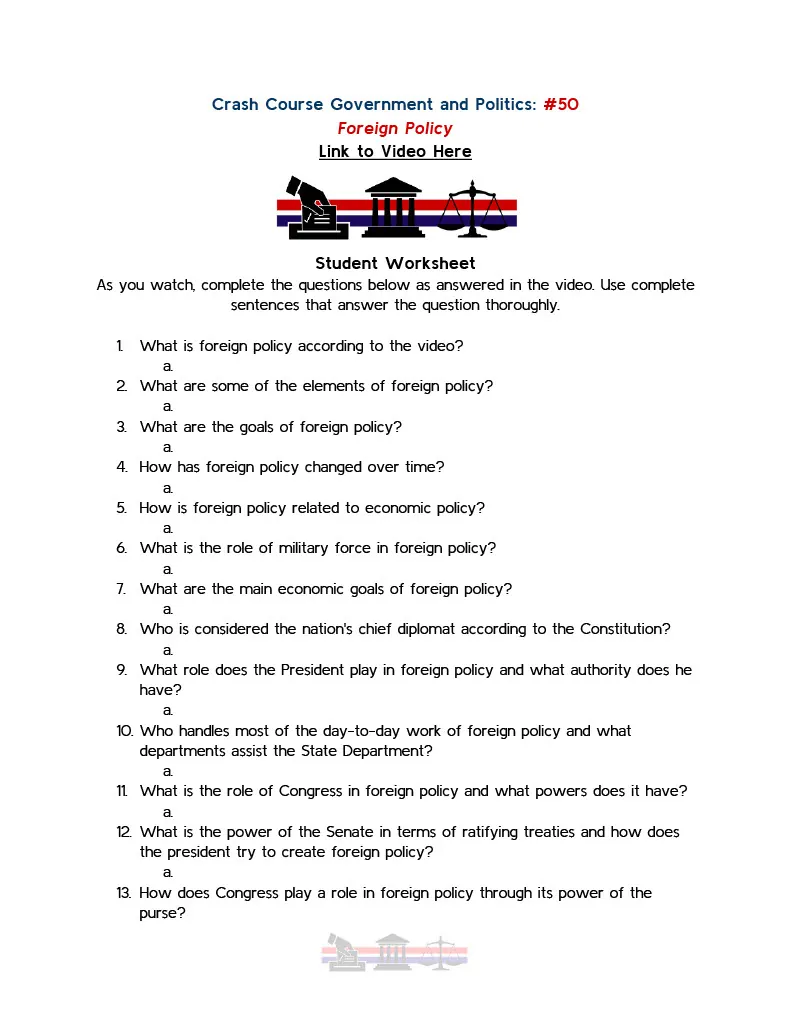
Define foreign policy and identify its main goals (security, prosperity, and global influence)
Explain the roles of the presidency, the State Department, and Congress in shaping and executing U.S. foreign policy

Teaching tips
Pair questions 8-11 (the president's diplomatic role, the State Department, and Congress's treaty power) as a mini-discussion set, since the answer key explains how these three branches of authority interact rather than treating them as isolated facts.
Use the answer key's note on executive agreements versus treaties (question 12) to prompt a follow-up discussion on why a president might prefer one over the other.

Skills covered
Video-based note-taking — students answer questions in complete sentences while watching the linked Crash Course episode.
Constitutional roles analysis — students explain how the presidency, State Department, and Congress each contribute to foreign policy.
Cause-and-effect reasoning — students explain why the president often uses executive agreements instead of treaties requiring a two-thirds Senate vote.
Good to know
Questions teachers ask about this resource
Does this require students to watch the full Crash Course video, or can it stand alone?
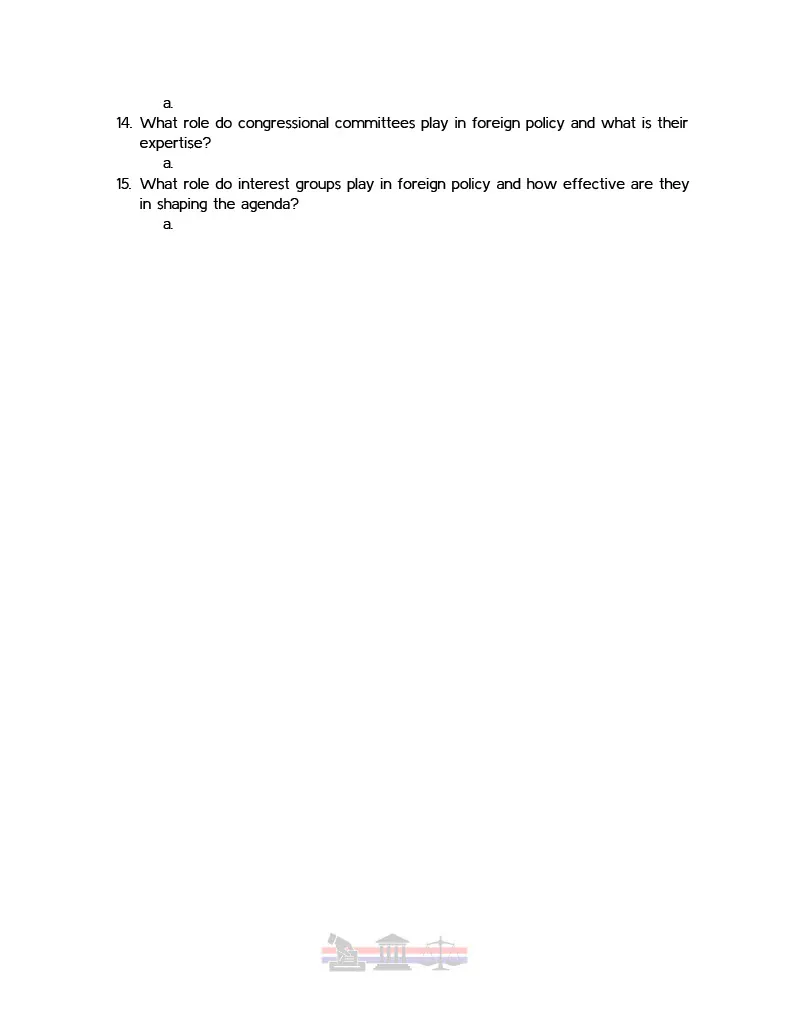
It's built to be completed while watching the linked video -- questions follow the episode's structure in sequence, from foreign policy's definition through the roles of the president, State Department, and Congress.

No reviews yet
Downloaded this resource? Tell other teachers how it went.
Resource details
Concepts & topics
Core concepts
 Core concepts
U.S. foreign policy goals
Presidential diplomatic authority
Congressional treaty and appropriations power
 Topics
Explore more
Categories this resource belongs to
Explore related searches
More to explore
You may also like