Crash Course Organic Chemistry: Episodes 1-5



- Grades
- Grades 10–12, Adult Education
- Pages
- 26
- File type
- Answer key
- Included


- Subject
- Science, Chemistry
- Topic
- Organic chemistry, Nomenclature
- Resource types
- Worksheets, Activities
- Answer key
- Included
Product description
From the author
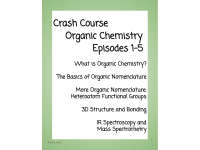
Crash Course Organic Chemistry: Episodes 1-5 will cover:
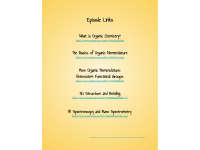
-What is Organic Chemistry?
-The Basics of Organic Nomenclature
-More Organic Nomenclature: Heteroatom Functional Groups
-3D Structure and Bonding
-IR Spectroscopy and Mass Spectrometry
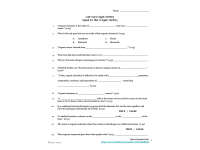
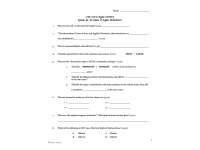
Episode links for each of these are included. There is an episode guide for students to complete (with and without timestamps). Answer keys are included.
Related resources
More resources teachers may find useful
15 related resources were found using this product's title, contributor, categories and tags.

In the classroom
Teaching tips & learning objectives

Learning objectives
Define organic chemistry and explain what "organic" means in this scientific context.
Apply IUPAC's naming steps (finding the longest carbon chain, prioritizing functional groups) to name organic compounds.
Explain VSEPR theory and identify the three molecular geometries used in organic chemistry.

Teaching tips
Play each Crash Course video using the timestamps printed next to each question to help students locate relevant sections.
Review with the included answer key immediately after each video while the content is still fresh.
Use the episode-links page to check video access and to queue up all five episodes in advance of the unit.

Skills covered
Video-guided note-taking — students fill in key terms while watching each timestamped Crash Course episode.
IUPAC naming convention practice — students record the steps for naming organic compounds introduced in Episodes 2 and 3.
Molecular geometry reasoning — students define VSEPR theory and identify the three geometries used in organic chemistry from Episode 4.

No reviews yet
Downloaded this resource? Tell other teachers how it went.
Resource details
Concepts & topics
Core concepts
 Core concepts
IUPAC nomenclature
Heteroatoms and functional groups
VSEPR theory
IR spectroscopy vs. mass spectrometry
 Topics
Explore more
Categories this resource belongs to
Explore related searches
More to explore
You may also like