Crash Course Psychology #21: Rorschach and Freudians
- Grades
- Grades 7–12, Middle School, High School
- Pages
- 2
- File type
- Zip


- Subject
- Social Studies, History, Psychology
- Topic
- Personality theory, Freud
- Resource types
- Worksheets & Printables, Worksheets
Product description
From the author
Related resources
More resources teachers may find useful
24 related resources were found using this product's title, contributor, categories and tags.


In the classroom
Teaching tips & learning objectives

Learning objectives
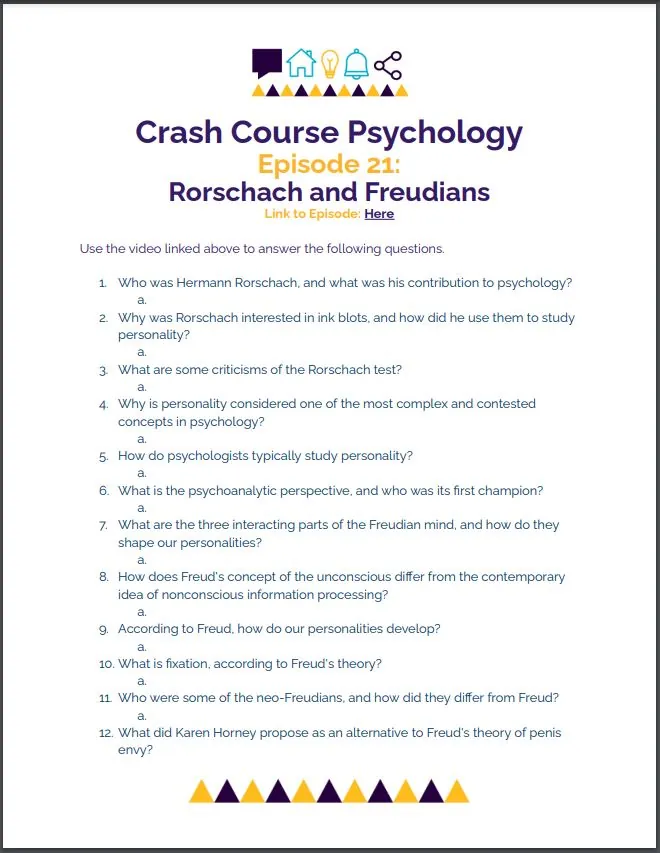
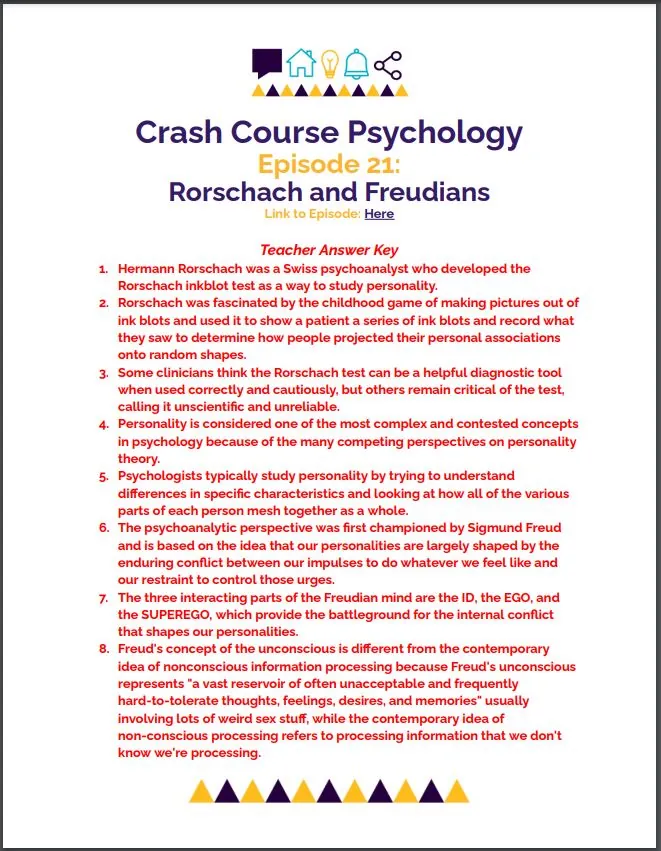
Describe how the Rorschach test uses projected associations
Differentiate the id, ego, and superego in Freud’s personality model
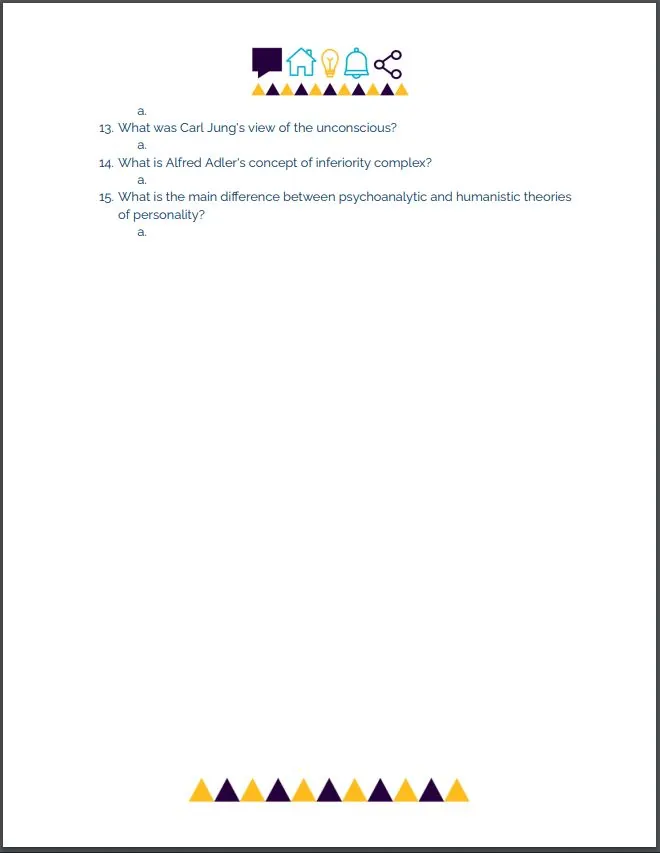
Compare Freud’s theory with the approaches of Horney, Jung, and Adler

Teaching tips
Separate the Rorschach measurement items from the later personality-theory section before comparing the two approaches.
Create a three-part organizer for Horney, Jung, and Adler using the final neo-Freudian prompts.

Skills covered
Theory comparison — students distinguish psychoanalytic, neo-Freudian, and humanistic perspectives.
Psychology vocabulary — responses use terms including projection, fixation, collective unconscious, and inferiority complex.
Evidence-based explanation — learners connect each named theorist with the idea described in the episode.

No reviews yet
Downloaded this resource? Tell other teachers how it went.
Resource details
Concepts & topics
Core concepts
 Core concepts
Rorschach test
Psychoanalysis
Personality theory
Neo-Freudians
Topics
 Topics
Explore more
Categories this resource belongs to
Explore related searches
More to explore
You may also like