Developing Reading Power 4 - Stories With Comprehension Activities



- Grades
- Grade 4, Elementary
- Pages
- 64
- File type
- Answer key
- Included


- Subject
- ELA, Reading
- Topic
- comprehension, answers
- Answer key
- Included
- Standards
- CCSS.RL.4.1 CCSS.RL.4.2 +1
About this resource
What's inside this resource
Product description
From the author
This language arts-based resource is designed for grade 4. Basic reading skills are developed through the use of this resource. High-interest stories are presented in a way that encourages students to start reading. Students learn what they have read through literal and inferential comprehension. Each story presented in this resource falls within the appropriate grade 4 readability range—from 39 to 52 Degrees of Reading Power (DRP) units. Aligned to the International Reading Association and National Council of Teachers of English Standards 1 and 3.
Related resources
More resources teachers may find useful
24 related resources were found using this product's title, contributor, categories and tags.


In the classroom
Teaching tips & learning objectives

Learning objectives
Determine the main idea and supporting details of a short story.
Sequence events and identify characters within a story.
Draw inferences and conclusions using specific details from the text.

Teaching tips
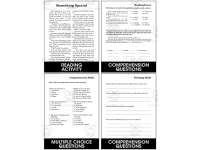
Assign the two-page story and 'Comprehension Skills' page together, then save the 'Reading Power' cloze page for a follow-up session once the story is familiar.
Use the DRP-based story order (see the table of contents) to move students from easier to harder texts across the book.
Use the 'Thinking Skills' short-answer pages for class discussion or written response practice, since they require more than a single-word answer.

Skills covered
Main idea and detail recall — students answer multiple-choice questions after each story testing main idea, sequencing, and supporting details.
Inferential comprehension — thinking-skills questions ask students to explain character motivation and predict beyond the text (e.g., why the elves helped the shoemaker).
Cloze reading — students fill in missing words in a passage summarizing each story, drawing on context and vocabulary.
Good to know
Questions teachers ask about this resource
How are the twelve stories arranged in the book?
By reading difficulty, using the Degrees of Reading Power (DRP) system to order them from easier to harder texts.
What does the 'Reading Power' page in each lesson ask students to do?
Fill in missing words in a cloze passage adapted from the story, choosing the correct word from four multiple-choice options for each blank.

No reviews yet
Downloaded this resource? Tell other teachers how it went.
Curriculum
Standards, concepts & topics
Standards
 Standards
- CCSS.RL.4.1 — Refer to details and examples in a text when explaining what the text says explicitly and when drawing inferences from the text.
- CCSS.RL.4.2 — Determine a theme of a story, drama, or poem from details in the text; summarize the text.
- CCSS.RL.4.3 — Describe in depth a character, setting, or event in a story or drama, drawing on specific details in the text (e.g., a character’s thoughts, words, or actions).
Core concepts
 Core concepts
reading comprehension
main idea and details
inference
cloze passages
 Topics
Explore related searches
More to explore
You may also like