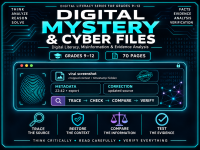
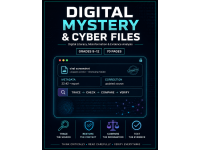
Digital Mystery & Cyber Files | Media Literacy | Grades 9–12 |70 Pages



About This Product
Digital Mystery & Cyber Files | Media Literacy | Grades 9–12 | 70 Pages
70-Page High School Digital Literacy, Misinformation & Evidence Analysis Workbook
Help students become more thoughtful and responsible digital investigators with Digital Mystery & Cyber Files!
Designed for Grades 9–12, this 70-page educational resource combines digital literacy, media literacy, misinformation analysis, source evaluation, and critical thinking through eight investigation-based cases and additional cyber investigation labs.
Students examine fictional digital clues involving viral screenshots, missing messages, look-alike accounts, image context, timestamps, online rumors, anonymous reviews, and digital trails.
The workbook encourages students to distinguish visibility from proof, recognize missing context, evaluate competing explanations, and understand the limitations of digital evidence.
What's Included?
70 total pages
Eight digital investigation cases
Foundational digital evidence activities
Master Cyber Labs
Source tracing and verification challenges
Screenshot and image context investigations
Timestamp and metadata analysis
AI-generated rumor evaluation
Anonymous review and reliability investigations
Two bar graphs and two line graphs
Eight teacher answer key pages (Pages 63–70)
Learning Sections
1. Digital Evidence Foundations (Pages 3–6)
Students explore screenshots, source tracing, evidence scales, and verification principles.
2. Viral Screenshot (Pages 7–12)
Investigate viral content, cropped information, and missing context.
3. Missing Message (Pages 13–18)
Examine incomplete digital communication and evaluate what available evidence can establish.
4. Look-Alike Account (Pages 19–24)
Investigate account identity, source authenticity, and digital verification.
5. Image Context (Pages 25–30)
Analyze image-based information and consider how context influences interpretation.
6. Impossible Timestamp (Pages 31–36)
Explore timestamps, chronology, and inconsistencies in digital evidence.
7. AI-Generated Rumor (Pages 37–42)
Evaluate claims involving AI-generated content and online misinformation.
8. Anonymous Review (Pages 43–48)
Examine source reliability and the limitations of anonymous information.
9. Digital Trail (Pages 49–54)
Connect digital clues and compare information across sources.
10. Master Cyber Labs (Pages 55–62)
Apply digital evidence evaluation and reasoning skills to more integrated investigative challenges.
Skills Developed
Digital literacy
Media literacy
Source credibility
Digital evidence evaluation
Identifying misinformation
Fact-checking strategies
Critical thinking
Comparing information sources
Understanding metadata and timestamps
Evaluating online identities
Recognizing missing context
Interpreting bar and line graphs
Evidence-based reasoning
Responsible digital citizenship
Suggested Classroom Uses
This resource is suitable for:
High school ELA lessons
Grades 9–12 media literacy instruction
Digital citizenship activities
Information literacy lessons
Critical thinking workshops
Independent classroom investigations
Small-group discussions
Online misinformation awareness
Source evaluation practice
Research and evidence analysis
Cross-curricular technology and literacy lessons
Teachers can assign individual investigation cases to reinforce digital literacy skills or combine several sections into a longer information verification unit.
Teacher Answer Key
Pages 63–70 are designated for the teacher answer key.
Some investigations may involve competing explanations or incomplete information. Students should evaluate what the evidence supports rather than assuming every digital clue provides definitive proof.
Resource Information
Grade Levels: Grades 9–12
Primary Focus: Digital Literacy / Media Literacy
Format: Printable PDF
Total Pages: 70
Investigation Cases: 8
Additional Sections: Digital Evidence Foundations and Master Cyber Labs
Answer Key: 8 pages
Core Skills: Source Evaluation, Misinformation, Evidence Analysis, Critical Thinking & Digital Citizenship
Help students develop the habits needed to navigate digital information carefully, question unsupported claims, restore missing context, and reach conclusions grounded in evidence.
Trace. Check. Compare. Verify.
Resource Tags
0 Reviews
Check out these other great products