Fossil Dig Simulation: Grid Maps & Dig Logs, Grades 3-5



About This Product
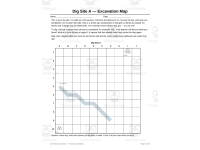
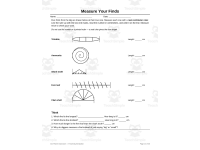
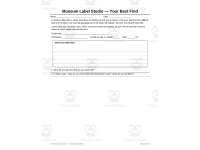
Turn students into real fossil diggers with this hands-on Fossil Dig Simulation for Grades 3-5. This is a simulation game, not a reading pack: there are no passages about how fossils form. Instead, students run the dig themselves, reading grid coordinates, choosing squares to dig, recording every find, measuring it with a real ruler, sorting finds by what they can actually see, graphing results, and writing museum labels for their best finds. A teacher guide on page 2 explains how to run the dig with a two-day plan, and the teacher keeps the two master maps while students never see them. A how-a-dig-works page gives the seven steps of a dig, dig-team roles of digger, recorder, measurer, and photographer, field rules, and a worked grid-square example. Two dig-site maps, Dig Site A, an old stream bed, and Dig Site B, a dry creek bed, each hide twelve buried items on a ten-by-ten coordinate grid, columns A to J and rows 1 to 10: ten fossils and two things that are not fossils. Dig logs give a twelve-row record sheet for each site with square, find, size in centimetres, and notes, plus a finds tally. Coordinate practice has students read squares from a grid, plot X marks on a second grid, and answer two thinking questions. A tool kit matches seven dig tools, soft brush, trowel, sieve, hand pick, ruler, field notebook, and camera, to their jobs. Dig-planning pages ask students to plan six digs at each site and give a reason for every square. A classify page sorts twelve field-note finds into six shape groups: spiral, fan-shaped shell, flat leaf, pointed, long and thin, and bumpy. A measuring page shows five fossils drawn at true size, trilobite 5 centimetres, ammonite 3, shark tooth 2.5, fern leaf 7, and clam shell 4, to measure with a real centimetre ruler. A size sort orders the twelve field-note finds from smallest, fish tooth at 2 centimetres, to largest, rib bone at 14. A pattern detective matches six patterns, spiral curves, straight ridges, branching veins, serrated edge, tiny dots, and smooth, to their finds. Counting, graphing, and comparing pages tally both sites, twenty fossils and four not-a-fossil items, shade two bar graphs, and compare the sites. A museum-label studio writes real exhibit labels for the best finds from each site, with name, site and square, size, description, and why a visitor should stop and look. The Missing Bone challenge spots the pattern in three sets of buried bone pieces and predicts the next square. A field journal, six true-or-false safety questions, a ten-question quiz, and a design-your-own-dig-site page where students place five finds on their own eight-by-eight grid and write their own answer key round out the student pages. Answer keys on pages 26 to 30 give both master maps with every find's square plus complete keys for every activity.
Resource Tags
0 Reviews
Check out these other great products