French Relative Pronouns – Ce que, Ce qui, Ce dont

- Grades
- Grades 10–12, High School
- File type
- Preparation
- Print ready


- Subject
- Foreign Languages, French
- Topic
- French assessment, relative pronouns assessment
- Resource types
- Teacher Tools, Assessments, Task Cards
- Preparation
- Print ready
About this resource
What's inside this resource
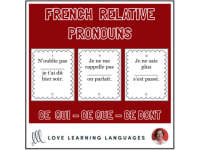
French relative pronouns CE QUE - CE QUI - CE DONT - Practice Cards - Distance Learning
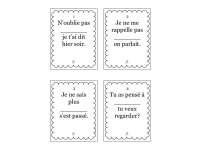
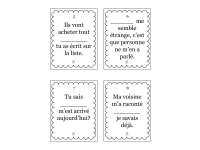
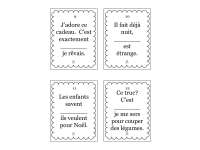
This is a set of 20 French relative pronouns practice cards focusing on CE QUI - CE QUE - CE DONT. These cards are so much more fun (and challenging) than classic worksheets. Main and dependent clauses are provided, and students fill in the blanks with the correct relative pronoun.
Included:
20 numbered practice cards
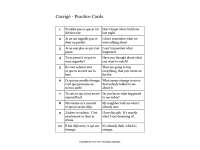
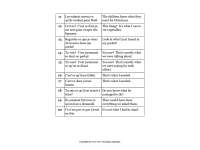
Numbered answer key with English translations
*2 practice card files are included. One is to be used for printing and cutting out sets of cards. The other is a PDF with only one card per page, perfect for projecting or distance learning.
Related resources
More resources teachers may find useful
24 related resources were found using this product's title, contributor, categories and tags.


In the classroom
Teaching tips & learning objectives

Learning objectives
Choose the correct French relative pronoun (ce que, ce qui, or ce dont) based on a sentence's grammatical structure
Translate completed French sentences using relative pronouns into natural English

Teaching tips
Introduce the grammatical rule for each pronoun (ce qui as subject, ce que as object, ce dont after de) before assigning the cards, since the cards themselves test application rather than teach the rule.
Use the one-card-per-page version for a distance-learning slideshow and the grid version for in-person printable card sorts.
Have students check their completed sentence against both the French answer and its English translation in the Corrigé to confirm they understood the meaning, not just the grammar.

Skills covered
Relative pronoun selection — students choose between ce que, ce qui, and ce dont to correctly complete 20 different French sentences.
Sentence translation — students use the answer key's English translations to confirm the meaning of each completed sentence.
Good to know
Questions teachers ask about this resource
How does a student know whether to use ce qui, ce que, or ce dont in a given blank?
The choice depends on the grammatical role of the missing word in the clause that follows: ce qui is used when it is the subject of that clause, ce que when it is the direct object, and ce dont when the following verb or expression requires 'de.'

No reviews yet
Downloaded this resource? Tell other teachers how it went.
Resource details
Concepts & topics
Core concepts
 Core concepts
ce que
ce qui
ce dont
French relative pronouns
 Topics
More to explore
You may also like