Knows Homophone Worksheets – Knows vs. Nose

- Grades
- Grades 2–4
- Pages
- 11
- File type
- Answer key
- Included


- Subject
- ELA, Vocabulary
- Topic
- Knows and nose, Homophones
- Resource types
- Worksheets, Assessments
- Answer key
- Included
- Standards
- CCSS.L.4.1
Product description
From the author
Students can practice using the correct spelling of homophone words with this worksheet packet. This packet focuses on the homophones: knows and nose.
What are homophones?
Homophones are words that sound the same but are spelled differently. Words that are homophones can often be tricky for students to spell correctly since the spelling varies depending on the meaning of the word.
What is Included:
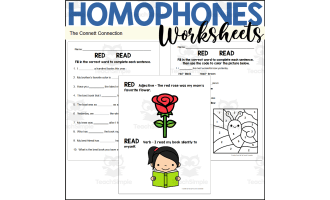
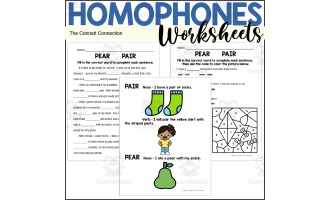
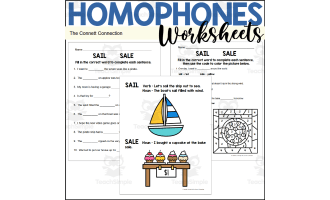
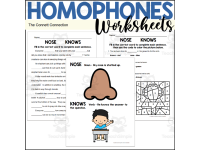
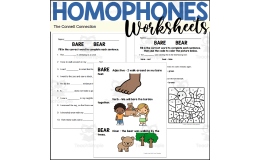
There is a poster page (available in color and in black and white) that shows the homophone, its part of speech, a sentence showing how it is used in a sentence, and a picture that illustrates the sentence.
One worksheet where students write in the correct homophone to complete each sentence.
One worksheet where students write in the correct homophone to complete the story.
One worksheet where students choose the correct word to complete each sentence and then they color in the color by code picture according to the answers of each sentence.
Answer keys for the 3 worksheets.
When to Use:
Literacy Activity - These worksheets make great practice for students learning these homophones.
Morning Work - These worksheets make great morning work for students who arrive to class early.
Homework - These worksheets are perfect to send home for students to practice homophones with their parents.
Sub Plans - The teacher can easily leave these worksheets for subs to assign to students.
These worksheets provide ample practice for students learning these homophones. With repeated practice distinguishing between words with the same sound and different spellings, students will master which form of the word to use in each sentence and become confident in using the correct word when writing their own sentences and stories.
These homophone worksheets are a no prep option for teachers to give to students. Teachers simply just need to print out the desired worksheet and give it to students to complete.
Related resources
More resources teachers may find useful
24 related resources were found using this product's title, contributor, categories and tags.


In the classroom
Teaching tips & learning objectives

Learning objectives
Select knows or nose to match sentence meaning.

Teaching tips
Connect each spelling to its meaning before completing the sentences.

Skills covered
Homophone meaning — distinguish knows from nose when selecting the spelling that fits a sentence.

No reviews yet
Downloaded this resource? Tell other teachers how it went.
Curriculum
Standards, concepts & topics
Standards
 Standards
- CCSS.L.4.1 — Demonstrate command of the conventions of standard English grammar and usage when writing or speaking. a. Use relative pronouns (who, whose, whom, which, that) and relative adverbs (where, when, why). b. Form and use the progressive (e.g., I was walking; I am walking; I will be walking) verb tenses. c. Use modal auxiliaries (e.g., can, may, must) to convey various conditions. d. Order adjectives within sentences according to conventional patterns (e.g., a small red bag rather than a red small bag). e. Form and use prepositional phrases. f. Produce complete sentences, recognizing and correcting inappropriate fragments and run-ons.* g. Correctly use frequently confused words (e.g., to, too, two; there, their).*
Core concepts
 Core concepts
Homophones; knows and nose.
 Topics
Explore more
Categories this resource belongs to
Explore related searches
More to explore
You may also like