


Kiwi Bird Extreme Dot-to-Dot PDF: 631 Dots
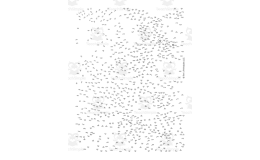
New Zealand's kiwi stands in profile with a long beak, shaggy feathers and clawed feet. Students join 631 dots, then use the completed bird to check their outline.


- Grades
- Elementary, Middle School, Homeschool Resources, High School
- Pages
- 2
- File type
- Answer key
- Included


- Subject
- Math, Science, Creative Arts
- Topic
- birds, new zealand
- Resource types
- Worksheets & Printables, Worksheets, Dot To Dots
- Answer key
- Included
About this resource
What's inside this resource
Round body, no visible wings, a beak nearly as long as its neck: the kiwi is an odd-looking bird, and that makes it a satisfying one to draw. This puzzle builds a standing kiwi out of 631 dots, starting at the head and running straight down the long curved beak.
Most of the work is in the feathers. The kiwi's coat is drawn as layers of jagged, shaggy edges, so the line zigzags constantly and there are many places where a star tells students to lift the pencil and begin a new stroke. The bird's eye is printed on the page, together with a handful of very short feather and claw marks that are too small to dot.
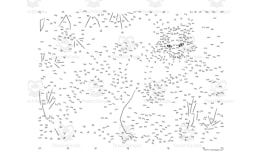
The second page shows the finished kiwi, which doubles as a coloring sheet.
- 631 dots, numbered in order from 1 START to 631 FINISH
- A star at every point where a new line begins
- Finished kiwi picture on page 2
- Full-color and black-and-white PDFs
Related resources
More resources teachers may find useful
24 related resources were found using this product's title, contributor, categories and tags.


In the classroom
Teaching tips & learning objectives

Learning objectives
- Sequence numbers from 1 to 631
- Track a line that changes direction often
- Notice and follow the star rule for starting a new line

Teaching tips
- The beak comes first and uses the first few dozen dots, a good warm-up before the busier feather sections.
- Feather edges zigzag. Tell students a sharp back-and-forth is correct there and they have not made a mistake.
- Pair it with a short reading about New Zealand wildlife or flightless birds and ask what the long beak is for.

Skills covered
- Counting in sequence — students join dots 1 to 631 in order
- Visual scanning — students search a dense page for the next number
- Fine motor control — students draw short zigzag strokes for the feathers
Good to know
Questions teachers ask about this resource
What does the finished picture show?
A single kiwi standing on two sturdy legs, facing right, with a long downward-curving beak, a round feathery body and clawed toes.
Why are there so many stars?
The feathers are drawn as separate layers, and each layer is its own line. A star marks the first dot of each one, so the pencil lifts often.
Is the eye drawn by the student?
No. The eye is printed on the puzzle page, with a few very short feather and claw marks. Everything else is drawn dot to dot.
Can this go with a science lesson?
Yes. It fits lessons on birds, animal adaptations or New Zealand, and page 2 can be labeled with beak, feathers, legs and claws.

No reviews yet
Downloaded this resource? Tell other teachers how it went.
Resource details
Concepts & topics
Core concepts
 Core concepts
- Number order to 631
- Three-digit numerals
- Zigzag and curved lines
- Flightless birds
 Topics
Explore more
Categories this resource belongs to
Explore related searches
More to explore
You may also like


